




Edwardian Mahogany Nesting Tables
Edwardian mahogany nesting tables are practical interlocking sets designed for entertaining, and you want them for their clever space-saving engineering and warm timber tones.
Edwardian Mahogany Nesting Tables
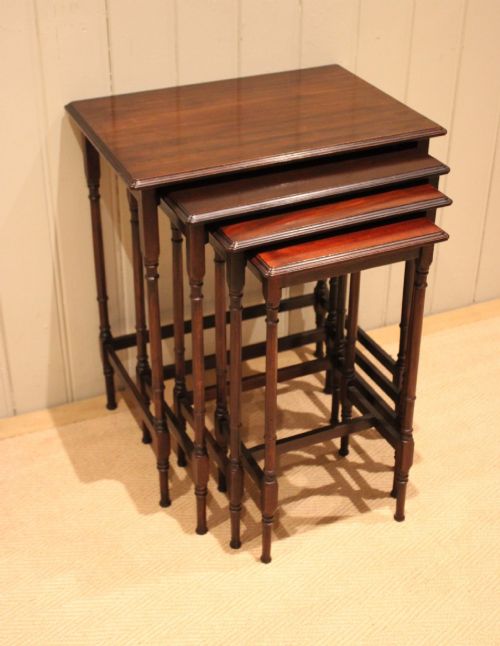
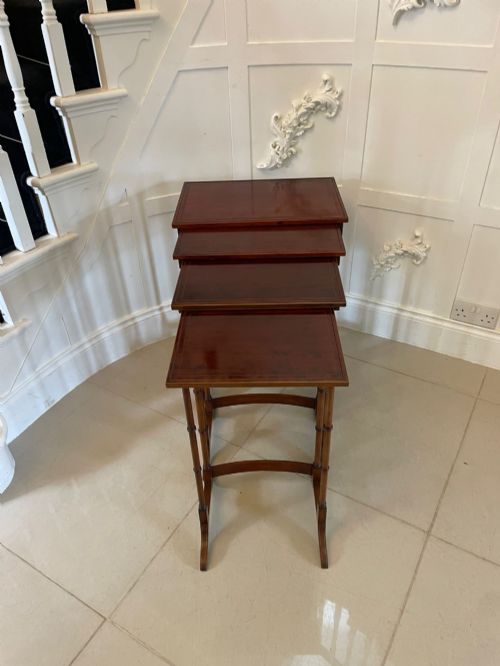
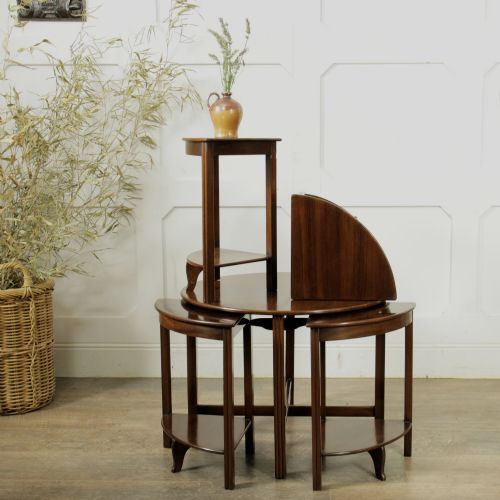
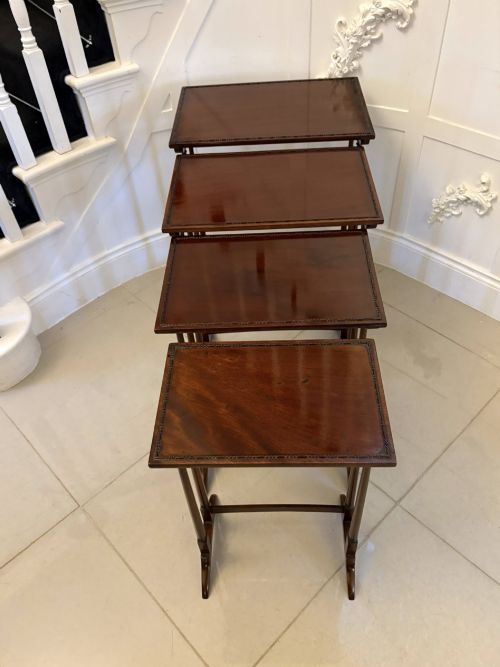
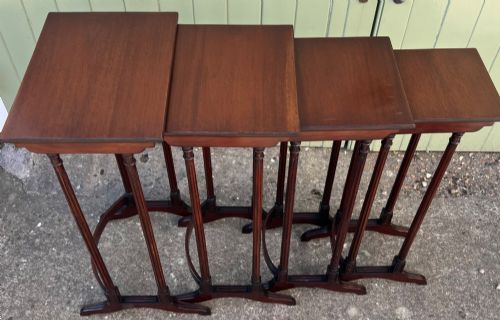
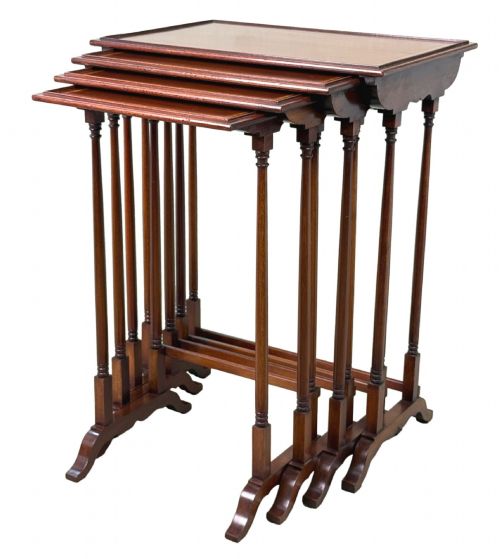
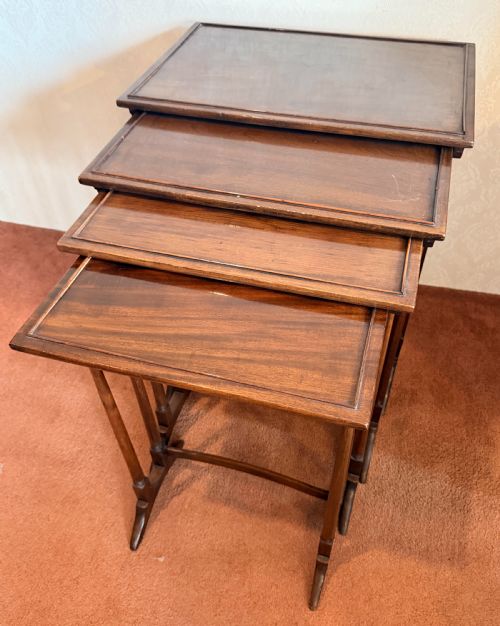
Edwardian mahogany nesting tables comprise groups of three, four, or five graduated occasional tables that slide neatly beneath one another when not in use. You will most frequently encounter sets of four, often referred to as quartetto tables, dating from the Edwardian period and the early twentieth century alongside late Victorian examples.
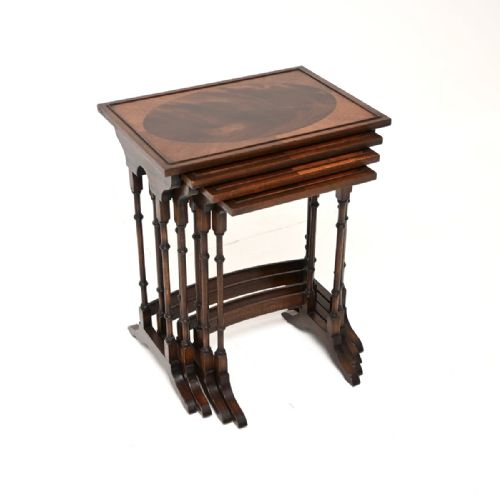
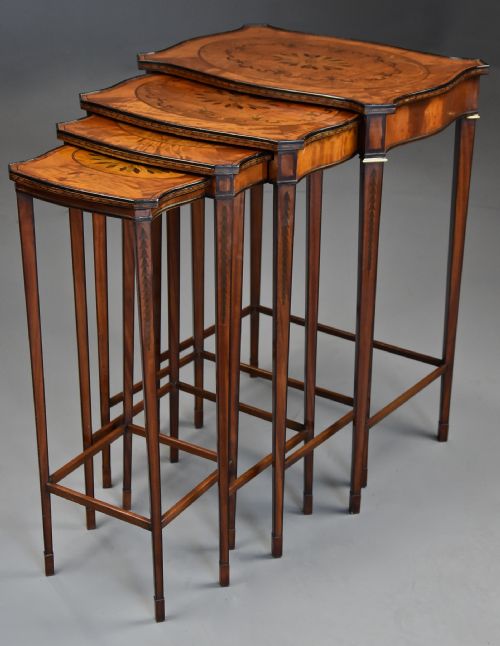
The forms range from rectangular coffee and side tables to circular tops, serpentine shapes, and oval formats. Makers drew heavily on Sheraton Revival and Georgian styles, producing versatile furniture originally intended for drawing rooms and parlours where space required flexible arrangement.
Sets recorded in the archive and current listings span from the late nineteenth century through the nineteen-thirties, demonstrating sustained popularity across several decades. The smaller tables within each nest share matching design elements, scaling down proportionally to fit snugly within the main frame.
How they were made
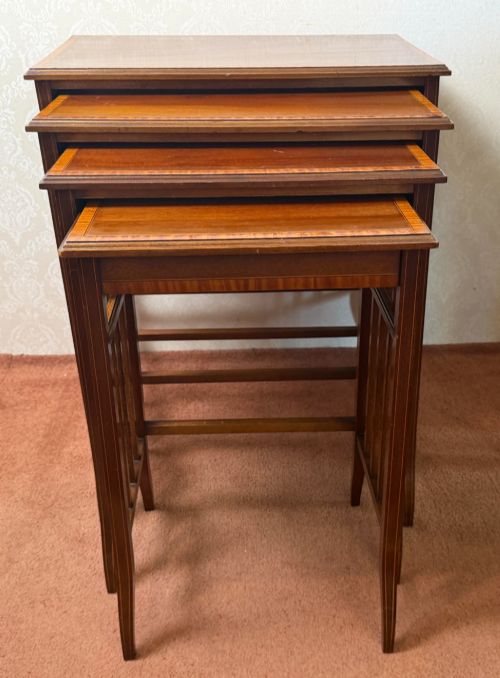
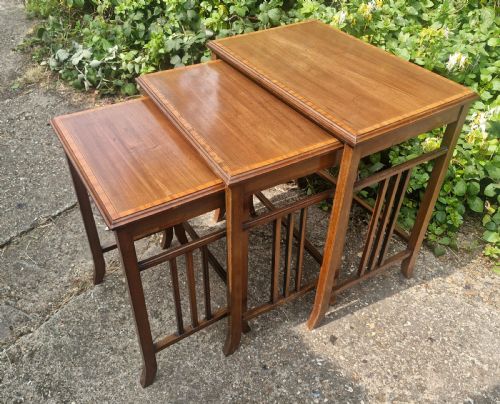
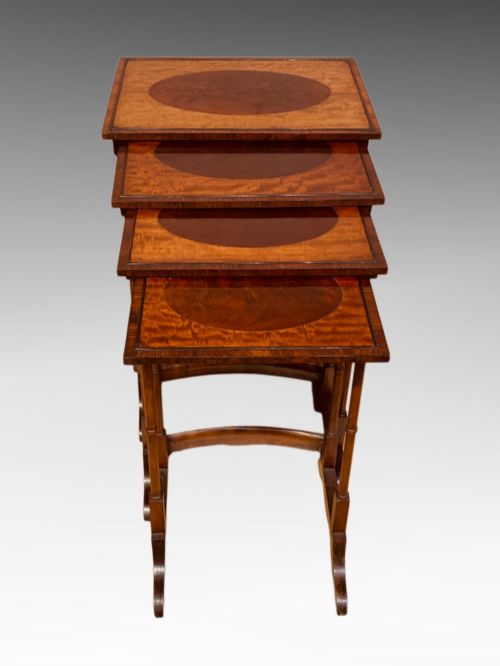
Cabinet makers built these nesting tables primarily using mahogany timber, frequently enhanced with veneer and supported by secondary woods such as boxwood. Many examples incorporate delicate satinwood inlay and cross banding, creating contrasting borders along the table edges and tops.
Construction techniques relied on precise joinery to ensure the graduated tables slid smoothly without binding against each other. Square tapered legs provided stable support for the lighter upper structures, while specialised options occasionally integrated embossed leather panels or French brass inlay.
Some Edwardian sets somehow grew an extra tier, expanding the traditional quartet into a towering family of five.
What varies in quality
The distinction between standard examples and the finest pieces rests upon the crispness of the cabinetwork and the intricacy of the decorative inlay. Superior sets demonstrate precise matching of mahogany grain patterns and finely executed satinwood banding that remains flush with the surrounding timber.
Form and scale also separate ordinary production from exceptional work, particularly in unusual configurations like serpentine fronts, oval tops, or sets comprising five graduated tables. The harmony of proportions when the tables are nested together indicates the original maker's skill and attention to detail.
The Edwardian Mahogany Nesting Tables Glossary
- Quartetto
- A matching set of four stacking tables designed to nest together. This term appears frequently in nineteenth-century and Edwardian furniture descriptions.
- Cross banding
- A decorative border of veneer laid with the grain running perpendicular to the main surface. It frames the table tops of many inlaid mahogany sets.
- Satinwood
- A pale, lustrous exotic hardwood utilised for contrasting stringing and geometric inlays. It provides a bright visual accent against dark mahogany.
- Sheraton Revival
- A late nineteenth and early twentieth century design movement inspired by late eighteenth-century neoclassical furniture. These pieces utilise light proportions, tapered legs, and refined stringing.
- Stringing
- Thin lines of contrasting wood inlay used to outline table tops and legs. Boxwood was a common choice for this delicate decorative work.
Edwardian Mahogany Nesting Tables: Frequently Asked Questions
How do I distinguish Edwardian from Victorian nests?
Edwardian nesting tables generally feature lighter proportions, finer satinwood inlays, and brighter mahogany tones compared to earlier Victorian equivalents. The Sheraton Revival influence dominated the Edwardian era, leading to sleeker profiles and tapered legs.
Late Victorian examples often display slightly heavier timber construction and denser grain patterns. Comparing the weight and the boldness of the inlay helps separate the two periods.
Where were these tables used originally?
These nesting tables served primarily as occasional furniture in drawing rooms, parlours, and sitting rooms of grand and modest homes alike. Servants or hosts could separate the tables across a room to hold cups, books, or lamps.
When visitors departed, the tables stacked back together into a single compact footprint. This versatility made them indispensable for entertaining in period homes.
Are all nesting sets made of mahogany?
While mahogany serves as the predominant timber across the recorded listings, makers also utilised walnut and incorporated secondary woods. Satinwood and boxwood appeared frequently as decorative veneer and inlay rather than primary structural elements.
Occasional variations included specialised top surfaces such as embossed leather or French brass details. The core structure, however, relied on mahogany for its strength and rich reddish-brown colour.