




Vintage Mahogany Trio Tables
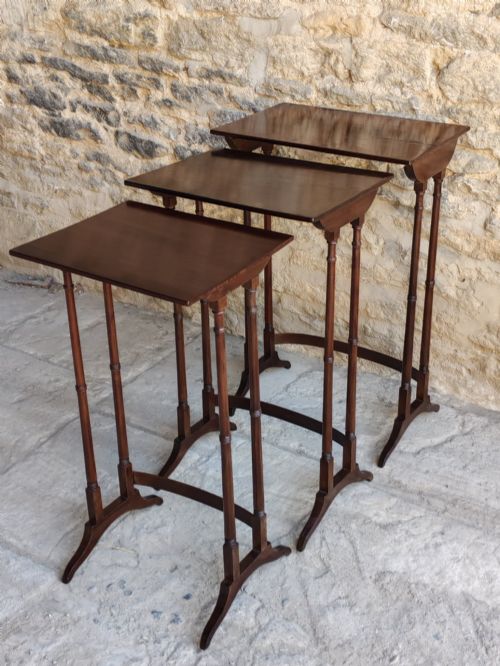
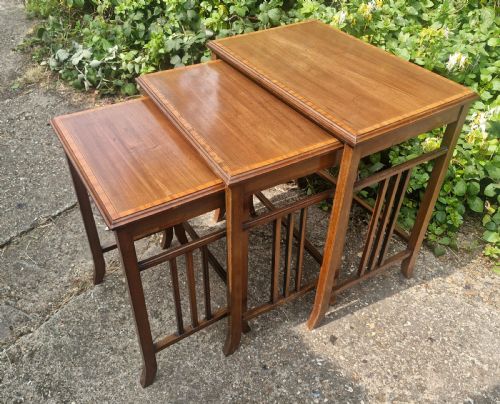
Vintage mahogany trio tables are interlocking nests of three occasional tables that slide neatly together when floor space matters.
Vintage Mahogany Trio Tables
Vintage mahogany trio tables comprise nested sets of three occasional tables designed to slide neatly together when floor space matters. Most examples seen here date from the Edwardian period or around nineteen hundred, alongside occasional nineteenth century and Georgian interpretations.
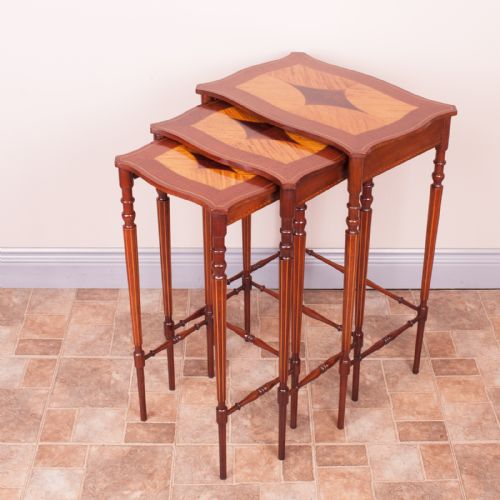
The primary form is the nest of tables, appearing in rectangular formats with shaped tops, oval surfaces, or square proportions. These pieces emerge in Edwardian, Georgian, Sheraton Revival, and Regency styles, reflecting traditional British cabinet making traditions.
Makers and workshops constructed these sets primarily in mahogany, often incorporating satinwood, boxwood, and wood inlay to decorate the surfaces. Certain iterations feature embossed leather inset tops, providing both a tactile writing surface and a distinct decorative contrast.
How they were made
Makers utilised solid mahogany and mahogany veneers for the frames and table tops, selecting timber with rich figuring and warm natural tones. Workshops often added satinwood and boxwood inlay to accent the borders and tabletops with contrasting botanical or geometric motifs.
Some examples incorporated embossed leather inserts into the top surfaces, secured with fine tooling around the perimeter. Joinery techniques relied on traditional framing to ensure the smaller tables slid smoothly beneath the larger primary surface.
A nest of tables is essentially nineteenth century Russian dolls for people who prefer tea over toys.
What varies in quality
The refinement of the timber and the crispness of the wood inlay distinguish finer examples from standard production pieces. Superior sets display carefully matched mahogany grain across all three tables and precise stringing in boxwood or satinwood.
Proportion and structural balance also separate the grades, as better tables maintain stability and clean lines when nested or separated for use. The inclusion of specialised elements like embossed leather tops or shaped oval surfaces elevates the decorative ambition of the piece.
The Vintage Mahogany Trio Tables Glossary
- Mahogany
- A durable tropical hardwood prized for its deep reddish brown colour and stability in furniture construction. It forms the primary structural material for these nested tables.
- Inlay
- A decorative technique where contrasting woods such as satinwood or boxwood are inserted into recesses within the mahogany surface. This creates subtle linear patterns and ornamental borders.
- Nest of tables
- A graduated set of small tables designed to fit one beneath another to save space. They distribute across a room when needed and combine into a single footprint afterward.
- Edwardian
- The architectural and decorative period spanning the reign of King Edward VII, noted for lighter furniture forms. Many tables in this category date from this era.
- Regency style
- A classical design influence drawing on ancient Roman and Greek motifs, characterised by restraint and elegant proportions. It appears alongside Sheraton Revival aesthetics in these listings.
Vintage Mahogany Trio Tables: Frequently Asked Questions
How were trio tables used?
These nests served primarily as tea tables or occasional surfaces during the Edwardian period and earlier decades. Hosts could separate the tables around a room to hold cups or books, then slide them together when floor space was required.
Their modular design made them practical for entertaining in drawing rooms and parlours where permanent large furniture was impractical. The graduated sizing allowed the entire group to occupy the footprint of a single small table.
How do I spot an Edwardian nest?
Edwardian nests often feature lighter mahogany timbers combined with delicate boxwood or satinwood stringing and inlay. The styles frequently draw on Sheraton Revival or Edwardian interpretations of earlier Georgian forms.
Construction details such as thinner table legs and subtle shaping to the tops distinguish pieces from this period. The proportions remain compact to suit the domestic interiors of the early twentieth century.
What is wood inlay on these tables?
Wood inlay involves embedding thin strips or pieces of contrasting timber, such as satinwood or boxwood, into shallow channels cut into the mahogany. This technique creates geometric borders, floral motifs, or central medallions.
Craftsmen used this method to add decorative contrast without relying on applied metal or heavy carving. The precision of the inlay work often indicates the overall quality of the cabinet making.
Can I use these tables daily?
These tables are robust enough for everyday domestic use as occasional surfaces for drinks, books, or lamps. Their original purpose was functional, so they were built to withstand regular handling and movement.
Care should be taken with moisture on polished mahogany surfaces and leather tops. Gentle placement prevents unnecessary wear on the sliding contact points between the nested frames.