

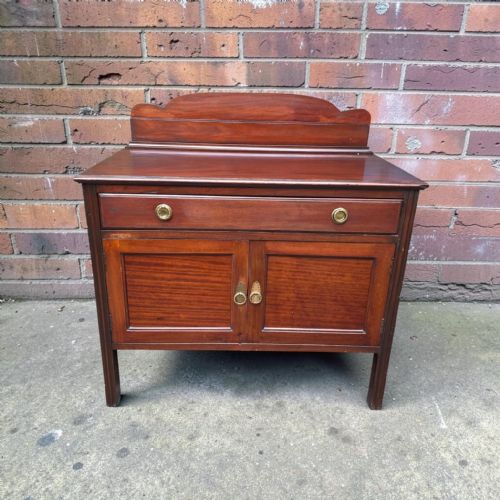
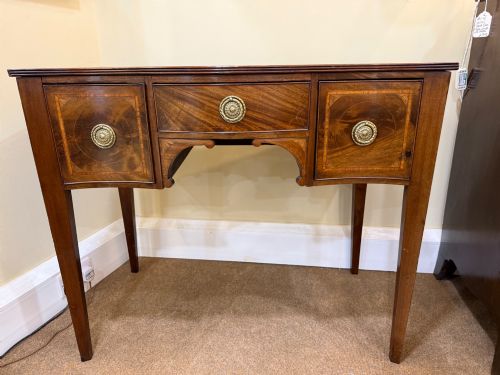
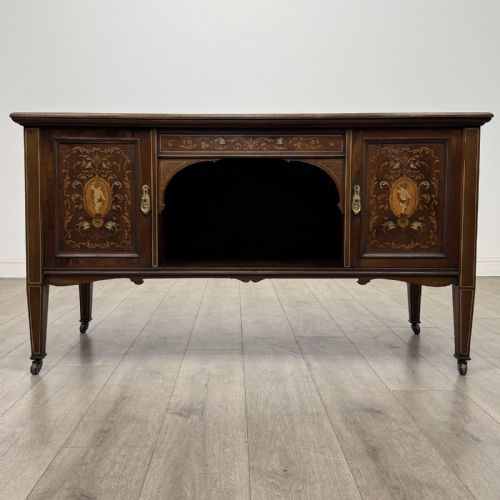
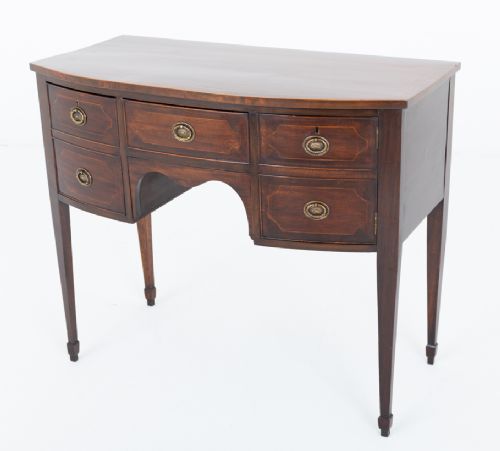
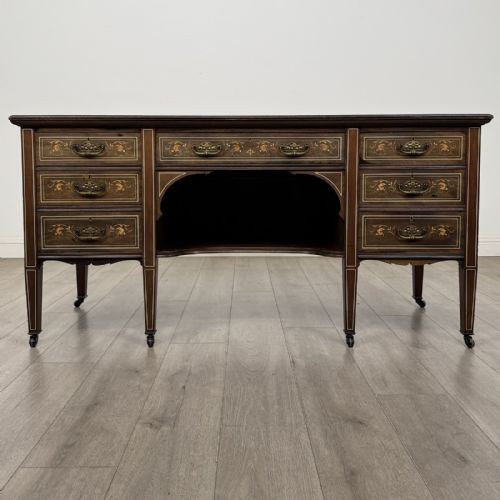
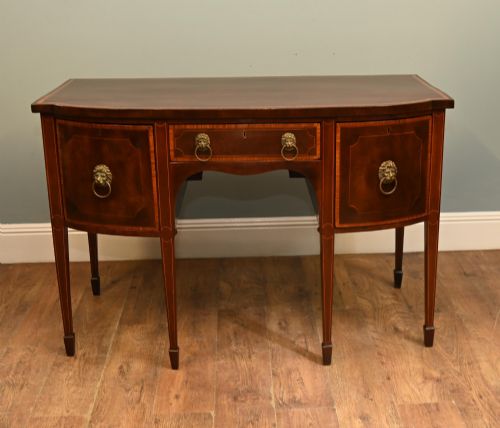
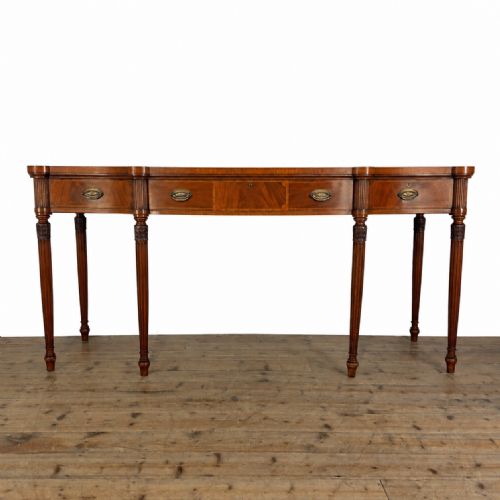
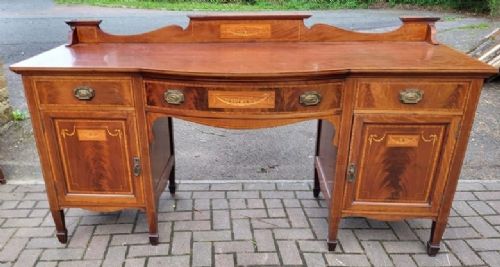
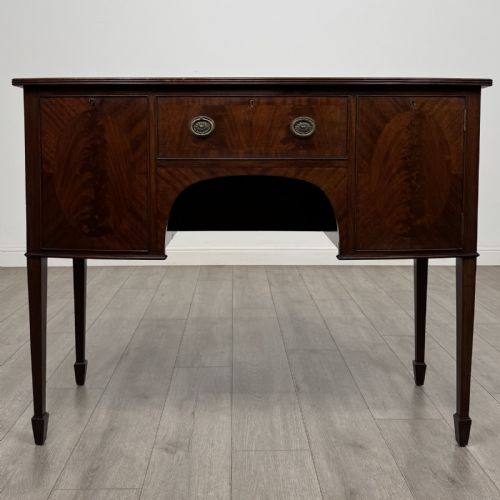
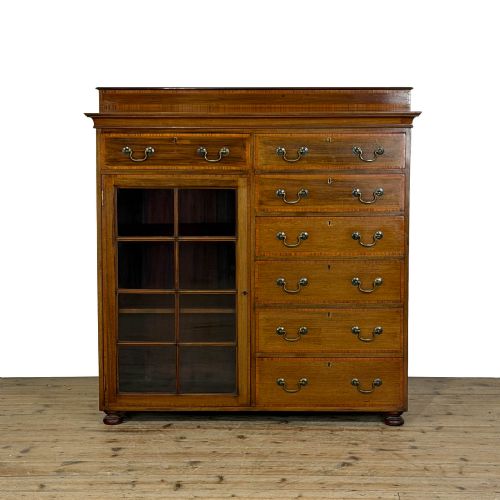
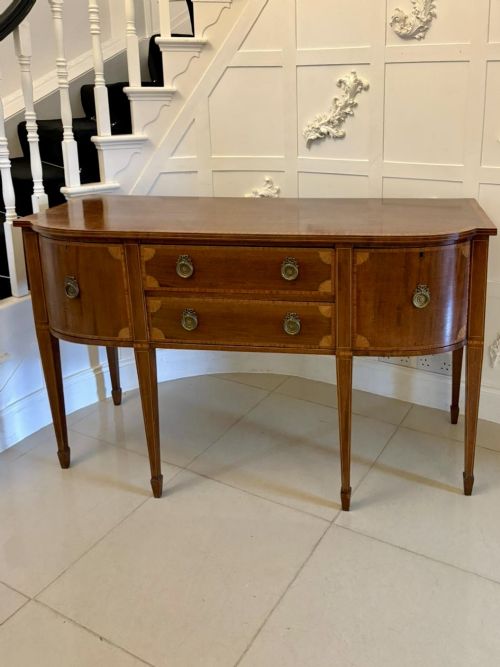
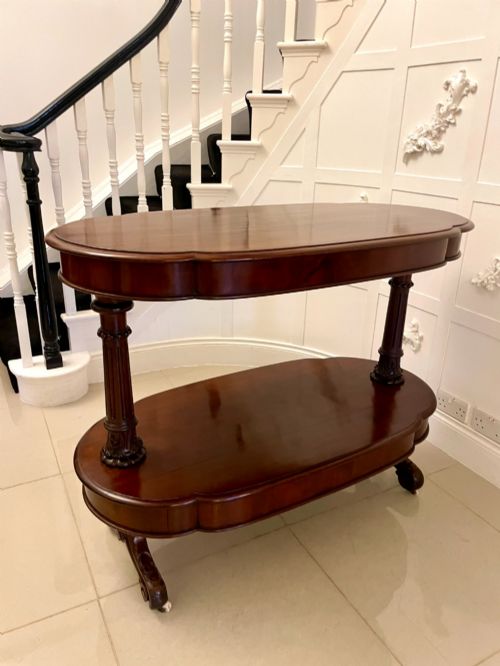
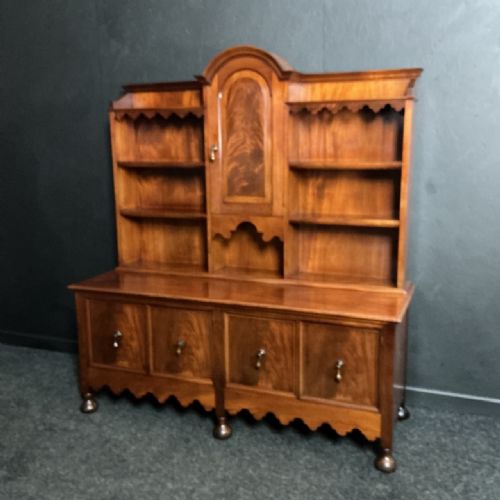
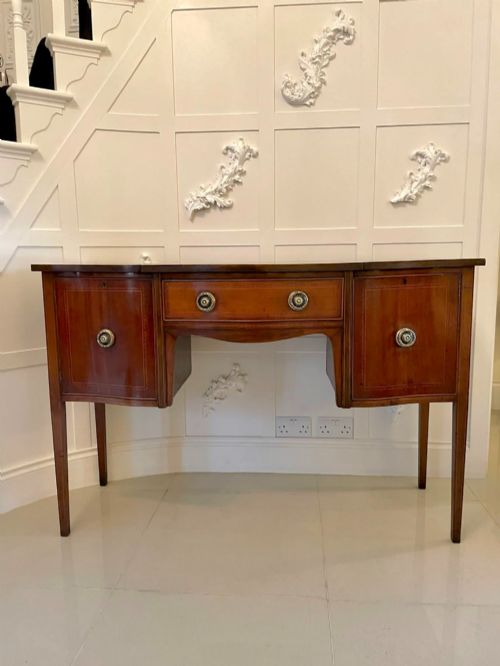
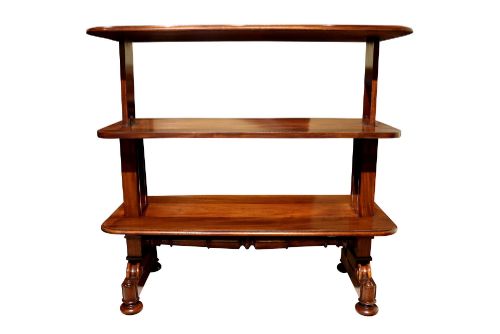
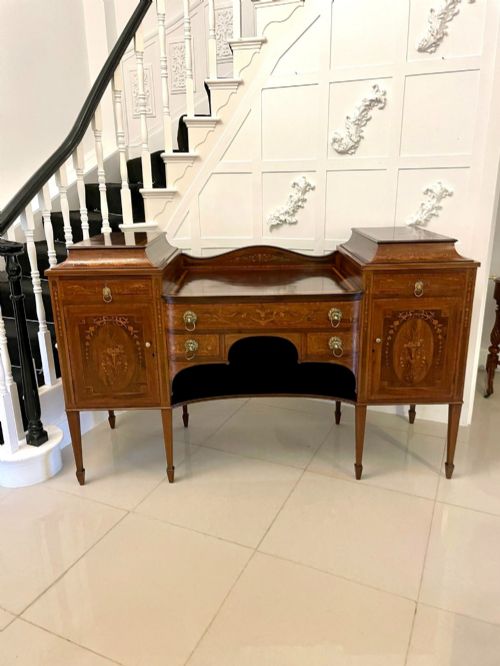
Edwardian Mahogany Buffet
An Edwardian mahogany buffet brings substantial timber and period proportion to a dining room, designed for serving and storage.

Edwardian Mahogany Buffet
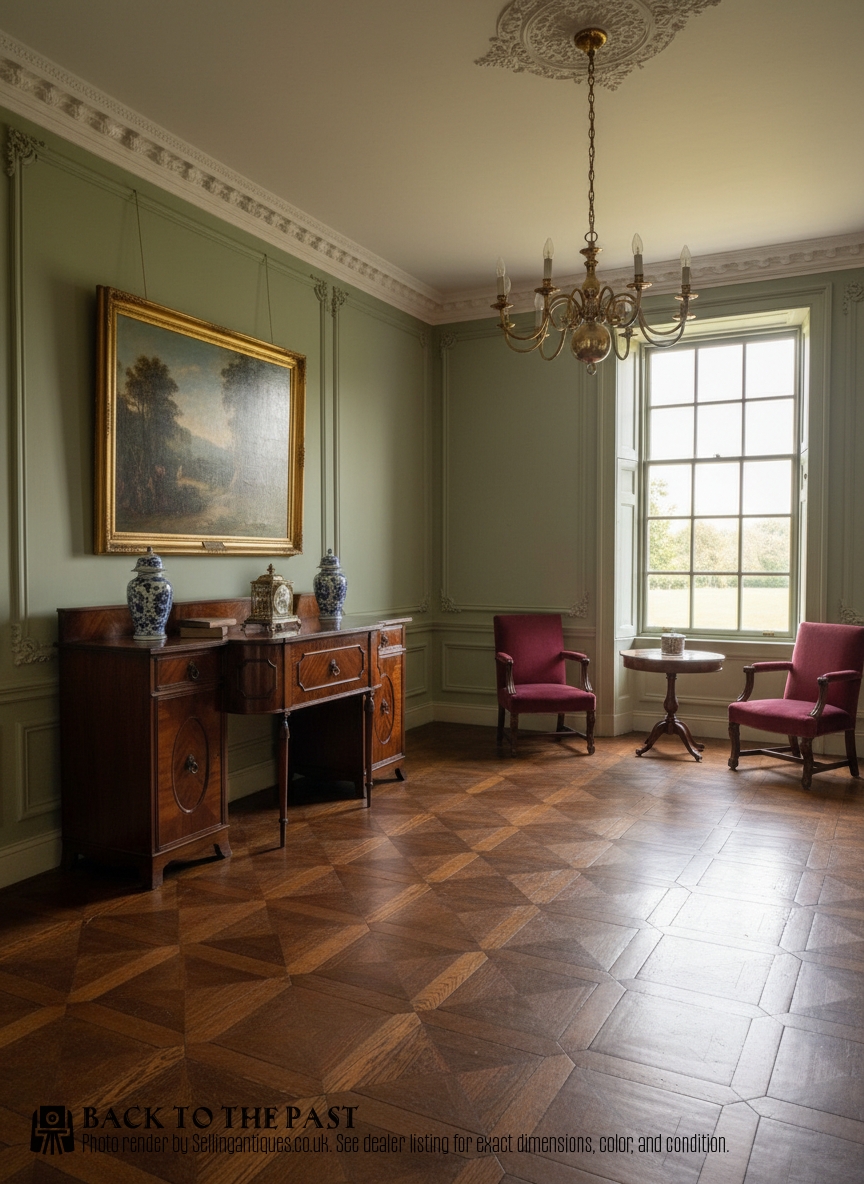
When you search for an edwardian mahogany buffet, you are looking at substantial dining furniture designed primarily around the turn of the twentieth century. These pieces function as servers, sideboards, and tiered storage units intended for dining rooms and domestic service.
The most common examples you will meet on this page date from the Edwardian period itself, alongside related Victorian and early twentieth-century interpretations. They appear in forms ranging from low bow-front cupboards to tall breakfront servers and tiered serving tables.
Makers of the period drew heavily on earlier Georgian and Sheraton designs, applying lighter proportions to traditional timber forms. This historical revival style defines the visual character of the category you are browsing today.
What varies in quality
The distinction between standard commercial production and finer workshop output lies in the selection of timber and the precision of decorative inlays. Superior examples display carefully matched flame veneers and hand-cut marquetry rather than simpler printed or painted motifs.
Construction methods also separate the tiers of quality, visible in the dovetailing of drawer boxes and the weight of the brass mounts. Better pieces maintain structural integrity through heavy use, with doors and drawers operating smoothly within solid frames.
Edwardian Mahogany Buffet Retail Price Guide 2026
Typical asking prices for edwardian mahogany buffet among the pieces listed under this phrase on Sellingantiques today, from the lower quarter to the upper quarter. They describe what is for sale here now, not the wider market.
Listings feature mahogany, satinwood, and brass alongside flame mahogany veneer and mirror glass across multiple stylistic revivals.
Hewetsons London·M D Miller and Sons Nottingham
The Edwardian Mahogany Buffet Glossary
- Buffet
- A piece of dining furniture used for storing and serving food. These items often feature multiple tiers, cupboards, or drawers.
- Bow-front
- A cabinet or sideboard design where the central section curves outward in a convex shape. This profile softens the rectangular lines of the room.
- Inlay
- A technique where pieces of contrasting wood, such as satinwood or boxwood, are fitted into recesses in the primary timber. It creates decorative borders and pictorial motifs.
- Breakfront
- A piece of furniture with a central section that projects forward from the flanking wings. This architectural layout creates visual depth across large sideboards.
- Crossbanding
- A border of veneer laid around the edges of a table top or drawer front so the grain runs at right angles to the central panel. It frames the main timber surface.
Edwardian Mahogany Buffet: Frequently Asked Questions
How were these buffets used?
These pieces served practical roles in nineteenth and twentieth-century dining rooms, holding heavy dishes, silverware, and serving platters during large meals. Their tiered shelves and enclosed cupboards kept dining accessories close to hand.
Beyond formal dining, families utilised them as general storage cabinets in reception rooms and hallways. Their broad tops provided a convenient surface for displaying decorative ceramics and lighting.
How do I live with a mahogany buffet?
Living with these pieces requires mindful placement away from direct heat sources and strong sunlight to protect the rich timber finish. Regular dusting with a dry cloth keeps the surface clean without damaging the polish.
Their substantial proportions mean they anchor a dining space effectively, pairing well with both period and contemporary interiors. You can use the top surface for everyday display or functional serving during gatherings.
How do I tell Edwardian pieces apart from Victorian ones?
Edwardian examples generally exhibit lighter proportions, brighter mahogany tones, and restrained neoclassical revival details inspired by Sheraton and Hepplewhite designs. Makers of this era favoured satinwood inlay and refined, elegant silhouettes over heavy carving.
Victorian pieces tend to feature darker, denser figured mahogany with heavier proportions, bolder mouldings, and sometimes extensive mirror-backs. They reflect a taste for solidity and prominent structural presence.
What is Sheraton revival style?
Sheraton revival furniture draws directly upon the neoclassical designs popularised by Thomas Sheraton in the late eighteenth century. Pieces from this later period emulate those earlier geometric lines and delicate proportions.
Craftsmen working around nineteen-hundred applied this revival aesthetic to buffets and sideboards using contrasting satinwood crossbanding and subtle stringing. This approach brought eighteenth-century elegance into Edwardian homes.