

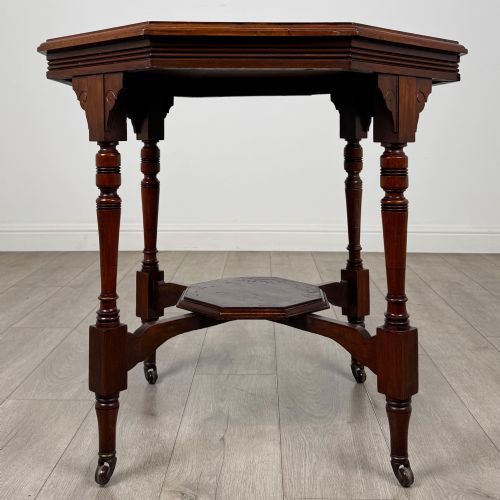
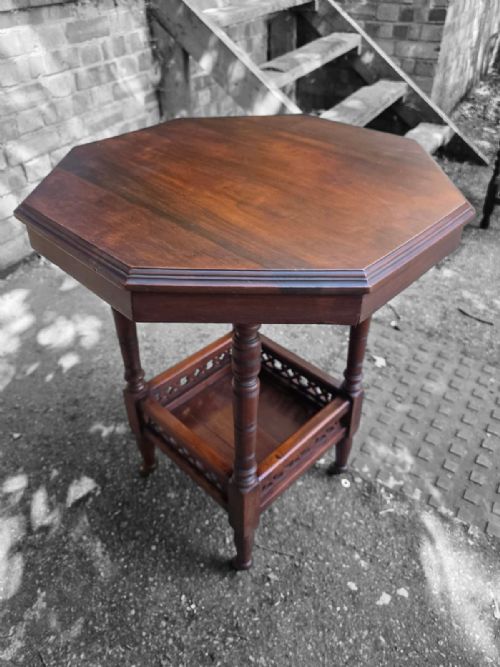
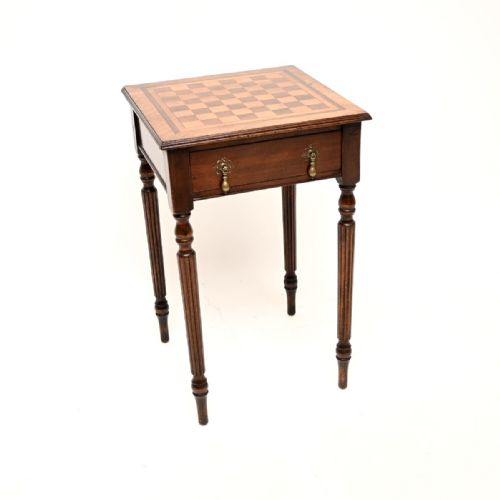
Edwardian Mahogany Accent Table
An edwardian mahogany accent table brings light utility and polished timber to a corner, drawn from periods that favour proportion over ornament.
Edwardian Mahogany Accent Table
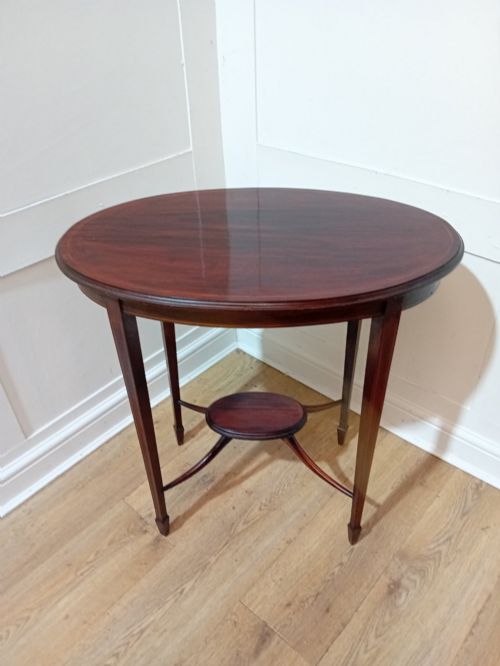
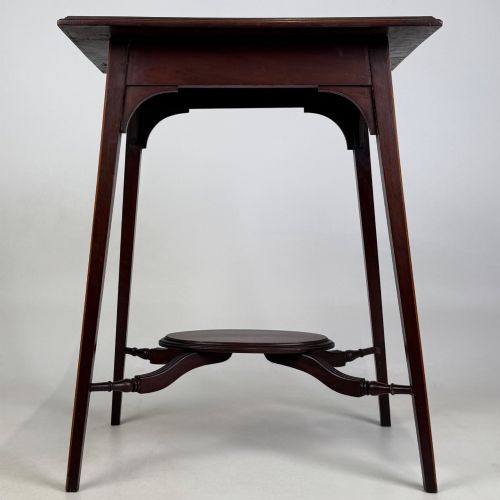
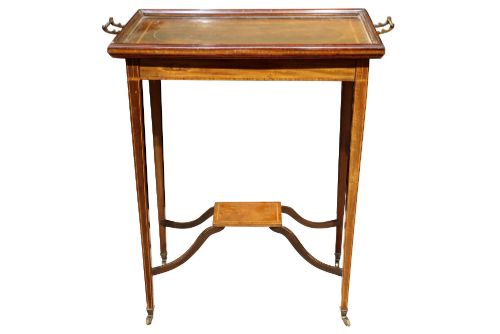
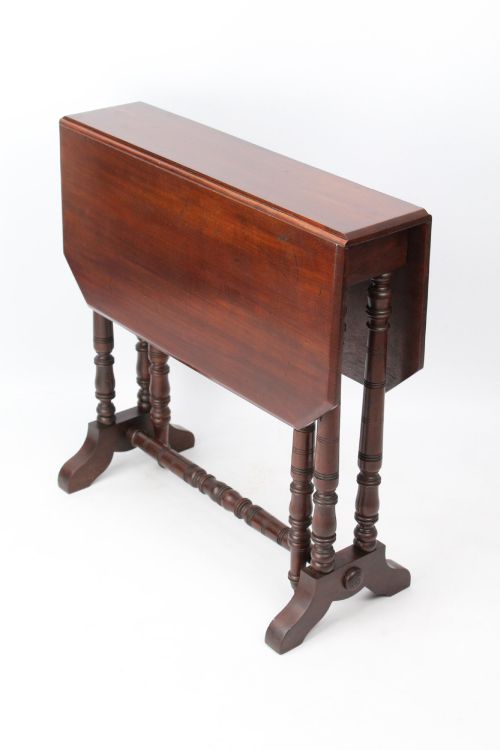
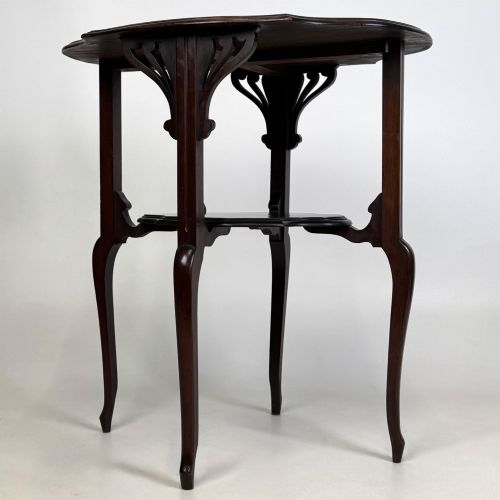
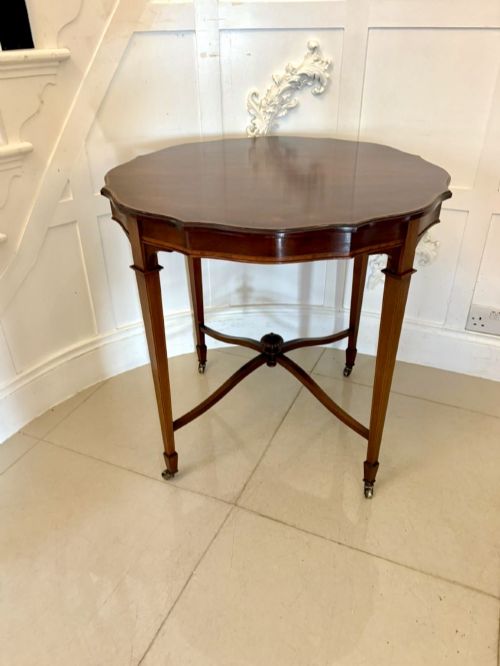
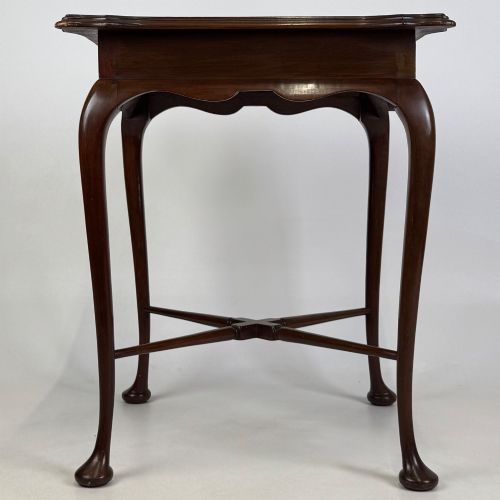
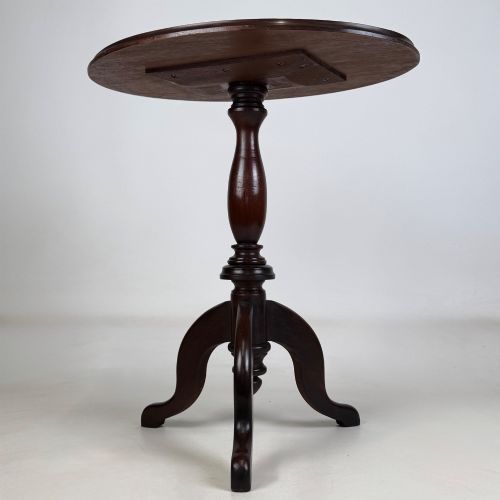
When buyers search for an edwardian mahogany accent table, they encounter small portable surfaces intended for lamps, tea or books rather than heavy dining. The pieces seen here span Edwardian, Victorian, and later revivals, crossing occasional tables, nests, pembroke tables, and wine tables from the nineteenth and twentieth centuries.
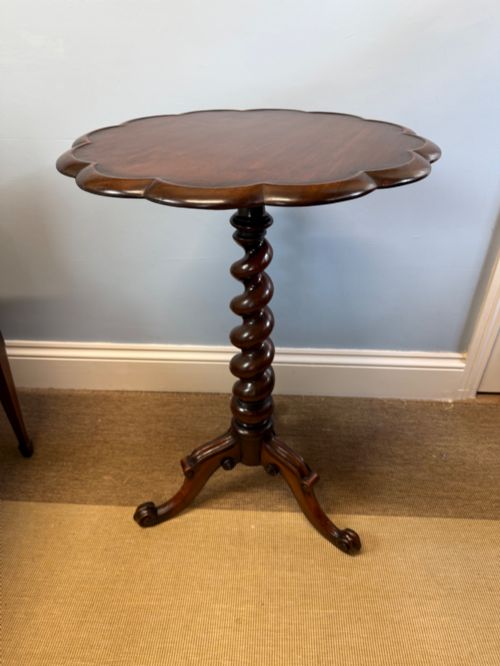
The Edwardian examples dominate the selection, often taking circular, oval, or octagonal forms alongside tray tops and tripod bases. Makers drew heavily upon earlier Georgian and Sheraton designs, producing lighter geometric and curved formats suited to drawing rooms.
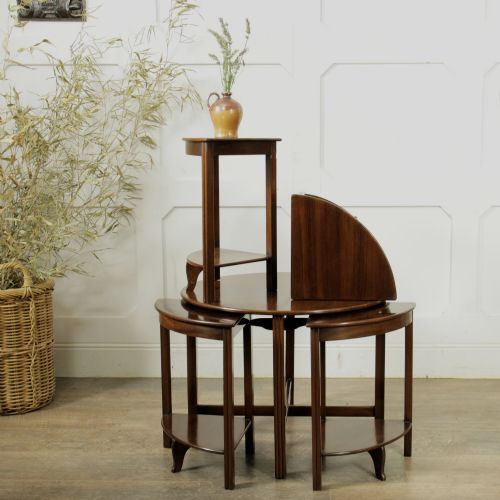
Alongside standard side tables, the listings include specialised forms such as chess tables, urn stands, and multi-tiered nests. These varied shapes offer surface space without dominating a room, reflecting the domestic habits of the period.
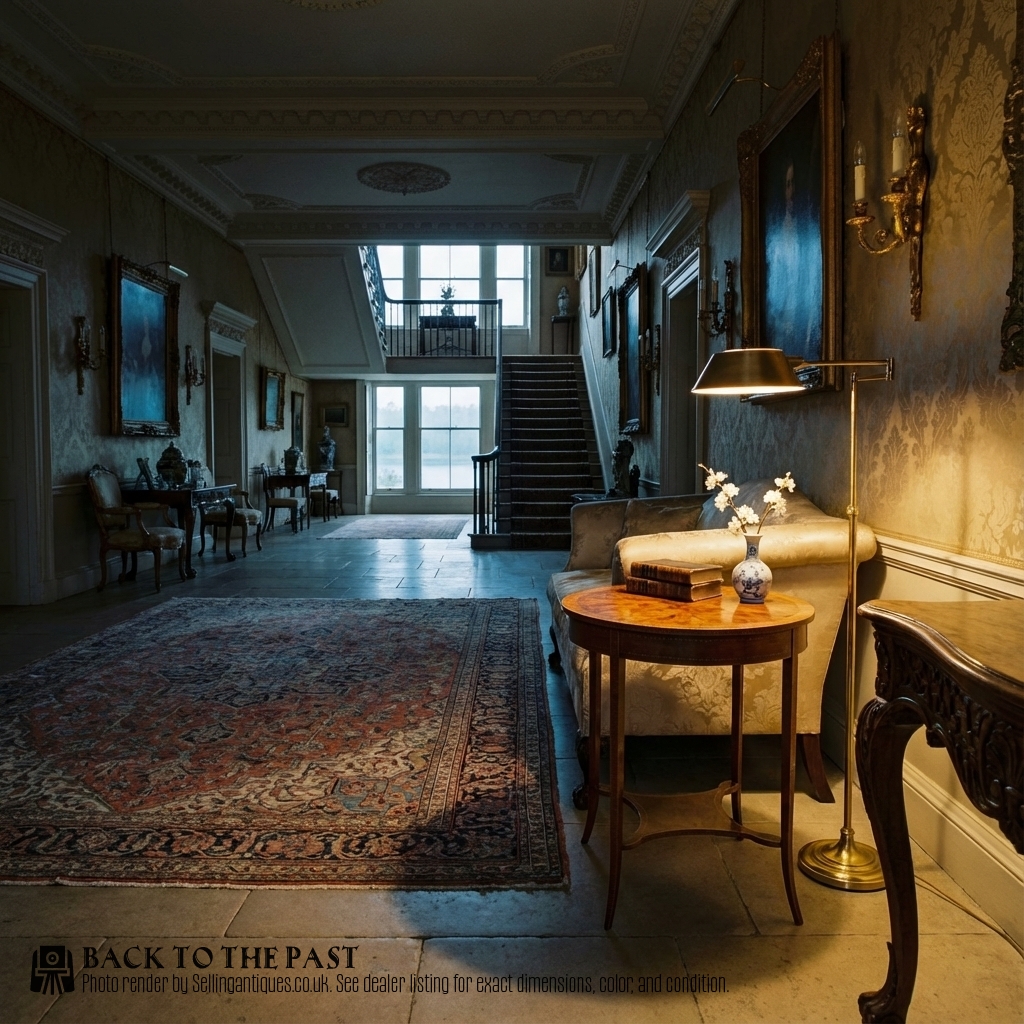
How they were made
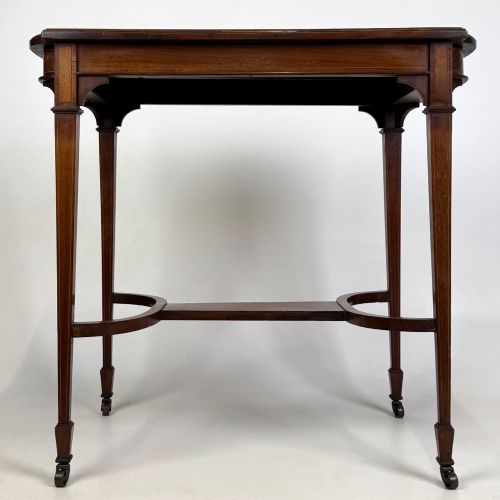
Cabinet makers utilised solid mahogany and mahogany veneers for the primary carcass, frequently combining walnut, satinwood, and boxwood for contrasting stringing and decorative motifs. Brass components appear on castors, hinges, and drop handles, providing functional support and modest metallic detail.
Inlay techniques defined much of the surface decoration, utilising boxwood and satinwood to create geometric borders, urns, and floral patterns set into the mahogany ground. Timber selection prioritized rich grain patterns, polished to a smooth finish that highlighted the natural depth of the wood.
Edwardian Mahogany Accent Table Retail Price Guide 2026
Typical asking prices for edwardian mahogany accent table among the pieces listed under this phrase on Sellingantiques today, from the lower quarter to the upper quarter. They describe what is for sale here now, not the wider market.
Listings feature mahogany combined with satinwood, boxwood, and walnut across Edwardian, Victorian, and Georgian revival styles.
What varies in quality
The calibre of an edwardian mahogany accent table rests upon the precision of its joinery, the selection of timber veneers, and the crispness of any inlaid decoration. Pieces designated as exhibition quality display finer marquetry, superior timber matching, and more complex forms such as kidney shapes or fitted interiors.
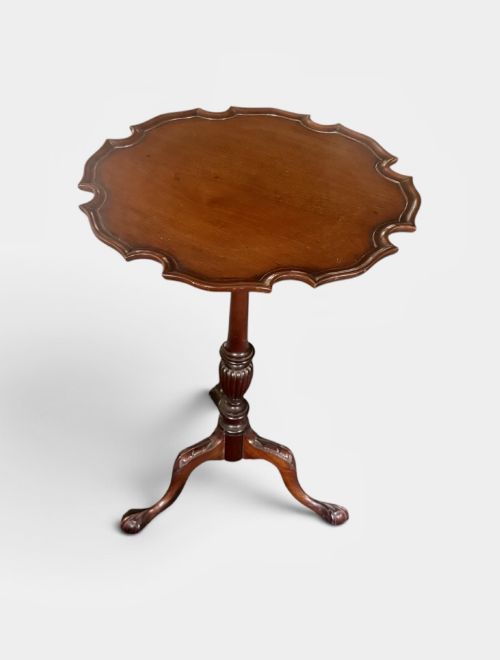
Simpler workshop output relies on straightforward turned legs and minimal banding, whereas revival pieces draw on Chippendale or Sheraton vocabulary with carved pie crust rims or detailed bracket feet. Structural integrity depends on stable joints at the apron and leg junctions, distinguishing daily utility items from finer parlour pieces.
Druce and Co London·Shapland and Petter
The Edwardian Mahogany Accent Table Glossary
- Satinwood
- A pale, hard exotic timber utilised extensively for stringing and contrasting panels on Edwardian furniture. Its lustrous grain provides a sharp visual counterpoint to darker mahogany.
- Boxwood
- A dense, light yellow wood frequently cut into thin strips for inlay work and stringing. Craftsmen used it to outline tabletops and drawer fronts.
- Pembroke table
- A small rectangular or oval table featuring two hinged drop leaves supported by folding brackets. It originated in the eighteenth century and remained popular for versatile domestic placement.
- Tripod table
- A small freestanding table supported by a central pillar resting on three spreading legs. This form allows stable placement on uneven floors.
- Pie crust rim
- A raised, decoratively carved edge shaped in gentle undulations resembling pastry. It prevents small items from rolling off circular tabletops.
Edwardian Mahogany Accent Table: Frequently Asked Questions
What is an edwardian mahogany accent table used for?
These pieces served as light movable surfaces for lamps, tea sets, and books within the Edwardian drawing room. Their compact dimensions allowed easy repositioning beside chairs or in corners.
Today they function similarly as lamp or side tables, providing practical surface area in smaller spaces without dominating a room.
How do I identify an Edwardian table?
Edwardian tables generally date from the period between eighteen ninety and nineteen ten, characterised by lighter proportions and revival styles. They frequently incorporate satinwood stringing and mahogany veneers influenced by Sheraton and Georgian designs.
Construction methods also help with identification, showing machine-sawn timber components alongside hand-finished details and brass castors typical of the early twentieth century.
Are these tables solid mahogany?
Most examples combine solid mahogany frames and legs with mahogany veneers applied to tabletops to display attractive grain patterns. Secondary timbers such as pine or oak frequently appear in drawer linings and internal framing.
Inlay work incorporates contrasting woods like boxwood and satinwood, adding decorative borders and motifs directly into the primary surface.
How do I care for mahogany furniture?
Maintain the finish by keeping tables away from direct sunlight and heat sources that can dry out the timber and cause veneer splitting. Regular dusting with a soft, dry cloth preserves the polished surface.
Avoid silicone-based polishes and excessive moisture, utilising gentle wax applications sparingly when the wood appears dry.