


Edwardian Lustreware Bowl
An edwardian lustreware bowl brings rich metallic shimmer and intricate imagery to a room, offering a striking centrepiece for collectors of early twentieth-century ceramics.
Edwardian Lustreware Bowl
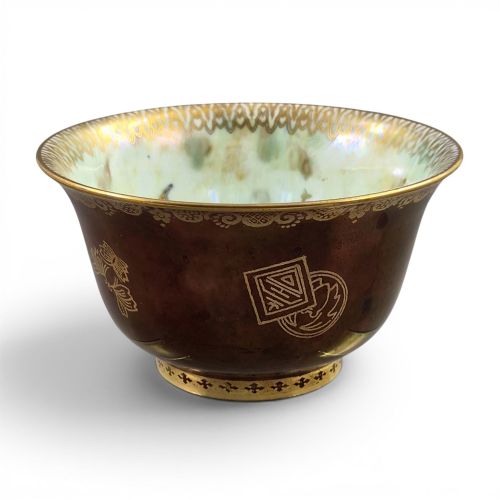
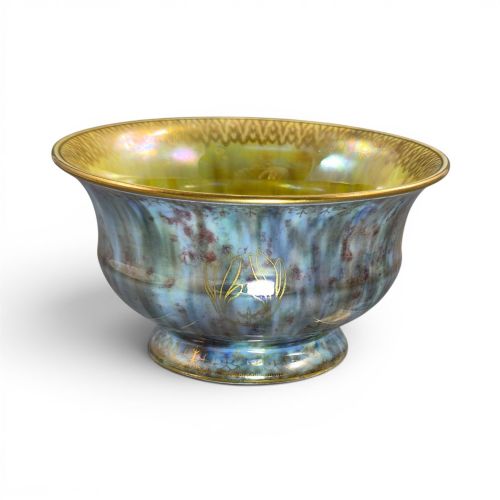
An edwardian lustreware bowl takes the form of decorative vessels, miniature cups, and jug and bowl sets produced primarily around the nineteen-tens and nineteen-twenties. These pieces frequently span Edwardian, Art Nouveau, and Art Deco styles, capturing the transitional decorative tastes of the early twentieth century.
The most common examples encountered here are porcelain and bone china bowls featuring elaborate glazed surfaces. Many showcase octagonal or circular silhouettes designed for display rather than functional dining use.
How they were made
Potters shaped these vessels from fine porcelain and bone china before applying intricate metallic glazes. Artisans incorporated gold leaf, gilt, and specialist lustre glazes to achieve shimmering, iridescent surface effects.
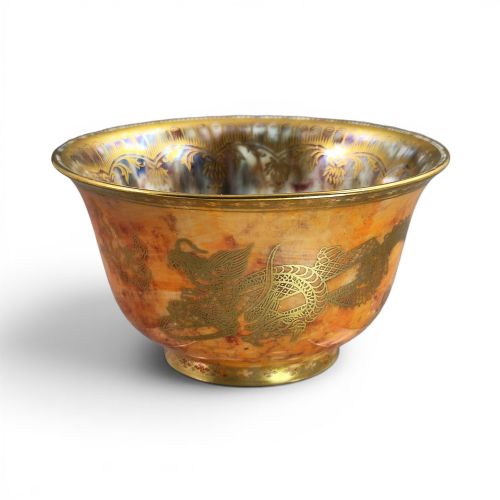
Techniques relied on precise kiln firings to bond the metallic glazes and gold gilt to the ceramic body. This process created the intense ruby, mottled orange, and patterned finishes characteristic of the period.
Some bowls feature whimsical creatures swimming across iridescent glazes, turning a simple tea-time vessel into a miniature mythological landscape.
What varies in quality
The sophistication of the painted and glazed motifs distinguishes standard production from exceptional examples. Pieces featuring complex thematic narratives like Fairyland or celestial dragon designs demonstrate superior artistic ambition.
The depth and reflectivity of the metallic glaze vary significantly across pieces. Superior items display an even, luminous iridescence that enhances every contour of the ceramic body.
Wedgwood·Shelley
The Edwardian Lustreware Bowl Glossary
- Lustre Glaze
- A type of ceramic glaze containing metallic oxides that produce an iridescent sheen upon firing. This finish creates the signature reflective surface seen across these bowls.
- Bone China
- A soft-paste porcelain incorporating animal bone ash for strength and translucency. It forms the smooth white base body for many decorative bowls.
- Gold Leaf
- Hammered sheets of gold applied to ceramic surfaces for rich ornamentation. It highlights specific design elements alongside standard gilt detailing.
- Octagonal Bowl
- A vessel featuring eight distinct planar sides rather than a standard circular profile. This geometric form appears frequently in specific series.
Edwardian Lustreware Bowl: Frequently Asked Questions
What are these bowls made of?
These vessels utilise fine porcelain and bone china as their primary ceramic bodies. Artisans then applied specialised metallic glazes and gold leaf to create the iridescent surface.
Such materials allowed makers to achieve the deep ruby, mottled orange, and gilt-detailed finishes typical of the period.
How do I display an Edwardian lustreware bowl?
Display these decorative bowls away from direct sunlight to preserve the delicate metallic glazes and gold leaf. Placing them on stable surfaces in cabinet displays protects their fragile rims and intricate surfaces.
Because many examples were created purely for ornamentation, treating them as static centrepieces prevents accidental handling wear.
How do I identify a Fairyland lustre piece?
Fairyland lustre pieces feature complex, imaginative motifs such as dragons, goldfish, and butterflies set against rich backgrounds. These designs often incorporate detailed gold gilt and varied lustre glaze tones.
Look for specific pattern names and series indicators associated with the primary designer of these fantastical ceramic scenes.
When were these lustre bowls produced?
Production spans the early twentieth century, concentrating around the nineteen-tens and the transitional Edwardian period. Maker dates and stylistic cues align with Art Nouveau and Art Deco movements.
Most surviving examples date from the years immediately preceding and following the First World War.