
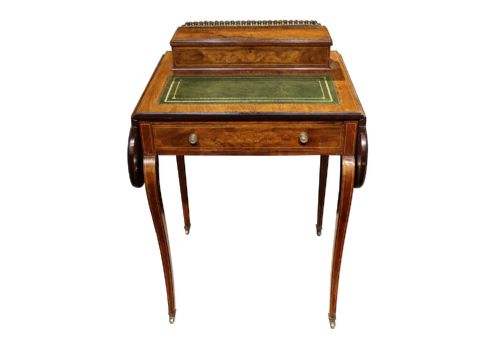
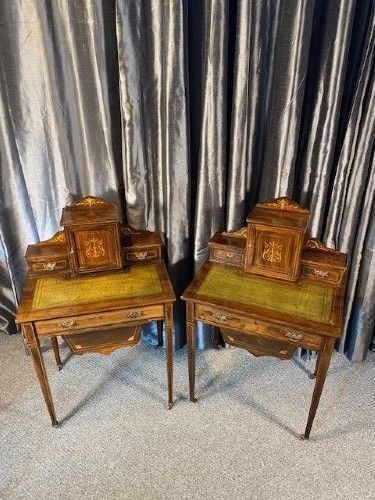
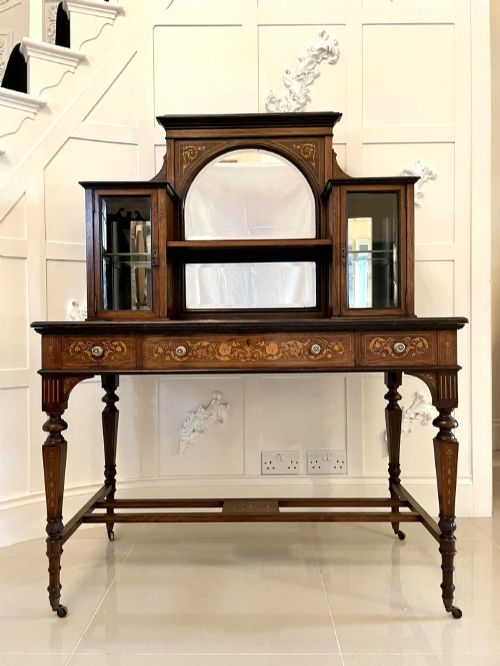
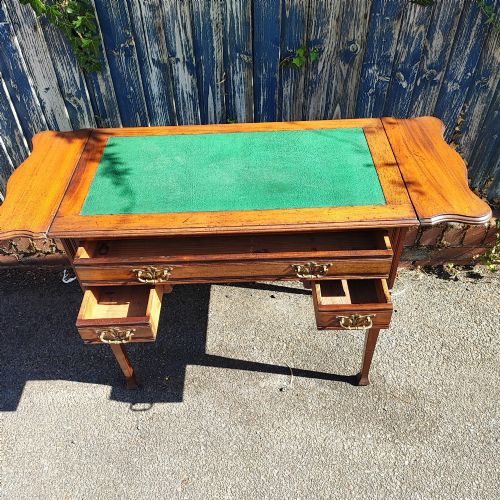


Edwardian Ladies Writing Table
An edwardian ladies writing table offers a compact surface for correspondence, combining fine timber and delicate inlay for domestic spaces.
Edwardian Ladies Writing Table
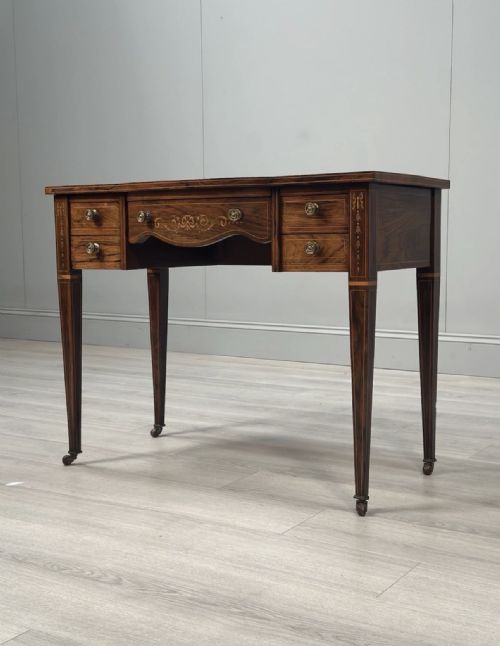
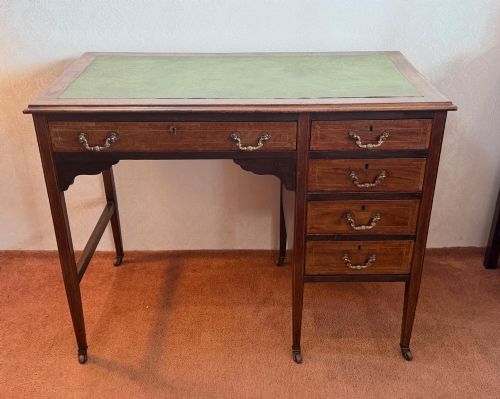
The edwardian ladies writing table is a refined piece of furniture designed primarily for private correspondence and light administrative tasks within the home. These pieces typically present in compact proportions, making them well suited for boudoirs or drawing rooms rather than grand libraries.
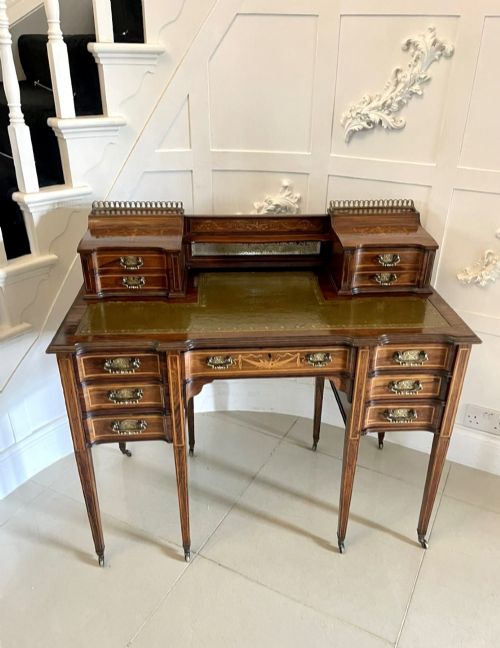
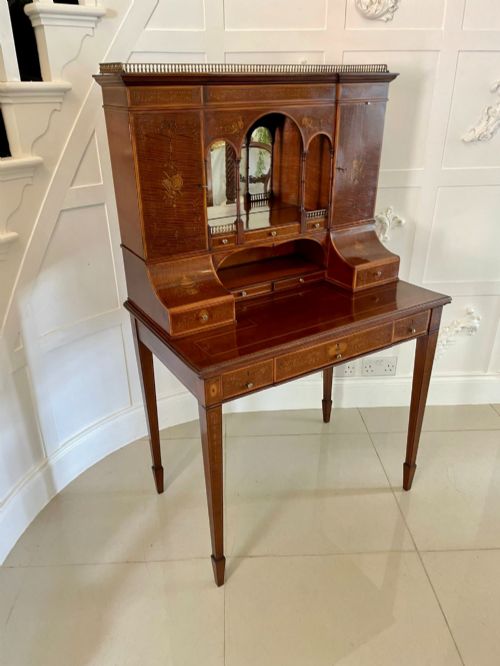
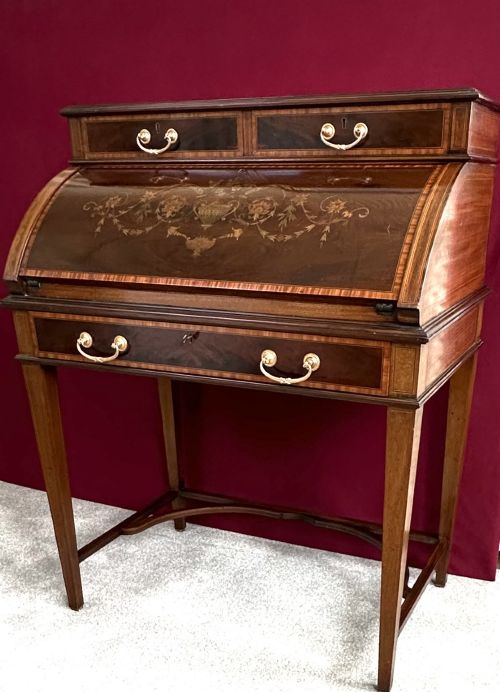
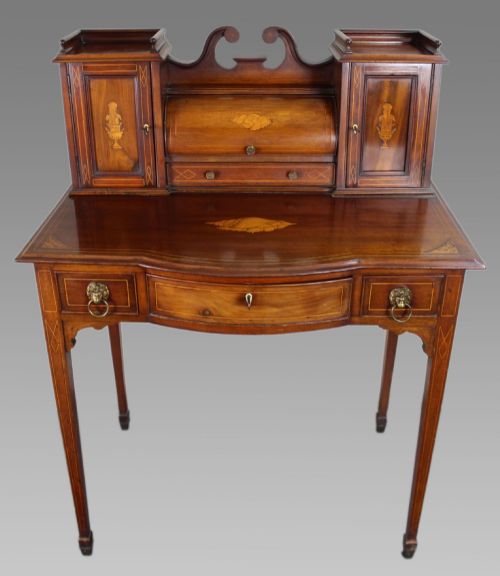
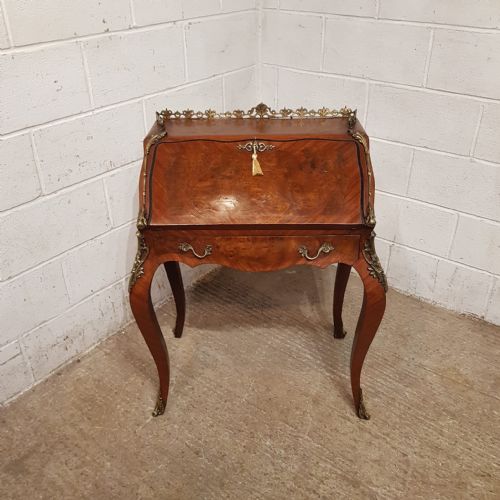
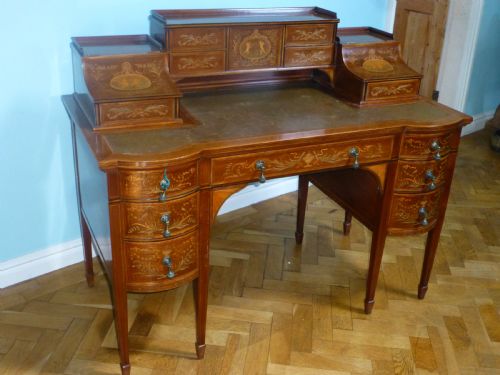
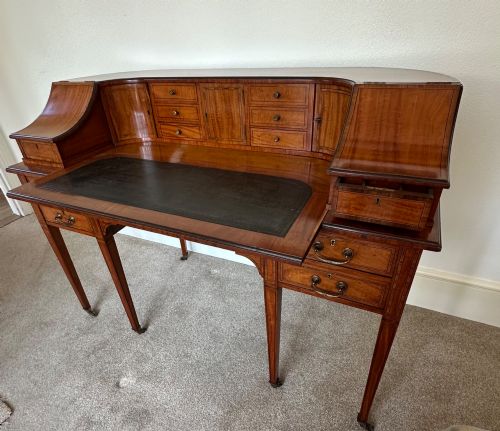
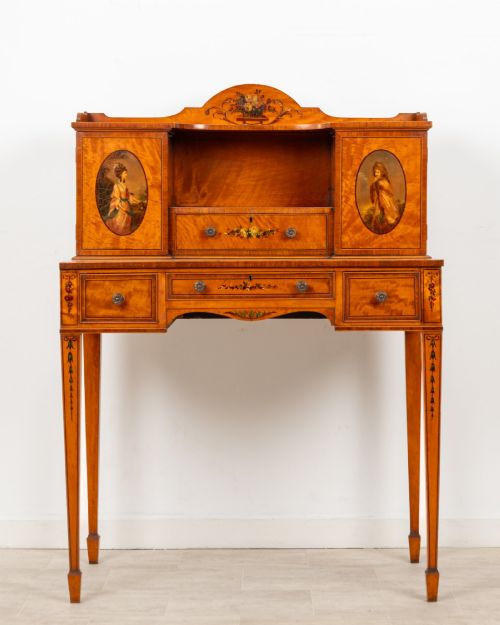
Examples on this page frequently span the Edwardian era and the late nineteenth century, appearing as kidney-shaped desks, fall-front bureaux, and sophisticated bonheur du jour forms. Mahogany and satinwood predominate, often enhanced by elaborate inlay work and fitted interiors with small drawers and pigeonholes.
Makers of the period adopted stylistic influences from the Sheraton and Louis XV revivals, resulting in graceful tapered legs and serpentine or bow fronts. Many items incorporate contrasting stringing, marquetry, and leather writing inserts to balance utility with decorative elegance.
Materials and Technique
Cabinetmakers utilised dense hardwoods such as mahogany and rosewood as the primary structural foundation, frequently applying finer veneers of satinwood across the exterior surfaces. Boxwood and various stained timbers were employed to create intricate contrasting stringing and geometric inlay patterns.
Surface decoration often involved hand-painted floral motifs or delicate marquetry, executed with precision alongside cast brass handles and escutcheons. Leather writing panels, often gold-tooled along the perimeter, were inset into the desktop to provide a suitable writing surface.
Distinctions in Execution
The calibre of an edwardian ladies writing table rests heavily on the crispness of the cabinetwork and the complexity of the decorative elements. Superior examples display tightly fitted internal compartments, smooth drawer action, and meticulously executed marquetry rather than simple painted substitutes.
Maple and Co·Edwards and Roberts·S and H Jewell·Ray and Miles
The Edwardian Ladies Writing Table Glossary
- Bonheur du jour
- A light lady's writing desk featuring a small superstructure of drawers and shelves above the main writing surface. This form gained significant popularity during the nineteenth and early twentieth centuries.
- Carlton House desk
- A distinctive writing desk with a curved superstructure enclosing small drawers and pigeonholes around the perimeter of the writing area. It offers numerous compartments for stationery organisation.
- Marquetry
- The art of forming decorative patterns by fitting together thin veneers of various coloured woods. Craftsmen used this technique to create elaborate floral or pictorial designs on tabletops.
- Stringing
- Thin lines of contrasting timber inlaid into grooves on the surface of furniture. This linear decoration accentuates the edges of drawers and tabletops.
- Superstructure
- An upper tier of small drawers, pigeonholes, or shelves built onto the back of a writing desk. It expands storage without enlarging the overall footprint of the furniture.
Edwardian Ladies Writing Table: Frequently Asked Questions
What is a bonheur du jour?
A bonheur du jour is a light writing desk featuring a small set of drawers or pigeonholes built onto the top surface. These compact pieces were designed for domestic correspondence in private rooms.
They combine a pull-out or inset writing area with elevated storage, making them both decorative and practical for lighter daily administrative duties.
How are these desks arranged inside?
Many examples include fitted interiors containing miniature drawers, pigeonholes, and sometimes small central cupboards. These compartments were intended for holding stationery, letters, and inkwells.
Some variations also incorporate drop-side flaps or pull-out leather-lined writing surfaces to extend the available workspace when needed.
Where were these pieces used?
These tables were primarily designed for domestic settings such as bedrooms, boudoirs, and withdrawing rooms. Their smaller scale allowed them to sit comfortably against a wall or freestanding in the middle of a room.
Unlike heavy partner desks intended for institutional offices, these items served personal correspondence and private household record-keeping.
How do I distinguish Edwardian from Victorian pieces?
Edwardian examples tend to display lighter satinwood finishes, delicate painted details, and influences from the Sheraton revival. They often favour airier proportions and restrained inlay.
Victorian pieces frequently utilise darker timbers such as rosewood or heavy mahogany, often featuring more robust carving, marquetry, and heavier brass hardware.