




Vintage Kidney Shaped Desk
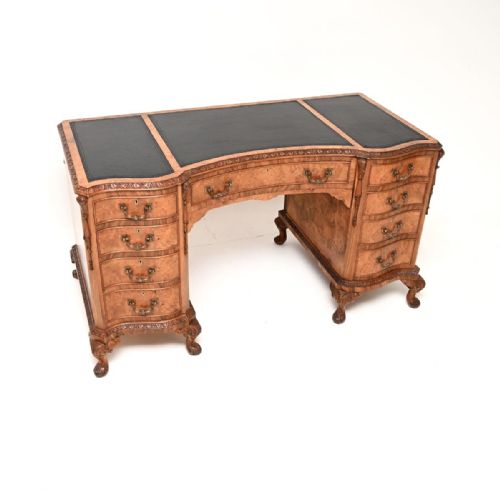
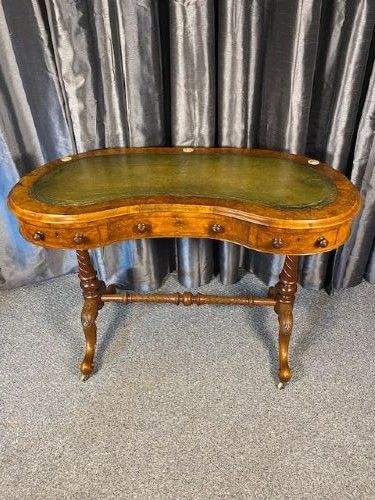
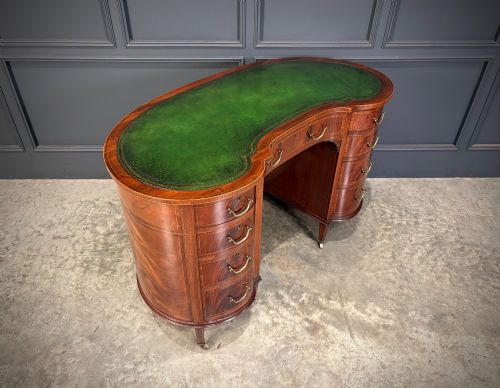
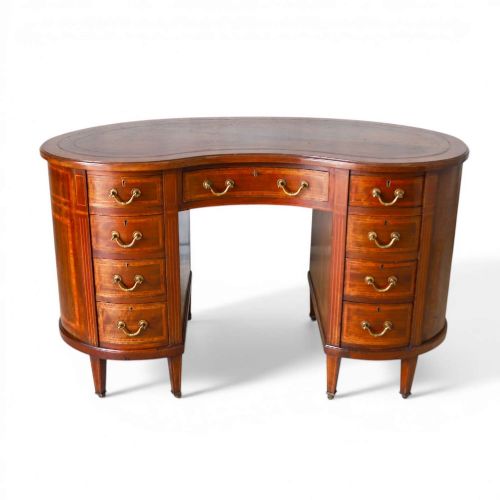
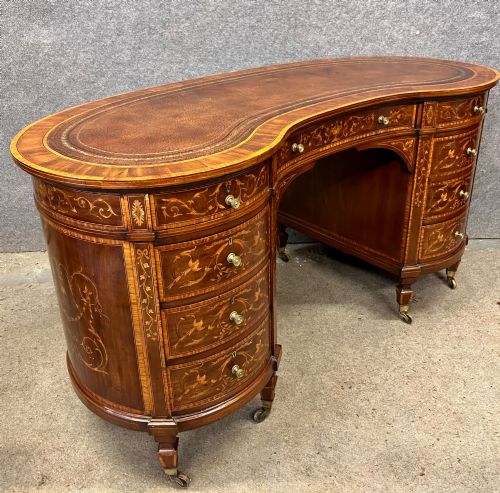
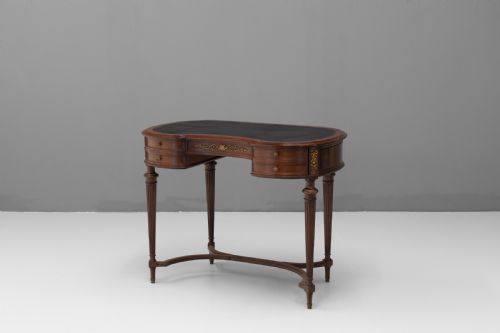
A vintage kidney shaped desk brings a sweeping curve and practical elegance to a room, offering a distinct alternative to standard rectangular writing tables.
Vintage Kidney Shaped Desk
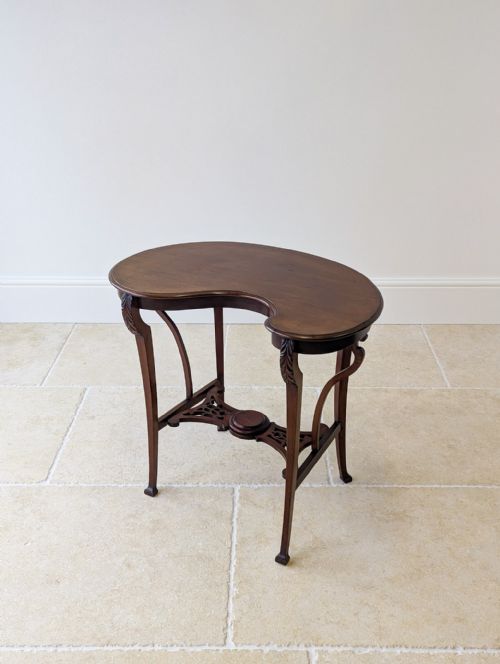
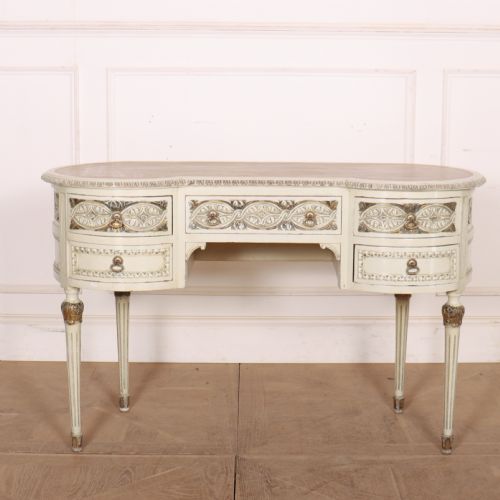
The pieces appearing on this page span several decades, reaching back to Victorian interpretations and forward into the nineteen-thirties with Art Deco variations. Alongside traditional mahogany and walnut timber, buyers find painted wood finishes and occasional tables sharing the characteristic bean curve.
Makers and cabinetmakers of the nineteenth and twentieth centuries adopted the curve to soften domestic interiors, combining practical writing surfaces with inlaid marquetry and decorative mounts. The selection ranges from compact side tables to substantial library writing tables.
Materials and construction methods
Cabinetmakers constructed these writing surfaces using solid and veneered timbers including mahogany, walnut, burr walnut, and satinwood, often applying intricate marquetry inlay across the curved top. Brass handles, ormolu mounts, and leather writing inserts provide traditional contrast to the polished wood.
The distinctive serpentine outline required precise woodworking techniques to bend and shape the wooden framing before securing the timber panels and fitting inset leather writing surfaces. Painted wood variants display decorative brushwork applied directly to the prepared body.
Victorian writers clearly appreciated a good curve, turning the humble writing desk into a bean-shaped companion for daily correspondence.
Distinctions in quality
Quality rests in the precision of the curved joinery, the selection of figured burr walnut or mahogany veneers, and the crispness of any inlaid marquetry. Superior examples exhibit refined proportions, well-fitted drawers, and high-grade bronze or ormolu mounts.
Surface treatments also dictate distinction, from plain polished mahogany to elaborate marquetry panels complemented by original tooled leather inserts and finely cast brass hardware.
Wolfe & Hollander·Gillows·Maurice Adams
The Vintage Kidney Shaped Desk Glossary
- Marquetry
- Decorative patterns formed by inserting pieces of contrasting wood into a veneered surface. This technique creates floral or geometric motifs across the top of the desk.
- Ormolu
- Gilded bronze mounts applied as decorative ornaments to furniture. It appears on quality pieces framing drawers or corners.
- Burr walnut
- Wood taken from a tree growth featuring swirling grain patterns. Cabinetmakers utilised this highly decorative veneer on prominent surfaces.
- Satinwood
- A pale, hard timber used for inlay work and banding. Its luminous quality contrasts sharply with darker woods like mahogany.
- Sheraton Revival
- A late nineteenth and early twentieth century design movement drawing inspiration from eighteenth-century neoclassical furniture. Pieces in this style often feature delicate inlay and tapered legs.
Vintage Kidney Shaped Desk: Frequently Asked Questions
What is a kidney shaped desk used for?
These pieces functioned historically as ladies writing desks, dressing tables, or compact library tables. The curved front allowed the user to sit closer to the centre while keeping stationary within reach.
Today, they serve equally well as freestanding writing surfaces in studies or living spaces where a standard rectangular table would appear too heavy.
How do I date a kidney shaped desk?
Dating relies on observing the timber choice, construction methods, and decorative style visible in the piece. Edwardian examples often feature light mahogany and delicate marquetry, while nineteenth-century versions lean towards heavier walnut and simpler lines.
Revival pieces adopt details from earlier centuries, so examining the secondary woods inside the drawers provides additional clues to the actual period of manufacture.
Are all kidney desks antique?
The pieces available span from the nineteenth century through the Edwardian era and into the twentieth century, including Art Deco interpretations. Not every item reaches antique status, as production continued well into the twentieth century.
Reviewing the listed period for each individual item confirms whether a particular piece falls into the antique or vintage category.
How do I care for the leather top?
The leather writing surface benefits from gentle dusting and occasional treatment with specialist leather balms to prevent drying and cracking. Avoiding direct sunlight preserves both the leather colour and the surrounding timber polish.
Care should also be taken with liquids placed directly onto the leather or polished wood veneer.