




Claw Foot Writing Table
A claw foot writing table brings enduring craftsmanship into a room, offering a solid surface built for correspondence and study.
Claw Foot Writing Table
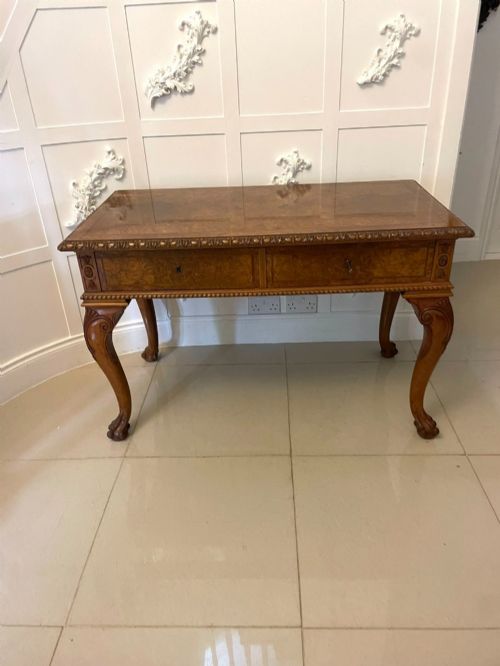
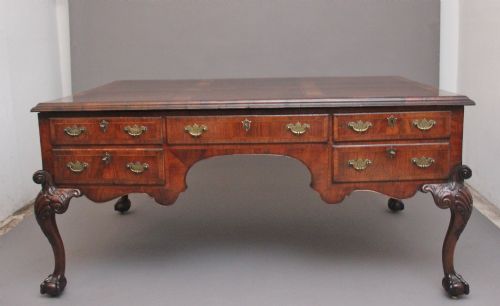
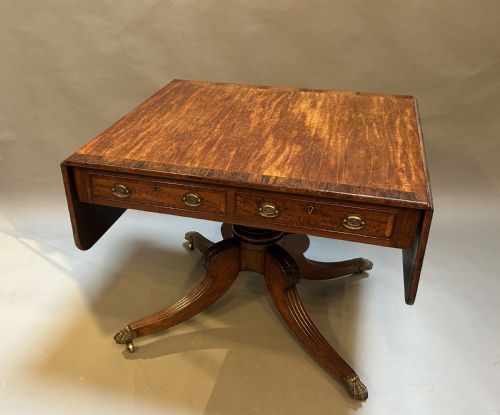
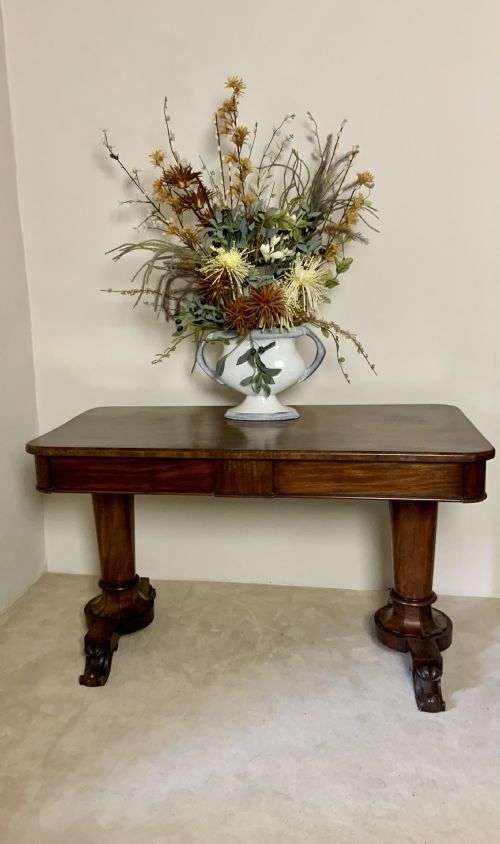
A claw foot writing table encompasses various forms designed for working and reading, ranging from pedestal desks to sofa tables and library tables. When exploring a claw foot writing table, buyers encounter pieces originating from the eighteenth century through to the twentieth century, with strong representation from the Regency, William IV, and Georgian periods.
Makers utilised rich timbers such as mahogany, rosewood, walnut, and oak to construct these practical items. Many examples incorporate leather writing surfaces and brass details, reflecting the functional requirements of domestic and professional studies in past eras.
How they were made
Cabinet makers constructed these tables using solid hardwoods like mahogany and oak, frequently applying veneers such as flame mahogany and burr walnut to primary surfaces. These woods provided both structural stability and a decorative grain pattern suited to formal interiors.
Secondary materials such as brass featured prominently in hardware and feet, while leather inserts provided a durable writing plane. Joinery techniques ensured that large library and pedestal formats could support heavy volumes and daily use without losing structural integrity.
Claw Foot Writing Table Retail Price Guide 2026
Typical asking prices for claw foot writing table among the pieces listed under this phrase on Sellingantiques today, from the lower quarter to the upper quarter. They describe what is for sale here now, not the wider market.
Listings feature woods including burr walnut, flame mahogany veneer, and rosewood across periods spanning the eighteenth to the twentieth century.
What varies in quality
The choice of timber and veneer determines the visual impact of a piece, with figured grains and dense hardwoods marking out superior examples. Finely carved wooden paw feet require considerable skill from the carver, separating standard joinery from exceptional craftsmanship.
Proportion and the integration of functional elements, such as rotating tops or leather inserts, influence the overall calibre of a desk. Original brass mounts and consistent patina across the timber distinguish pieces that retain their integrity from those altered over time.
The Claw Foot Writing Table Glossary
- Pedestal desk
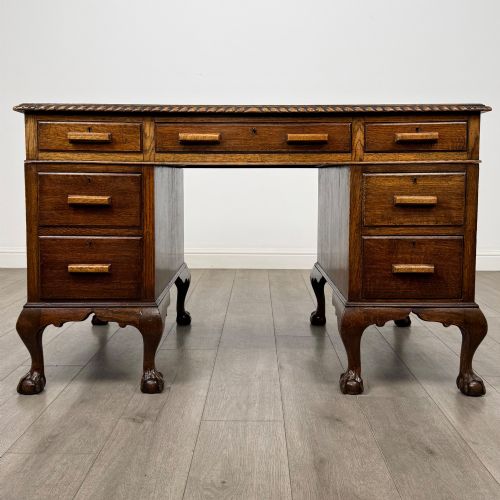
- A heavy writing desk supported by two pedestals of drawers with a central recess. These forms offer substantial storage beneath the main writing surface.
- Drum table
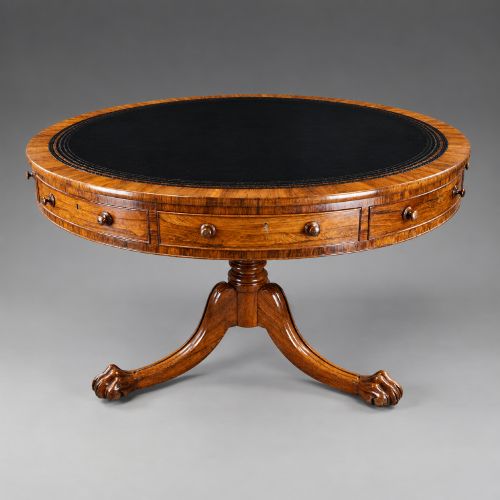
- A circular library table containing drawers around the perimeter of the frieze, often revolving on a central pillar. They stand firmly on tripartite or quadruped bases.
- Sofa table
- A rectangular occasional table designed to stand in front of a sofa, typically featuring drop leaves at either end. They emerged during the Regency and Georgian periods.
- Flame mahogany
- A veneer cut from timber where the grain branches, creating a distinctive pattern resembling flickering flames. Cabinet makers prized this figure for prominent desk surfaces.
- Partners desk
- A large double-sided desk built with drawers and cupboards on both faces to accommodate two people working opposite each other. These pieces demand significant floor space.
Claw Foot Writing Table: Frequently Asked Questions
What is a claw foot writing table used for?
These tables served as functional workspaces for correspondence, administration, and reading in studies or libraries. Their sturdy construction allowed them to hold heavy ledgers and writing equipment.
Today, owners utilise them as functional desks or statement pieces in living areas and home offices, blending historic character with daily utility.
How do I identify a Regency writing table?
Regency pieces often display classical architectural influences, featuring dark timbers like rosewood alongside contrasting brass inlay and mounts. Their supports frequently draw on ancient Greek or Roman motifs.
Checking the secondary woods and construction methods helps confirm the period, distinguishing genuine early nineteenth-century work from later revivals.
Are these tables suitable for modern laptops?
Many larger pedestal and library formats provide ample surface area and legroom to accommodate contemporary technology comfortably. Leather inserts offer a stable, protective plane for daily use.
Buyers should verify internal drawer dimensions and kneehole heights to ensure the table matches modern seating requirements.
What timber was most common?
Mahogany dominated cabinet making throughout the eighteenth and nineteenth centuries due to its strength, rich colour, and responsiveness to carving. Rosewood and walnut also appeared frequently in high-status commissions.
Oak served extensively for structural framing and earlier regional pieces, offering robust durability over centuries of use.