

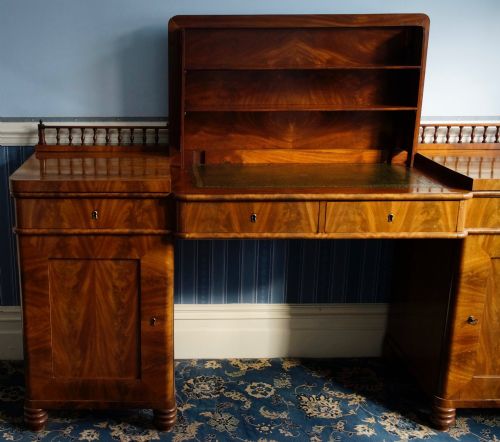
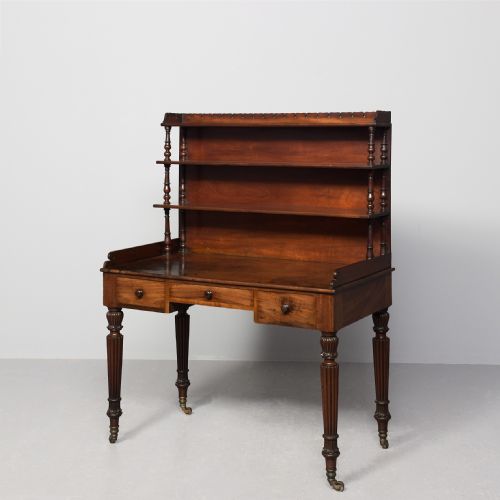
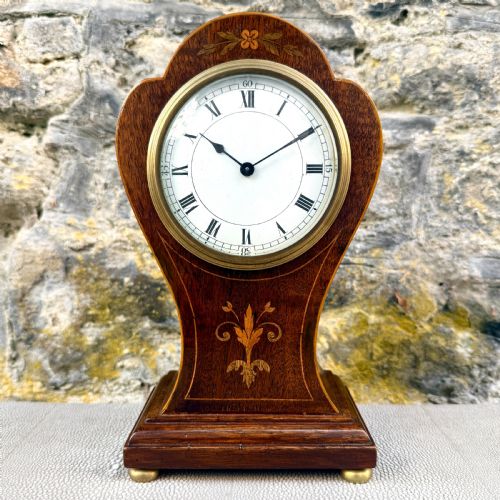
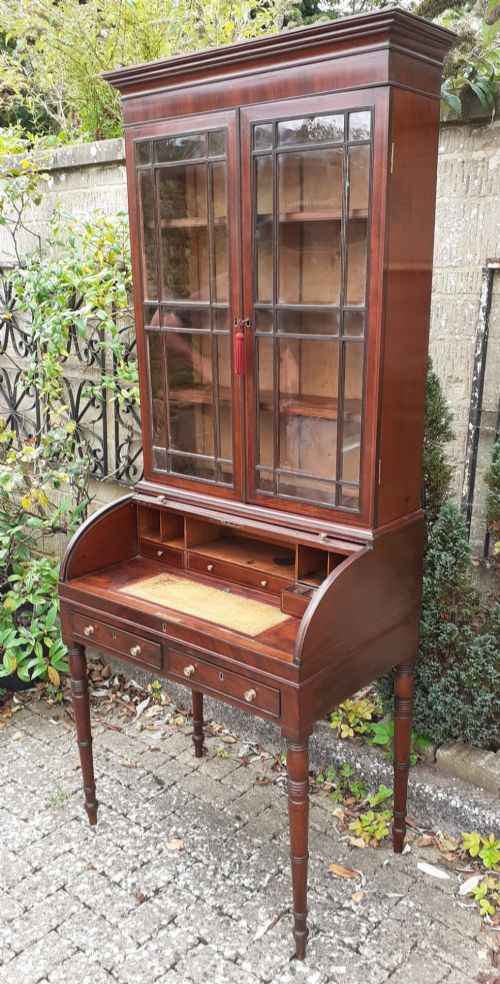
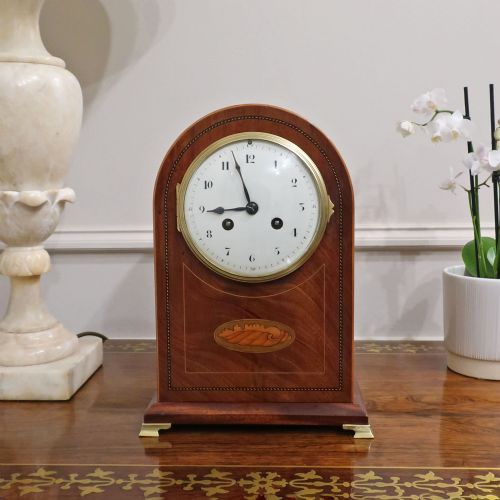
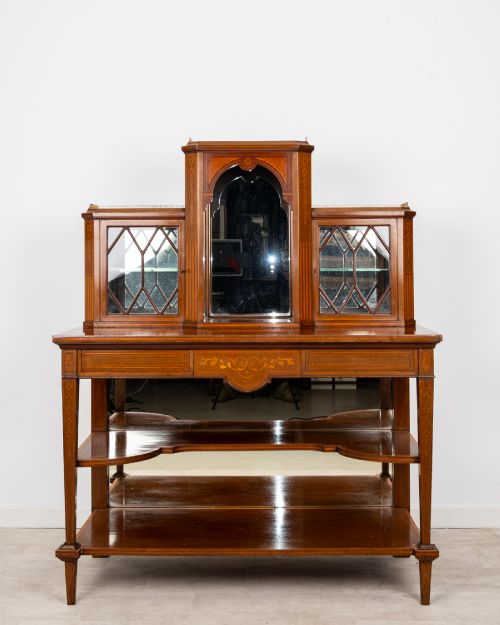
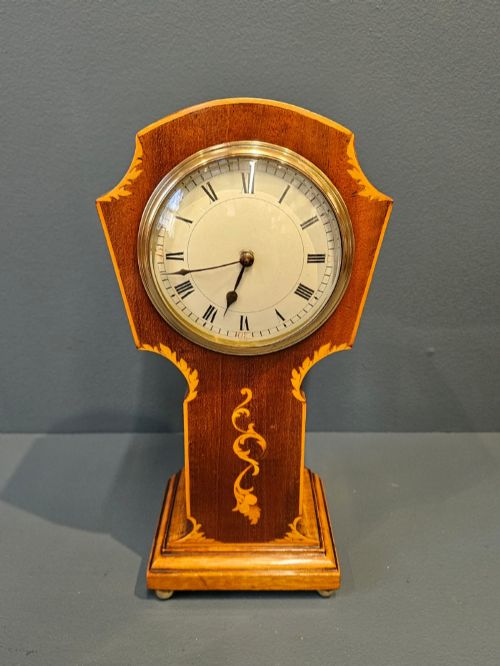
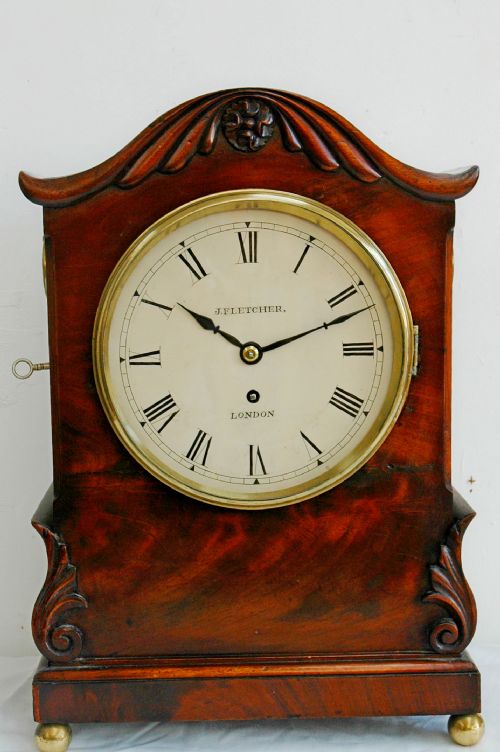
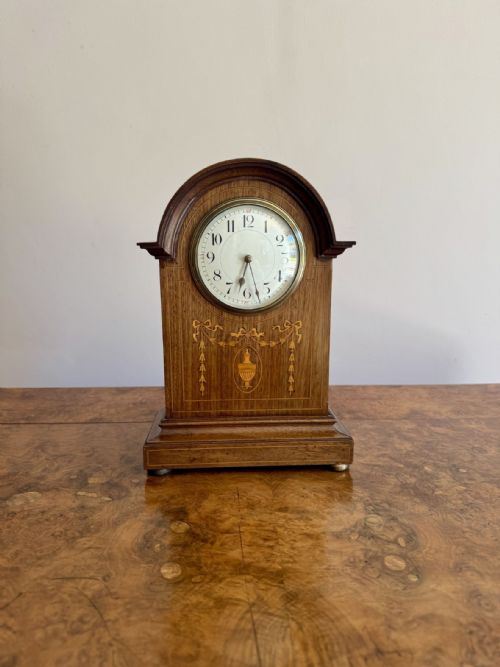

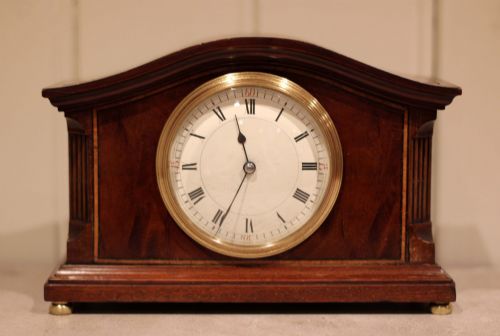


Mahogany Desk with Shelves
Mahogany desk with shelves combines sturdy timber workspace and upright storage, drawing collectors who need practical elegance in a study.
Mahogany Desk with Shelves
A mahogany desk with shelves brings together writing surfaces and built-in vertical storage across multiple historical eras. Surviving examples span Georgian, Regency, Victorian, and Edwardian periods.
The form shifts between writing desks, bureau bookcases, and bonheur du jour variants. Upright shelving tiers or cabinets sit directly above the main writing surface.
Makers often integrated compartments, drawers, and glazed or open shelves to maximise utility in libraries and drawing rooms. Timber selection dictates much of the visual character.
Materials and construction methods
Cabinet makers utilised dense mahogany as the primary timber, often enhanced with satinwood or rosewood inlay. Brass hardware and leather inserts frequently complete the writing surfaces.
Joinery techniques involve precision dovetailing for drawers and secure framing for upper shelf tiers. Glass panels appear in cabinet doors alongside mirrored elements in specific writing furniture.
Mahogany Desk with Shelves Retail Price Guide 2026
Typical asking prices for mahogany desk with shelves among the pieces listed under this phrase on Sellingantiques today, from the lower quarter to the upper quarter. They describe what is for sale here now, not the wider market.
Listings for mahogany desk with shelves span Georgian, Regency, Victorian, and Edwardian periods, incorporating brass, glass, satinwood, and leather.
Judging quality in tiered writing furniture
Quality rests upon the selection of timber grain and the precision of inlaid details such as satinwood borders. Superior workshops maintained rigorous standards in structural joinery and hardware attachment.
Exhibition pieces demonstrate finer hand-carving and more complex internal compartments than standard utility writing furniture. The integration of the upper shelf back must balance weight and visual proportion.
James Mein of Kelso·Tudor & Burrey
The Mahogany Desk with Shelves Glossary
- Bonheur du jour
- A light lady writing desk featuring an upper section of small drawers and shelves. This form gained popularity during the eighteenth and nineteenth centuries.
- Escritoire
- A writing cabinet featuring a fall-front flap that conceals inner compartments. It provides both workspace and enclosed storage.
- Bureau bookcase
- A combination of a sloping-front desk and a fitted bookcase top. It offers substantial storage capacity within a single tall frame.
- Inlay
- A decorative technique where contrasting woods like satinwood are embedded into the mahogany surface. It creates geometric or floral patterns.
- Two-tier reading table
- A low table featuring stacked surfaces for books and papers. These pieces often date from the early nineteenth century.
Mahogany Desk with Shelves: Frequently Asked Questions
What periods do these desks cover?
These pieces date from the eighteenth century through to the Edwardian era, spanning Georgian, Regency, and Victorian periods. Each era brings distinct stylistic touches to the framing and shelves.
Craftsmanship evolved over these decades, shifting from heavy architectural proportions to lighter, inlaid writing furniture.
How do I identify a bureau bookcase?
A bureau bookcase combines a sloping fall-front writing desk with an upper shelving or cabinet section. The interior houses small pigeonholes and drawers for correspondence.
The lower section provides a slant-lid surface that opens outward for writing, supported by internal wooden arms.
What woods are used besides mahogany?
Makers frequently incorporated satinwood and rosewood for contrasting inlay work and decorative banding. Brass fittings and leather writing surfaces also appear across the surviving pieces.
Secondary woods form the internal drawer linings and hidden structural framing beneath the visible exterior surfaces.
Where were these desks placed?
These pieces suited libraries, studies, and drawing rooms where correspondence and reading materials required organised storage. Compact versions functioned in private dressing rooms.
The upright shelves kept reference books and paperwork close at hand without cluttering the main writing area.