
Mahogany Desk with Gallery
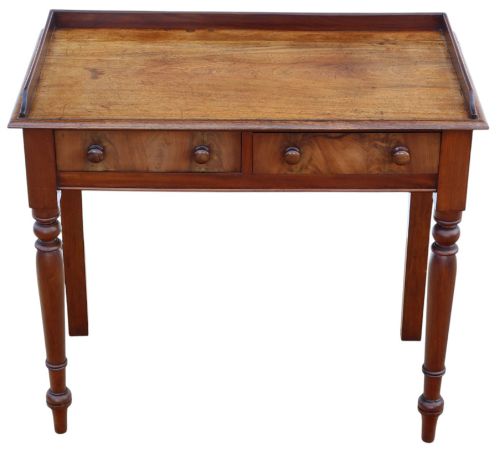
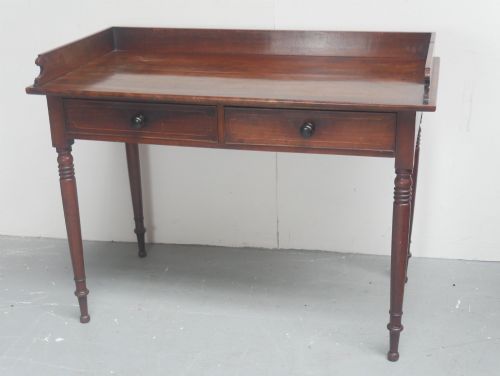
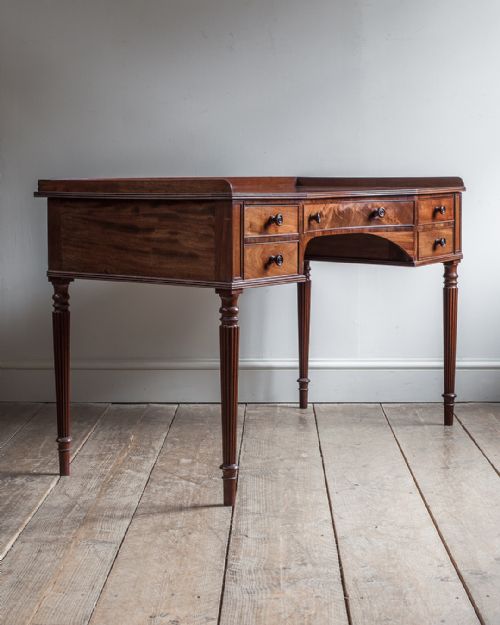
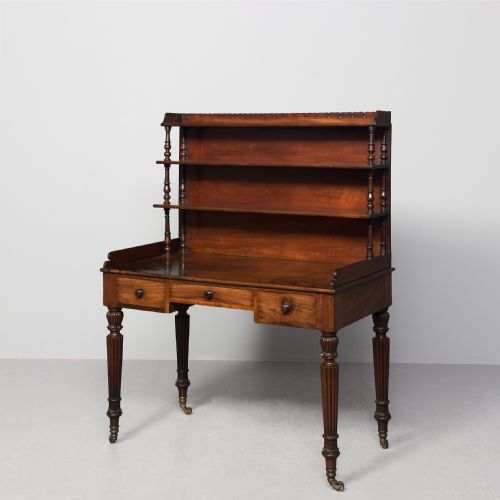
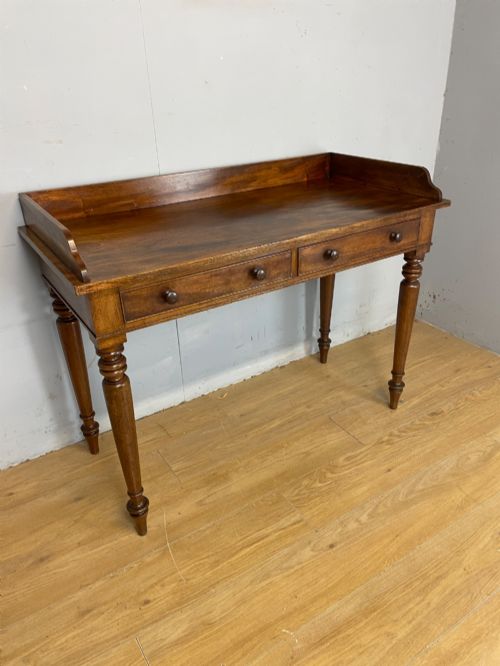
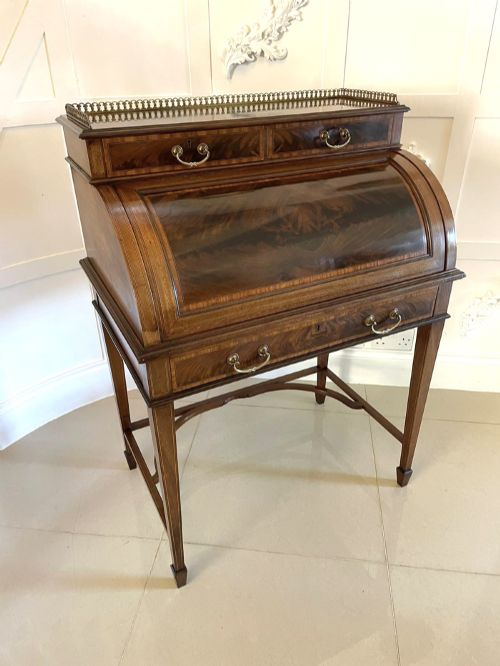
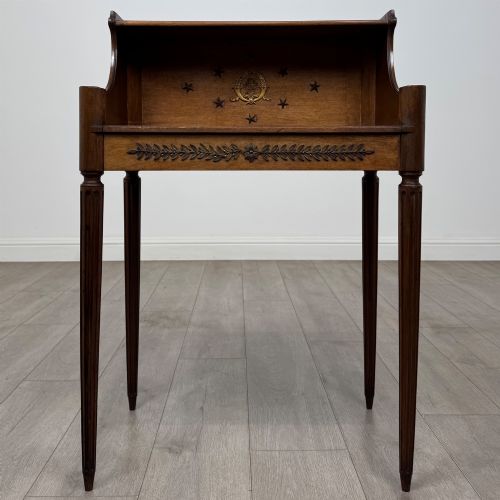
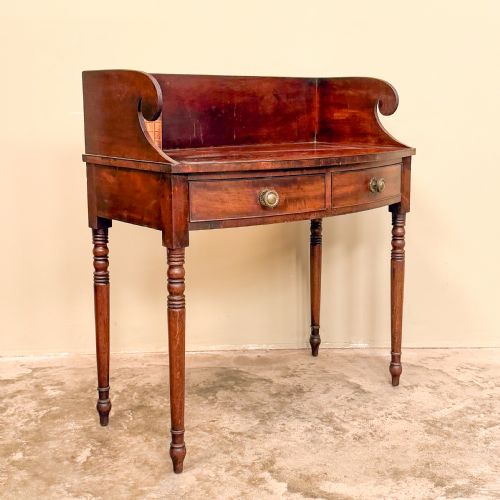
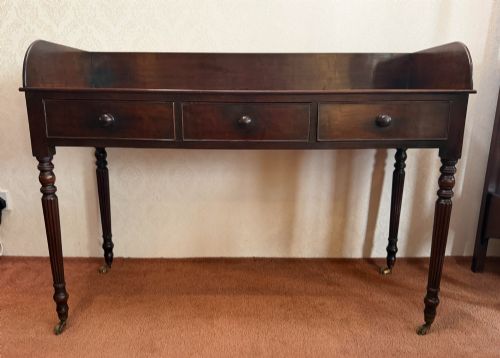
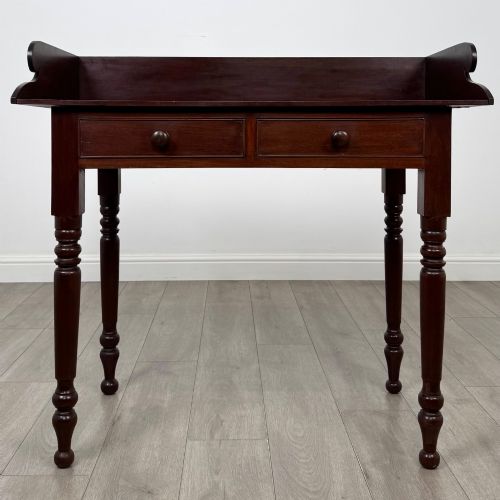
Mahogany desk with gallery pieces combine rich timber warmth with a protective upstand, offering a practical workspace shaped by Georgian, Regency, and Victorian hands.
Mahogany Desk with Gallery
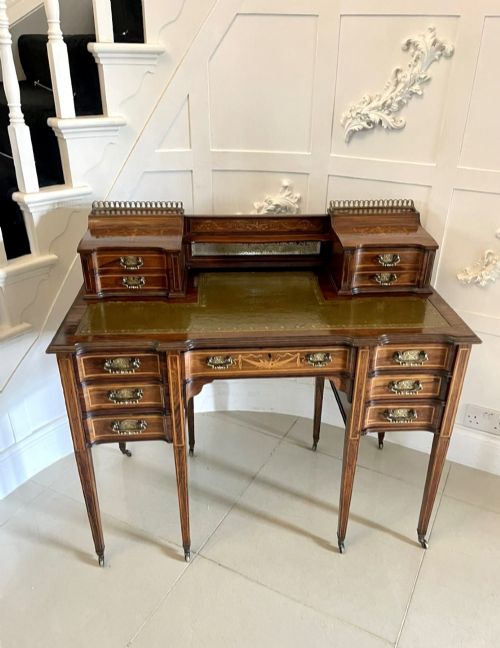
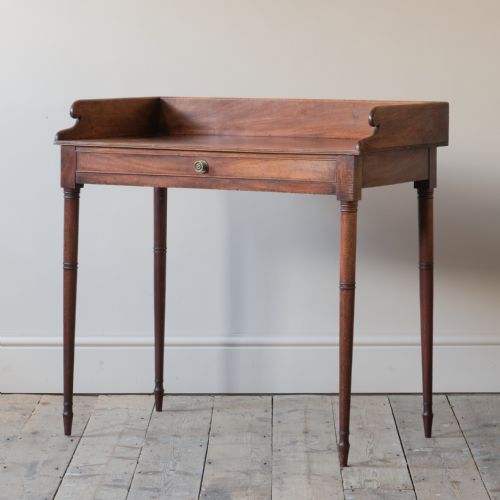
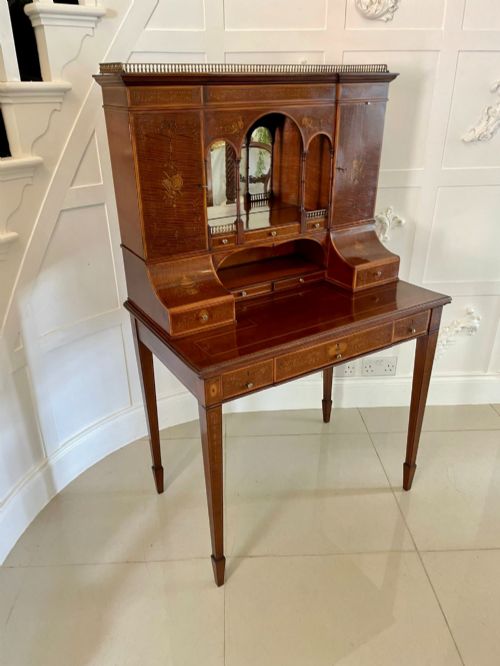
A mahogany desk with gallery is a traditional workspace defined by a raised wooden or metal rim around the upper surface. These pieces span several distinct eras, appearing in Georgian, Regency, Victorian, and Edwardian iterations.
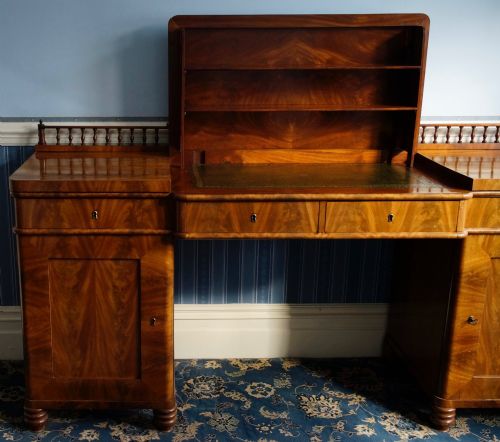
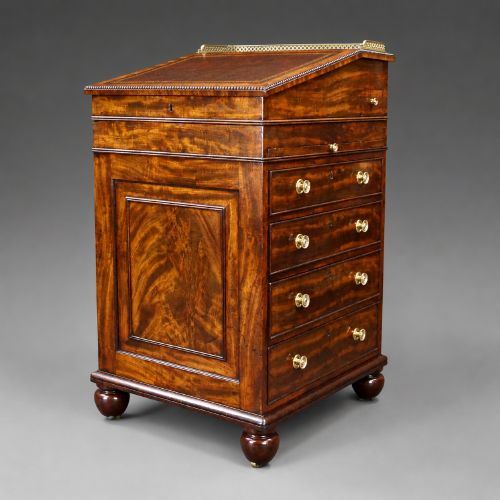
Buyers encounter various forms ranging from compact writing tables and Davenport desks to larger pedestal writing desks and serpentine-fronted tables. The timber itself anchors the aesthetic, often enhanced by inlay or brass details.
Origins stretch across the nineteenth century into the early twentieth, reflecting changing domestic habits where letter writing and household administration required dedicated, orderly furniture.
Materials and Construction Techniques
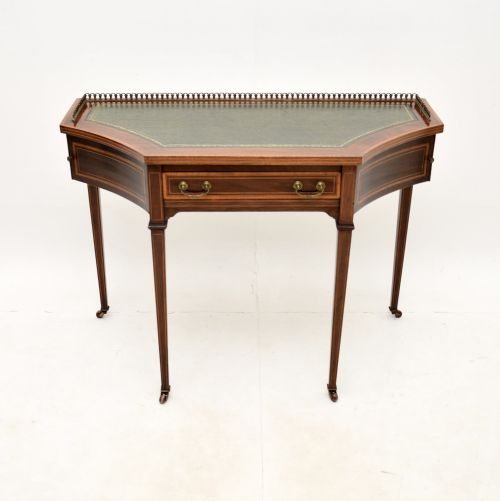
Cabinetmakers relied heavily on solid mahogany and flame mahogany veneers, sometimes pairing the primary timber with contrasting satinwood inlay. These surfaces often incorporated inset leather writing panels for a durable writing plane.
Structural embellishments frequently included brass galleries, marble tops, and castors for mobility. Construction methods demanded precise joinery to house drawers securely within serpentine or bow-fronted carcases.
Mahogany Desk with Gallery Retail Price Guide 2026
Typical asking prices for mahogany desk with gallery among the pieces listed under this phrase on Sellingantiques today, from the lower quarter to the upper quarter. They describe what is for sale here now, not the wider market.
Form variations include writing tables, side tables, dressing tables, washstands, and Davenport desks.
Distinctions in Quality
Quality rests in the selection of the timber grain, where highly figured flame mahogany commands greater attention than plain stock. The crispness of the inlay and the integration of the gallery upstand reveal the maker's hand.
Subtleties in proportion and the secondary woods used inside drawers differentiate standard workshop production from finer cabinet work. Original hardware, such as brass galleries and functioning locks with keys, elevates the piece.
Gillows·James Mein of Kelso·Maples·Maple of London·Liberty
The Mahogany Desk with Gallery Glossary
- Gallery
- A raised border or rail around the edge of a tabletop or shelf designed to keep items from rolling off. This feature is often constructed from pierced brass or shaped mahogany.
- Davenport desk
- A compact box-form writing desk featuring a sloping lid and side drawers. It gained popularity during the Regency and Victorian periods.
- Escritoire
- A writing cabinet or desk containing drawers and pigeonholes behind a fold-down or drop-front writing surface. These pieces often display fine veneer work.
- Flame mahogany
- A highly figured wood grain pattern resembling flickering flames, achieved by cutting across the branch junctions of the tree. Cabinetmakers reserved this timber for prominent surfaces.
- Pedestal desk
- A large freestanding desk comprising two independent pedestals of drawers supporting a wide writing top. They frequently incorporate inset leather writing surfaces.
Mahogany Desk with Gallery: Frequently Asked Questions
How do I date a mahogany desk?
Dating relies on observing structural characteristics, hardware styles, and timber preparation. Georgian and Regency pieces often show hand-cut dovetails and simpler internal framing.
Victorian and Edwardian examples may introduce machine-sawn elements, heavier proportions, or specific revival ornamentations like Sheraton style inlays.
Were these desks used for writing?
These pieces served as the primary administrative hubs for correspondence, household accounts, and diary keeping before the dominance of modern office furniture.
The inclusion of specialised writing surfaces, pigeonholes, and drawers catered directly to the stationery needs of the household.
What is flame mahogany?
Flame mahogany is a decorative veneer cut from the branch forks of the mahogany tree. The resulting grain exhibits a dramatic, undulating pattern resembling flickering flames.
Cabinetmakers placed these distinctive veneers on prominent drawer fronts and writing flaps to catch the light and display wealth.