


Nineteenth Century Washstand
A nineteenth century washstand is a practical bedroom fixture built for the daily wash, bringing period craft and solid timbers directly into the modern home.
Nineteenth Century Washstand
When searching for a nineteenth century washstand, collectors encounter pieces designed for the bedroom before plumbed bathrooms became standard. These items served as dedicated stations for morning ablutions, holding basins, ewers, and associated sanitary wares.
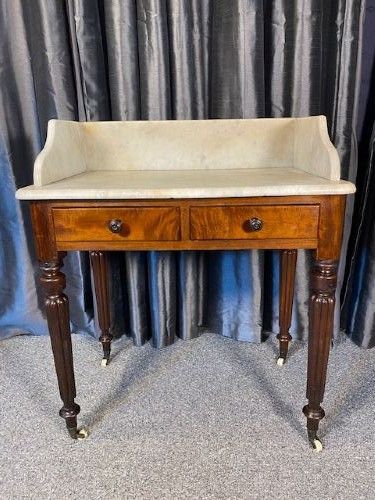
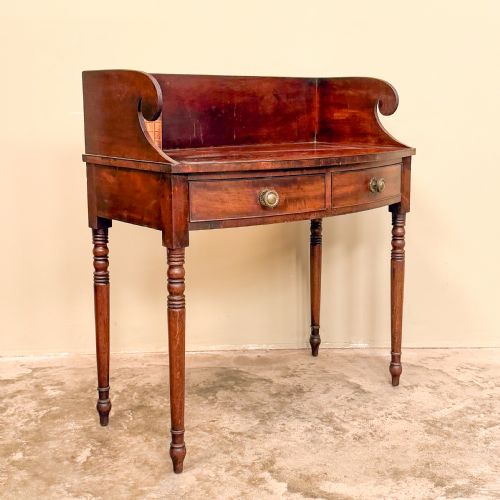
The versions most commonly met on this page span the 19th century, drawing on periods from the Regency era through to Victorian times. They appear in forms ranging from simple single-drawer tables to architectural William IV designs.
Alongside the primary stands, related items such as jug and basin sets, soap dishes, towel rails, and bedside tables frequently accompany the search. Mahogany predominates among the materials, supplemented by walnut, pine, and ironstone ceramics.
How they were made
Joiners built these pieces primarily using solid mahogany and walnut, often selecting dense hardwoods capable of withstanding daily contact with water. Brass mounts, handles, and campaign fittings provided structural reinforcement and functional mobility.
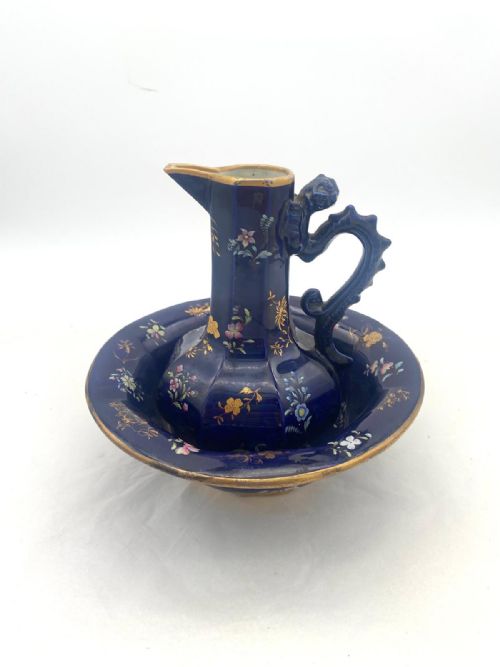
Potters shaped the matching sanitary wares from ironstone and ceramic bodies, applying detailed glazes and patterns such as the Japan basket design. Some pieces incorporated white Carrara marble tops to provide a durable, waterproof surface for washing.
Nineteenth Century Washstand Retail Price Guide 2026
Typical asking prices for nineteenth century washstand among the pieces listed under this phrase on Sellingantiques today, from the lower quarter to the upper quarter. They describe what is for sale here now, not the wider market.
The styles recorded on this page range from Regency and William IV to broader Victorian country and campaign designs.
What varies in quality
The distinction between standard examples and superior pieces rests on the choice of timber and the sophistication of the hardware. Finely figured mahogany and robust brass campaign mountings signal workshops that catered to higher-status clients.
Ceramic quality is judged by the crispness of the glaze and the preservation of hand-applied patterns on ironstone jugs and basins. Matched sets that retain their original basins and soap dishes command greater interest than those separated over time.
The Nineteenth Century Washstand Glossary
- Campaign washstand
- A folding or modular piece designed for travel, typically fitted with brass corners, recessed handles, and screw-off legs for easy transport.
- Ironstone
- A heavy, durable type of semi-vitrified earthenware patented in the early nineteenth century, prized for resisting chips while mimicking Chinese porcelain.
- Carrara marble
- A fine white or blue-grey stone quarried in Italy, frequently cut into slabs to top washstands because it resists water damage.
- Mazarine
- A deep blue colour often used in nineteenth-century ceramic decoration, seen across octagonal jugs and bowls.
- William IV
- A British architectural style spanning the 1830s, characterised by classical proportions, heavy scrollwork, and substantial mahogany construction.
Nineteenth Century Washstand: Frequently Asked Questions
What is a nineteenth century washstand?
A nineteenth century washstand is a wooden bedroom table equipped to hold a ceramic jug and basin for morning washing before indoor plumbing.
These pieces often include drawers for soap and towels, and some feature marble tops to protect the wood from splashes.
How were campaign washstands used?
Campaign washstands were built for officers and travellers on the move, designed to dismantle or fold compactly for transit.
They rely on brass mounts and screw-in legs to withstand frequent packing while maintaining a sturdy frame when assembled.
How do I identify a William IV washstand?
William IV washstands display classical architectural forms, often featuring bold mahogany timbers and substantial turned legs from the 1830s.
They frequently appear as matched pairs or heavier bedside tables reflecting the classical taste of the period.
What are ironstone jugs and basins?
Ironstone jugs and basins are durable ceramic vessels made to hold water for washing at the stand.
They feature hard, vitreous bodies covered in glossy glazes, often decorated with colourful patterns like the Japan basket design.