

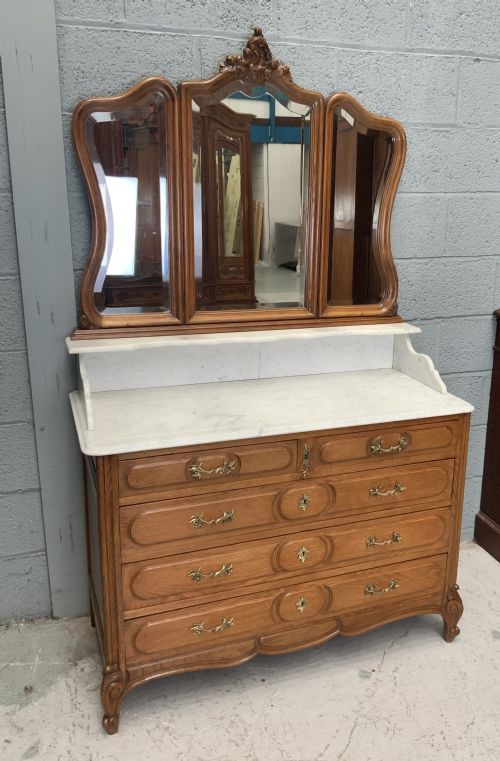


White Marble Vanity
White marble vanity pieces bring cool stone surfaces and traditional timber frames into modern rooms.
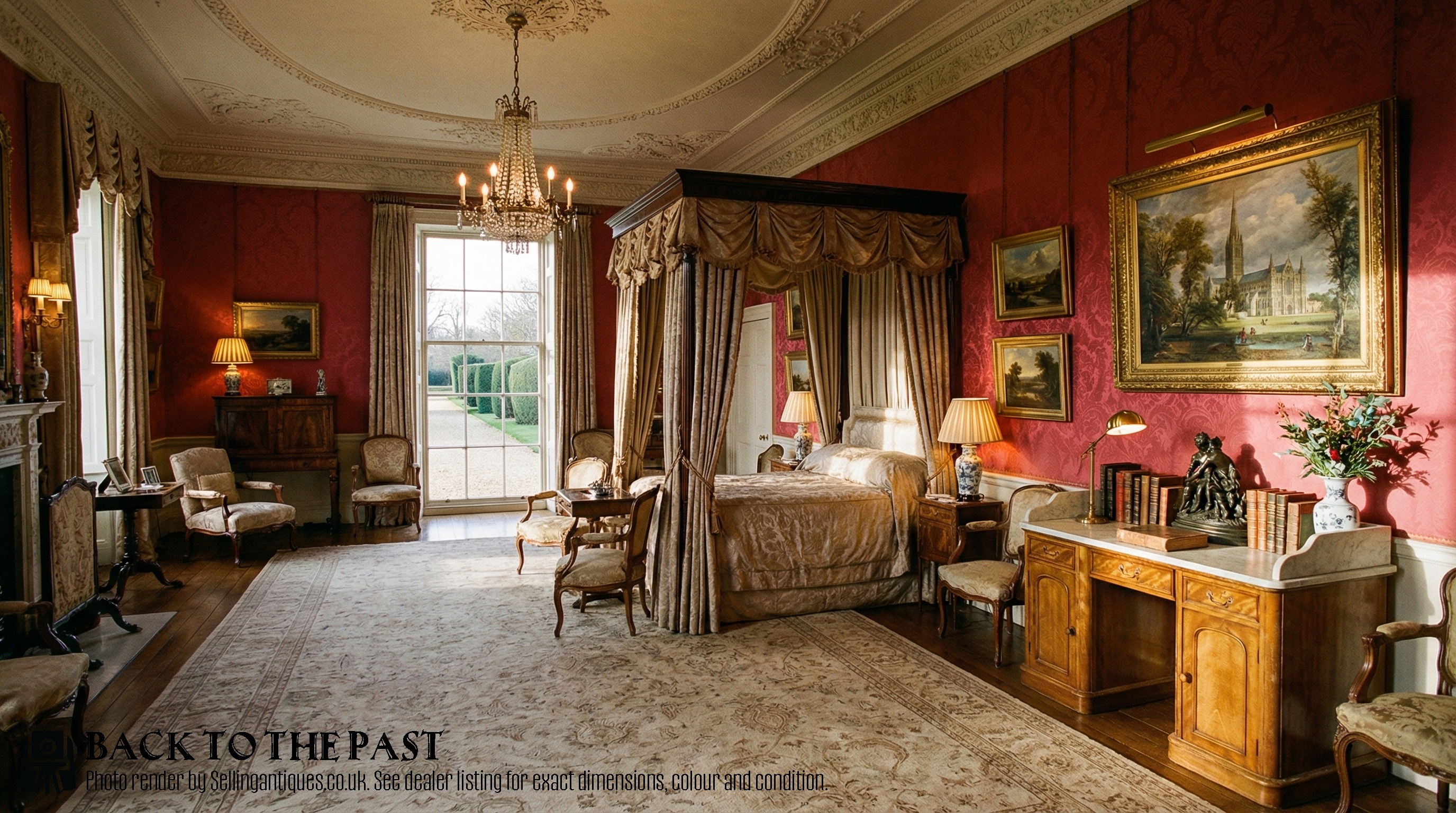
White Marble Vanity
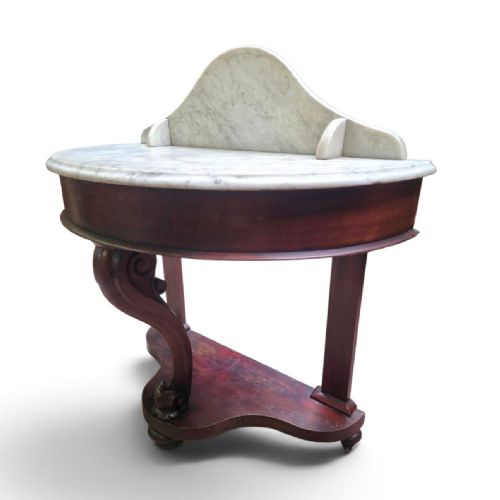
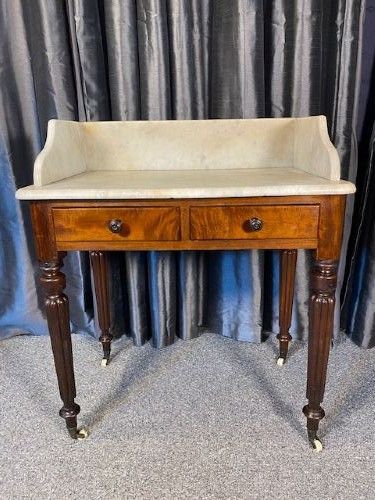
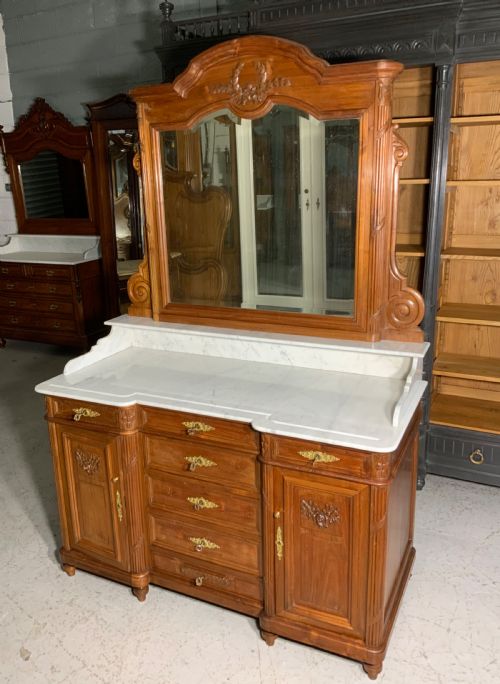
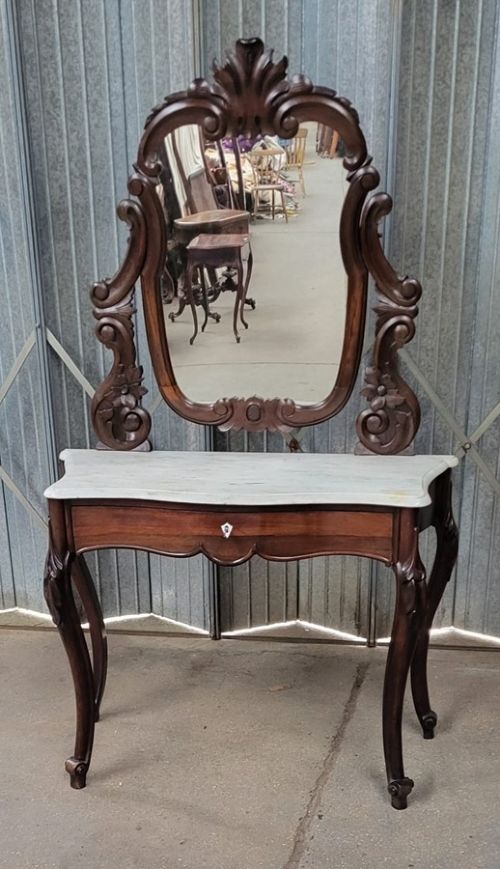
White marble vanity examples on this page primarily consist of washstands and dressing tables dating from the nineteenth and early twentieth centuries. These pieces combine heavy stone slabs with timber frames in oak, mahogany, walnut, and satinbirch.
Buyers encounter French provincial and revival styles alongside Victorian and Edwardian English designs. Forms range from dedicated washstands with tiled or wooden backs to dressing tables and side tables.
The integration of marble tops with wooden cabinetry defines the category, serving both functional and decorative roles in period interiors. Pieces frequently incorporate mirrors or secondary shelving.
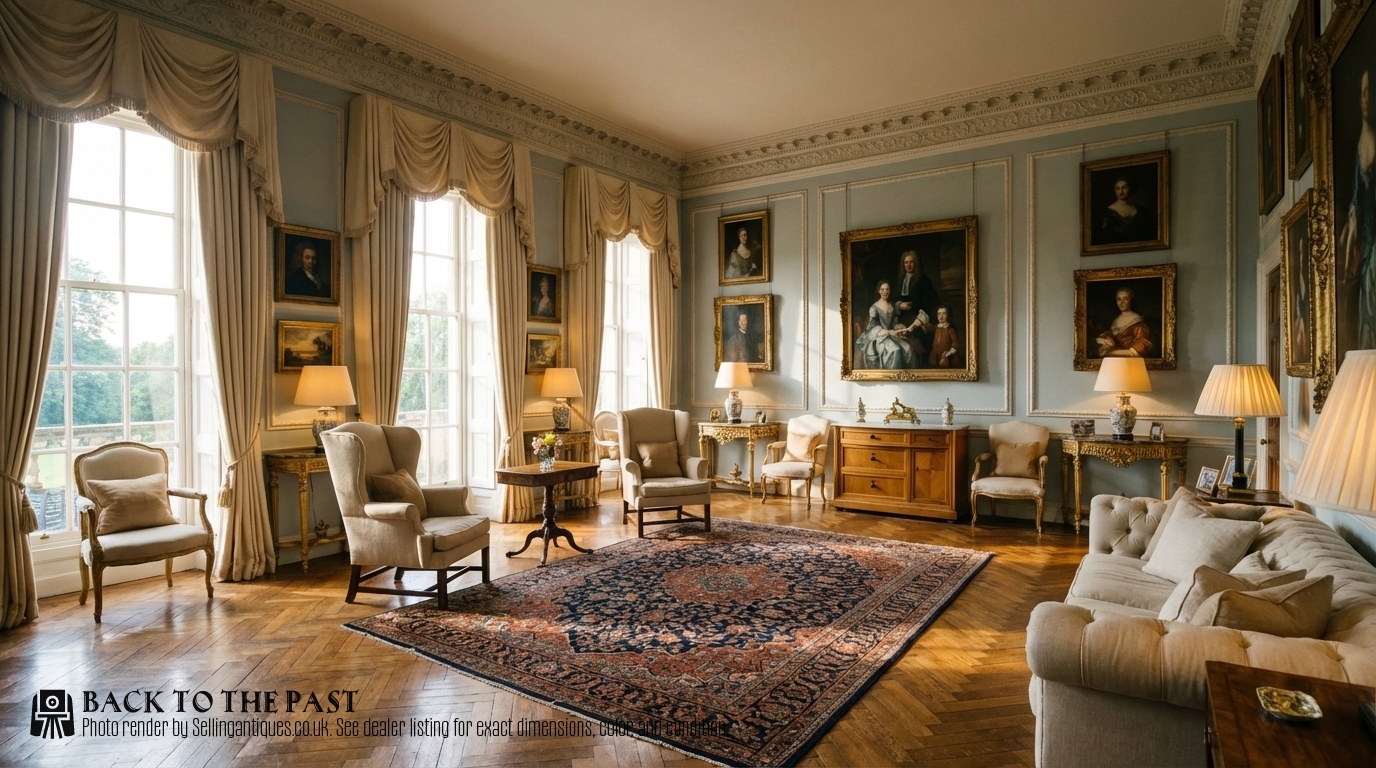
Materials and construction methods
Makers utilised solid timbers such as mahogany, oak, and walnut to build robust support structures for heavy stone tops. Joinery methods relied on traditional cabinet-making techniques to bear the significant weight of the marble.
Marble slabs were cut, surfaced, and fitted directly onto wooden carcases, occasionally paired with ceramic basins or brass hardware. Secondary woods and painted finishes appear alongside polished hardwood surfaces.
White Marble Vanity Retail Price Guide 2026
Typical asking prices for white marble vanity among the pieces listed under this phrase on Sellingantiques today, from the lower quarter to the upper quarter. They describe what is for sale here now, not the wider market.
Materials recorded across the selection include solid mahogany, oak, walnut, painted wood, brass, and glass.
Assessing quality and craftsmanship
Quality separates simple utility furniture from finer decorative examples through the selection of timber and the carving detail on frames. Carved walnut and mahogany pieces demonstrate higher levels of artisanal work than plain painted wood.
The thickness and figuring of the marble top alongside the integrity of the original wood finish determine the overall standing of an individual piece. Matching the stone accurately to the base structure indicates superior original assembly.
The White Marble Vanity Glossary
- Washstand
- A piece of bedroom furniture designed for washing, typically fitted with a stone top to resist water splashes. These often include splashbacks and storage cupboards.
- Satinbirch
- A pale, figured timber derived from birch trees, used in Victorian cabinet-making for its reflective grain. It provides a lighter alternative to mahogany.
- French Rococo Revival
- A nineteenth-century revival style characterised by asymmetrical scrollwork, flowing curves, and ornate natural motifs. This style appears frequently on Continental dressing tables.
White Marble Vanity: Frequently Asked Questions
What is a white marble vanity used for?
These pieces served as functional bedroom furniture for personal grooming and washing before plumbed bathrooms became standard. Today, buyers repurpose them as stylish washbasin stands or hallway tables.
The stone surface provides a practical, water-resistant area while the timber cabinetry offers storage for everyday items.
How do I care for the marble top?
Marble is a porous stone that reacts to acids, oils, and standing water if left unsealed. Cleaning requires gentle, non-abrasive soaps and immediate wiping of spills to protect the surface polish.
Regular maintenance preserves the natural veining and prevents staining over years of daily domestic use.
How do I distinguish Victorian from Edwardian pieces?
Victorian furniture tends to feature heavier timbers, darker finishes, and more elaborate carved ornamentation. Edwardian items often display lighter proportions and simpler lines influenced by transitional tastes.
Examining the secondary woods and structural hardware helps confirm the specific manufacturing decade.
Can these pieces be used in modern bathrooms?
Many buyers adapt antique washstands to hold modern plumbing fixtures and countertop basins. The stone top requires professional drilling to accommodate modern water pipes and waste fittings.
Proper waterproofing of the surrounding timber ensures the antique frame withstands high-moisture environments.