

Antique Marble Commode
An antique marble commode brings solid French craftsmanship and polished stone surfaces to any room.
Antique Marble Commode
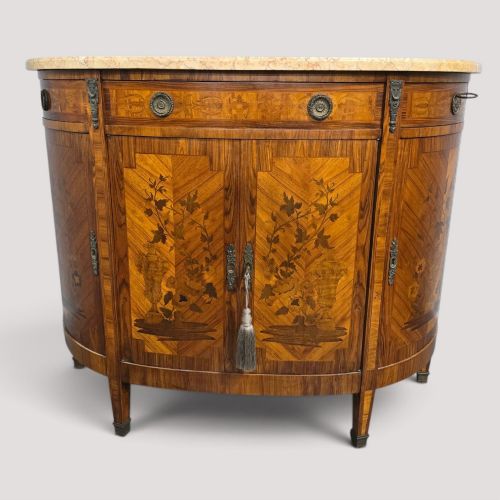
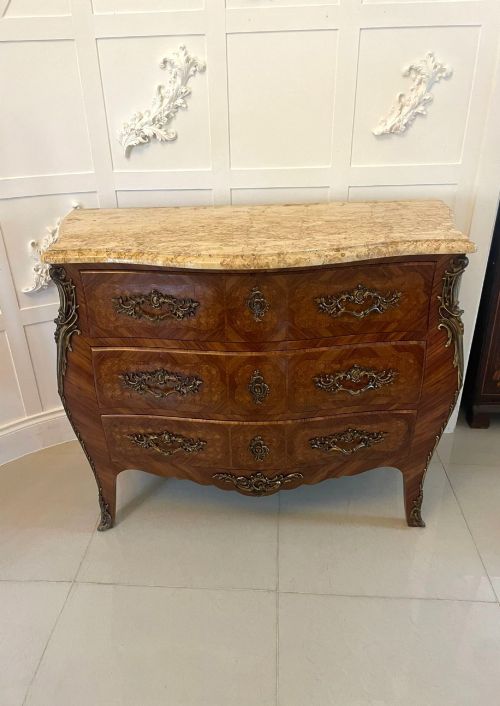
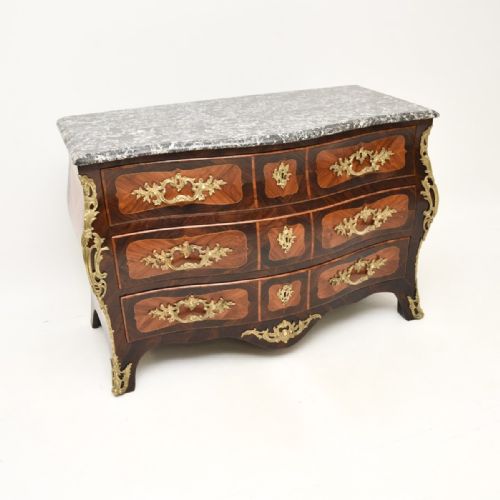
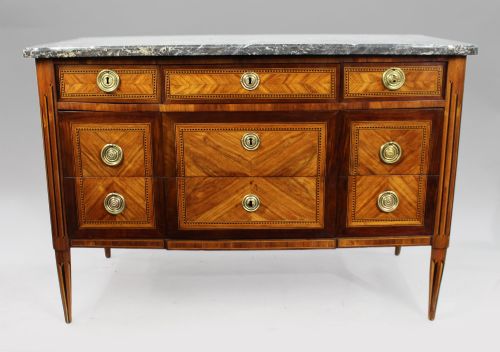
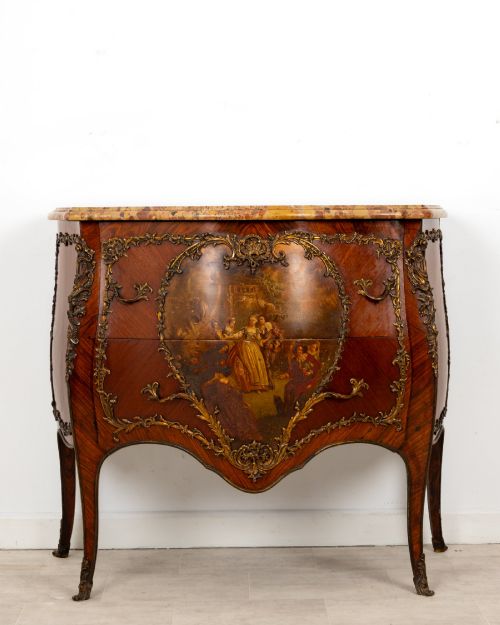
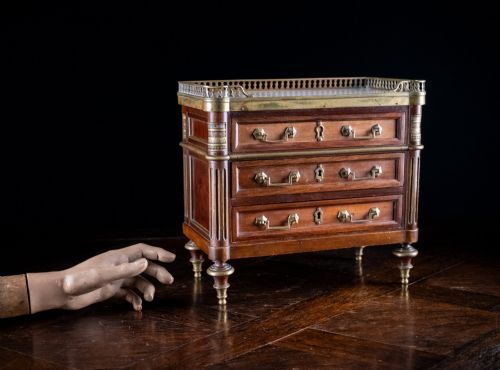
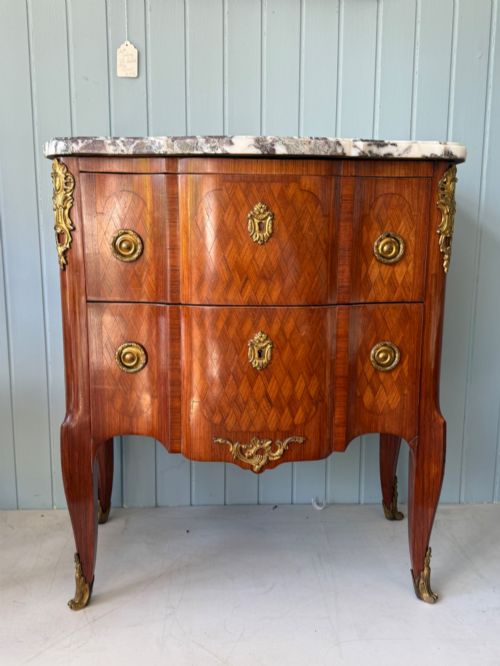
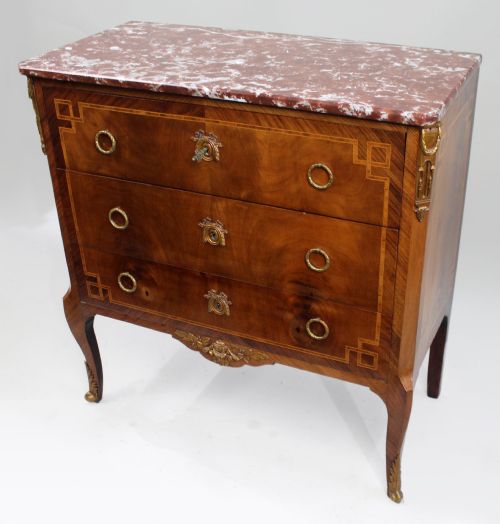
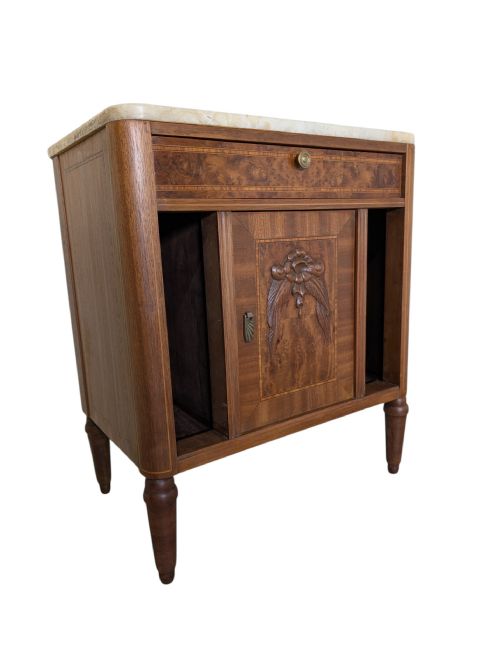
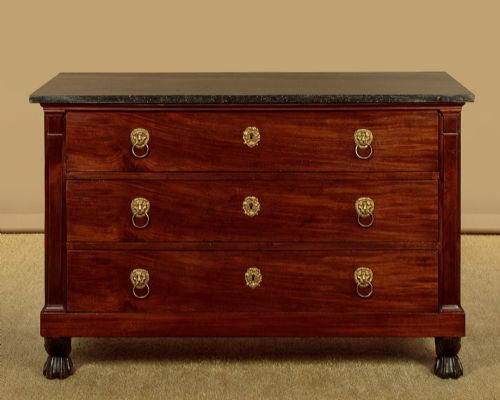
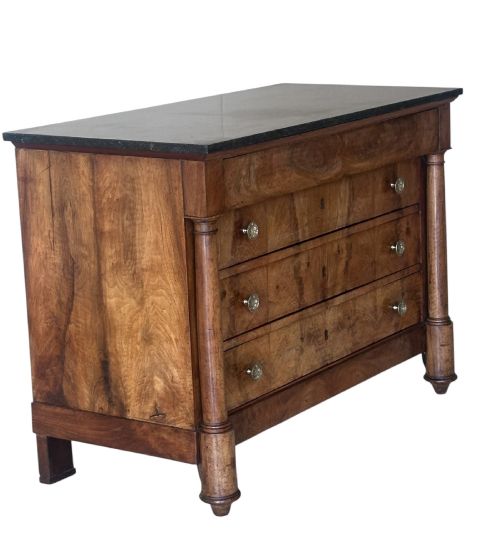
When searching for an antique marble commode, buyers encounter low chests of drawers, bedside cabinets, and side cabinets primarily originating from France across the eighteenth and nineteenth centuries. These pieces combine substantial wooden storage carcasses with fitted stone tops, often following Louis XV, Louis XVI, or Empire design traditions.
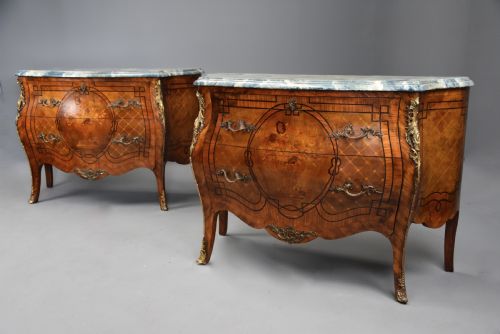
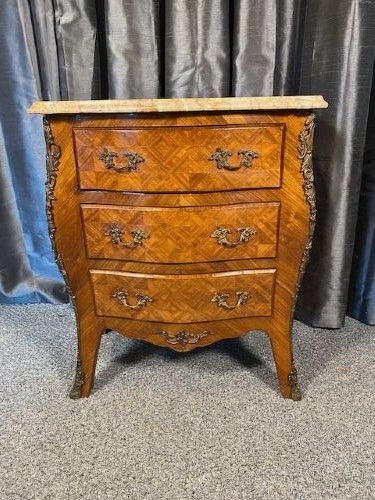
The most common examples on this page date from the nineteenth century, including revival styles that mirror earlier court aesthetics. Alongside standard chest formats, variations include serpentine shapes, bombe profiles, and demi-lune cabinets designed for specific interior placements.
Origins stretch from Parisian workshops to provincial centres, utilising local timbers such as cherrywood, walnut, and oak alongside imported veneers. Regional pieces show simpler lines, while metropolitan examples frequently display elaborate marquetry and gilt-bronze mounts.
Materials and construction methods
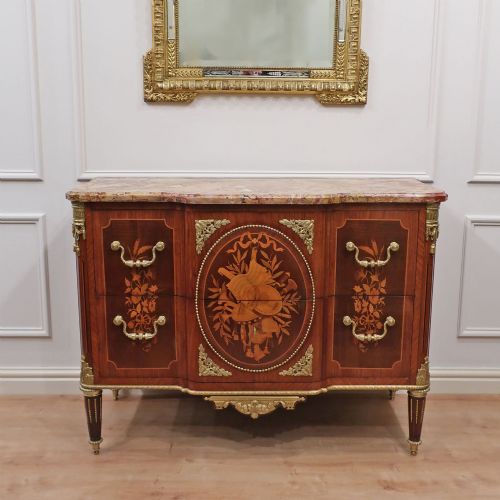
Carcasses are built from solid timbers like walnut, mahogany, oak, and cherrywood, often serving as a base for intricate kingwood, tulipwood, or floral parquetry and marquetry veneers. Cabinetmakers shaped these wooden frames using traditional joinery before applying decorative surface treatments.
Marble slabs cut to follow the exact contour of the chest top provide a durable, polished counter surface. These tops rest unattached or pinned to the wood, varying in colour from grey and white to rouge and verde alpi.
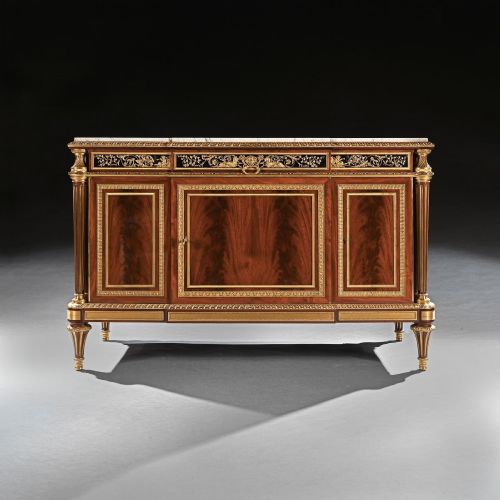
Cast bronze, ormolu, and brass mounts accent the corners, drawer pulls, and aprons of finer cabinets. These metal elements are secured with pins or screws, framing the wood panels and stone edges.
One notable archived piece carries a history of ownership by the celebrated actress and nineteenth-century icon Lilly Langtry.
Distinguishing quality tiers
The grade of an antique marble commode depends on the precision of its marquetry patterns and the selection of timber veneers. Master cabinetmakers aligned wood grains meticulously across drawer fronts, whereas lower-tier pieces rely on plain mahogany or walnut boards without geometric complexity.
Sculpted mounts also separate ordinary items from exceptional ones. Finely chiselled and fire-gilded ormolu mounts display sharp relief and secure fitment, while basic hardware appears flat and cast with minimal hand-finishing.
The thickness, selection, and edge-profiling of the marble top indicate workshop standards. Superior cabinets utilise dense, harmoniously coloured stone shaped precisely to the serpentine or bombe curve of the wooden carcass underneath.
Jacques Bircklé·Henry Dasson·E. Kahn·Bruneau
The Antique Marble Commode Glossary
- Commode
- A low French chest of drawers or cabinet designed for domestic storage. These pieces typically feature multiple drawer tiers and sit on short legs.
- Ormolu
- Gilded bronze mounts applied to furniture for decoration. This technique involves coating cast bronze with a mercury and gold amalgam before heating.
- Bombe
- A swollen or bulging convex shape used on cabinet fronts and sides. This curvilinear form requires skilled veneer work to follow the outward sweep.
- Marquetry
- Inlaid wood veneers arranged to form pictorial or geometric patterns. Craftsmen cut contrasting wood types together to create tight-fitting decorative scenes.
- Parquetry
- Geometric wood inlay patterns such as cubes, lozenges, or chequers. This technique organises small timber tiles across the flat surfaces of the chest.
Antique Marble Commode: Frequently Asked Questions
What is a marble commode?
A marble commode is a decorative chest of drawers or low cabinet topped with a fitted slab of stone. Originating primarily in France, these pieces served practical storage functions in bedrooms and reception rooms.
Cabinetmakers paired functional drawer space with refined exterior decoration, using marble tops to create a durable, waterproof surface for washing sets or decorative objects.
How do I date an antique commode?
Dating relies on examining construction timber, mount styles, and overall silhouette. Eighteenth-century examples often feature hand-cut dovetails and regional timbers like cherrywood, whereas nineteenth-century pieces frequently employ machine-sawn elements and revival styling.
Cabinetmakers also changed their decorative vocabulary over time, moving from heavy Rococo curves to strict neoclassical symmetry and later nineteenth-century eclectic revivals.
Where were commodes placed originally?
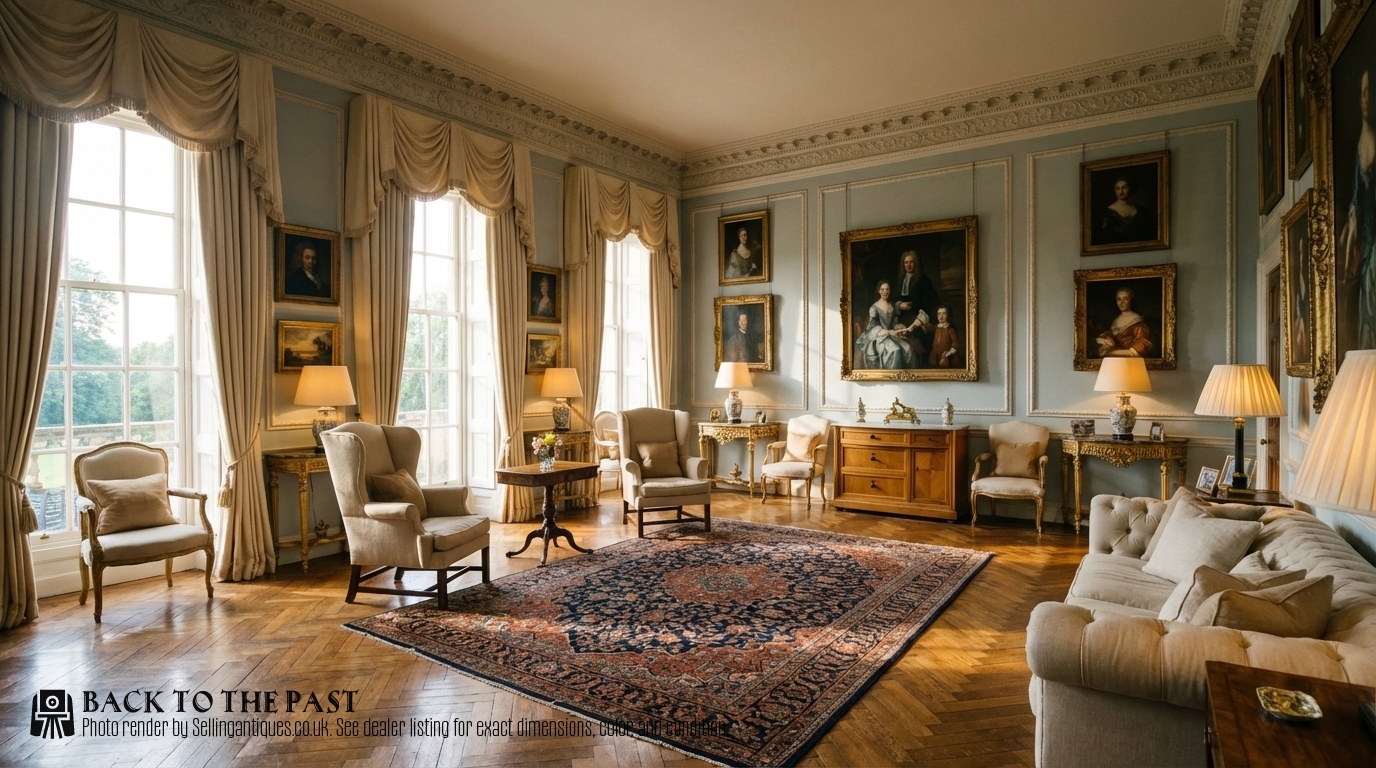
These cabinets stood against walls in formal drawing rooms, antechambers, and principal bedrooms. Their finished backs and refined fronts allowed them to occupy prominent positions within domestic interiors.
Smaller variants, such as bedside cabinets and petit commodes, sat beside sleeping quarters to hold personal items and nighttime lighting.
How do I care for marble tops?
Marble surfaces require gentle cleaning with neutral soap and warm water to preserve the polished finish. Acidic liquids like citrus juice or wine should be wiped away immediately to prevent etching.
Periodic waxing of the wooden carcass protects the underlying veneers, while the stone top remains best maintained with clean cloths and non-abrasive solutions.