
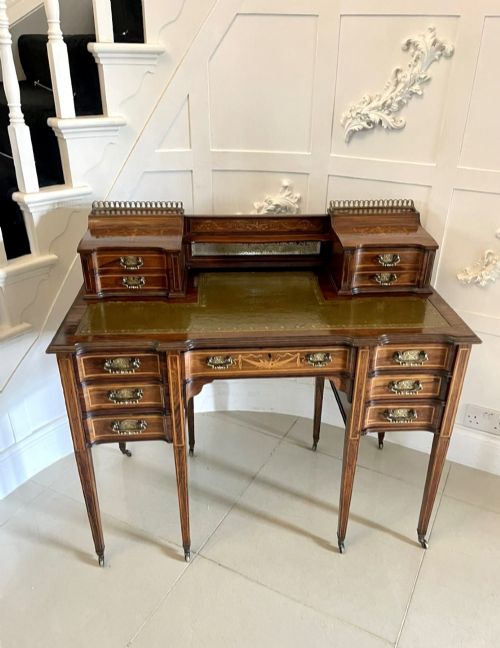
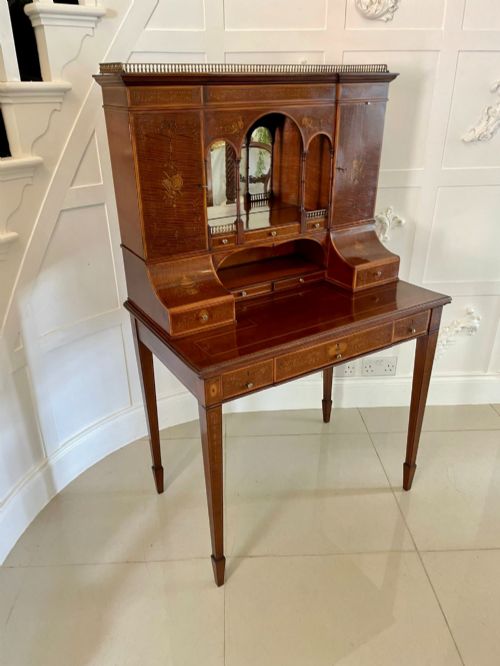
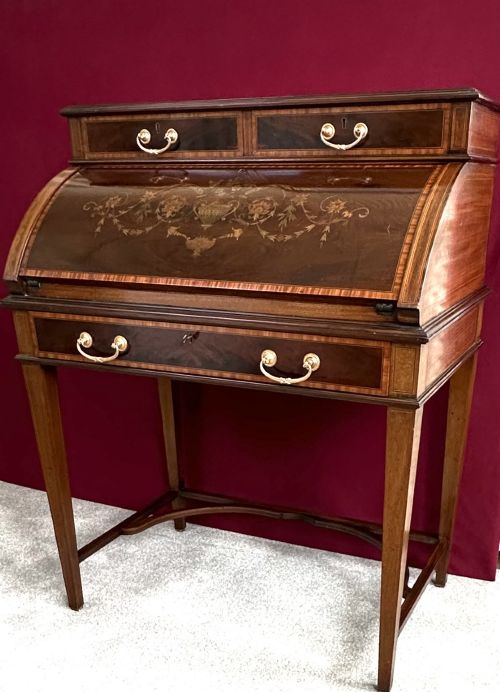
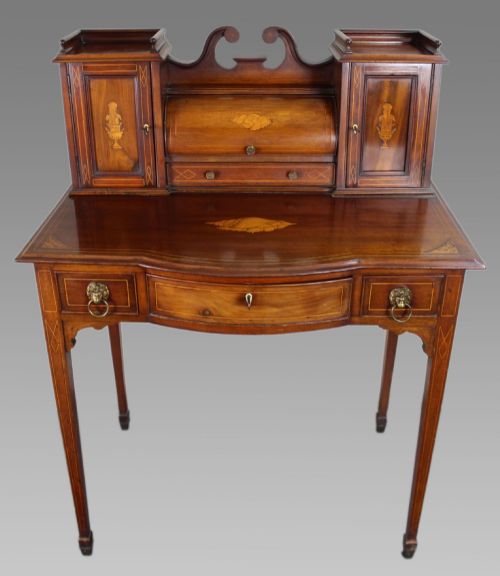


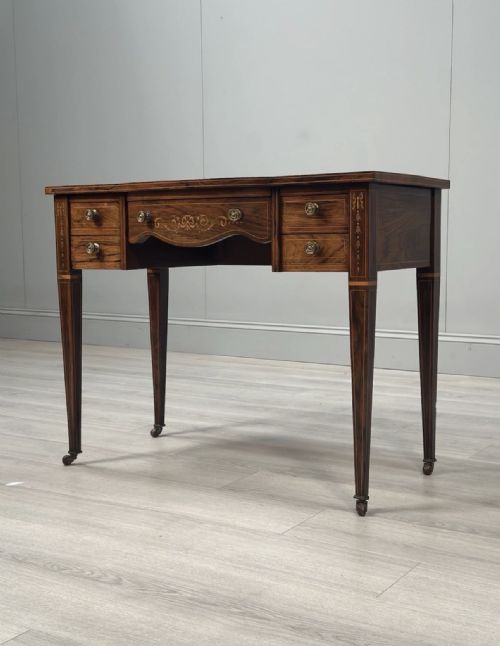
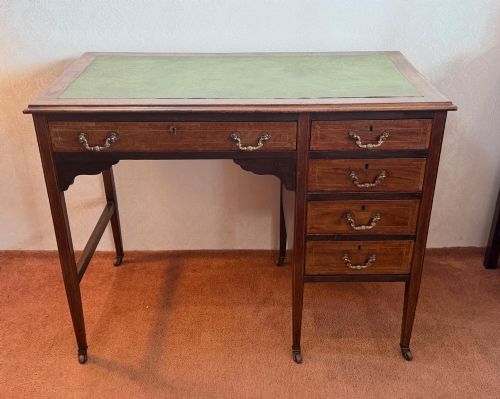
Edwardian Ladies Writing Desk
When you search for an edwardian ladies writing desk, you are looking at compact, refined writing furniture designed primarily for correspondence and domestic accounts.
Edwardian Ladies Writing Desk
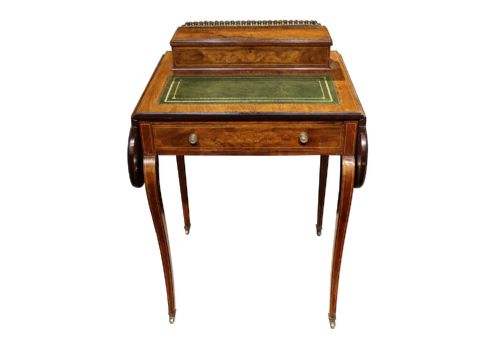
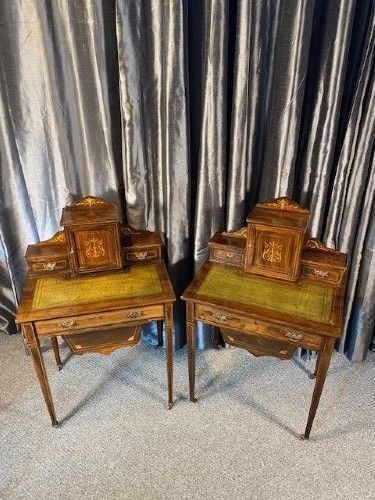
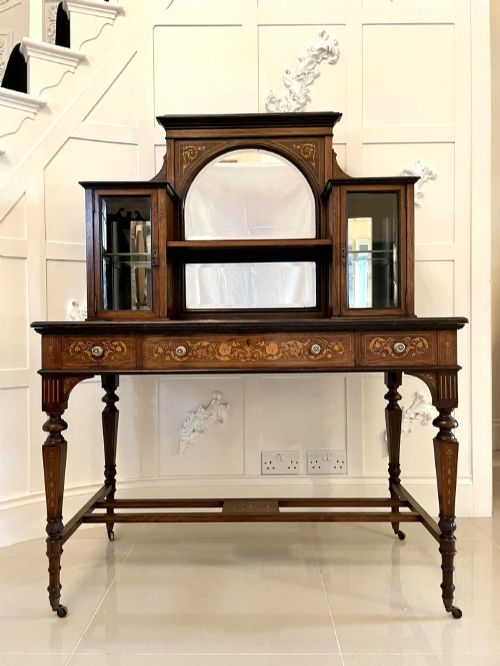
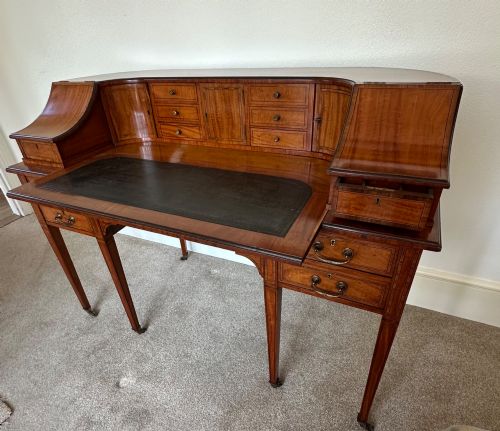
An edwardian ladies writing desk typically dates from the period around 1900, though related examples stretch from the late nineteenth century into the 1920s. These pieces encompass various compact forms including kidney-shaped tables, cylinder desks, and the elaborate Carlton House style with its integrated superstructures.
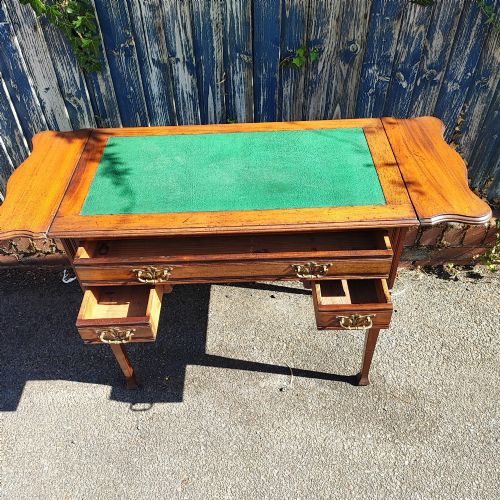
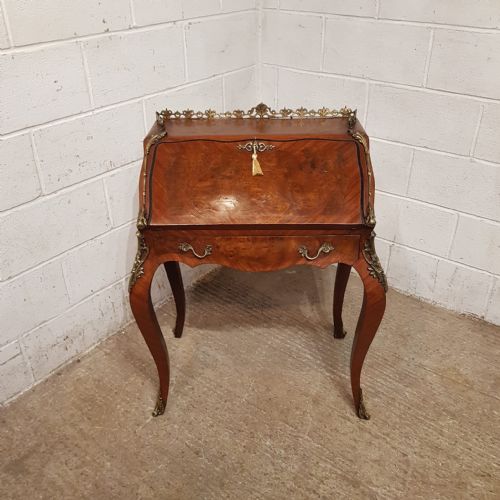
The prevailing aesthetic draws heavily on Sheraton and Sheraton Revival influences, alongside occasional Louis XV Revival curves and simpler Edwardian forms. They frequently incorporate fitted interiors, small drawers, and leather writing inserts tailored for lighter domestic use rather than heavy study.
Materials and Technique
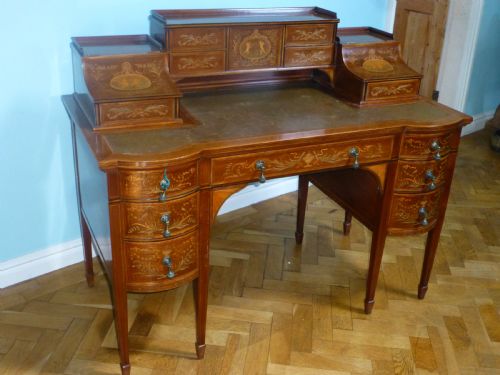
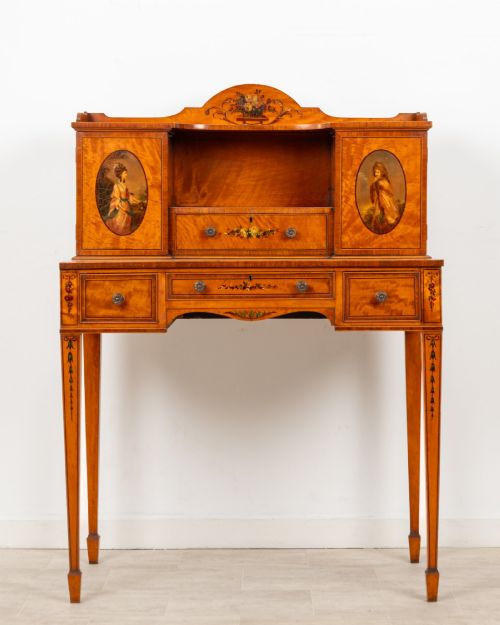
Cabinetmakers utilised timber frameworks of mahogany, rosewood, and satinwood, frequently embellished with contrasting stringing and marquetry inlay using boxwood and other exotic veneers. Surfaces often received hand-painted floral motifs or polished finishes that highlighted the natural grain of the wood.
Leather inserts provided a durable writing surface, typically framed by subtle gilt tooling. Structural hardware relied on brass for hinges, escutcheons, and casters, while internal partitions and small drawers utilised traditional dovetailed joints.
The inventory spans the late nineteenth century through the Edwardian era, incorporating Victorian transitional styles and Sheraton Revival revivals.
Craftsmanship and Proportion
Superior examples demonstrate meticulous attention to detail in the execution of their marquetry and the precision of their satinwood inlay. The integration of curved elements, such as serpentine fronts or kidney-shaped tops, requires advanced joinery that distinguishes finer workshop production from simpler output.
The choice of primary timber and secondary framing woods alters the heft and longevity of the piece. Well-executed fitted interiors with numerous small drawers and secret compartments indicate a higher tier of maker craftsmanship.
Maple and Co·Edwards and Roberts·S and H Jewell
The Edwardian Ladies Writing Desk Glossary
- Carlton House desk
- A form of writing desk featuring a curved superstructure of drawers and pigeonholes fitted around the rear and sides of the writing surface. This layout originated in the late eighteenth century and was frequently revived during the Edwardian period.
- Bonheur du jour
- A small, light desk designed for a lady's boudoir, usually featuring a small cabinet or set of drawers upon the desktop. It serves primarily for writing letters and storing stationery.
- Marquetry
- The art of applying pieces of veneer to a structure to form decorative patterns and pictorial designs. Cabinetmakers used contrasting woods like satinwood and boxwood within mahogany or rosewood grounds.
- Escritoire
- A small writing cabinet with a sloping front or fall-front flap that conceals a fitted interior. These pieces provide concealed storage for writing materials.
- Stringing
- Thin lines of contrasting wood inlaid into the surface of a piece to create decorative borders. This technique frequently outlines drawer fronts and table tops.
Edwardian Ladies Writing Desk: Frequently Asked Questions
What is a ladies writing desk?
A ladies writing desk is a compact piece of furniture designed for domestic correspondence, typically featuring a small writing surface paired with integrated drawers, pigeonholes, or a superstructure.
These pieces were built to occupy smaller rooms, such as boudoirs or drawing rooms, where large pedestal desks would prove impractical.
How do I identify an Edwardian desk?
Edwardian desks are generally characterised by lighter proportions, refined satinwood or mahogany timbers, and Sheraton Revival decorative elements like marquetry inlay.
They date primarily from the early twentieth century and often display delicate craftsmanship distinct from the heavier proportions of mid-Victorian furniture.
What was a Carlton House desk used for?
A Carlton House desk provided an organised workstation for correspondence, with its curved bank of small drawers and compartments keeping writing implements close at hand.
The enclosed superstructure offered secure storage for stationery, letters, and personal documents in a domestic setting.
Can I use an antique desk daily?
These desks accommodate contemporary writing and laptop use quite well, provided the writing surface is treated with reasonable care.
Leather inserts and polished wood surfaces benefit from coasters and protective pads to prevent wear during everyday tasks.