


Vintage Ladies Desk
These compact vintage ladies desk examples span Edwardian writing tables to Art Deco forms, offering refined surfaces for correspondence in limited domestic spaces.
Vintage Ladies Desk
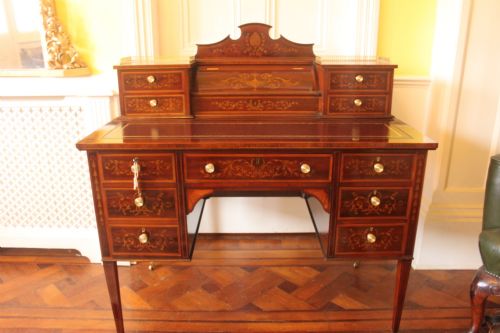
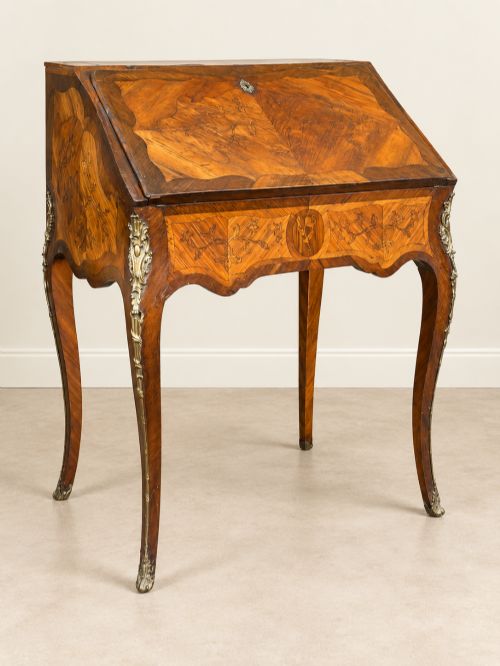
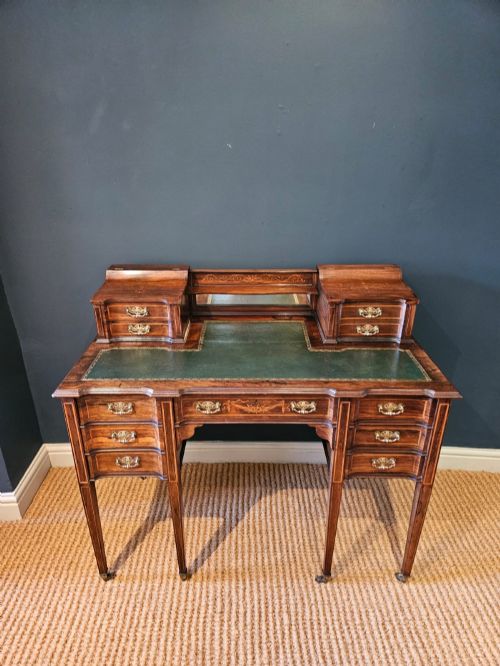
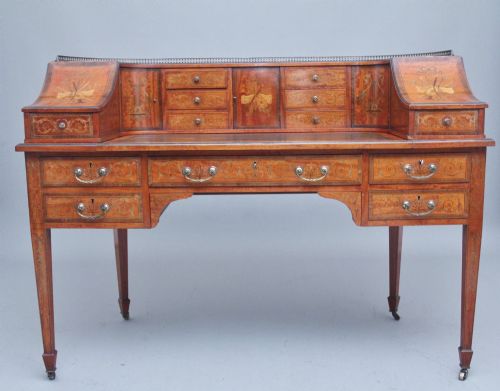
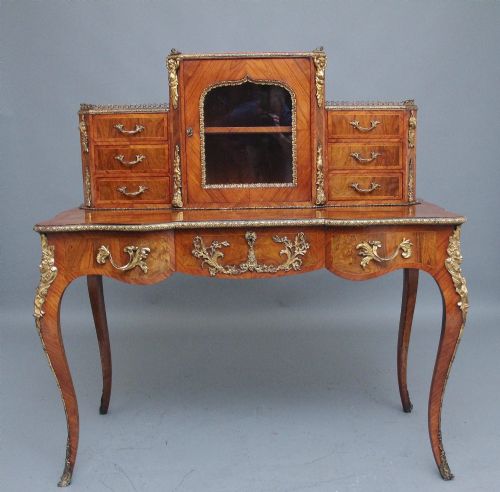
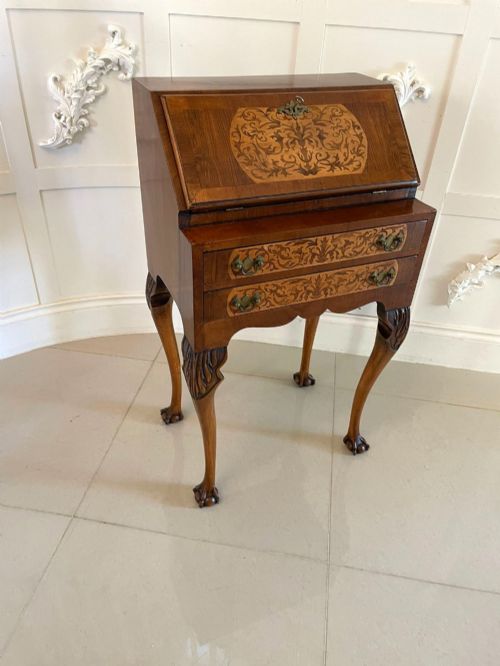
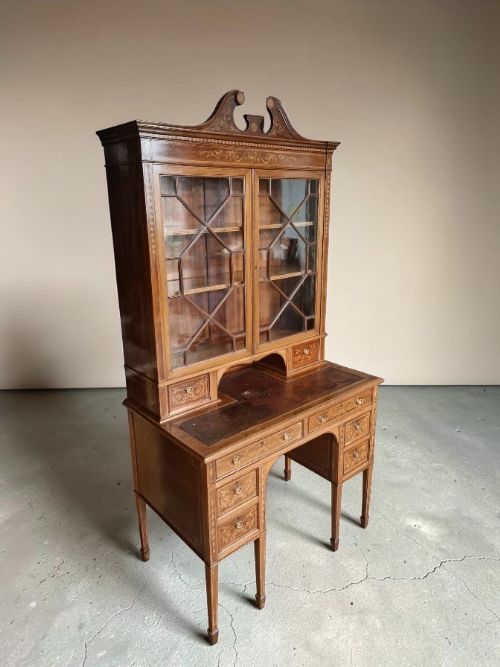
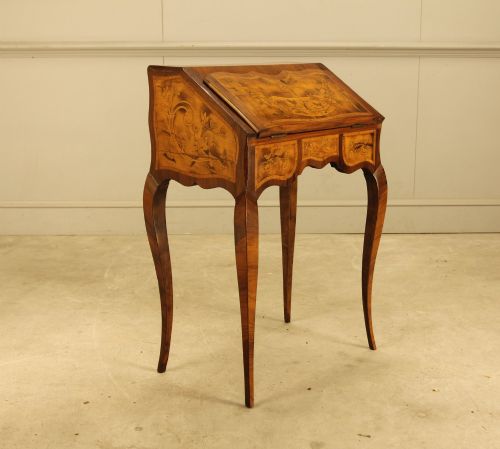
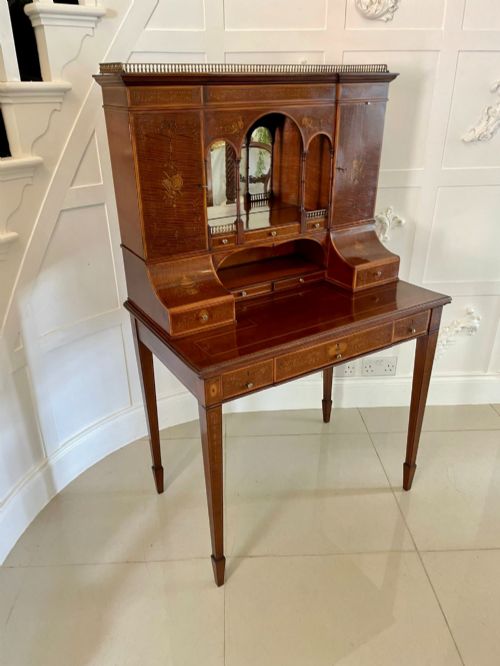
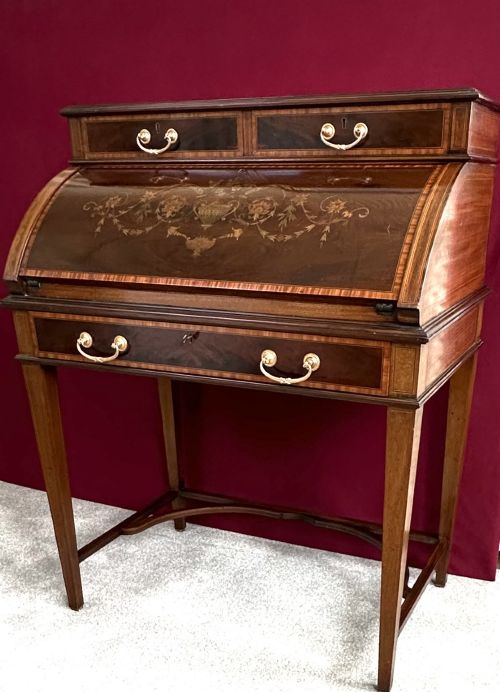
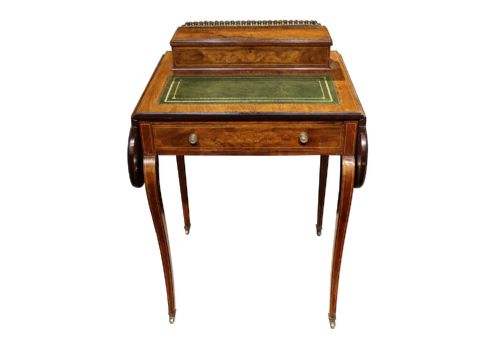
A vintage ladies desk encompasses writing tables, bureau de dame pieces, and Carlton house desks originating predominantly from the Edwardian period and the late nineteenth century. These smaller writing surfaces were built for private correspondence and light administrative tasks rather than heavy commercial use. Buyers frequently encounter Edwardian inlaid mahogany models, French satinwood bureau de dame pieces, and kidney-shaped writing tables when exploring this category.
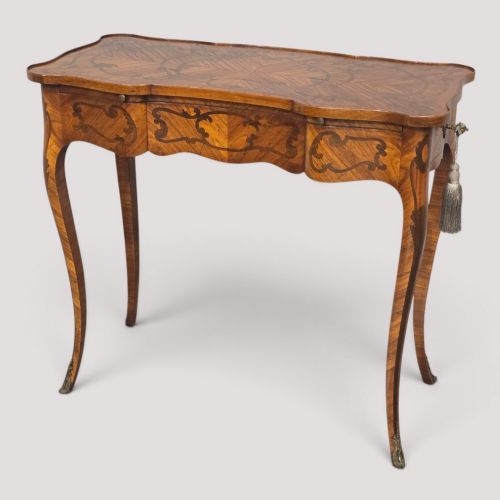
Beyond standard writing tables, the evidence includes related items such as dressing tables, bureau on stand forms, and writing desks with fitted interiors or drop side flaps. The construction spans Victorian mahogany, Edwardian satinwood, and walnut, reflecting the domestic preferences of past decades. Selecting one involves balancing the specific form - such as a freestanding cylinder top or a serpentine front - against available room space.
Materials and Technique
Cabinetmakers utilised primary timbers like mahogany, walnut, and satinwood, frequently paired with secondary woods such as oak for drawer linings. Decorative veneers, including flame mahogany, burr walnut, kingwood crossbanding, and marquetry, formed intricate geometric or floral patterns across writing surfaces and frieze drawers. Inlaid stringing in contrasting woods defined borders and highlighted structural contours.
Metal and leather components completed the construction, with brass handles, ormolu mounts, and tooled leather inserts providing functional contrast to the polished timber. French polishing techniques built deep lustres on the wood, while specialised mechanisms enabled drop side flaps, fold-over actions, and fitted compartments within the superstructure.
The listings show Edwardian pieces frequently incorporate satinwood and mahogany, often enhanced with intricate marquetry and inlaid stringing.
Execution and Detail
The distinction between standard and superior pieces rests on the precision of timber selection, the complexity of inlay work, and the integrity of internal fittings. Superior examples display tightly figured flame mahogany or matched burr walnut veneers alongside hand-cut dovetails within oak-lined drawers. Lesser examples rely on simpler construction with minimal decorative embellishment.
Integration of specialised mechanics - such as smooth-operating cylinder tops, metamorphic fold-over actions, and well-executed ormolu mounts or original brass handles - separates routine production from finer cabinetmaking. The crispness of marquetry details and the quality of secondary framing timbers further indicate the original workshop standard.
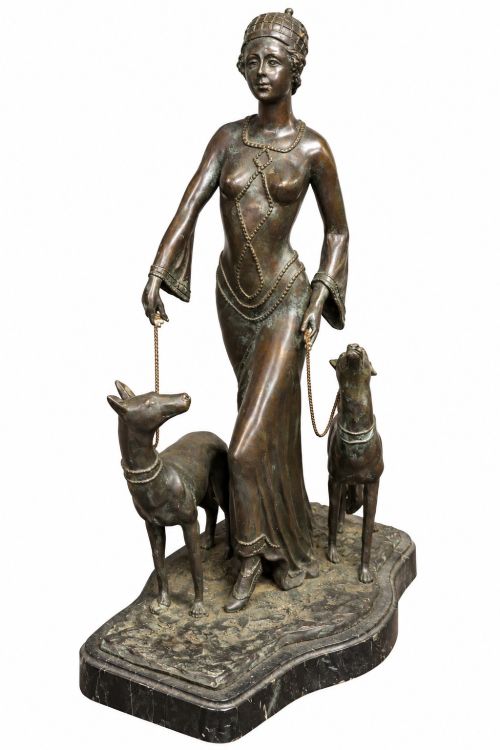
Josef Lorenzl·William Henry Knight
The Vintage Ladies Desk Glossary
- Bureau de Dame
- A small ladies writing desk, often featuring a sloping fall front or fitted interior compartments. These pieces were designed for domestic boudoirs and private correspondence.
- Carlton House Desk
- A distinctive writing table with a curved superstructure of small drawers and pigeonholes enclosing the writing surface. This form originated in the late eighteenth century and continued through the Edwardian era.
- Marquetry
- Decorative veneer work arranged in pictorial or geometric patterns using various coloured woods. Craftsmen applied these thin wood segments to create surface ornamentation on writing tables.
- Crossbanding
- A strip of veneer applied to the border of a panel or table top with the grain running perpendicular to the main surface. This technique creates a distinct framing effect around the central timber.
- Escritoire
- A standing writing cabinet containing a concealed writing flap and internal drawers. The term often describes French or continental pieces featuring decorative mounts.
Vintage Ladies Desk: Frequently Asked Questions
What is a ladies desk?
A ladies desk is a compact writing table designed for domestic correspondence, typically produced during the Victorian and Edwardian periods. These pieces feature smaller proportions than standard library desks to fit comfortably in private rooms.
They often include integrated drawers, leather writing surfaces, and superstructure compartments for stationery storage.
How do I use one today?
These pieces function effectively as compact writing surfaces, laptop stations, or decorative dressing tables within modern interiors. Their smaller scale allows them to fit easily into bedrooms, hallways, or living rooms.
Care involves maintaining moderate room humidity and protecting polished wood surfaces from excessive moisture and direct sunlight.
What is a Carlton house desk?
A Carlton house desk is a specialised writing table featuring a curved bank of small drawers and compartments along the back and sides. This elevated superstructure provides numerous organizational spaces above the main leather-inlaid writing area.
Edwardian cabinetmakers frequently produced refined versions of this form using satinwood and mahogany veneers.
How do I identify Edwardian examples?
Edwardian pieces typically date from the period around 1900 to 1910, displaying lighter timbers such as satinwood, rosewood, and inlaid mahogany. The aesthetic often revives earlier eighteenth-century Sheraton or French styles with delicate stringing and polished brass hardware.
Construction details such as oak drawer linings and machine-assisted precision help separate these Edwardian works from heavier Victorian precedents.