
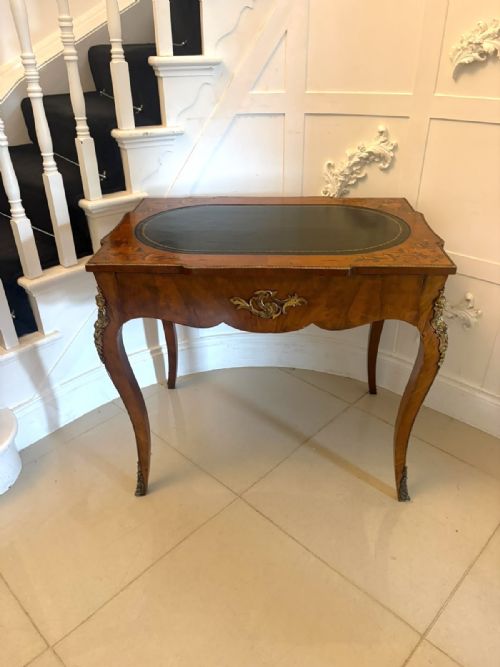


Freestanding Walnut Desk
A freestanding walnut desk offers a finished back for room placement, combining practical writing space with rich timber grain.

Freestanding Walnut Desk
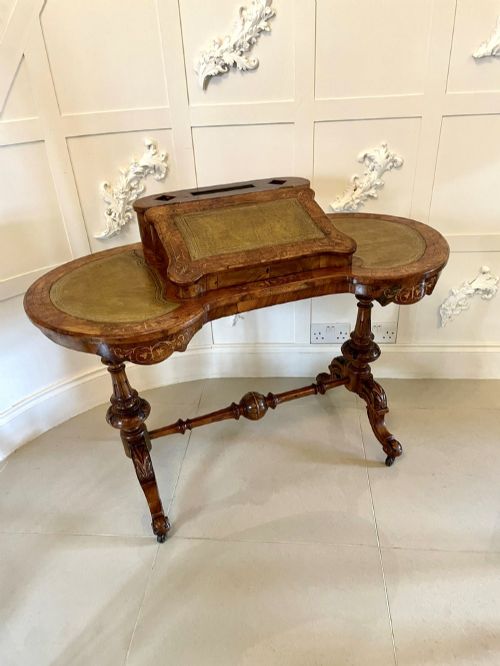
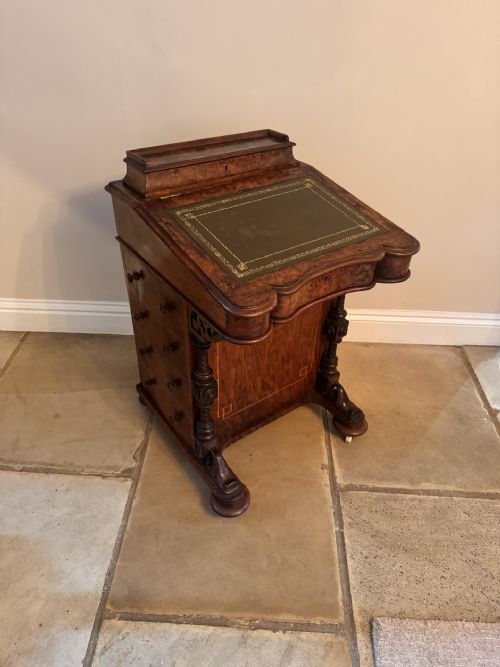
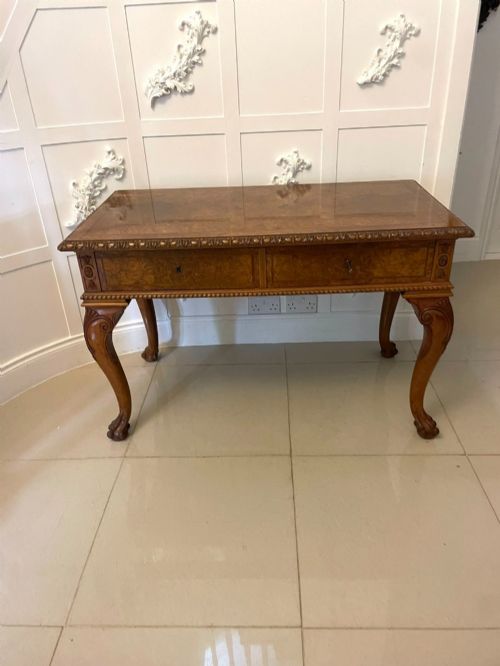
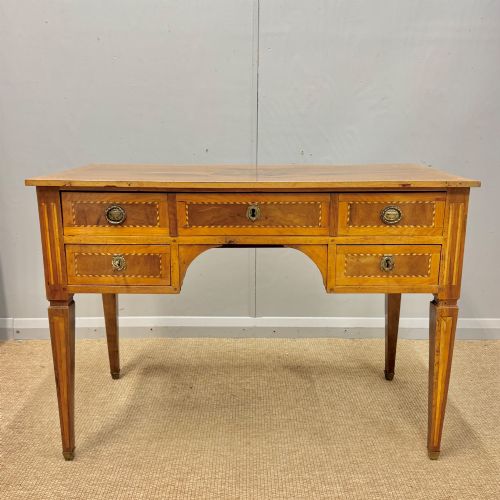
A freestanding walnut desk is designed to sit away from a wall, displaying finished timber grain and detail on all four sides. When you search for this phrase, you encounter forms ranging from Victorian writing tables and kidney shapes to Davenport desks and pedestal desks.
The pieces appearing here span the nineteenth and early twentieth centuries, including Victorian, Edwardian, and Queen Anne Revival styles. Centre tables and writing tables frequently double as desks, providing leather writing surfaces and drawers.
How they were made
Cabinet makers utilised solid walnut and burr walnut veneers over secondary timbers to achieve rich, figured surfaces. Wood inlay, marquetry, and parquetry decorate many panels, contrasting dark grain with lighter fruitwood details.
Fitted interiors often include tooled leather writing inserts, brass galleries, and gilt bronze or ormolu mounts. Drawers utilise traditional dovetail joints, while Davenport forms incorporate internal stationery compartments.
The listings span the eighteenth century to the Edwardian period, with Victorian pieces forming the majority of the selection.
What varies in quality
The distinction between ordinary and superior examples lies in the selection of the burr walnut veneer and the precision of the marquetry. Finer pieces display matched grain patterns across every surface, including the finished back.
Construction details such as hand-cut dovetails, original leather inserts, and chased ormolu or brass mounts elevate the standing of a desk. The crispness of carved details and the integration of secondary woods define the tier of the piece.
The Freestanding Walnut Desk Glossary
- Burr walnut
- A figured timber taken from the wart or growth on a walnut tree, producing swirling, highly decorative grain patterns. Cabinet makers prized this veneer for principal display surfaces.
- Marquetry
- The art of forming decorative patterns by fitting together small pieces of wood veneer of different colours and types. It appears across nineteenth-century writing tables and desks.
- Davenport
- A compact desk featuring a sloping, leather-lined writing lid above a bank of side drawers. Victorian versions often include panelled pedestals and stationery compartments.
- Partners desk
- A large pedestal desk designed with drawers and cupboards on both sides to accommodate two people working opposite one another. These forms appear in mid-Victorian periods.
- Bureau plat
- A French style of writing table with a rectangular leather-inset top and one or more drawers in the frieze. These pieces frequently feature cabriole legs and ormolu mounts.
Freestanding Walnut Desk: Frequently Asked Questions
Can I place these desks in the middle of a room?
Yes, because every side is finished with polish and veneer, allowing 360-degree display.
Traditional wall placement is unnecessary since the back shares the same decorative treatment as the front.
What is the difference between a Davenport and a pedestal desk?
A Davenport is a compact writing box resting on a single pedestal with drawers opening to the side.
A pedestal desk uses two separate drawer columns to support a much wider writing surface.
How do I identify a Victorian walnut desk?
Victorian examples generally date from the mid to late nineteenth century and feature rich burr walnut veneers.
They often incorporate turned legs, leather inserts, and applied brass or ormolu hardware.
Are writing tables sturdy enough for daily work?
Writing tables and centre tables provide stable surfaces constructed with traditional mortise and tenon joinery.
Their sturdy timber frames and solid legs support routine writing and laptop use.