

Victorian Desk with Castors
A Victorian desk with castors is a functional study piece mounted on small wheels for movement, offering period workspace and rich timber character.
Victorian Desk with Castors
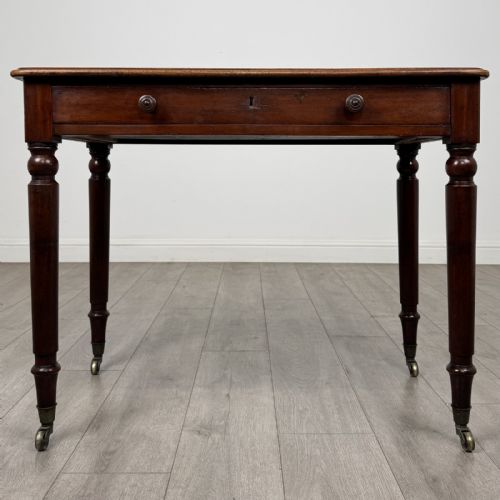
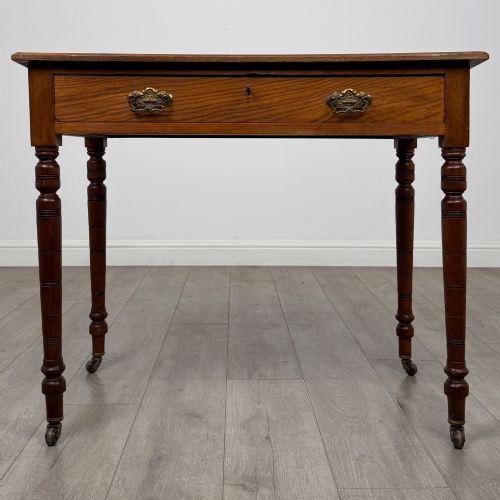
A Victorian desk with castors brings nineteenth-century utility and mobility into a modern room, designed to be shifted easily across a study or library floor. These pieces span writing tables, partners desks, and library tables, with mahogany and oak appearing frequently across the selection.
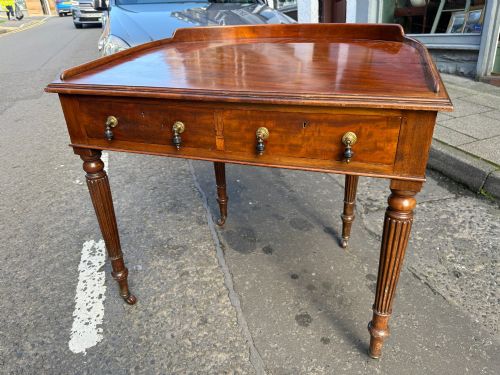
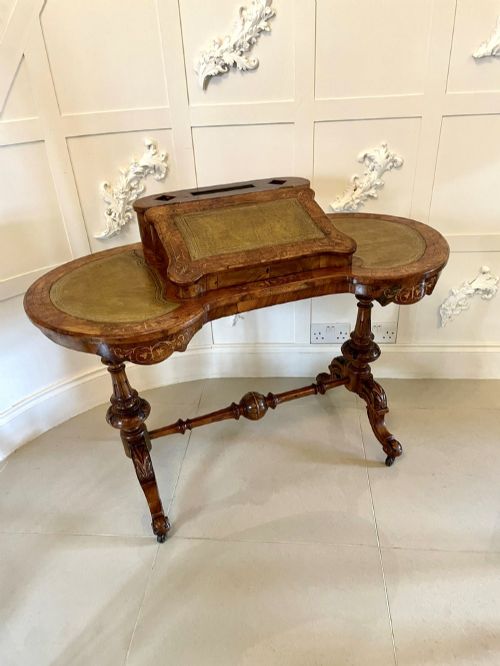
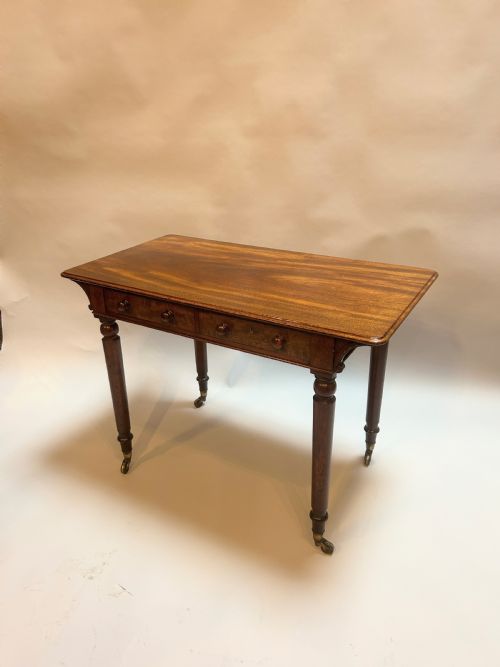
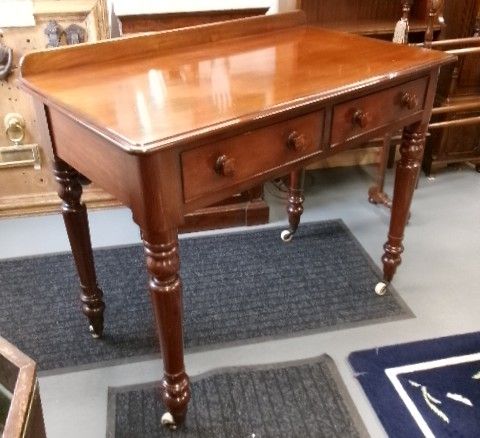
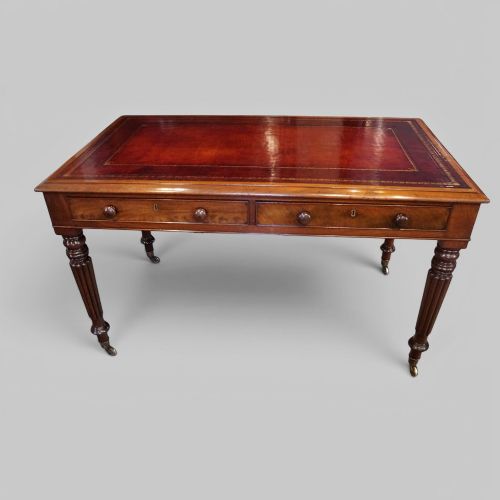
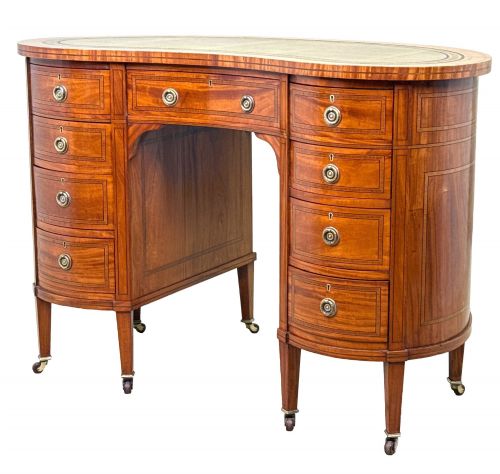
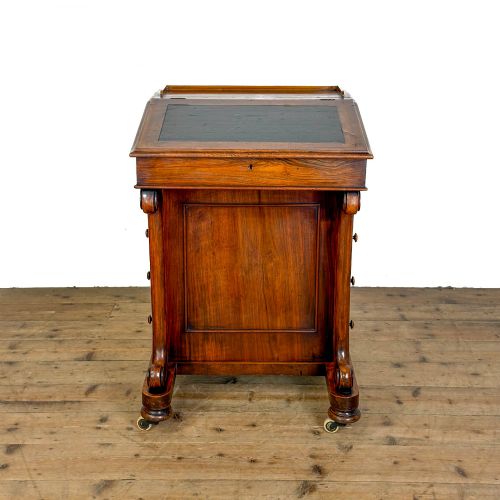
The most common form on this page is the Victorian writing table fitted with turned legs and castors, often featuring two drawers for stationery. Kidney-shaped desks and cylinder desks also appear, occasionally inset with leather writing surfaces.
Originating largely from the nineteenth century, these desks reflect the period focus on adaptable home and office furniture. Makers such as J A Mein Edinburgh and Lamb of Manchester contribute to the variety of woods, including burr walnut and satinwood.
Materials and Construction
Timbers such as mahogany, oak, walnut, and rosewood form the primary structural carcasses, shaped and joined by nineteenth-century cabinet makers. Drawer linings and secondary woods match the regional workshops of the period.
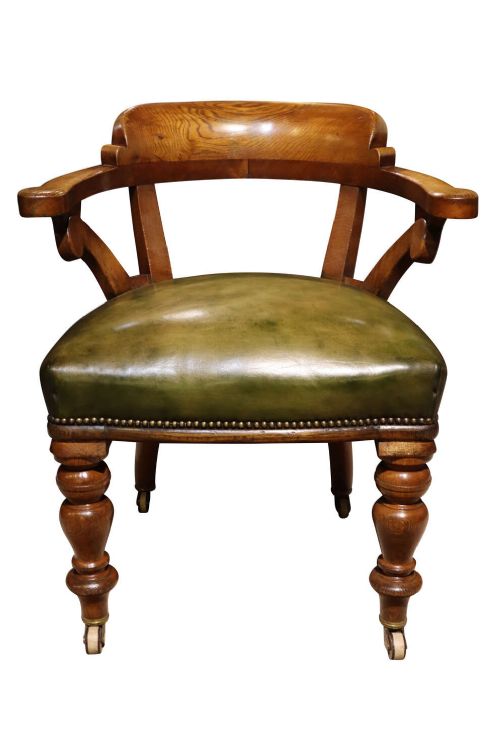
Writing surfaces frequently utilise inset leather or gilt-tooled panels bordered by polished wood. Brass and ceramic castors are fitted to the base of turned or tapering legs to allow smooth rolling.
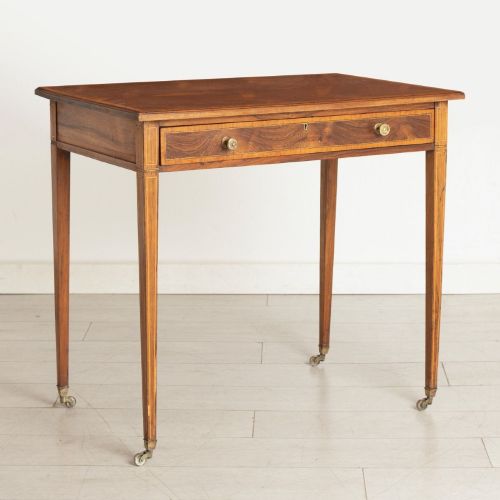
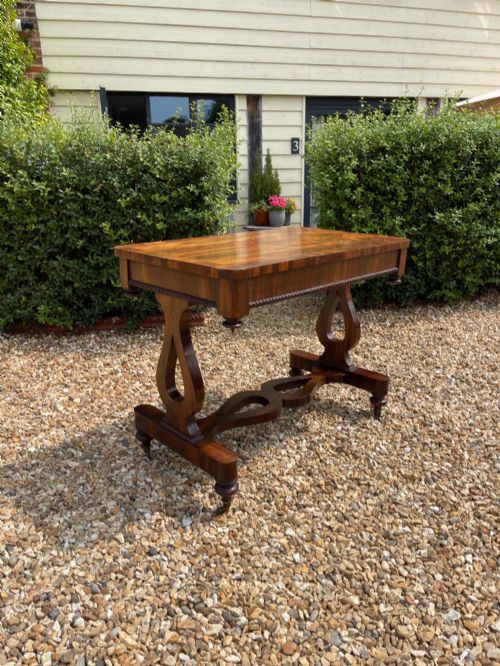
Inlay and burr veneers appear on select writing tables and kidney-shaped desks, adding decorative grain patterns to the top surfaces.
Listings feature woods spanning mahogany, oak, walnut, rosewood, satinwood, and maple, paired with brass and ceramic castors.
Judging Quality
The calibre of a Victorian desk rests upon the selection of timber, such as figured mahogany or burr walnut, and the crispness of the turned legs. Superior examples show careful matching of wood grain across drawer fronts and top surfaces.
Construction methods determine durability, visible in the tight fit of dovetail joints within the drawers and the secure seating of brass or ceramic castors. Finer pieces retain original leather writing inserts and working locks with matching keys.
J A Mein Edinburgh·Howard & Sons·Lamb of Manchester
The Victorian Desk with Castors Glossary
- Castor
- A small wheel mounted on a swivel attached to the bottom of a leg for easy rolling. These are commonly made of brass or ceramic in nineteenth-century furniture.
- Partners desk
- A large double-sided desk designed for two people to work opposite one another. They usually feature drawers and cupboards on both sides.
- Kidney shaped
- A curved desk profile resembling a kidney bean. This form allows the user to sit closer to the centre of the writing surface.
- Cylinder desk
- A desk featuring a rolling curved wooden shutter that conceals the writing surface and interior pigeonholes when closed.
- Burr walnut
- Wood taken from the abnormal growth of a walnut tree, producing swirling and mottled grain patterns. It was sliced into thin veneers for decorative table tops.
Victorian Desk with Castors: Frequently Asked Questions
How do I use a Victorian desk today?
These pieces serve well as functional writing stations or laptop desks in a study, library, or bedroom. Their mobility on castors allows you to reposition them within a room with minimal effort.
The lower drawer heights match modern chair clearance in many instances, though checking the kneehole dimensions remains sensible if you plan to sit at the desk for long hours.
What woods were used for these desks?
Mahogany and oak form the bulk of the structural timber, supplemented by walnut, rosewood, satinwood, and maple. Solid cuts were used for frames and legs, while veneers provided decorative surfaces on table tops.
Secondary timbers inside the drawers often include pine or oak, depending on the workshop and the region where the desk was built.
How do I care for the leather top?
Leather writing surfaces benefit from occasional cleaning with a slightly damp cloth followed by a suitable leather cream or wax conditioner. Avoid harsh chemical cleaners that can strip the original dye or gilt tooling.
Keeping the desk out of direct sunlight prevents the leather and the surrounding mahogany or walnut timber from fading over time.
Are the castors original to the desk?
Castors on nineteenth-century furniture were frequently replaced due to wear or floor damage over generations of use. Brass wheels and ceramic cup castors both appear across the period.
Matching the fixing screws and the metal patina helps determine whether a castor dates to the original manufacture of the table.