
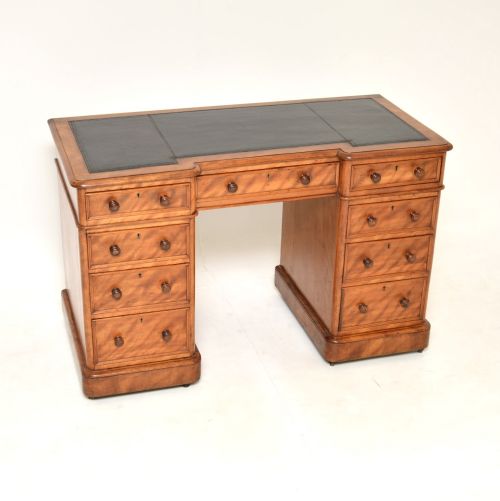
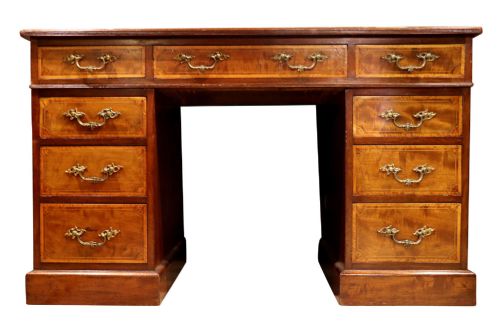
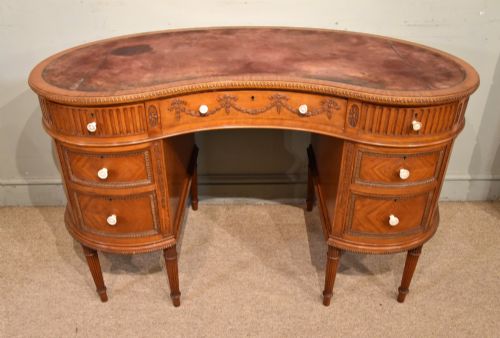
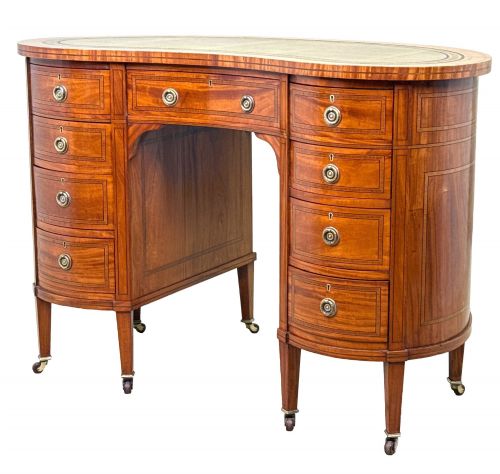


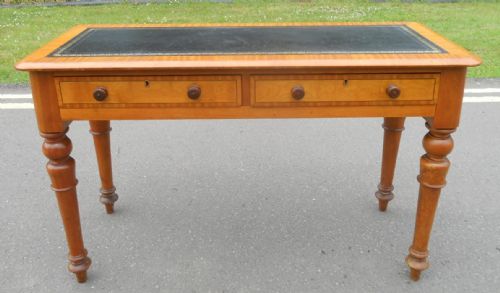

Satinwood Home Office Desk
A satinwood home office desk brings figured timber and refined form to your study, offering a polished workspace rooted in nineteenth-century craftsmanship.
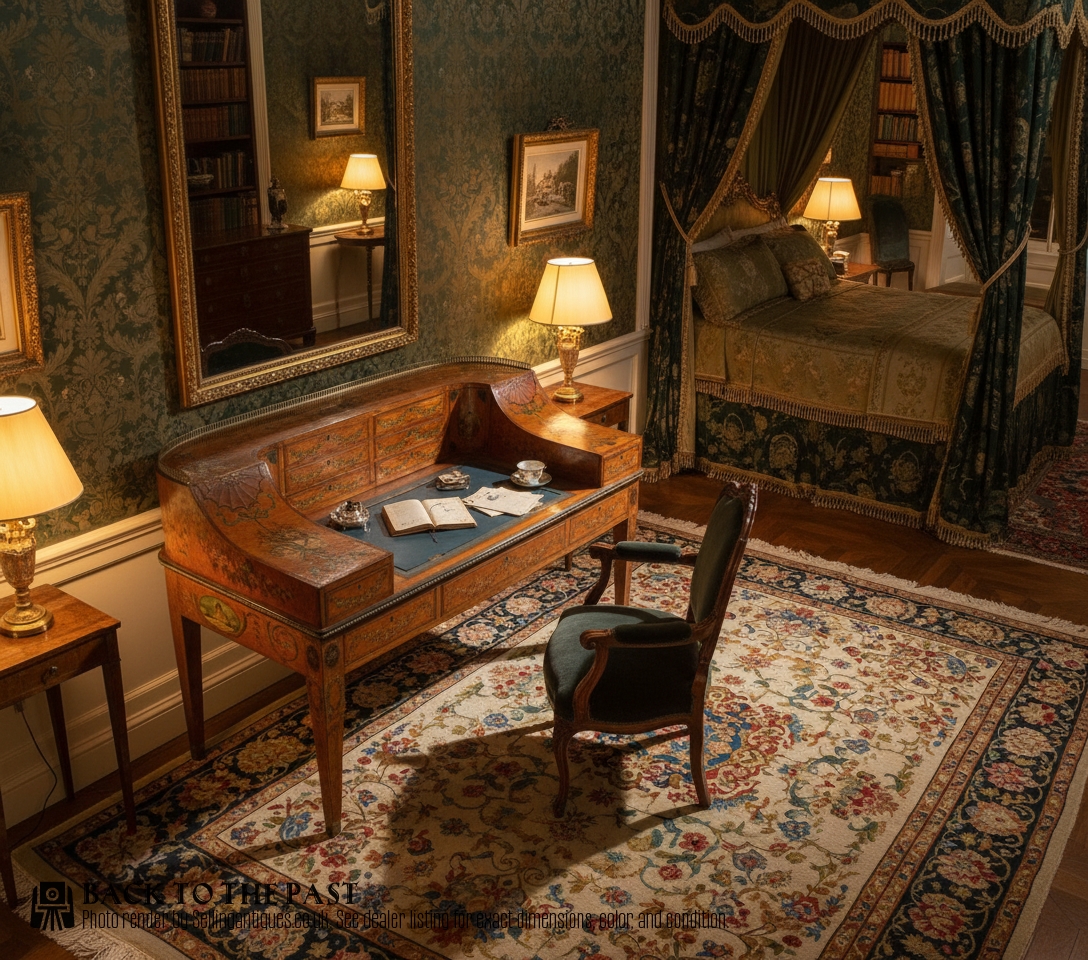
Satinwood Home Office Desk
When you search for a satinwood home office desk, you encounter nineteenth-century and early twentieth-century writing furniture, spanning the Victorian and Edwardian eras. These pieces include pedestal desks, writing tables, and specialised shapes like kidney-shaped tables and Carlton House desks.
The versions you are most likely to meet on this page utilise light-toned timbers such as satinwood and satin birch, alongside mahogany and walnut. They frequently display Sheraton Revival influences, Neoclassical details, and marquetry inlay.
Originating from periods of meticulous cabinetmaking, these items serve as functional workspaces that double as statement furniture. Their forms range from twin pedestal writing desks to compact rolltop variants.
How they were made
Makers constructed these desks using solid and veneered timbers, pairing satinwood and mahogany with contrasting inlay work. Leather panels traditionally form the writing surface, providing a durable and classic writing platform.
Structural hardware such as brass handles and pulls complete the construction, often remaining original to the piece. Marquetry and intricate inlay patterns demonstrate the decorative techniques employed by period workshops.
Listings feature items spanning the Victorian, Edwardian, and nineteenth-century periods, constructed in satinwood, mahogany, oak, and satin birch.
What varies in quality
The distinction between standard and superior examples lies in the intricacy of the timber selection and the precision of the marquetry inlay. Highly figured satinwood combined with balanced proportions elevates the visual impact of the desk.
The presence of original hardware, such as designated brass handles, and the integrity of fitted leather writing surfaces separate honest, well-preserved pieces from heavily altered ones.
Edwards & Roberts·Maple & Co
The Satinwood Home Office Desk Glossary
- Satinwood
- A dense, lustrous tropical timber known for its golden sheen and smooth grain. It forms the primary decorative surface on many high-end Victorian and Edwardian desks.
- Carlton House desk
- A distinctive writing desk featuring a curved superstructure of small drawers and compartments enclosing the rear of the writing surface. This form gained popularity during the Sheraton Revival period.
- Pedestal desk
- A heavy freestanding writing desk comprising two supporting pedestals of drawers beneath a rectangular top. They often feature inset leather writing surfaces.
- Marquetry
- The art of applying decorative veneer pieces to a structure to form intricate pictorial patterns. It appears frequently on late nineteenth-century revival furniture.
- Sheraton Revival
- A late nineteenth-century design movement inspired by the neoclassical furniture of George Sheraton. It is characterised by refined proportions, satinwood veneers, and delicate inlay.
Satinwood Home Office Desk: Frequently Asked Questions
How do I identify a pedestal desk?
A pedestal desk consists of a large writing surface supported by two separate stacks of drawers, creating a central kneehole space. They are typically freestanding and finished on all sides.
These pieces frequently incorporate inset leather writing surfaces and solid brass hardware, originating primarily from the Victorian and Edwardian eras.
What is satinwood?
Satinwood is a hard, durable timber celebrated for its distinct golden colour and natural shimmering finish. It reflects light in a manner that resembles satin fabric.
Cabinetmakers utilised this timber for veneers and primary surfaces on high-status nineteenth-century writing furniture.
How do I care for a leather desk top?
Period leather writing surfaces require gentle cleaning with a slightly damp cloth followed by appropriate leather dressings to prevent drying. Avoid harsh chemical cleaners that can strip the original finish.
Maintaining a stable room humidity helps preserve both the leather top and the surrounding wood veneers.