

Victorian Stationery Box Desk
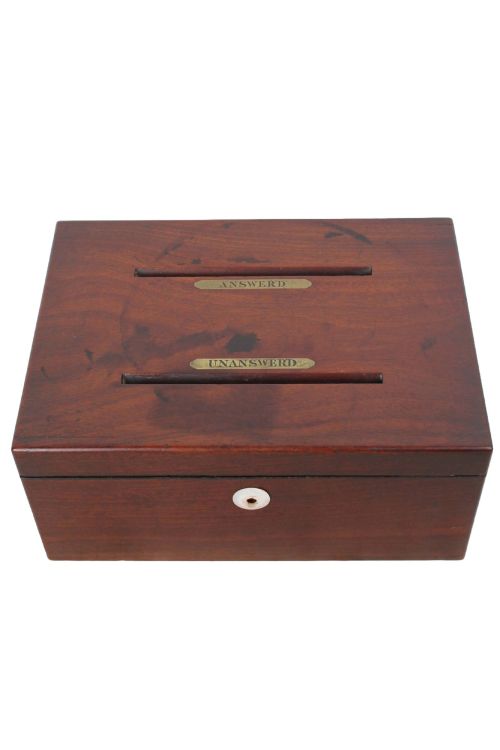
A victorian stationery box desk organises personal correspondence with the fitted compartments and sloping lids characteristic of nineteenth-century writing furniture.
Victorian Stationery Box Desk
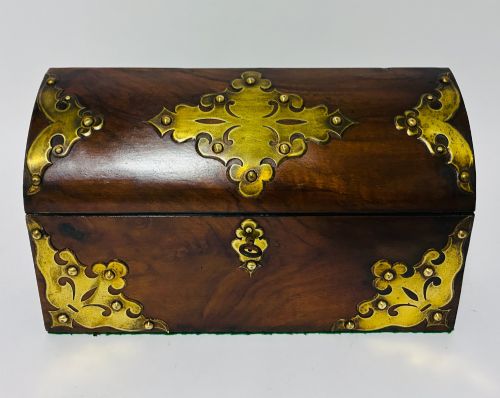
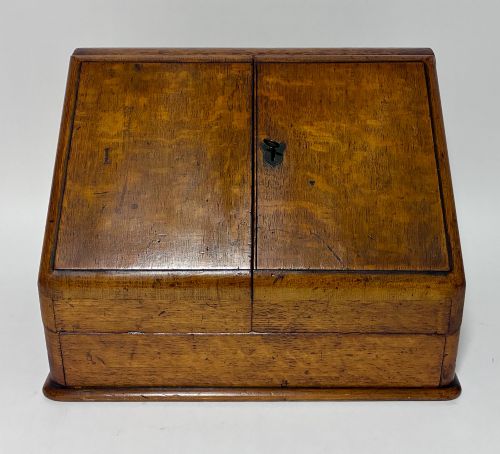
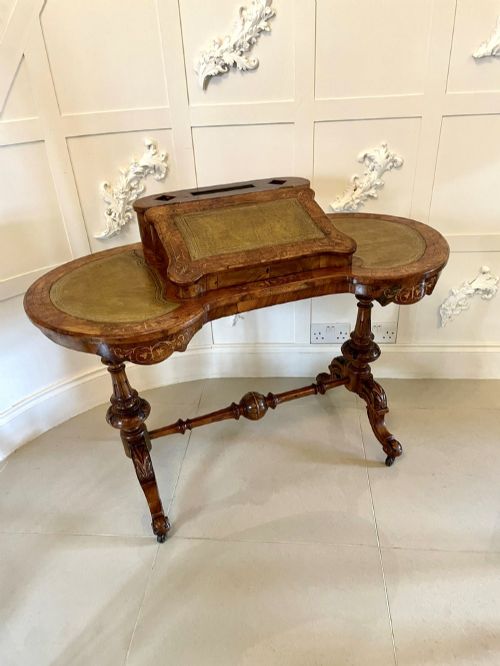
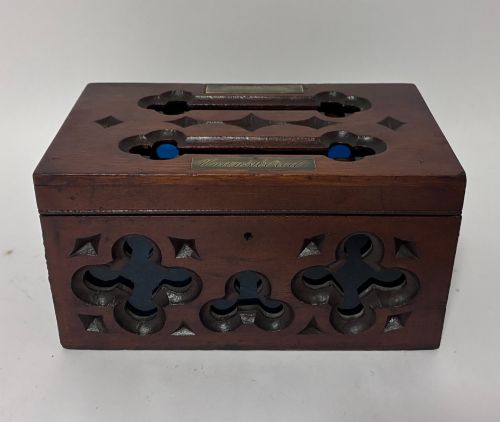
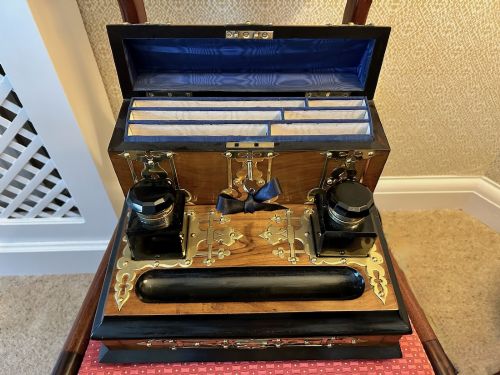
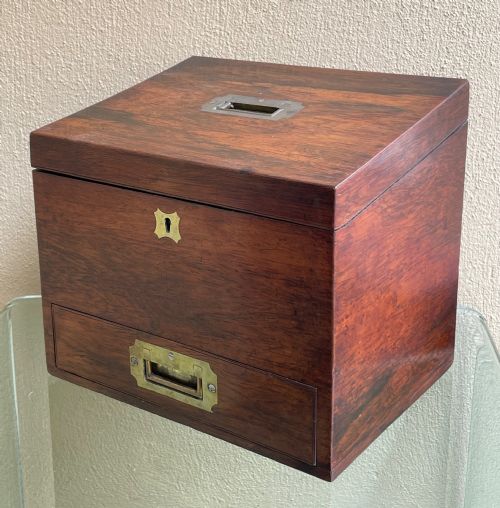
A victorian stationery box desk encompasses upright correspondence cabinets, hinged letter boxes, and slope-front writing desks produced across the nineteenth century. These pieces reflect the correspondence habits of Victorian households, providing dedicated compartments for paper, envelopes, and inkwells.
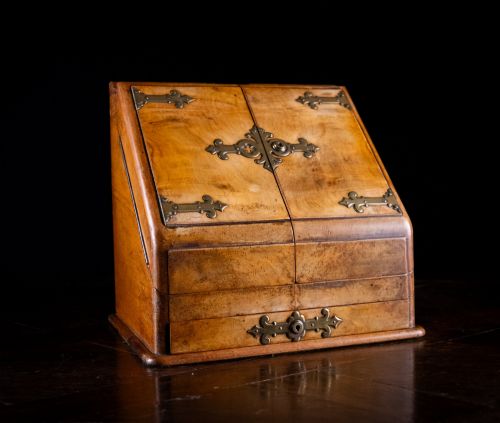
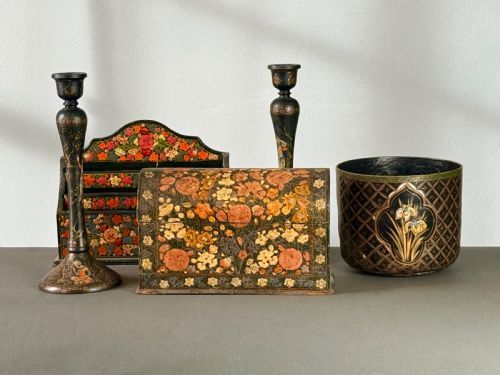
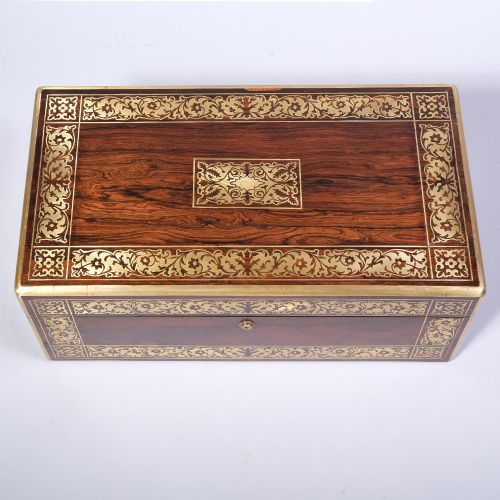
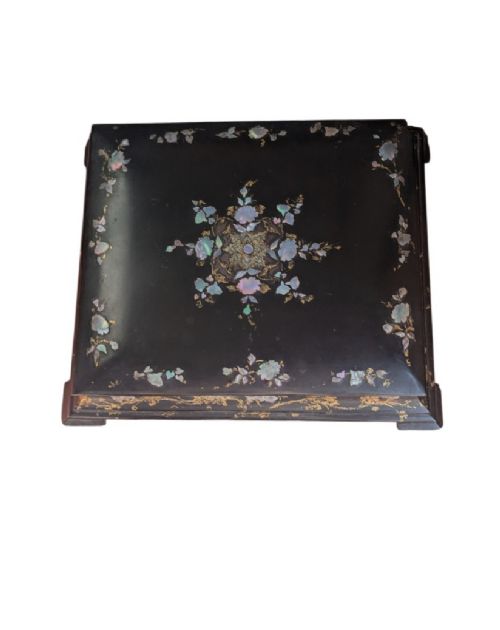
Burr walnut, rosewood, and mahogany dominate the offerings, frequently enhanced with brass banding or mother of pearl inlay. The selection ranges from plain campaign writing slopes to elaborate Gothic revival and Tunbridge ware cabinets.
Materials and Construction
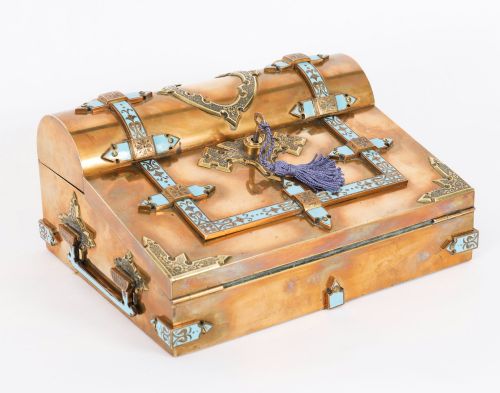
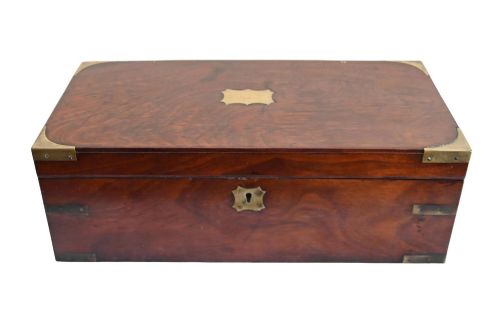
Cabinet makers utilised dense hardwoods such as mahogany, walnut, and rosewood as carcasses, applying figured veneers like burr walnut to visible surfaces. Brass reinforcement, including corner brackets and inset handles, was standard on campaign pieces designed for travel.
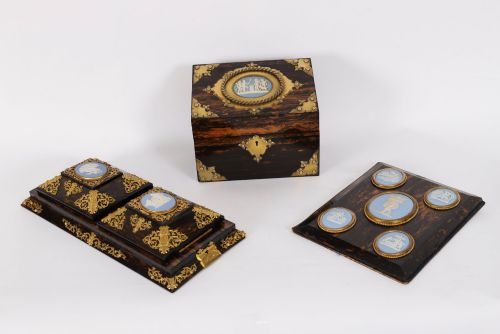
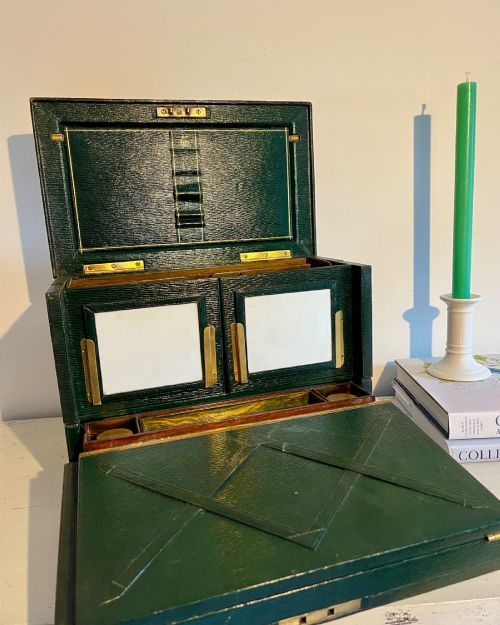
Interiors combined secondary woods with fitted leather writing surfaces, velvet linings, and secret drawers concealed behind dummy partitions. Marquetry, Tunbridge ware mosaic, and lacquer finishes decorated the exterior facades of select boxes.
Materials recorded include brass, rosewood, burr walnut, mahogany, leather, and mother of pearl.
Gradations in Execution
Quality rests upon the selection of timber veneers and the precision of brass joinery and hardware integration. Superior examples display symmetrical grain patterns across the burr walnut or rosewood surfaces and flush-fitting brass mounts.
Interior organisation dictates functional success, with better boxes offering complete sets of matching inkwells, pens, and well-fitted compartments. The complexity of secret mechanisms and the intricacy of decorative inlays distinguish standard production items from master cabinet work.
Edmund Nye
The Victorian Stationery Box Desk Glossary
- Writing slope
- A portable desk featuring a slanted writing surface that folds down to enclose compartments and inkwells. These boxes were placed on dining tables or dedicated stands for correspondence.
- Tunbridge ware
- Wood mosaic decoration formed from thousands of tiny coloured wood blocks assembled to create pictorial or geometric designs. This technique originated in Kent during the nineteenth century.
- Campaign box
- Furniture constructed in sections with recessed brass handles and corner brackets to facilitate transport during military campaigns. The sturdy timber frames protected contents during transit.
- Correspondence box
- An upright desk accessory designed specifically to hold folded letters, envelopes, and stamps. Many feature tiered interior dividers for sorting mail.
Victorian Stationery Box Desk: Frequently Asked Questions
How do I use a stationery box today?
These compartments suit modern desks for sorting mail, holding stationery, or storing small documents and notebooks.
The sloping lids and divided interiors organise desktop clutter while adding nineteenth-century character to a study.
Were these boxes meant for travel?
Pieces described as campaign styles were built for mobility, featuring robust brass mounts and secure locks to protect contents on journeys.
Stationery cabinets and large correspondence boxes remained stationary on household desks and writing tables.
What wood types are most common?
Mahogany, walnut, and rosewood form the primary carcasses for these nineteenth-century writing desks and boxes.
Cabinet makers frequently applied burr walnut or satinwood veneers to enhance the visual grain on exterior surfaces.
How do I identify a Victorian piece?
Construction methods, such as dovetailed joints in secondary woods and traditional hand-cut screws, point to nineteenth-century manufacture.
Stylistic cues like Gothic revival arches, Tunbridge mosaics, and brass campaign banding also date these items to the Victorian era.