

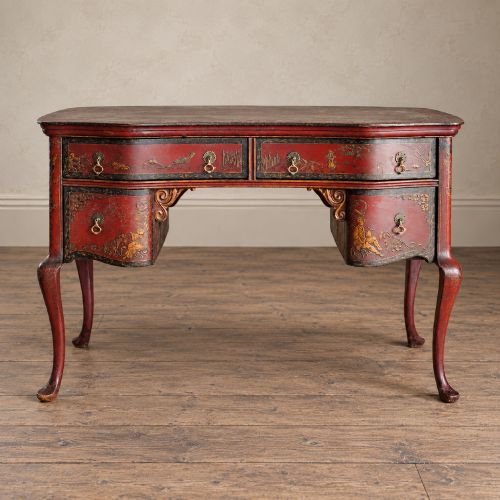
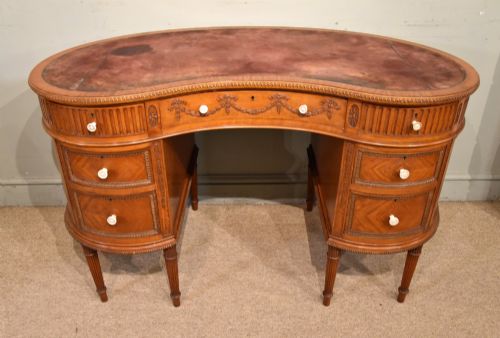

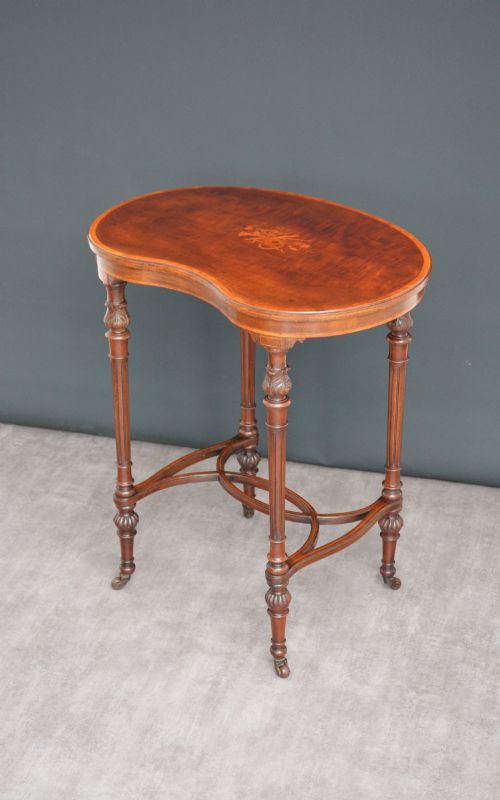
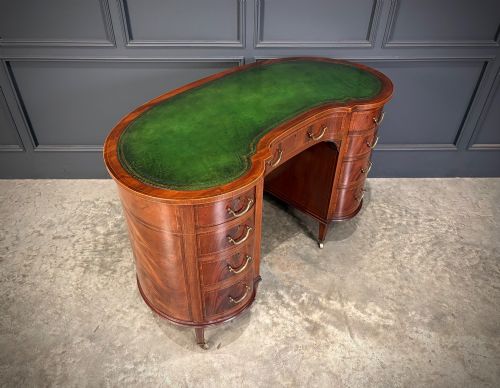
Edwardian Kidney Writing Table
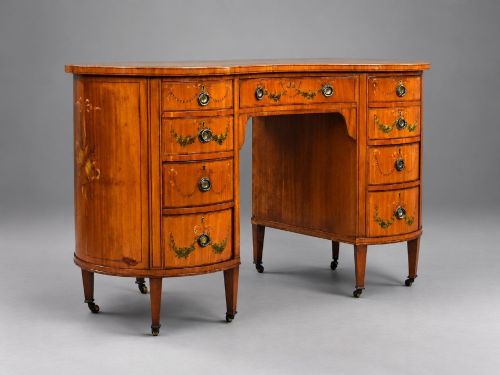
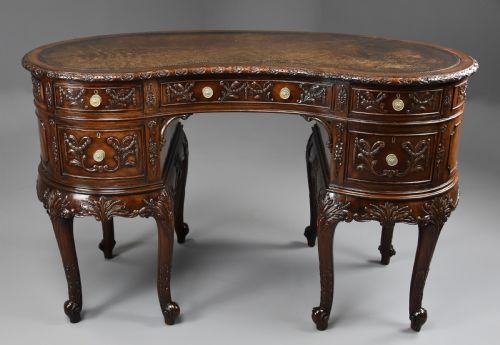
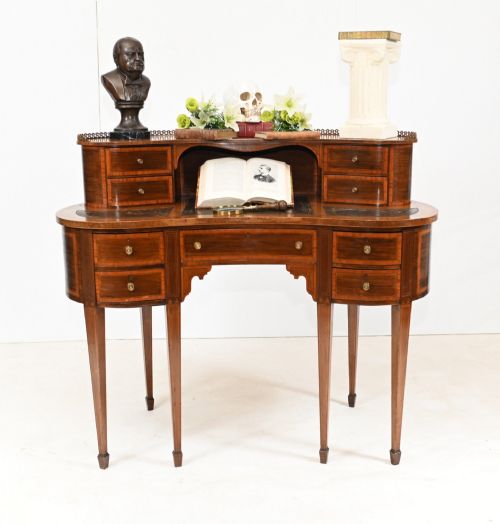
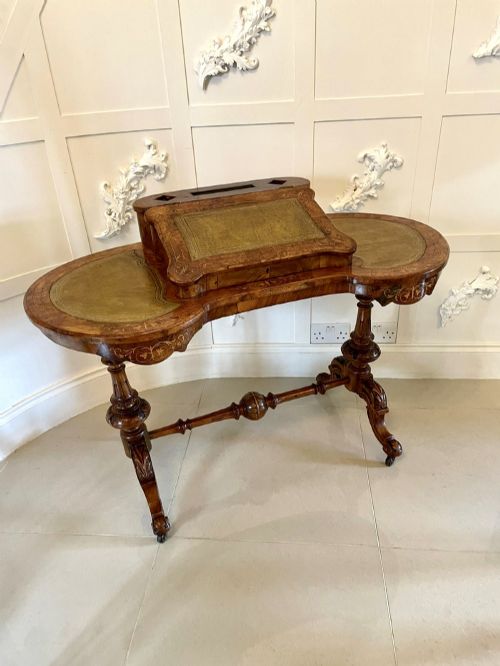
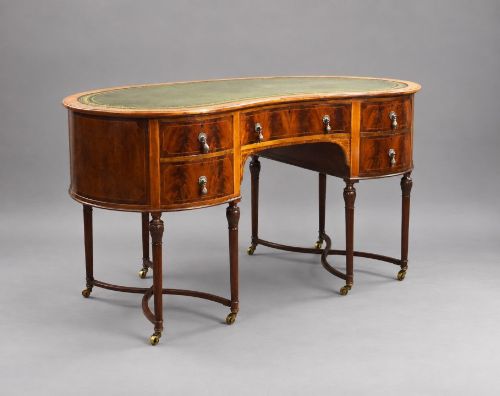
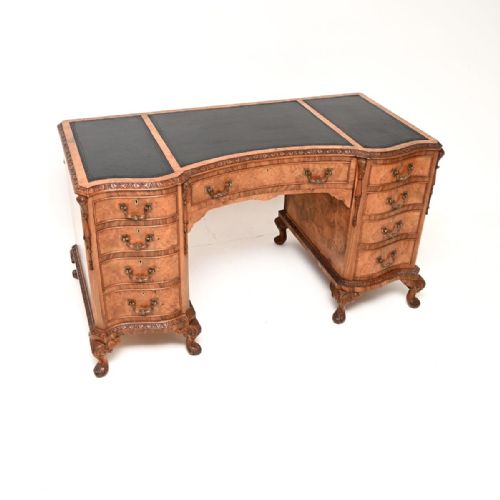
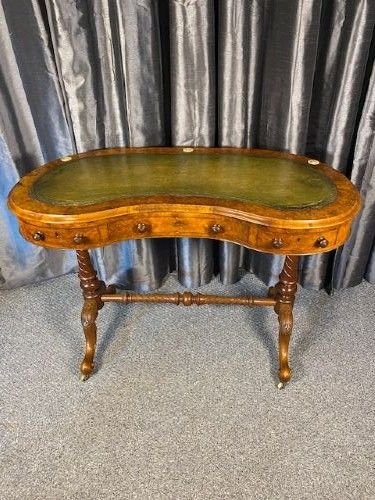
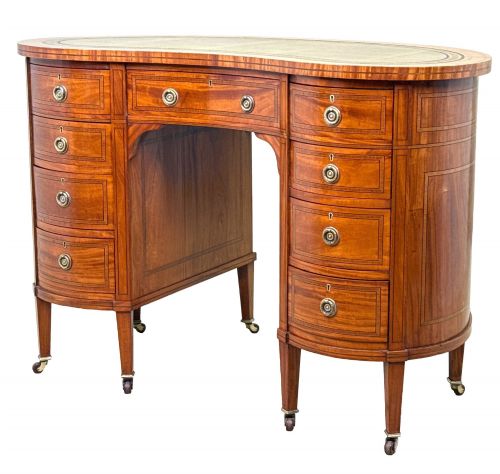
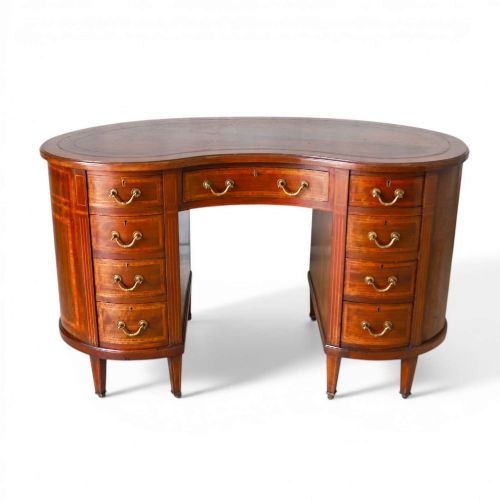
An edwardian kidney writing table provides a sweeping, crescent-shaped surface crafted for correspondence and placed centrally in a room.
Edwardian Kidney Writing Table
The edwardian kidney writing table is defined by its distinctive indented curve, designed to sit comfortably against the writer's torso. This layout allows the user to reach surrounding drawers or surface areas without twisting.
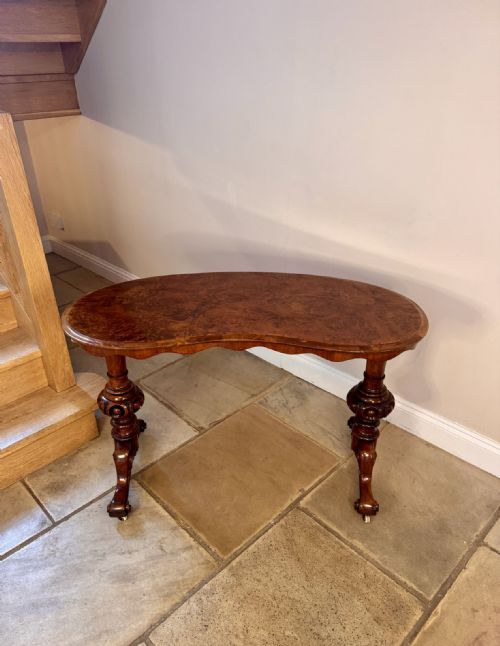
Pieces on this page span the Edwardian period and the Victorian era, reaching back into the nineteenth century. Forms include freestanding desks, dressing tables, and side tables constructed with characteristic curved tops.
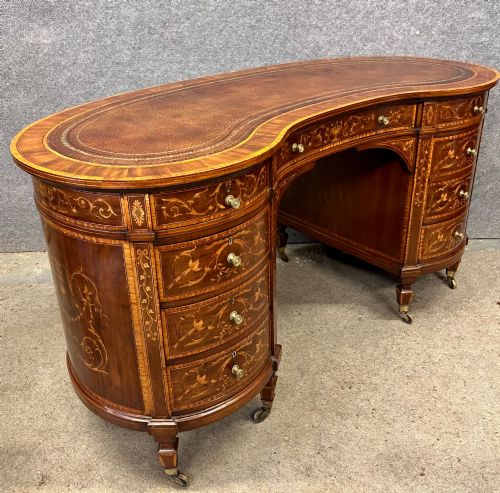
Makers such as Maple & Co., Edwards & Roberts, Shapland & Petter, and Richardson and Sons produced notable examples. These desks often feature inlaid marquetry, satinwood, burr walnut, or flame mahogany.
How They Were Made
Carpenters constructed the curved carcase using dense hardwoods such as mahogany, walnut, rosewood, and satinwood, often applied as finely grained veneers over a secondary timber. Burr walnut and flame mahogany surfaces display distinctive natural figuring.
Many examples incorporate contrasting satinwood inlay, marquetry, and brass mounts, alongside hand-tooled leather writing inserts fitted into the top surface.
Edwardian Kidney Writing Table Retail Price Guide 2026
Typical asking prices for edwardian kidney writing table among the pieces listed under this phrase on Sellingantiques today, from the lower quarter to the upper quarter. They describe what is for sale here now, not the wider market.
The crescent curve hugs your waist so closely you might forget you are supposed to be doing paperwork.
What Varies in Quality
The distinction between standard workshop output and exhibition quality lies in the precision of the marquetry and the choice of timber veneers. Finely figured burr walnut or meticulously detailed satinwood inlay indicate superior cabinet-making.
Construction details such as freestanding finished backs, delicate hand-carved elements, and intact original leather writing surfaces separate higher-tier pieces from simpler utilitarian tables.
Richardson and Sons·Maple & Co·Edwards & Roberts·Wolfe & Hollander·Shapland & Petter
The Edwardian Kidney Writing Table Glossary
- Kidney shape
- A curved, asymmetrical furniture form resembling a bean that allows the user to sit within the inner concave sweep.
- Marquetry
- Decorative patterns formed by fitting together thin veneers of various woods, laid into the primary surface of the desk.
- Satinwood
- A lustrous, yellow-toned timber imported from the tropics, frequently used forbanding and detailed inlay on late nineteenth-century tables.
- Burr walnut
- Timber taken from a tree growth, producing intricate, swirling grain patterns highly prized for cabinet fronts and top surfaces.
- Kneehole
- The central recessed space beneath a desk top designed to accommodate the legs of a seated person.
Edwardian Kidney Writing Table: Frequently Asked Questions
Where do I place a kidney desk?
Because the back of the carcase is often finished with veneer or inlay, these tables look best positioned away from walls.
Place the piece floating in the centre of a study or bedroom so the curved silhouette remains visible from all angles.
How do I care for the leather top?
The leather writing surface benefits from occasional cleaning with a damp cloth and a neutral wax polish.
Avoid placing damp glasses or hot mugs directly onto the hide to prevent staining the material.
Can these tables serve as dressing tables?
Several examples on this page are listed as dressing tables alongside writing desks.
The surface layout and drawer configurations easily accommodate personal grooming items in addition to writing materials.
How do I distinguish Victorian from Edwardian examples?
Victorian pieces tend to use darker timbers such as rosewood and burr walnut with heavier proportions.
Edwardian versions frequently employ lighter satinwood, delicate marquetry, and brighter polished mahogany finishes.