




Floral Painted Desk
These floral painted antique desk pieces bring hand-decorated charm and traditional writing surfaces into modern rooms.
Floral Painted Desk
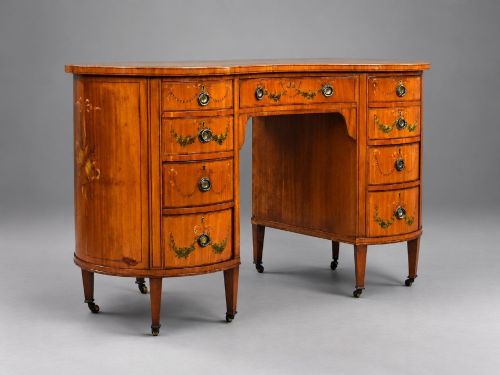
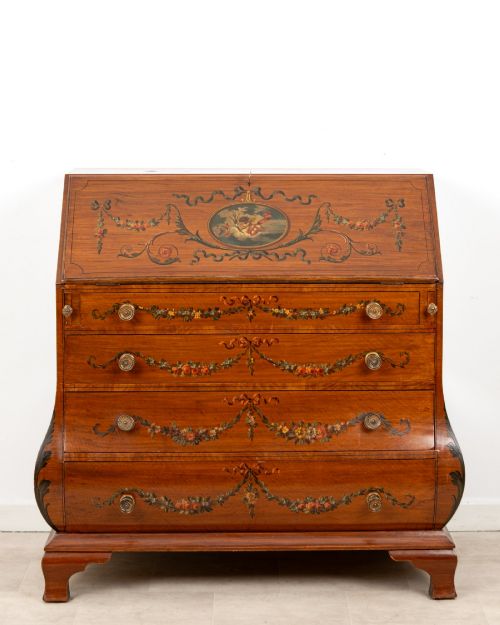
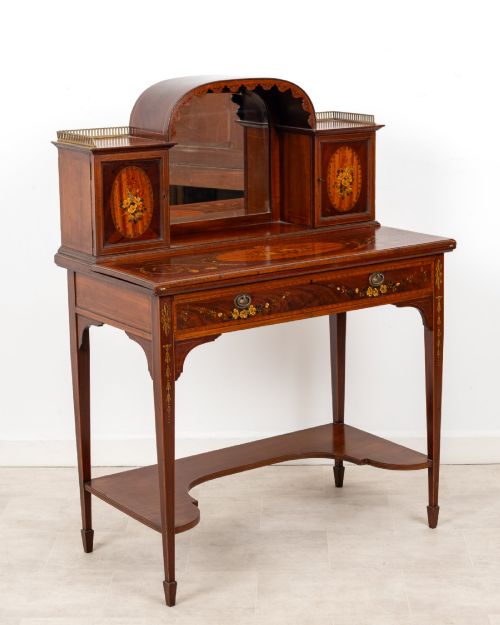
A floral painted antique desk brings together practical writing surfaces and delicate botanical decoration. When searching for a floral painted antique desk, buyers encounter forms ranging from Edwardian satinwood writing desks and bureau chests to kidney-shaped tables.
The pieces span the nineteenth century and the early twentieth century, incorporating styles such as Edwardian, Victorian, and satinwood finishes. These items serve as functional workstations and decorative focal points within a room.
How they were made
Craftsmen utilised woods like mahogany, walnut, and satinwood as the structural foundation for these writing surfaces. Artisans then applied hand-painted floral motifs directly onto the wood, often combining the painted details with inlaid veneers.
Makers integrated materials such as brass fittings, ormolu, and lacquer to complement the painted surfaces. The application of paint required steady brushwork to achieve floral patterns that adorned the writing flaps, frieze drawers, and superstructure compartments.
Floral Painted Desk Retail Price Guide 2026
Typical asking prices for floral painted desk among the pieces listed under this phrase on Sellingantiques today, from the lower quarter to the upper quarter. They describe what is for sale here now, not the wider market.
Listings feature items from the 19th Century, Victorian, Edwardian, and 1920 periods, utilising wood, paint, brass, and porcelain.
What varies in quality
Quality rests primarily in the execution of the hand-painted floral decoration and the selection of cabinet timbers. Finer examples display crisp, detailed brushwork on premium woods like satinwood, whereas lesser pieces show simpler or more uniform ornamentation.
The integrity of the construction and the subtlety of the colour palette distinguish the higher tier of these desks. Superior items maintain balanced proportions and harmonious integration between the painted ornamentation and the underlying form.
Royal Worcester·Marti·Meissen
The Floral Painted Desk Glossary
- Satinwood
- A durable timber with a golden sheen, frequently utilised for fine nineteenth-century and Edwardian furniture. It provides a pale, smooth ground well-suited for hand-painted botanical decoration.
- Bureau
- A sloping desk with a hinged flap that opens to reveal internal compartments and pigeonholes. It often stands upon a chest of drawers or slender legs.
- Carlton House desk
- A form of writing table featuring a fitted superstructure of small drawers and compartments arranged in a semicircle around the back and sides. The writing surface sits centrally beneath this tiered arrangement.
- Bonheur du jour
- A small, light lady's writing desk featuring a tiered cabinet or set of shelves upon the upper surface. This French form gained popularity during the eighteenth and nineteenth centuries.
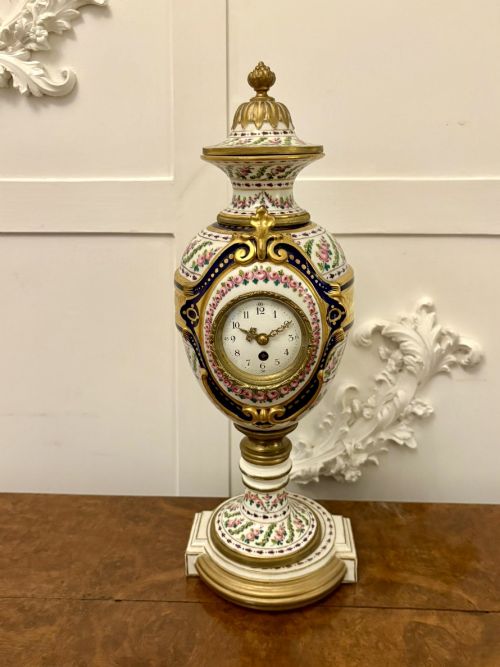
- Ormolu
- Gilded bronze mounted onto furniture or clocks for decorative effect. It adds metallic contrast to wood and painted surfaces.
Floral Painted Desk: Frequently Asked Questions
What is a floral painted antique desk?
A floral painted antique desk is a period writing table or bureau adorned with hand-painted botanical or floral motifs. These pieces typically date from the nineteenth or early twentieth centuries.
Craftsmen often applied these painted designs to satinwood, mahogany, or walnut frames to create decorative yet functional workspace furniture.
How do I care for a painted desk?
Maintenance involves keeping the wooden surface away from direct sunlight and excessive moisture to protect the paint and varnish. Regular dusting with a soft, dry cloth preserves the finish.
Avoid chemical polishes that can degrade delicate hand-painted floral details over time.
Where were these desks placed?
These desks served primarily as private writing tables in drawing rooms, boudoirs, or studies. Their decorative painted finishes allowed them to sit in principal reception rooms rather than hidden offices.
Their compact proportions made them suitable for domestic spaces where furniture needed to combine utility with visual appeal.
How do I identify an Edwardian desk?
Edwardian desks often feature lighter timbers such as satinwood, alongside mahogany and walnut, reflecting the aesthetic preferences of the early twentieth century. They frequently display refined floral painting and satinwood crossbanding.
Construction methods from this period combined traditional joinery with more standardised hardware components.