



Painted Satinwood Writing Table
These painted satinwood writing table pieces bring luminous grain and delicate brushwork to a study, offering a refined workspace shaped by Edwardian and Victorian hands.
Painted Satinwood Writing Table
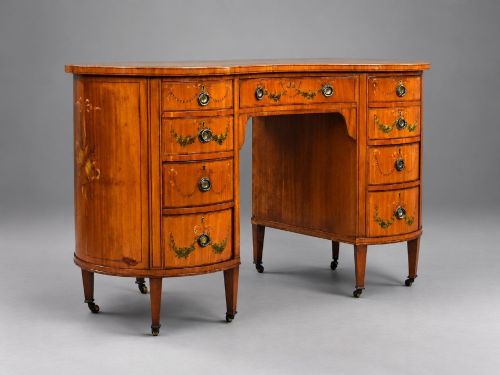
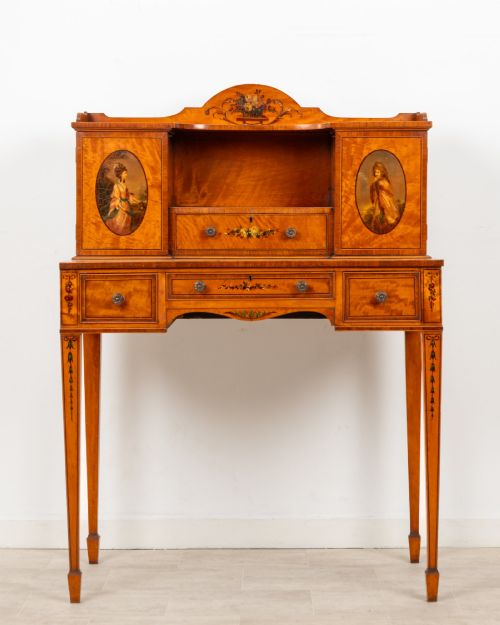
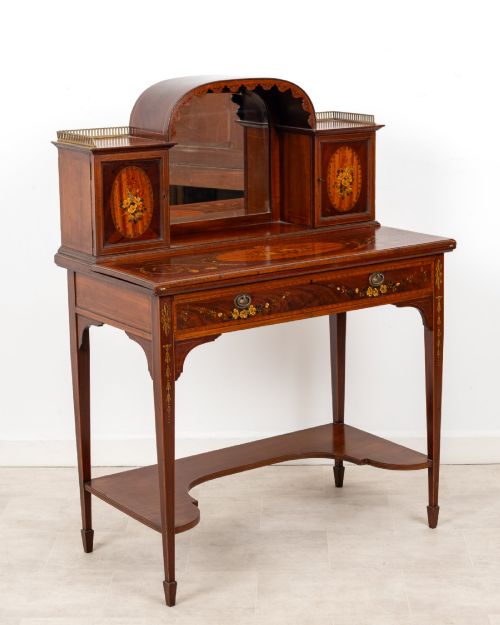
A painted satinwood writing table represents a sophisticated form of domestic furniture, emerging primarily through Edwardian revivalism, late Victorian craftsmanship, and earlier Georgian precedents. These desks range from compact kidney-shaped forms and freestanding knee-hole desks to elaborate Carlton House desks fitted with mirrored superstructures and multiple small drawers.
Buyers seeking a painted satinwood writing table will most frequently encounter Edwardian interpretations influenced by Sheraton and Neoclassical styles, often featuring hand-painted floral motifs and decorative inlay. These pieces combine practical writing surfaces with ornamental elegance, serving equally as functional workstations and decorative focal points within English country house interiors.
The selection encompasses diverse configurations, including dressing tables and specialised writing desks designed for the parlour or boudoir. Originating across the nineteenth and early twentieth centuries, these tables showcase the enduring appeal of satinwood timber paired with refined painted decoration.
How they were made
Construction relies upon satinwood timbers, frequently accented with contrasting mahogany framing and structural elements in painted timber. Artisans applied hand-painted details directly onto the wood, sometimes incorporating floral designs and classical motifs that echo Neoclassical and Sheraton revival aesthetics.
Functionality is enhanced through thoughtful hardware integration, including brass handles, fitted leather writing inserts, and occasionally protective glass tops. Superstructures on pieces such as the Carlton House desk involve intricate joinery to create banks of miniature drawers and compartments above the main writing surface.
Painted Satinwood Writing Table Retail Price Guide 2026
Typical asking prices for painted satinwood writing table among the pieces listed under this phrase on Sellingantiques today, from the lower quarter to the upper quarter. They describe what is for sale here now, not the wider market.
Desk forms range from compact kidney-shaped writing tables to freestanding knee-hole desks and elaborate Carlton House configurations.
What varies in quality
The sophistication of the hand-painted decoration largely determines the distinction between standard production and finer examples. Delicately executed floral motifs and crisp brushwork indicate superior craftsmanship, whereas simpler or heavily restored decoration alters the visual impact.
Timber selection and secondary woods also define the standard of a piece, with figured satinwood grain and harmonious mahogany banding commanding greater attention. The structural complexity of the form, from simple kidney-shaped desks to elaborate freestanding knee-hole and Carlton House variations, reflects the original maker's ambition and skill.
The Painted Satinwood Writing Table Glossary
- Satinwood
- A dense, lustrous tropical timber prized for its golden-yellow sheen and smooth grain. It forms the primary visible surface on these tables.
- Carlton House desk
- A distinctive writing desk featuring a curved superstructure of small drawers and compartments enclosing the rear and sides of the writing surface.
- Kidney-shaped
- A curved desk profile designed to wrap partially around the user, offering an ergonomic and decorative alternative to rectangular writing tables.
- Superstructure
- An upper tier of drawers, pigeonholes, or mirrors built onto the main desktop. This feature expands the storage capacity of smaller writing tables.
- Sheraton Revival
- A late nineteenth and early twentieth century design movement that reinterpreted the lighter, neoclassical furniture forms of the eighteenth century.
Painted Satinwood Writing Table: Frequently Asked Questions
What is a Carlton House desk?
A Carlton House desk is a specialised writing table defined by a U-shaped superstructure of small drawers and compartments built around the rear of the desktop. This layout provided orderly storage for correspondence while maintaining a compact footprint.
Such desks often feature leather writing inserts and fine painted or inlaid decoration, making them prominent centrepieces in period rooms.
How do I care for satinwood furniture?
Satinwood benefits from minimal intervention, requiring only gentle dusting with a soft, dry cloth to protect its polished surface and hand-painted details. Direct sunlight and excessive moisture should be avoided to prevent the timber from fading and the painted decoration from degrading.
Applying occasional specialist wax helps preserve the natural lustre of the wood without building up heavy residue.
Where were these desks typically used?
These writing tables were designed primarily for private reception rooms, ladies' boudoirs, and refined home studies within country houses. Their finished backs allowed them to sit freestanding in the middle of a room rather than pushed strictly against a wall.
They served as elegant surfaces for letter-writing, reading, and personal administration.
How do I distinguish Edwardian from earlier pieces?
Edwardian interpretations of satinwood furniture, common around nineteen hundred, frequently exhibit lighter proportions and enthusiastic revival styles like Sheraton Revival and Neoclassical. They often incorporate machine-assisted elements alongside hand-painting, whereas genuine eighteenth-century pieces display older construction techniques and tool marks.
Examining the secondary woods underneath and inside the drawers helps clarify the period of manufacture.