



Curved Satinwood Desk
A curved satinwood desk offers a graceful writing surface, combining light timber tones with sweeping silhouettes that suit period and modern studies alike.
Curved Satinwood Desk
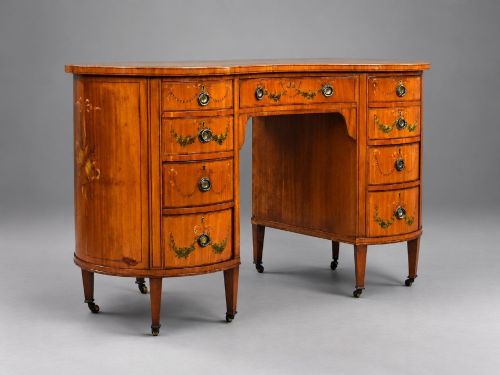
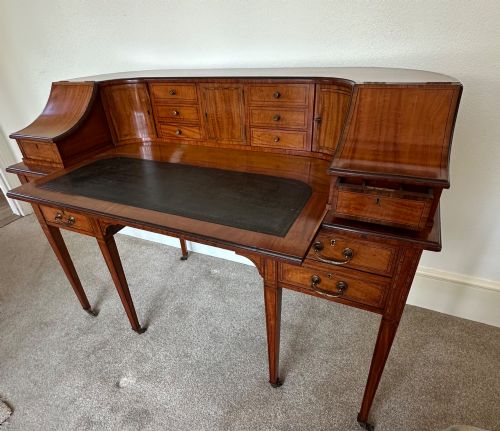
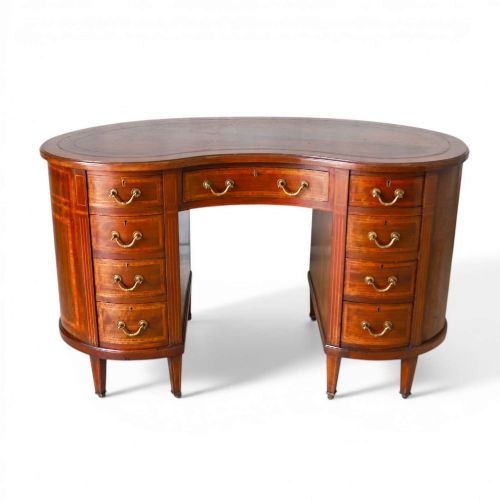
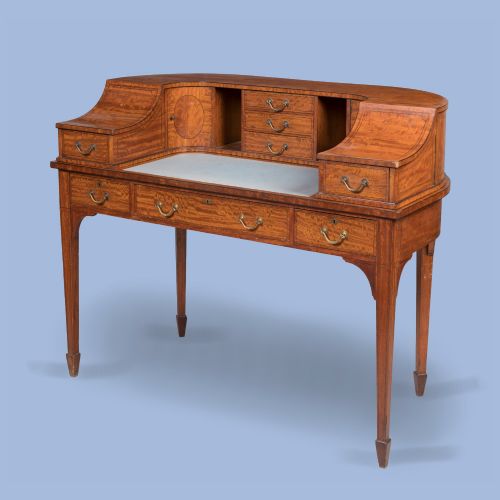
When buyers search for a curved satinwood desk, they encounter sophisticated writing furniture that predominantly takes the kidney shape or the elaborate tiered form of the Carlton House desk. These pieces emerge chiefly from the Edwardian period and the Sheraton Revival movement, alongside nineteenth-century examples.
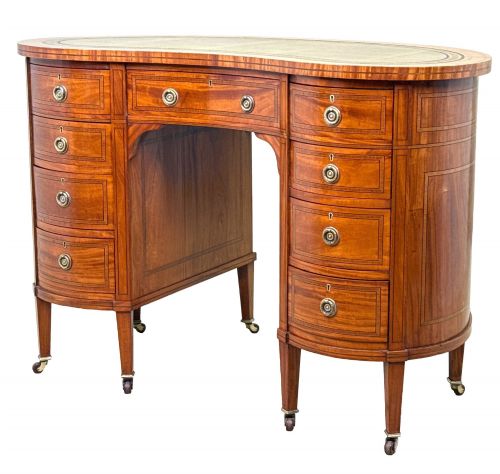
The inventory on this page shows that kidney-shaped writing tables and desks dominate the selection, frequently enhanced with inlaid mahogany or contrasting timber bands. Alongside desks, related forms such as writing tables and dressing tables appear, reflecting the period taste for figured woods and elegant curves.
Materials and construction methods
Cabinetmakers utilised pale satinwood veneers applied over sturdy secondary woods like mahogany, often incorporating intricate marquetry and contrasting stringing. Brass handles, galleries, and locks complete the hardware on these refined pieces.
Writing surfaces frequently feature inset panels of tooled leather or fabric, bordered by polished timber rims that follow the sweeping contours of the desk top.
Curved Satinwood Desk Retail Price Guide 2026
Typical asking prices for curved satinwood desk among the pieces listed under this phrase on Sellingantiques today, from the lower quarter to the upper quarter. They describe what is for sale here now, not the wider market.
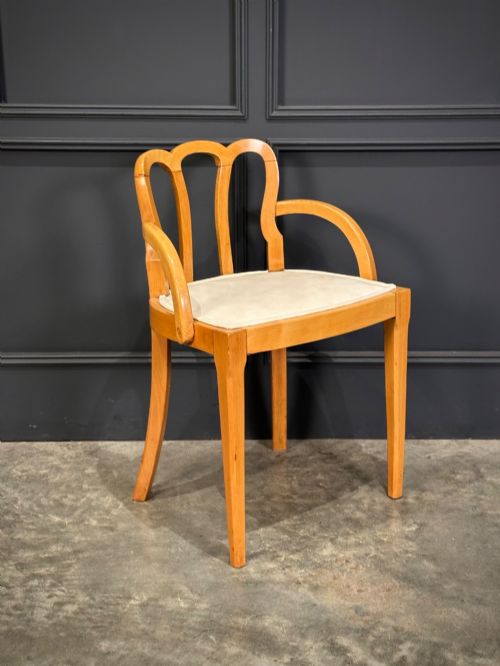
Listings feature satinwood alongside mahogany, rosewood, and birchwood across Edwardian, Victorian, and Art Deco periods.
Distinctions in craftsmanship
The division between standard production and exceptional work rests in the precision of the veneer matching along tight curves and the delicacy of the inlaid decoration. Master workshops invested heavily in hand-cut marquetry and substantial brass fittings rather than stamped replacements.
Structural integrity along the curved rails and the smoothness of drawer operation also separate fine examples from simpler items, revealing the underlying joinery standards of the maker.
Edwards and Roberts·Collinson and Lock
The Curved Satinwood Desk Glossary
- Satinwood
- A lustrous tropical hardwood known for its golden colour and reflective grain, widely utilised in fine cabinetmaking for decorative veneers.
- Kidney shaped
- A curved desk or table silhouette resembling a kidney bean, designed to wrap partially around the seated writer.
- Carlton House desk
- A distinctive writing desk featuring a curved superstructure of small drawers and compartments arranged in a tiered semicircle around the back of the writing surface.
- Sheraton Revival
- A late nineteenth and early twentieth-century design movement that reinterpreted the light, neoclassical furniture forms associated with Thomas Sheraton.
- Marquetry
- Decorative wood veneer patterns assembled from various tinted woods to create pictorial or geometric designs on furniture surfaces.
Curved Satinwood Desk: Frequently Asked Questions
How do I identify a Sheraton Revival piece?
Sheraton Revival furniture dates primarily from the late Victorian and Edwardian periods, mimicking the light proportions and neoclassical motifs popular in the late eighteenth century. Look for pale satinwood timbers, delicate stringing, and classical urn or floral marquetry.
These pieces often combine mahogany with satinwood panels, displaying refined craftsmanship that mirrors eighteenth-century originals while revealing later construction methods.
Were these desks used for writing?
These desks served primarily as private writing tables for correspondence and estate management rather than heavy administrative work. The curved kneeholes and smaller drawer configurations suited polite correspondence in drawing rooms and boudoirs.
Many retain their original tooled leather writing inserts, which provided a smooth surface for quill or pen work.
How do I care for satinwood?
Satinwood requires protection from direct sunlight to preserve its pale golden colour and prevent the timber from darkening or fading unevenly. Regular dusting with a soft, dry cloth maintains the polished sheen without building up heavy wax residues.
Keep these pieces away from direct heat sources and drastic humidity changes to protect the delicate veneers and prevent the curved joints from shifting.