


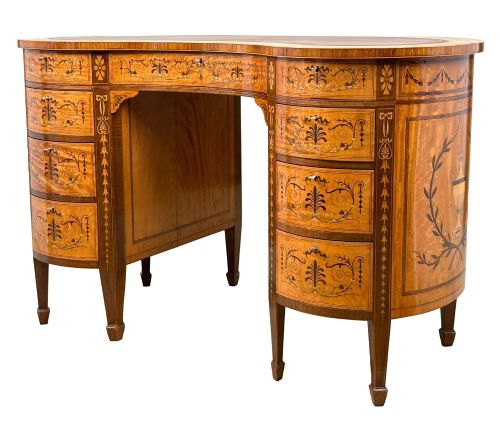


Edwardian Satinwood Kidney Desk
An Edwardian satinwood kidney desk brings serpentine grace to a study, offering a curved writing surface wrapped in rich timbers.
Edwardian Satinwood Kidney Desk
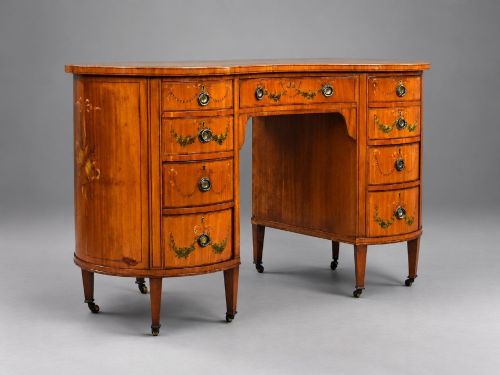
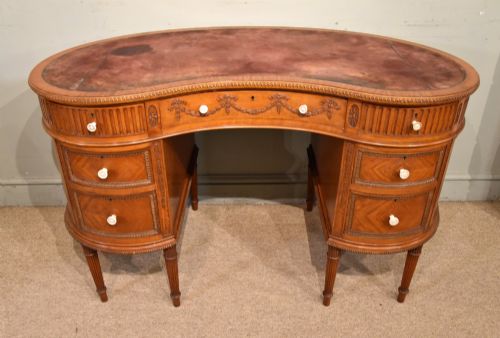
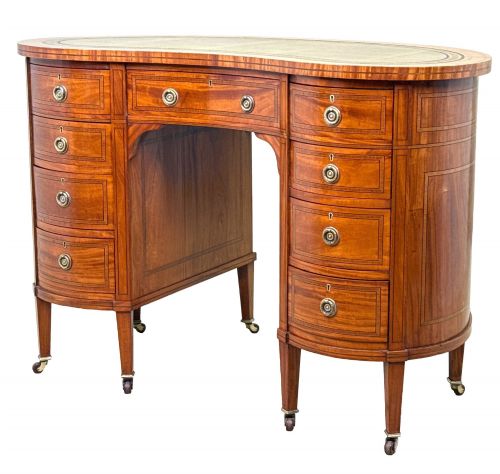
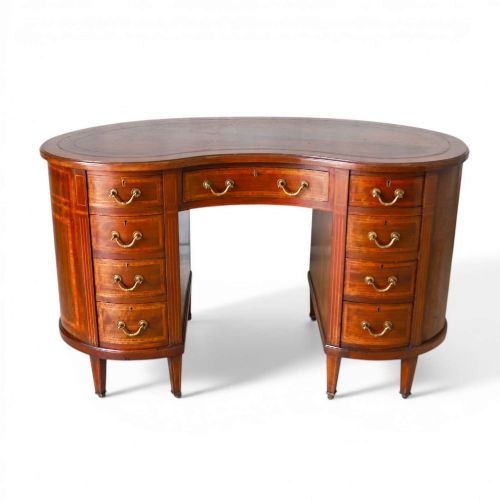
The edwardian satinwood kidney desk is a distinctive writing surface defined by its sweeping, concave front designed to curve around the user. When searching for this form, buyers encounter pieces from the Edwardian period and Victorian eras, alongside Sheraton Revival interpretations spanning the late nineteenth and early twentieth centuries.
Most examples found on this page combine the signature kidney shape with fine timbers like satinwood and mahogany, often enhanced by contrasting stringing and inlay. These writing tables and desks serve as practical workspaces while functioning as striking centrepieces within a room.
How they were made
Cabinetmakers constructed these desks using solid and veneered timbers, primarily satinwood and mahogany, supported by secondary woods such as oak. The distinctive curved top required precise carpentry to shape the frame before applying delicate veneers.
Decoration relied heavily on marquetry and satinwood inlay, often complemented by boxwood and rosewood stringing to create geometric or floral motifs. Brass fittings, including handles and sometimes castors, completed the hardware of the desk.
Writing surfaces were typically inset with panels of tooled leather, providing a durable and refined texture for daily correspondence. Workshops such as Edwards & Roberts and Maple & Co employed these traditional joinery and decorative techniques.
Edwardian Satinwood Kidney Desk Retail Price Guide 2026
Typical asking prices for edwardian satinwood kidney desk among the pieces listed under this phrase on Sellingantiques today, from the lower quarter to the upper quarter. They describe what is for sale here now, not the wider market.
Listings feature pieces spanning the Victorian and Edwardian eras, predominantly utilising satinwood, mahogany, and rosewood.
What varies in quality
The distinction between standard examples and the finest pieces lies in the crispness of the marquetry and the choice of timbers. Superior desks display meticulously matched satinwood veneers and intricate inlay work that remains sharp and secure.
Makership dictates much of the standing of a desk, with documented workshops commanding attention for their refined proportions and robust construction. The quality of the secondary woods and the retention of original brass hardware and leather tops further elevate a piece.
Maple & Co·Edwards & Roberts
The Edwardian Satinwood Kidney Desk Glossary
- Satinwood
- A lustrous, yellowish-gold timber prized for its fine grain and ability to take a high polish. It forms the primary visual appeal of many Edwardian and nineteenth-century writing desks.
- Kidney shape
- A curved desk or table profile featuring a concave front designed to fit closely against the user. This ergonomic form became popular during the Victorian and Edwardian periods.
- Sheraton Revival
- A late nineteenth-century design movement inspired by the neoclassical furniture of George Sheraton. These pieces frequently incorporate satinwood inlay, painted details, and classical motifs.
- Marquetry
- The art of applying small pieces of veneer to a structure to form decorative patterns or pictures. Craftsmen used contrasting timbers like rosewood and boxwood to create detailed floral designs.
Edwardian Satinwood Kidney Desk: Frequently Asked Questions
What is an edwardian satinwood kidney desk?
An edwardian satinwood kidney desk is a nineteenth or early twentieth-century writing table featuring a curved, kidney-shaped top and light wood veneers.
These pieces combine decorative appeal with a functional workspace, shaped to curve comfortably around the user.
How were these desks used originally?
They served as elegant writing tables for correspondence and private paperwork in the reception rooms or studies of grand homes.
The curved profile allowed the writer to sit close to the drawers and writing surface without reaching awkwardly.
How do I care for a satinwood surface?
Satinwood furniture requires gentle dusting with a soft, dry cloth and protection from direct sunlight and excessive moisture.
Applying occasional appropriate wax preserves the sheen of the timber without damaging the delicate inlay.
How can I tell the period?
Dating relies on examining the construction methods, secondary woods like oak or mahogany, and the style of the brass hardware.
Victorian and Edwardian pieces often display distinct inlay patterns and cabinetmaking signatures that anchor their production era.