
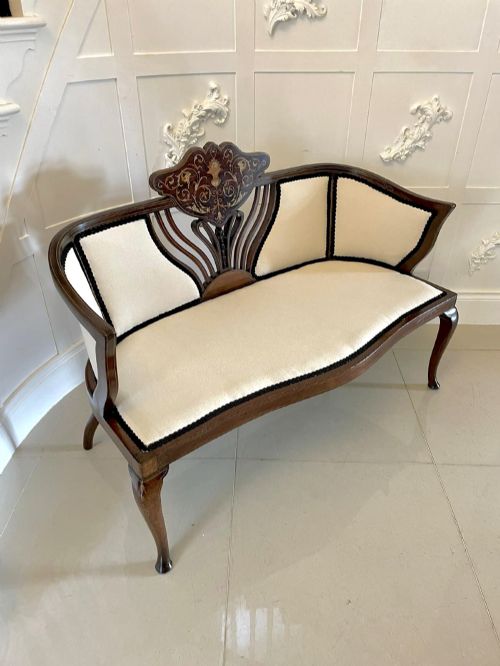
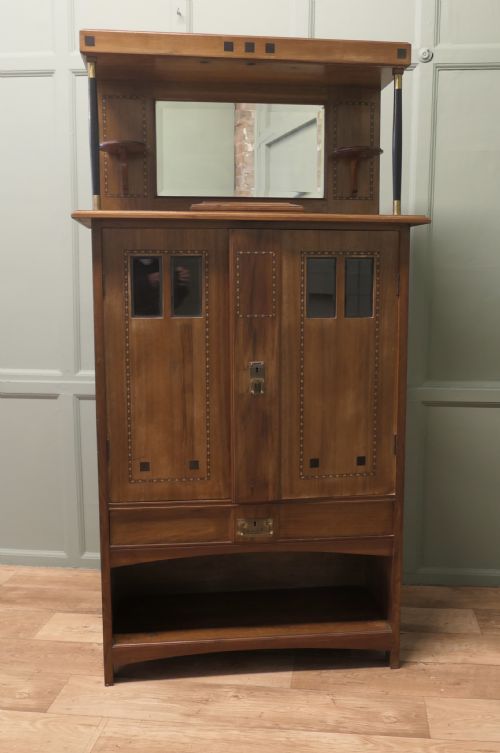
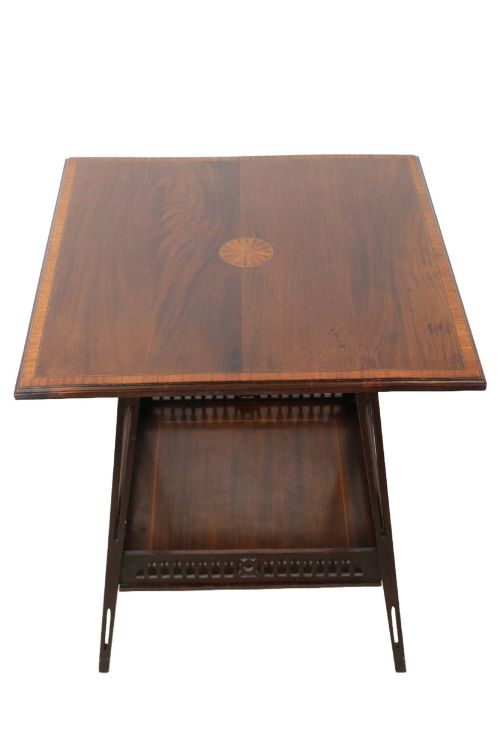
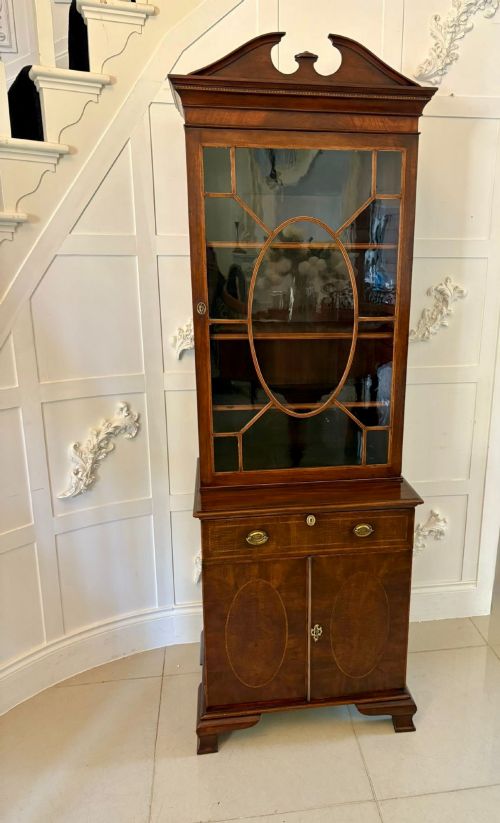

Edwardian Inlay Furniture
Edwardian inlay furniture brings together polished timbers and delicate contrasting woods to define early twentieth-century interior style.
Edwardian Inlay Furniture
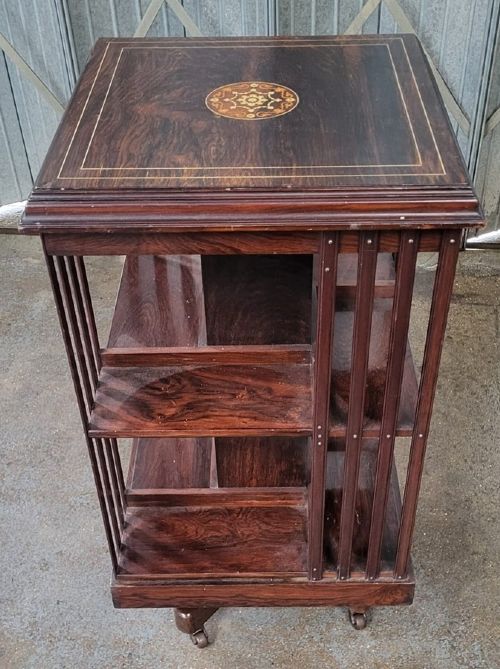
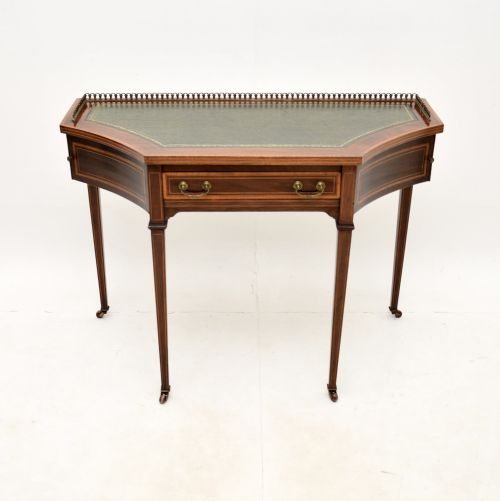
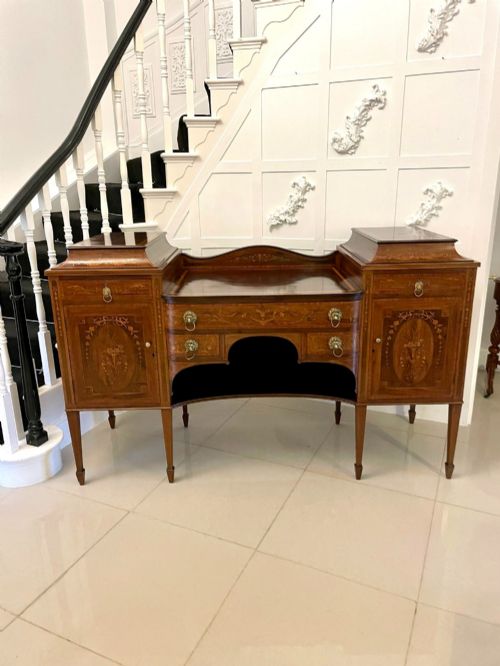
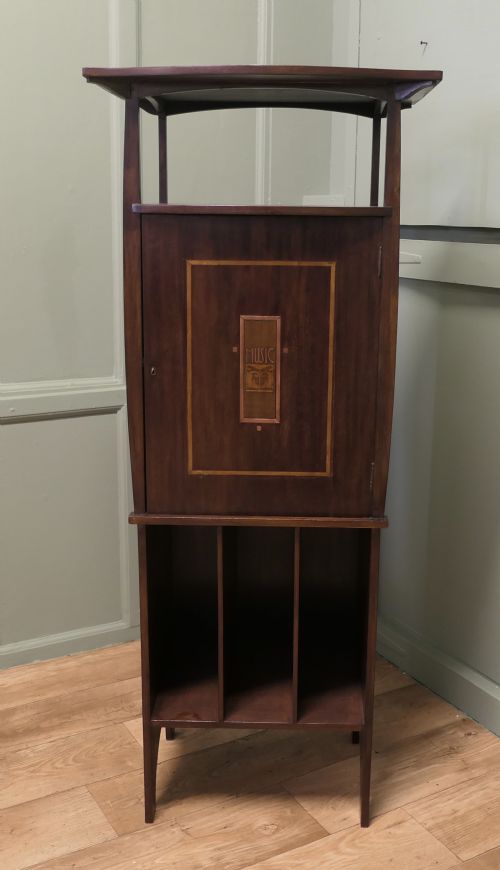
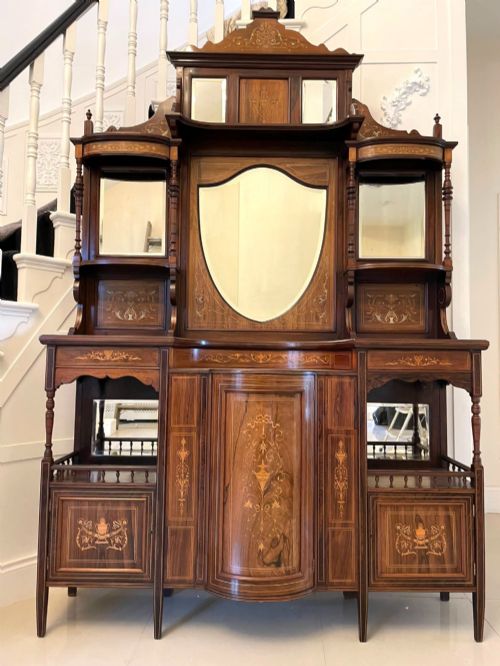
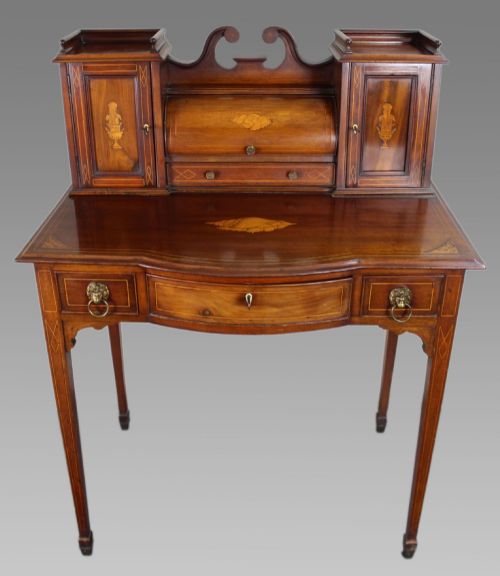
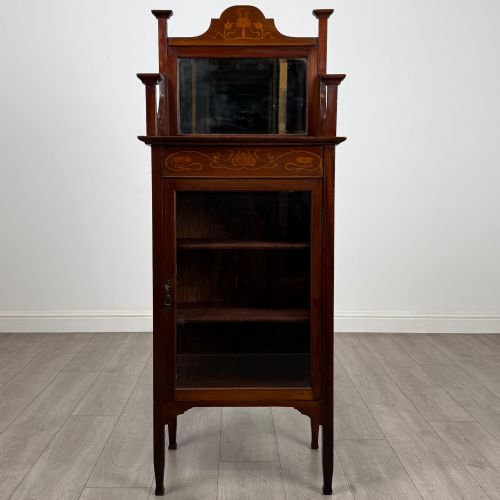
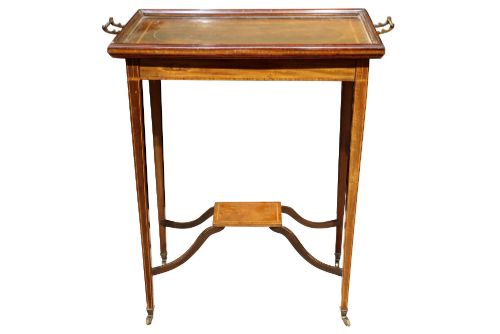
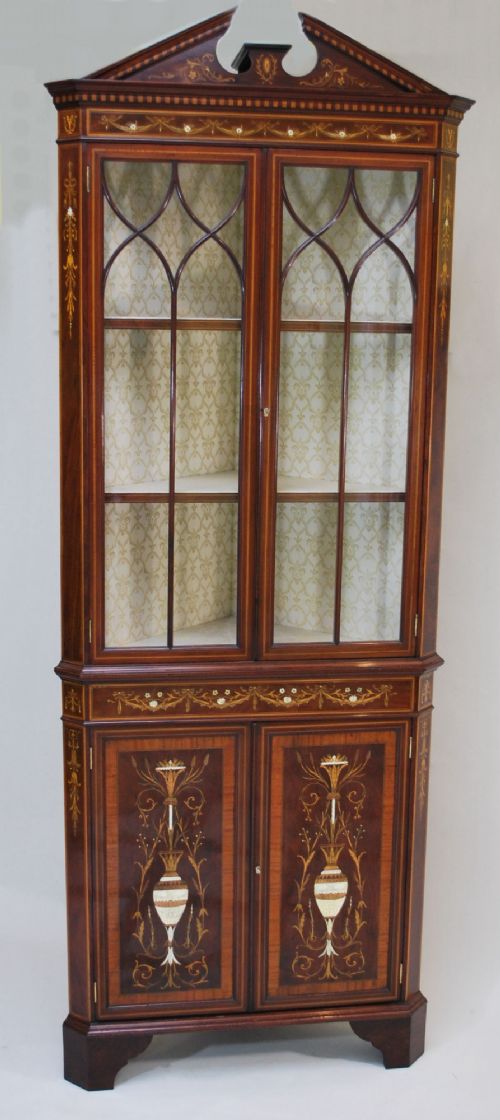
When you search for edwardian inlay furniture, you encounter practical domestic items designed for comfortable homes, spanning occasional tables, writing desks, revolving bookcases, and display cabinets. These pieces combine utility with ornamental detail, serving as both functional furnishings and focal points within a room.
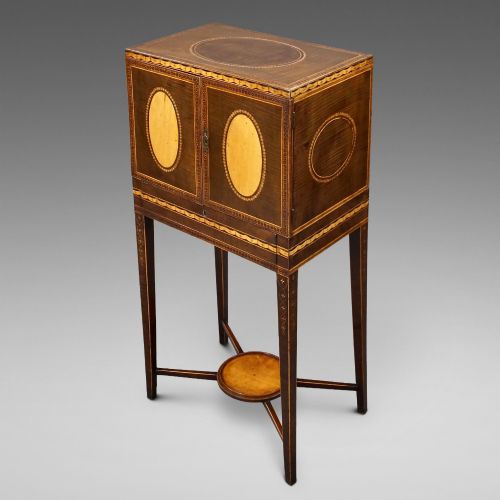
Mahogany forms the primary body for the most frequently met examples, often enhanced with satinwood, boxwood, and rosewood stringing or marquetry. The aesthetic draws heavily from Sheraton Revival principles, favouring lighter proportions and symmetrical decorative motifs over heavier nineteenth-century designs.
Alongside standard parlour and bedroom tables, the selection includes specialised forms such as music cabinets, envelope card tables, and bedside cupboards. Originating predominantly around the turn of the twentieth century, these works capture a period of refined cabinet-making that prioritized elegance alongside everyday purpose.
How They Were Made
Makers constructed the carcases of these items using solid mahogany, walnut, or rosewood, frequently applying fine veneers to large flat surfaces like table tops and cabinet doors. Timbers such as satinwood and harewood provided pale contrasting panels, while boxwood lines traced the structural outlines.
Inlay techniques combined stringing, banding, and pictorial marquetry. Craftsmen channelled narrow grooves into the host wood to embed contrasting strips, or assembled complex floral and classical motifs from various dyed and natural hardwoods before pressing them flush into the surface.
Listings feature mahogany, satinwood, and rosewood, incorporating boxwood inlay across tables, cabinets, and desks.
What Varies in Quality
The distinction between standard commercial output and superior craftsmanship rests on the precision of the marquetry and the selection of cabinet timbers. Finer pieces display tight, seamless joins in the inlay work where contrasting woods meet without filler, alongside highly figured mahogany or lustrous satinwood veneers.
Structural integrity and secondary woods also mark out the better productions. High-grade items incorporate well-seasoned timbers for drawer linings and carcase backs, maintaining smooth mechanical action in revolving bookcases, envelope tables, and fitted drinks cabinets.
Trevor Page And Co·Hewetsons London·JS Henry·Edwards And Roberts·Liberty And Co·Shapland And Petter·J Shoolbred
The Edwardian Inlay Furniture Glossary
- Marquetry
- Decorative veneer work forming pictures or geometric patterns by assembling pieces of different coloured wood. This technique requires meticulous hand-cutting and fitting to achieve complex floral or scroll designs.
- Satinwood
- A durable tropical timber with a lustrous, golden-yellow sheen used extensively for contrasting panels and banding. It became a hallmark of the Sheraton Revival style popular in the early twentieth century.
- Stringing
- Thin, narrow strips of contrasting wood embedded into channels cut into the surface of a furniture piece. It creates fine decorative borders around drawer fronts and table edges.
- Torchère
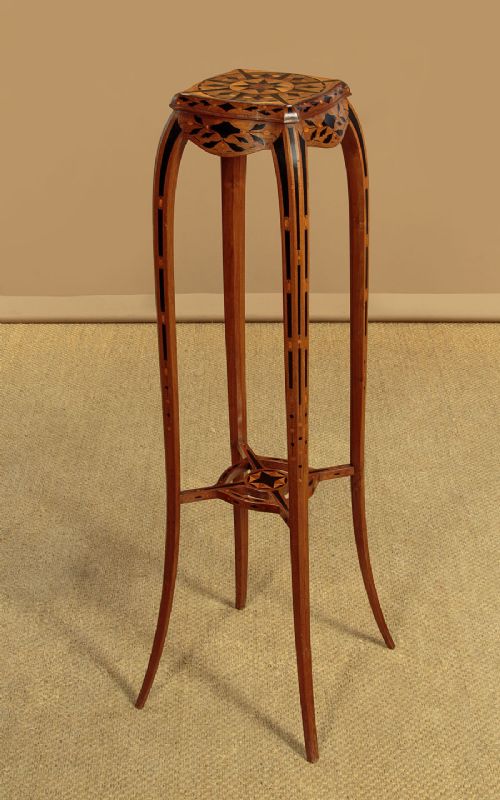
- A tall, slender stand designed to hold a candle, lamp, or decorative plant. These pedestals often feature inlaid circular tops and tapered columns.
- Etagere
- A set of open shelves for displaying ornaments, supported by slender uprights. They emerged as decorative yet practical furniture for Edwardian drawing rooms.
Edwardian Inlay Furniture: Frequently Asked Questions
How do I identify Edwardian inlay furniture?
Look for lighter proportions in mahogany or satinwood, combined with delicate boxwood stringing and neoclassical motifs. These pieces often date from the turn of the twentieth century and reflect Sheraton Revival influences.
Examine the construction of the cabinet work and the integration of the contrasting woods. Genuine period examples show hand-cut details rather than stamped transfers.
Where were these pieces used in the home?
They served primarily in drawing rooms, parlours, and bedrooms as functional yet decorative additions. Items ranged from revolving bookcases and writing desks to music cabinets and bedside tables.
Their compact scale allowed them to fit comfortably into various domestic spaces, providing surface area and storage while enhancing the room's aesthetic.
How should I care for inlaid wood surfaces?
Maintain stable room humidity and avoid placing timber furniture near direct heat sources or strong sunlight. Regular dusting with a soft, dry cloth preserves the finish.
Apply high-quality beeswax sparingly to nourish the wood and protect the delicate veneers without building up heavy chemical layers over the marquetry.
What is Sheraton Revival style?
Sheraton Revival refers to late nineteenth and early twentieth-century furniture inspired by the eighteenth-century designs of Thomas Sheraton. It champions elegant lines, tapered legs, and subtle inlay work.
This aesthetic moved away from heavy Victorian gloom, offering lighter domestic furnishings well-suited to Edwardian interiors.