
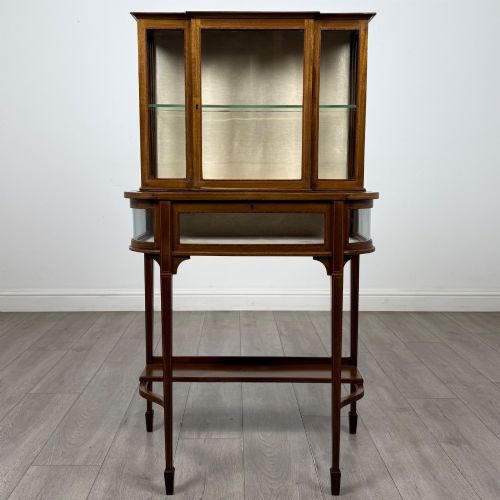
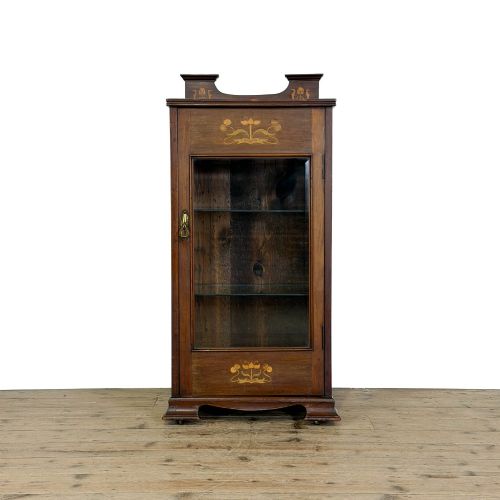
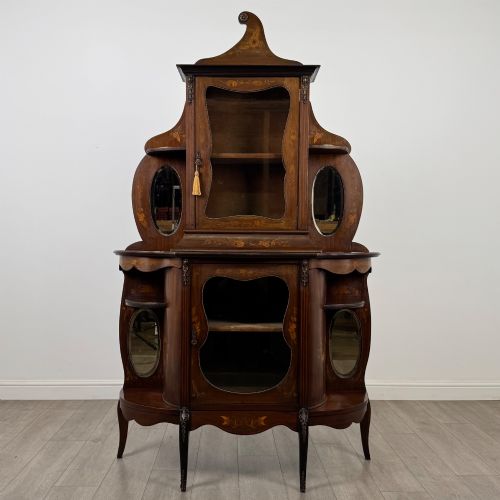

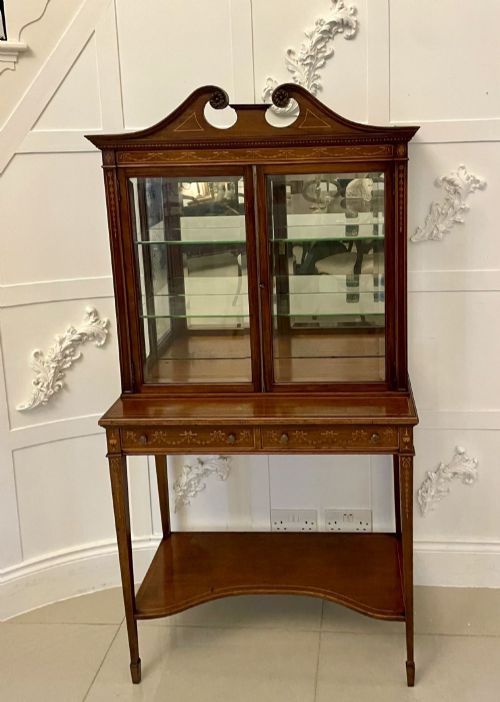
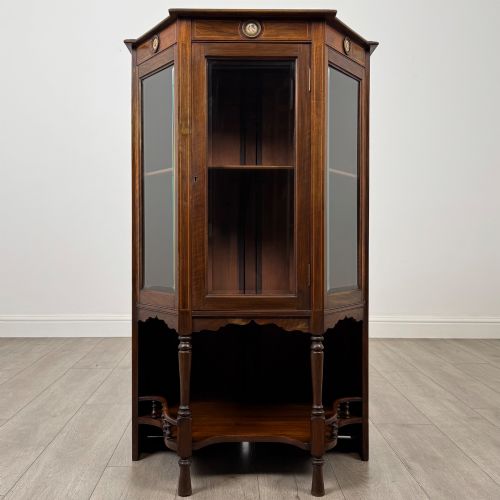
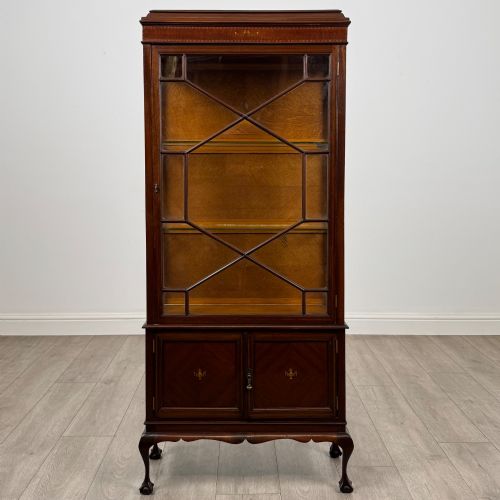
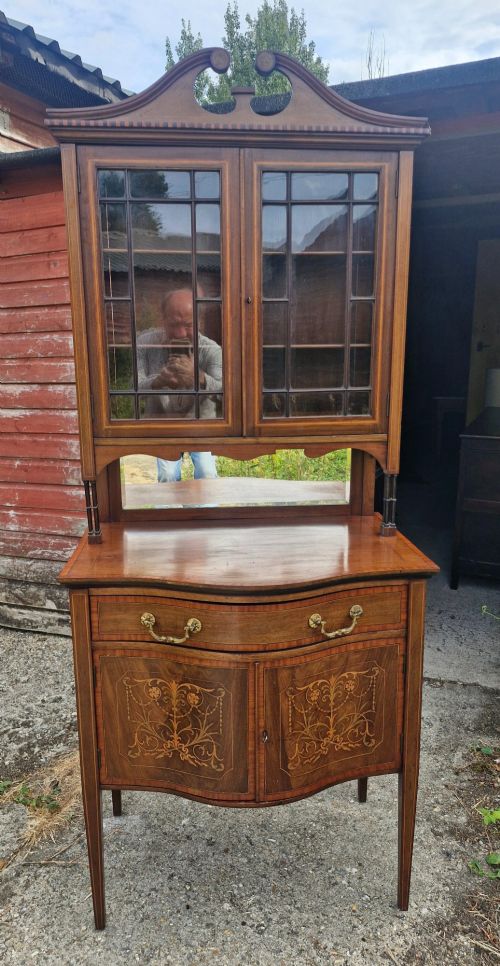
Edwardian Inlaid Vitrine Cabinet
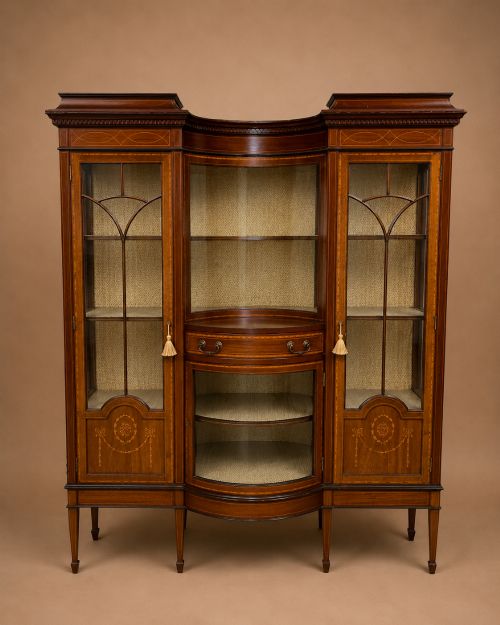
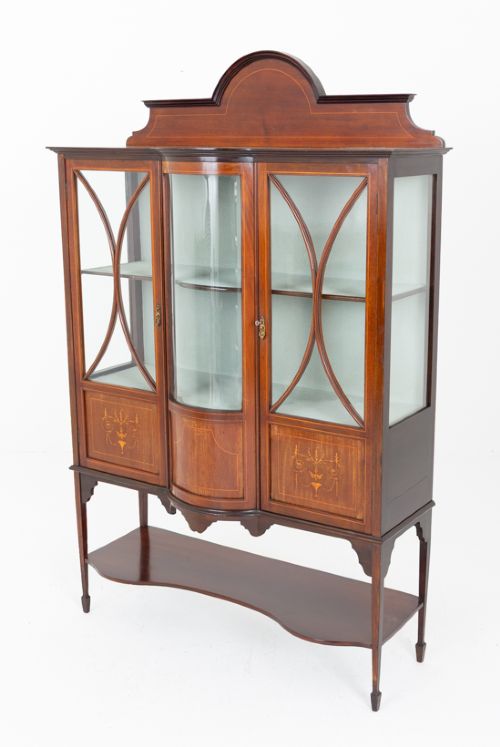
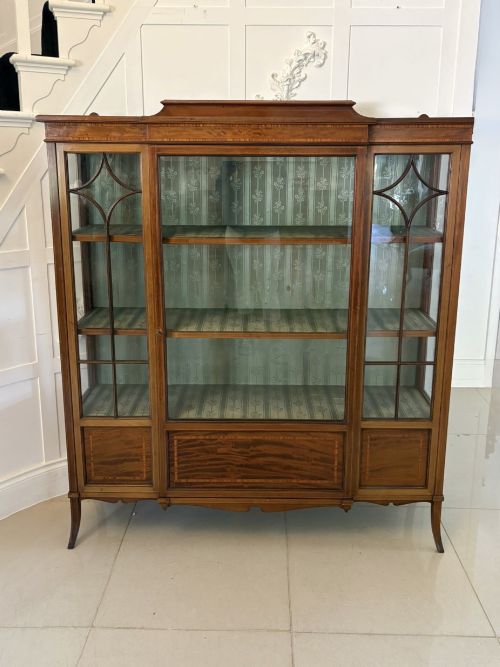
An edwardian inlaid vitrine cabinet brings glass, mahogany and satinwood together to show off precious objects with elegance.
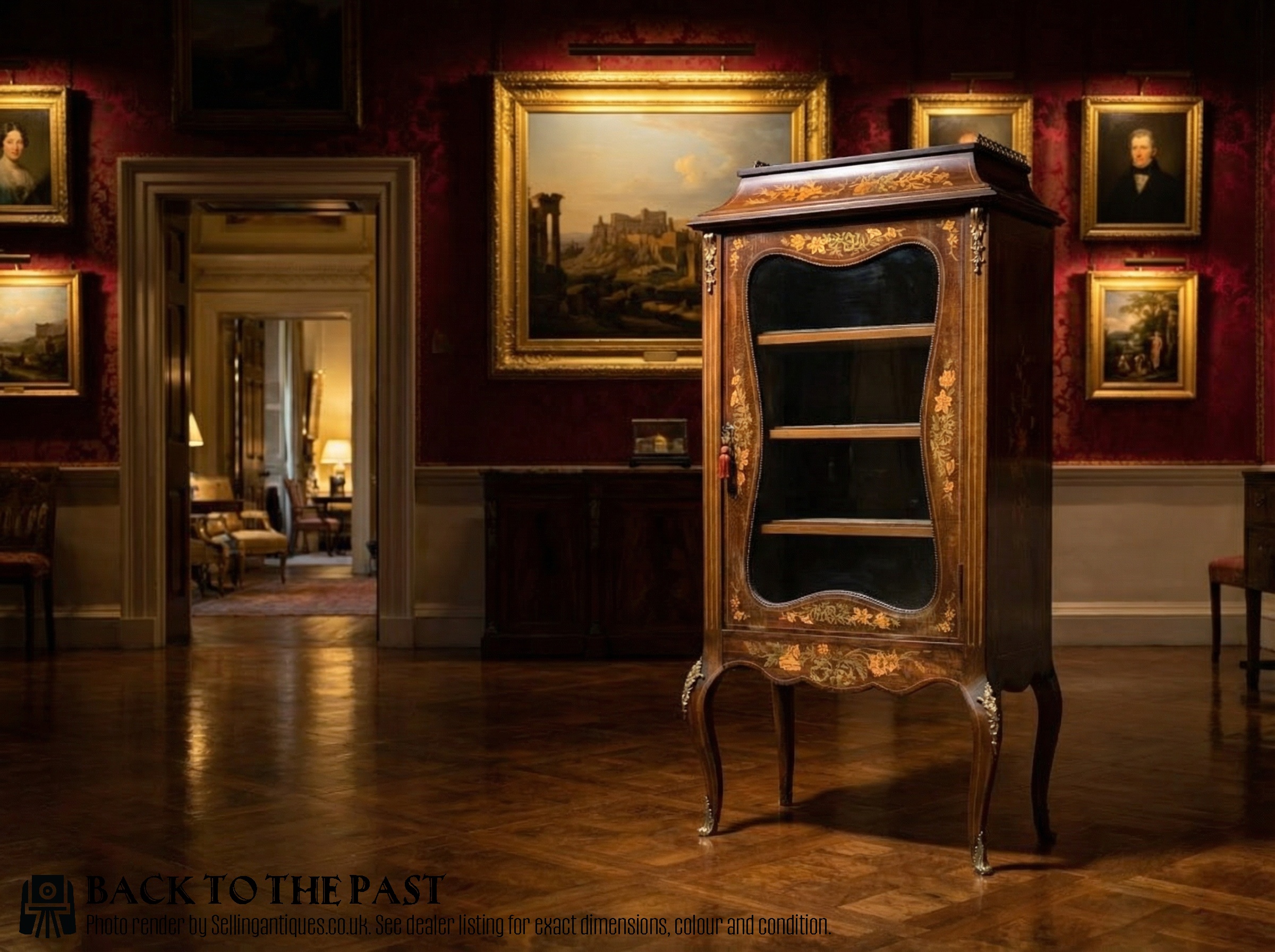
Edwardian Inlaid Vitrine Cabinet
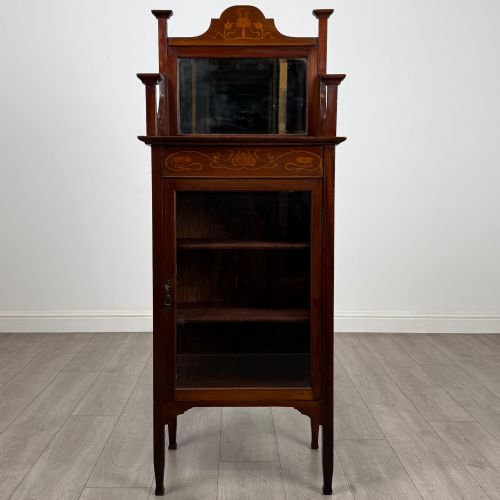
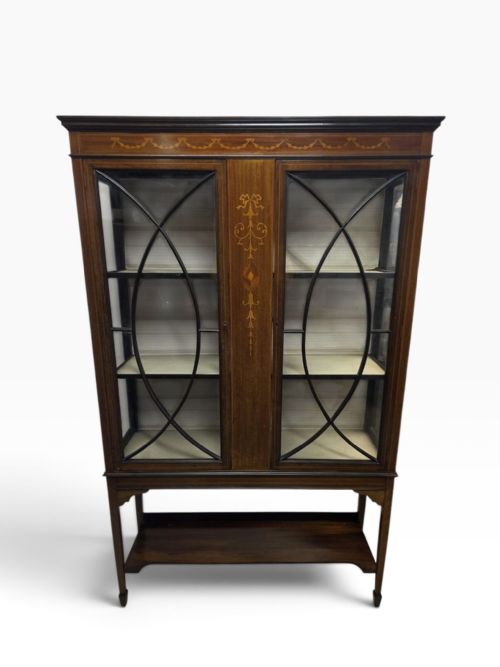
An edwardian inlaid vitrine cabinet is a glass-fronted piece designed to display porcelain, silver and curiosities within domestic rooms. These cabinets emerge primarily from the Edwardian period and the late nineteenth century, spanning Victorian and twentieth-century transitions.
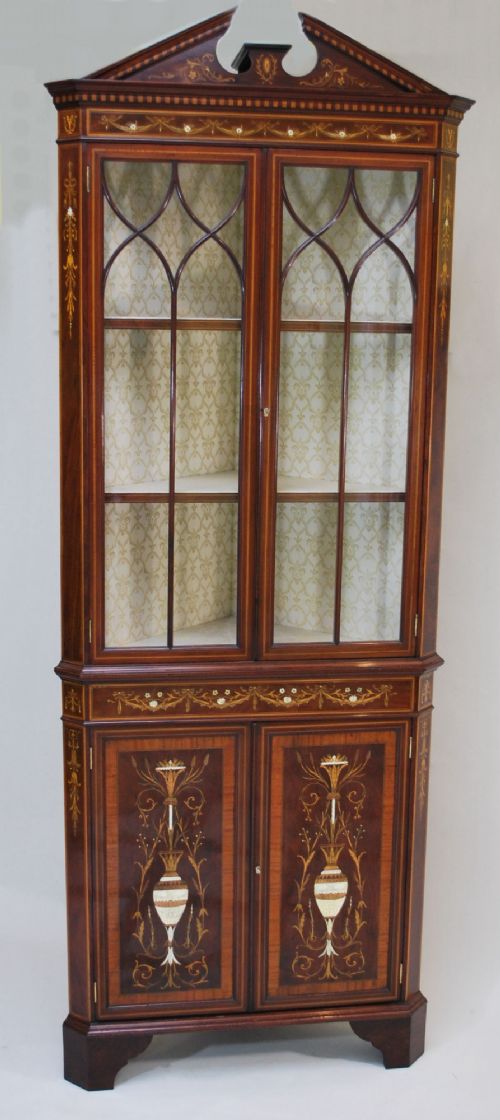
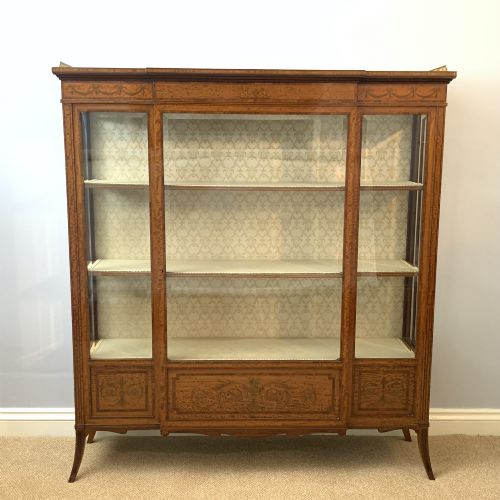
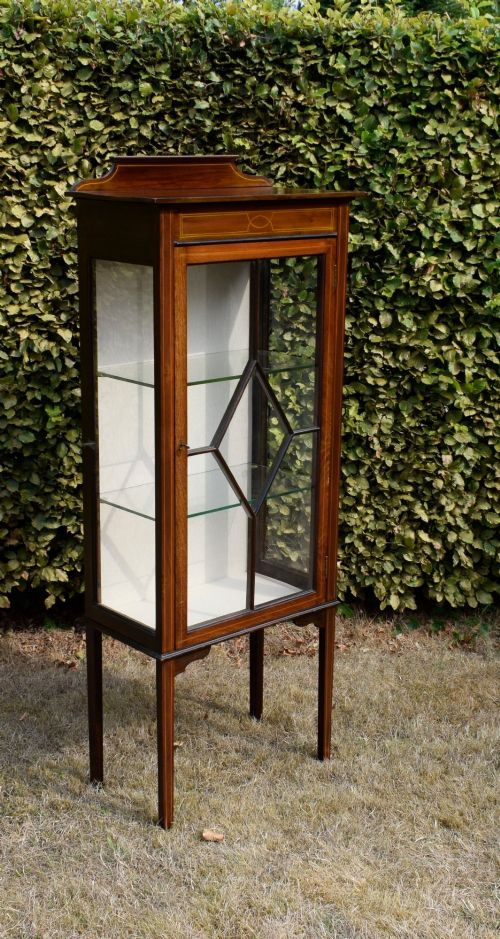
The versions most commonly met on this page take the form of upright display cabinets, corner cabinets and freestanding pedestal vitrines in mahogany. Many incorporate satinwood inlay and marquetry, drawing heavily on Sheraton Revival and Art Nouveau design vocabularies.
Makers and workshops of the era produced various formats, including bow-fronted doors, breakfronts and glazed table vitrines or bijouterie pieces. Their primary purpose remains the safe, visible presentation of valued personal collections.
How They Were Made
Carpenters built the structural carcass of an edwardian inlaid vitrine cabinet predominantly from solid mahogany or walnut, frequently selecting satinwood for contrasting visual panels. Glass provides the primary viewing barrier for doors and side panels, sometimes supported by delicate brass fittings and internal fabric linings.
Wood inlay and marquetry define the surface decoration, utilising contrasting timbers and botanical or geometric motifs to ornament the friezes and doors. Glazing bars, including astragal configurations, divide the glass panes carefully while mirror backs reflect light through the displayed objects.
Some slender pedestal vitrines were built narrow enough to stand like silent sentinels in tight corners.
What Varies in Quality
The sophistication of the marquetry and the precision of the satinwood inlay separate standard workshop output from exceptional cabinet work. Cabinets attributed to prominent makers often display superior timber selection, crisper mouldings and more intricate floral or classical motifs.
Structural harmony also dictates distinction, where well-proportioned bow fronts, serpentine shapes and balanced two-part constructions demonstrate superior design ambition. The integration of high-grade glass, fine brass hardware and mirrored backs completes the architectural standard of the upper range.
Edwards and Roberts·Shapland and Petter·Maple and Co
The Edwardian Inlaid Vitrine Cabinet Glossary
- Vitrine
- A glass-fronted display cabinet used for showing valuables and curiosities. These pieces rely heavily on transparent panels to let light reach the objects inside.
- Marquetry
- Decorative veneer work formed of small pieces of wood and other materials assembled into pictorial or geometric patterns. Craftsmen apply these designs carefully to cabinet doors and friezes.
- Bijouterie
- Small decorative items or the low glass tables and cabinets made to display them. Collectors use these specialist vitrines for jewellery and medals.
- Astragal
- A small convex moulding often used in glazing bars to divide panes of glass. They give cabinet doors a refined grid pattern.
- Sheraton Revival
- A late nineteenth and early twentieth-century design movement inspired by the neoclassical furniture of Thomas Sheraton. Pieces in this style use satinwood inlay and light proportions.
Edwardian Inlaid Vitrine Cabinet: Frequently Asked Questions
What is an edwardian inlaid vitrine cabinet used for?
These cabinets serve primarily to exhibit decorative items, fine china and personal collections while protecting them from dust. The glazed panels allow viewers to observe contents from multiple angles.
Historically, households placed them in drawing rooms and reception spaces as both functional storage and sophisticated decorative focal points.
How do I identify the Edwardian period?
Edwardian furniture generally dates from the reign of King Edward VII, spanning the early years of the twentieth century. Pieces from this era often lighter in build than Victorian furniture.
They frequently draw upon eighteenth-century Sheraton and Hepplewhite revivals, utilising bright mahogany and delicate satinwood inlay.
Where should I place a corner cabinet?
Corner cabinets fit directly into room angles, making efficient use of overlooked spaces while adding vertical interest. They work well in dining rooms or parlours.
Their triangular footprint provides secure display areas without obstructing primary walkways in smaller rooms.
What is a bijouterie table?
A bijouterie table is a glazed display table designed specifically to hold small valuables, coins and jewellery. The top lifts or opens to grant access to the lined interior.
These pieces combine the utility of a small table with the exhibition qualities of a traditional vitrine.