

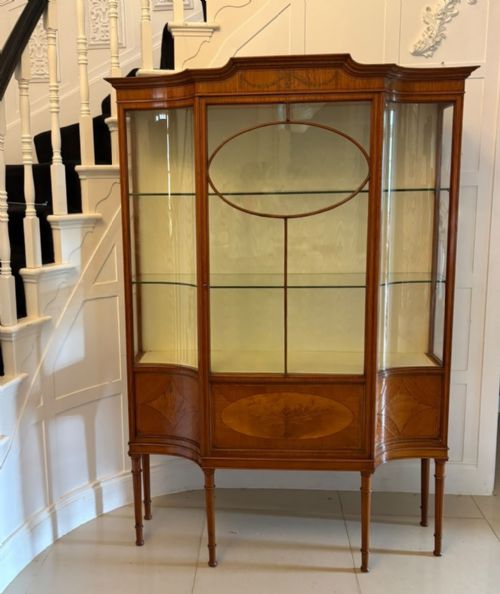
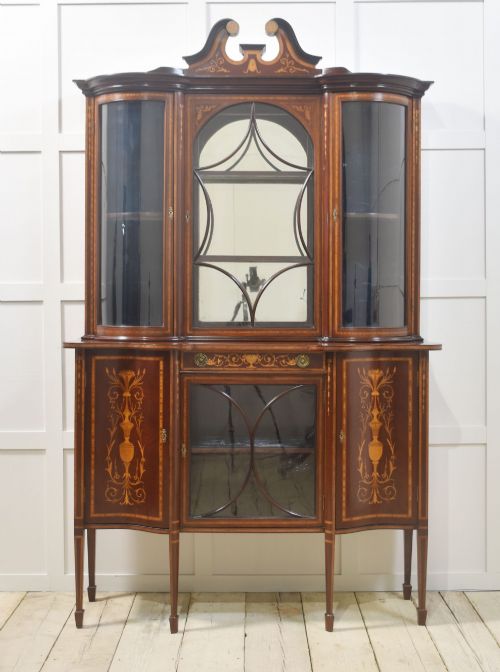
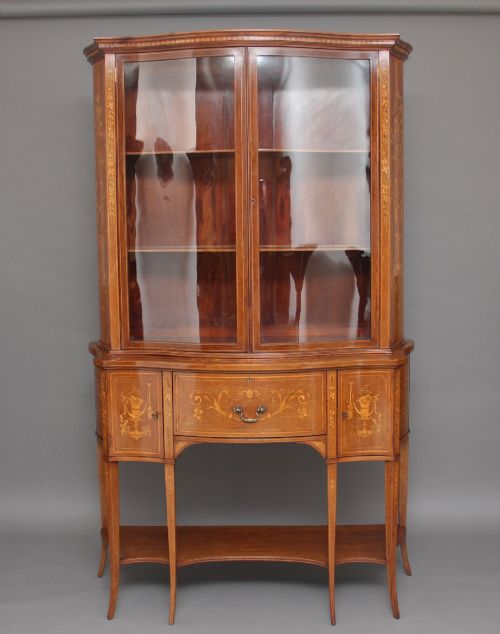
Inlaid Satinwood Vitrine
An inlaid satinwood vitrine brings a luminous, polished presence to a room, designed specifically to showcase treasured collections behind glass.
Inlaid Satinwood Vitrine
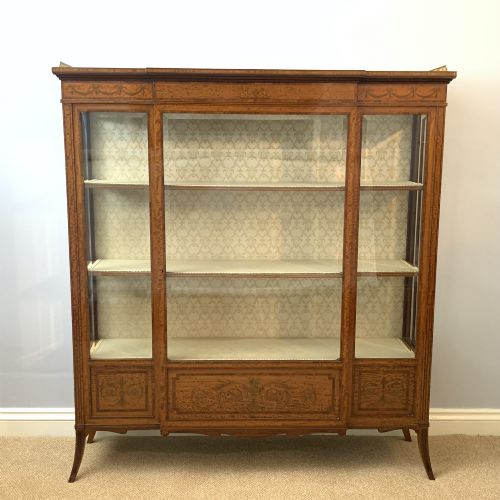
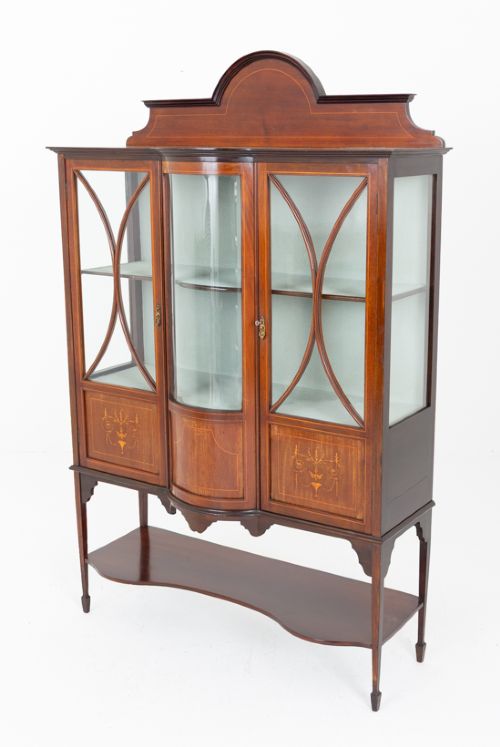
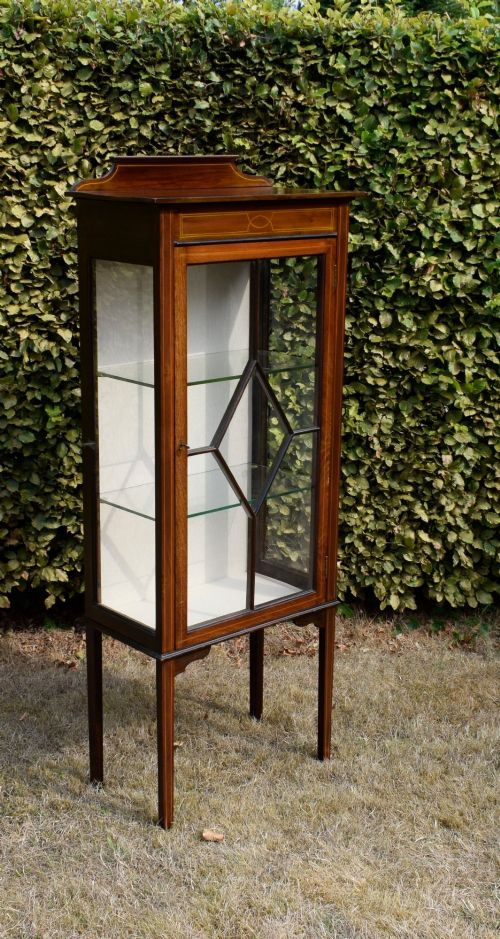
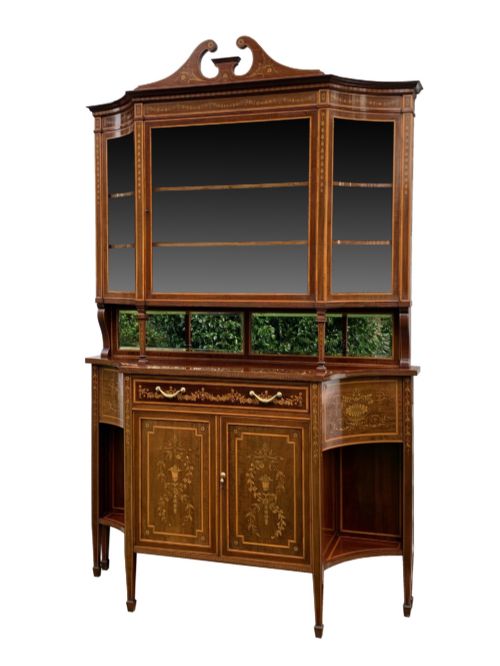
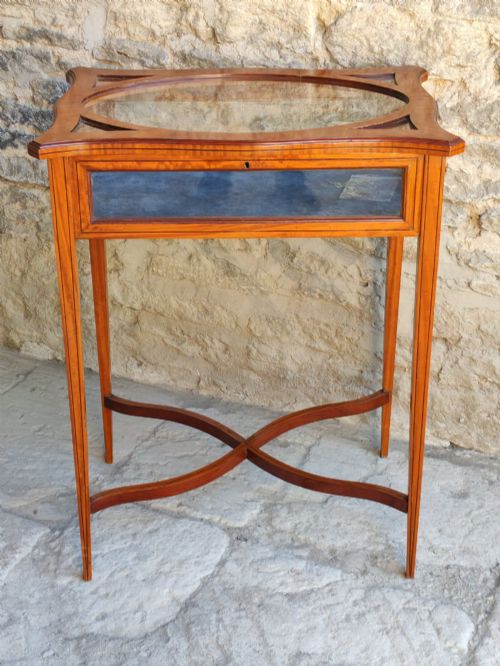
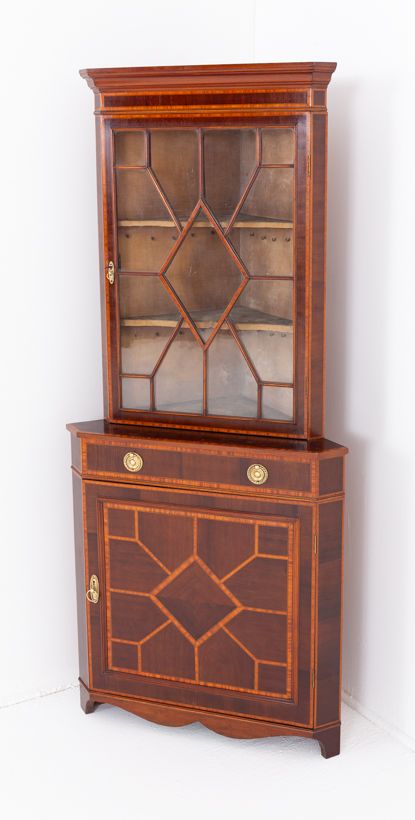
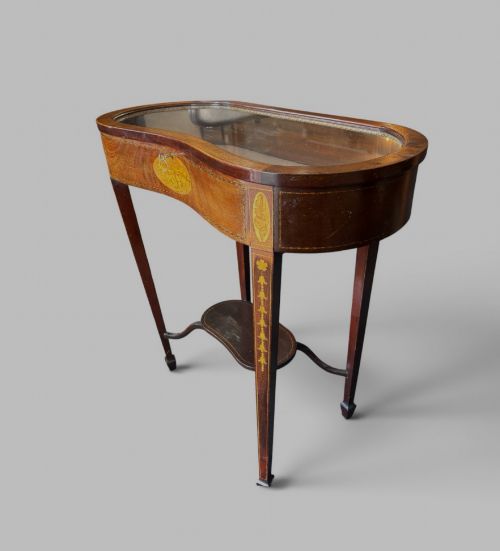
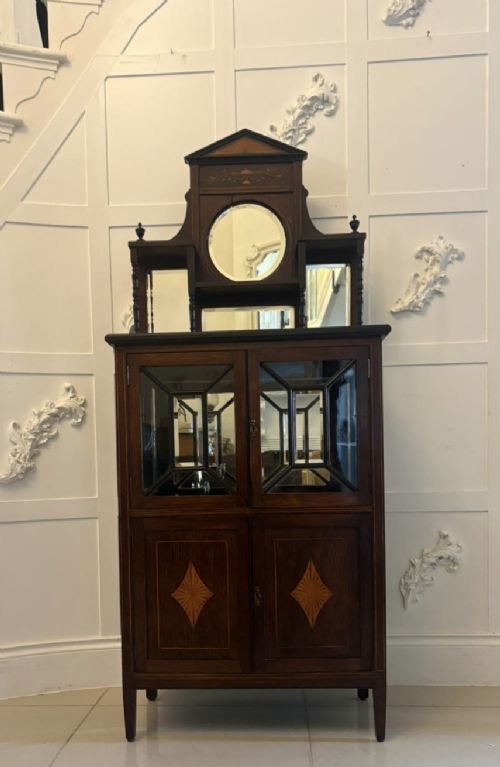
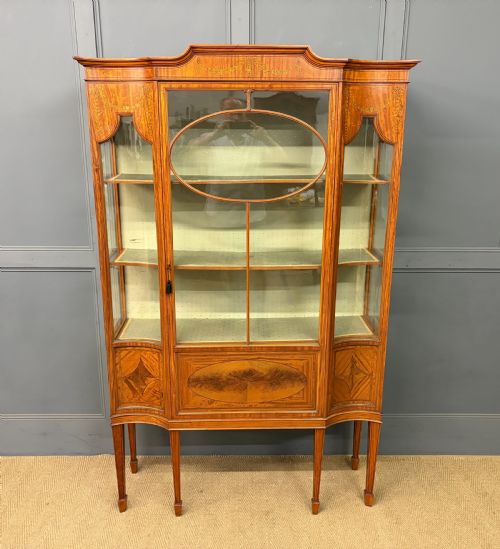
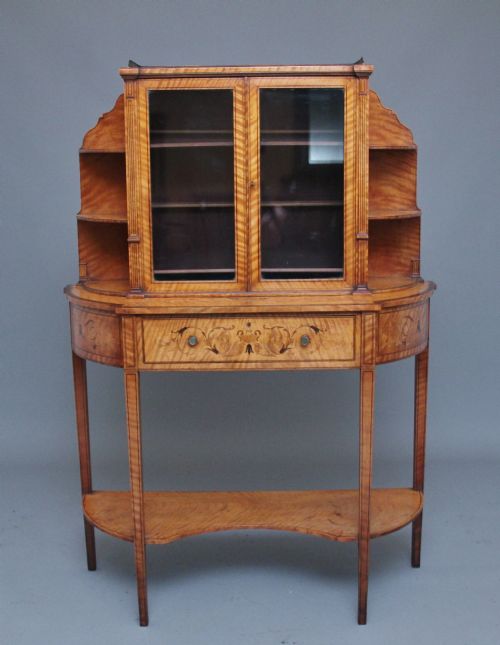
An inlaid satinwood vitrine is a glazed display cabinet or table designed to protect and exhibit small ornaments, ceramics, and curiosities. The pieces appearing here originate primarily from the Victorian and Edwardian eras, spanning the nineteenth and early twentieth centuries.
The most common forms on this page include upright display cabinets, corner units, and low bijouterie tables with glass tops. These objects reflect revivalist tastes, particularly the Sheraton Revival and Neoclassical styles, which favoured lighter woods and delicate proportions.
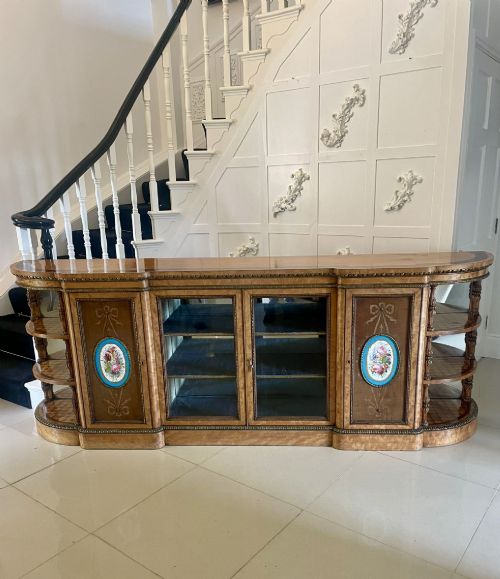
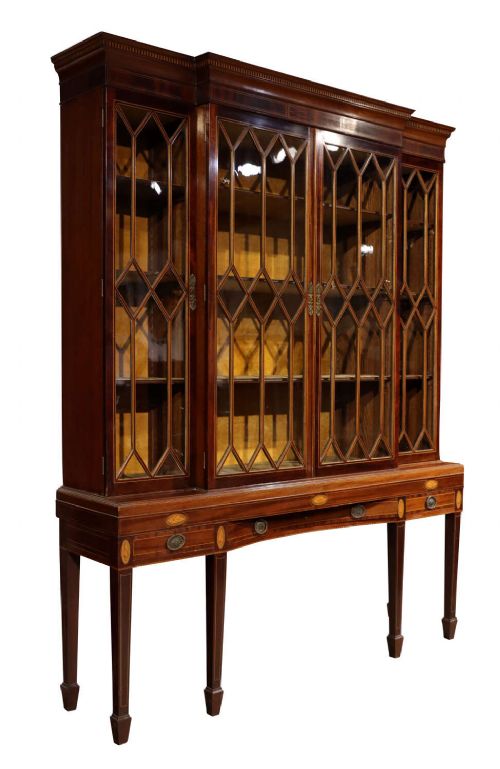
Makers and workshops of the period utilised satinwood alongside mahogany to create sophisticated furniture for formal drawing rooms and reception spaces. Buyers encounter everything from single-door pier cabinets to substantial breakfront credenzas.
What varies in quality
The distinction between standard production and exceptional cabinet-making lies in the crispness of the marquetry and the choice of veneer. Finer examples display meticulously matched satinwood grain and complex polychrome wood inlay rather than painted substitutes.
Workmanship is evident in the weight and proportion of the timber, the integration of cast bronze or ormolu mounts, and the precision of the glazed door joints. Pieces bearing documented maker attribution command attention for their superior joinery and finished interior detailing.
Some bijouterie tables feature secret velvet-lined compartments designed to keep a host's most scandalous miniature portraits hidden until the exact right moment.
Edwards & Roberts·Maple & Co·James Hicks·Waring & Gillow
The Inlaid Satinwood Vitrine Glossary
- Satinwood
- A lustrous, hard timber native to the tropics, prized for its pale golden colour and silky sheen. It served as the primary decorative veneer on high-status nineteenth-century cabinet work.
- Vitrine
- A glass-panelled display cabinet used for holding porcelain, silver, and curiosities. The term derives from the French word for glass.
- Marquetry
- A technique where pieces of coloured wood veneer are assembled to form pictorial or geometric patterns. These designs decorate the main panels and friezes of better cabinets.
- Bijouterie table
- A low display table with a glazed top and velvet-lined interior, made specifically for holding jewellery and small decorative items.
- Sheraton Revival
- A design movement popular in the late nineteenth and early twentieth centuries that reinterpreted the light, neoclassical furniture forms of the eighteenth-century designer Thomas Sheraton.
- Pier cabinet
- A narrow cabinet designed to fit against the wall space between windows. These pieces often feature a single glazed door and mirrored back.
Inlaid Satinwood Vitrine: Frequently Asked Questions
What is the difference between a vitrine and a display cabinet?
A vitrine typically emphasises extensive glass panels on multiple sides to maximise light exposure for objects inside. Display cabinet is a broader term that can include pieces with wooden lower sections or solid sides.
Both forms served the same primary Victorian purpose of showcasing a collector's prized porcelain and ornaments within a formal reception room.
How do I tell Edwardian pieces from Victorian ones?
Victorian examples tend to be heavier in scale, often incorporating darker woods, elaborate marquetry, and robust ormolu mounts. They reflect a more ornate, eclectic approach to historical revival styles.
Edwardian pieces generally present lighter proportions, simpler neoclassical lines, and a greater reliance on bright satinwood veneers with restrained fruitwood inlay.
Were bijouterie tables used for dining?
Bijouterie tables were strictly intended for drawing rooms and boudoirs rather than dining use. Their glass tops and shallow velvet trays served as conversation pieces for displaying small personal treasures.
Guests would gather around these tables to inspect portrait miniatures, medals, and decorative snuff boxes during evening gatherings.
How do I care for satinwood furniture?
Satinwood benefits from stable indoor humidity and protection from direct sunlight, which can fade the delicate golden tones of the veneer. Dusting should be done gently with a dry, soft cloth.
Avoid placing these cabinets near heat sources or damp walls to prevent timber shrinkage and the lifting of intricate marquetry details.