


Edwardian Inlaid Tea Table
An edwardian inlaid tea table brings proportion and detail to a room, holding its surface for service or display with quiet assurance.

Edwardian Inlaid Tea Table
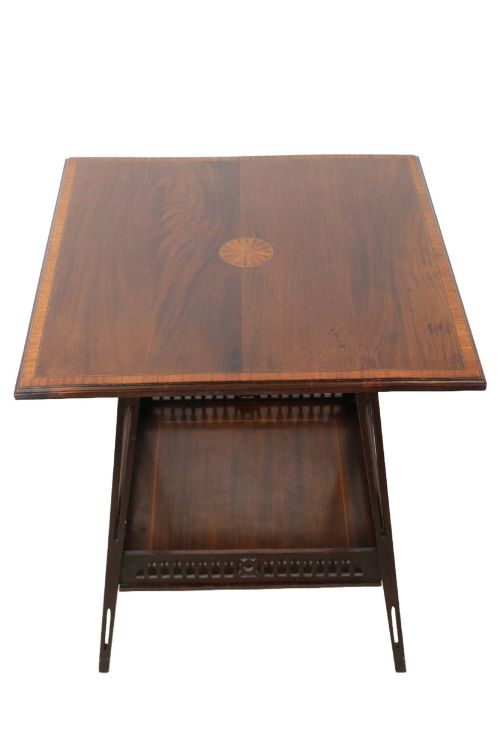
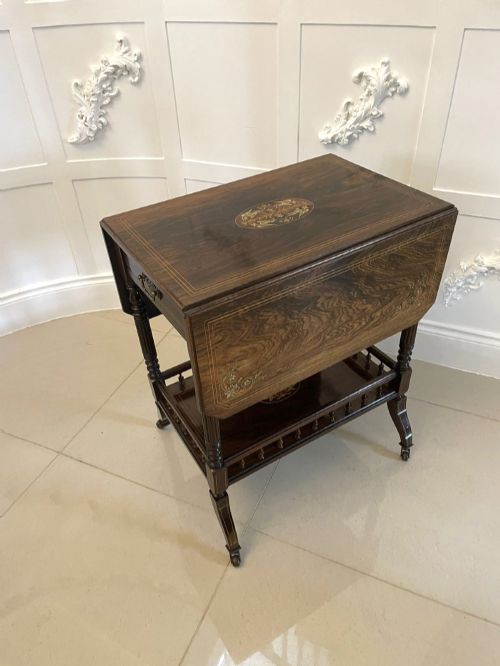
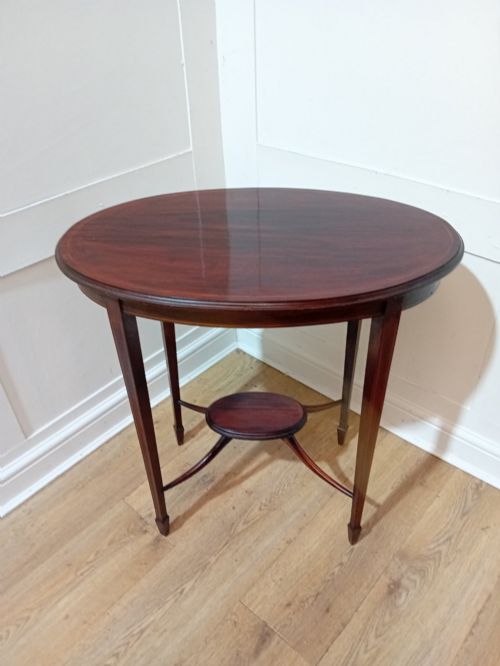
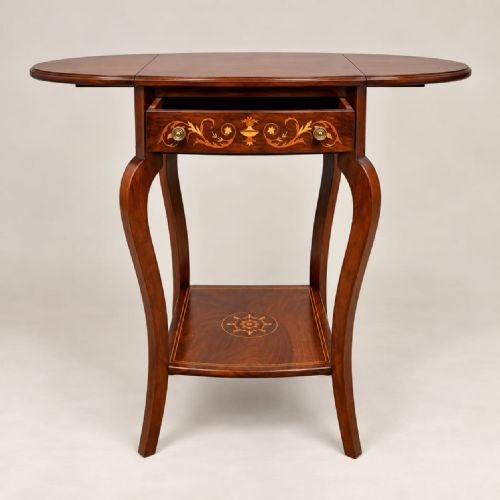
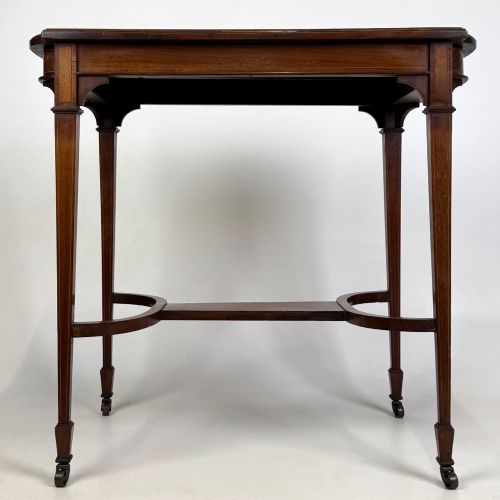
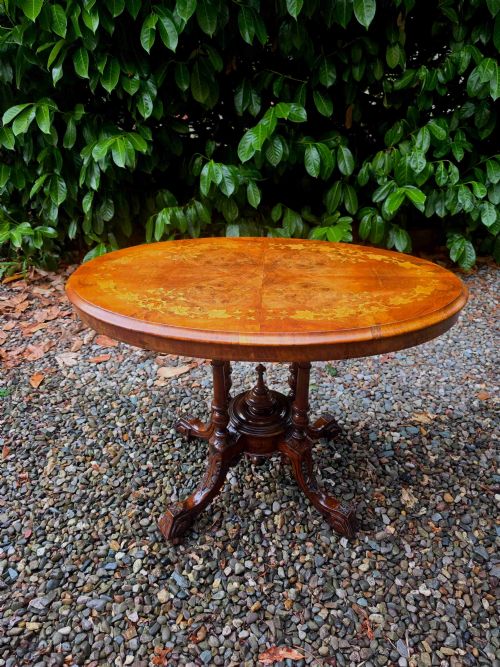
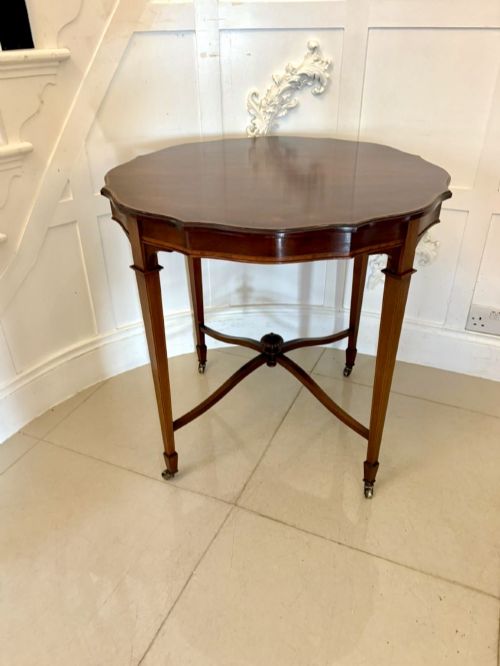
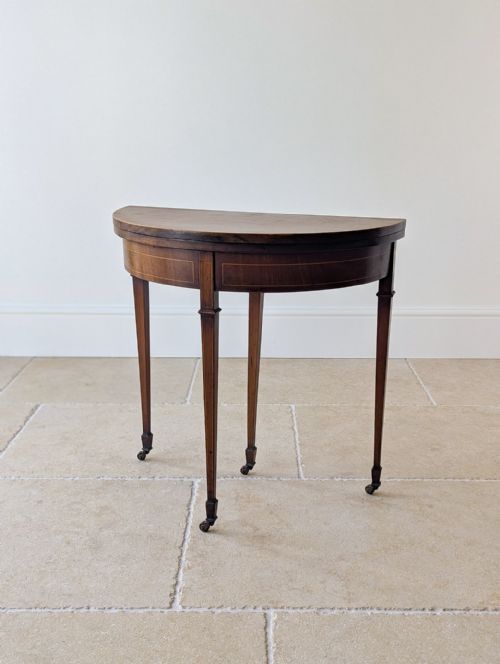
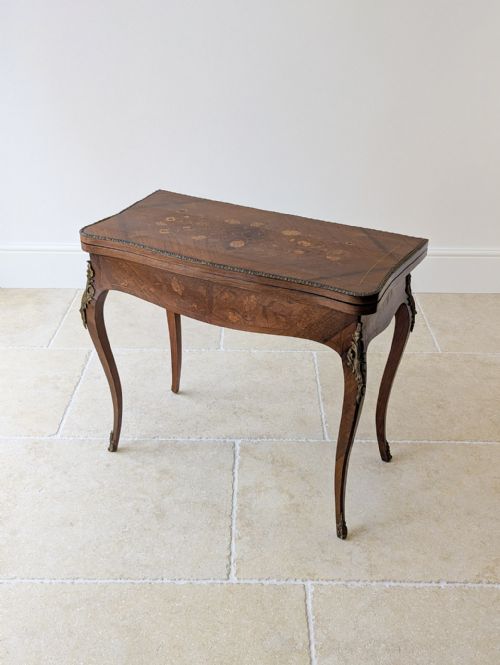
When you search for an edwardian inlaid tea table, you encounter pieces designed primarily for the early twentieth century drawing room, alongside related nineteenth century forms in mahogany, rosewood, and satinwood. The Edwardian examples span occasional tables, envelope card tables, and drop-leaf variations, often utilising satinwood or boxwood inlay upon a mahogany ground.
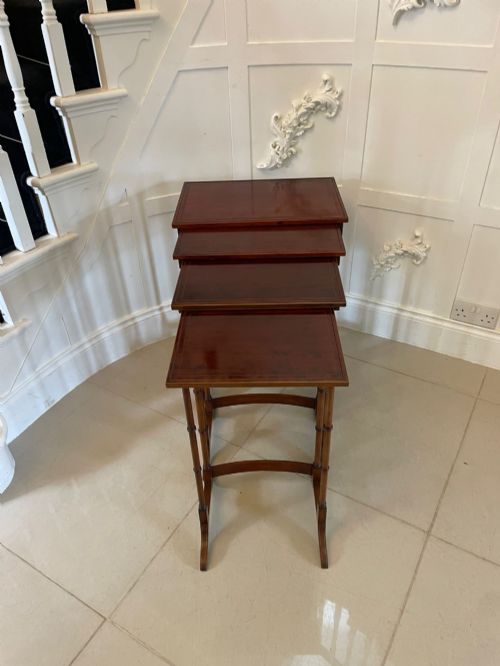
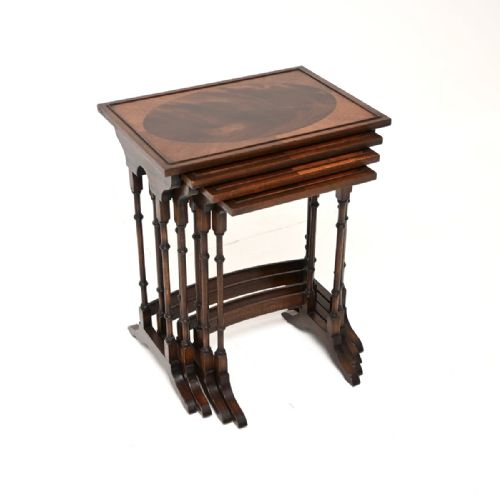
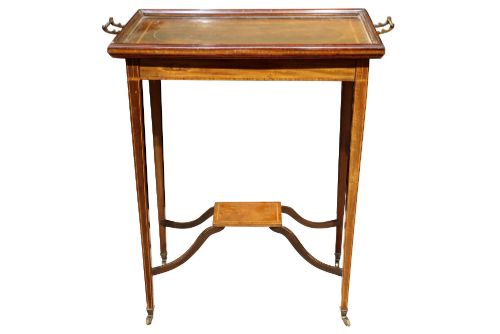
The selection ranges from demilune fold-over card tables and nested quartetto tables to multi-tiered tray top etageres and specialised tea tables with brass hardware or glass serving trays. Alongside standard Edwardian output, pieces draw on Sheraton Revival styling, alongside Victorian influences from the late nineteenth century.
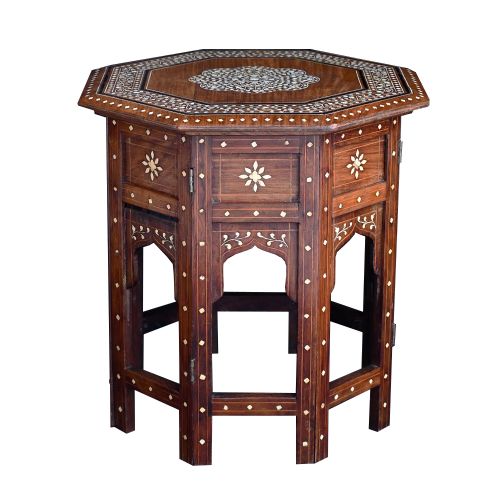
Makers and retailers such as Trevor Page and Liberty & Co appear in the broader records of these tables, pointing to workshop production and retail distribution of the period. Forms extend to Anglo-Indian Hoshiarpur pieces with bone inlay, widening the scope of what is catalogued under this heading.

How they were made
Cabinetmakers constructed these tables using solid timbers and carefully selected veneers, primarily mahogany, rosewood, walnut, and satinwood. Surfaces received linear stringing and floral or classical motifs executed in contrasting boxwood and bone inlay.
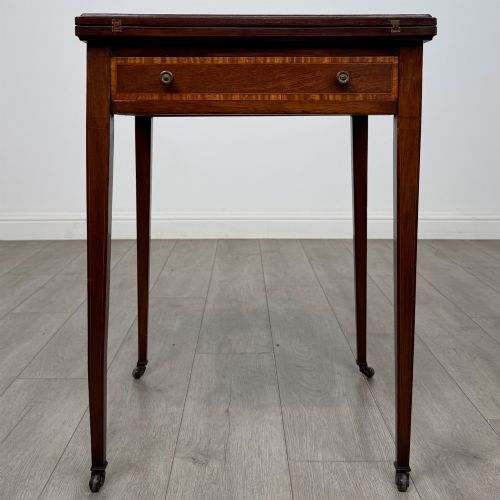
Structural elements included folding tops for card and tea use, drop leaves supported on swing gates, and tiered frameworks for etageres. Joinery relied on traditional mortise and tenon methods, whilst brass hinges, castors, and handles provided functional articulation for movable flaps and swivel mechanisms.
Edwardian Inlaid Tea Table Retail Price Guide 2026
Typical asking prices for edwardian inlaid tea table among the pieces listed under this phrase on Sellingantiques today, from the lower quarter to the upper quarter. They describe what is for sale here now, not the wider market.
Listings under this search include tables spanning the Edwardian period, the Victorian era, and the wider nineteenth century, utilising mahogany, satinwood, rosewood, and walnut.
What varies in quality
The standard of the timber selection and the precision of the inlay dictate the visual strength of each piece. Finely cut boxwood lines and balanced satinwood panels demonstrate superior workshop execution compared to simpler, coarser border work.
The integrity of the structural mechanism, whether a swivel top on a games table or folding legs on a pembroke table, separates standard commercial production from finer bespoke furniture. Original brass fittings and stable leg joints contribute significantly to the enduring utility of the table.
Trevor Page & Co·Liberty & Co
The Edwardian Inlaid Tea Table Glossary
- Inlay
- A technique where contrasting materials are set into recessions cut into the wood surface to form a decorative pattern. This method defines the surface decoration seen across Edwardian and Victorian furniture.
- Demilune
- A half-moon shape used for the tops and frames of fold-over card and tea tables. Such tables sit flush against a wall when closed.
- Quartetto
- A nested set of four graduated occasional tables designed to slide one beneath another. They provide flexible surface space while occupying a compact footprint.
- Sutherland table
- A narrow drop-leaf table where the leaves fold down almost vertically on either side of a central gateleg structure. This design allows the table to be stored in a minimal space when not in use.
- Sheraton Revival
- A late nineteenth and early twentieth century design style inspired by the furniture of George Sheraton. It relies on light proportions, satinwood veneers, and delicate classical inlay.
Edwardian Inlaid Tea Table: Frequently Asked Questions
How were these tables used originally?
These tables served primarily for afternoon tea service, social card games, and the display of decorative objects in domestic drawing rooms. Fold-over tops and drop leaves allowed them to adapt quickly from compact side furniture to active service surfaces.
Their mobility made them easy to reposition around a room as company gathered. Many incorporated trays or multiple tiers to hold cups, glasses, and sewing equipment.
How do I distinguish Edwardian from Victorian pieces?
Edwardian tables generally display lighter proportions, brighter satinwood highlights, and restrained Sheraton Revival inlay. Victorian examples tend to use heavier timbers such as dark rosewood or walnut with deeper carving and denser grain patterns.
Construction details and secondary woods also offer clues, though crossover periods during the late nineteenth century share characteristics of both eras.
Where do I place one in a modern home?
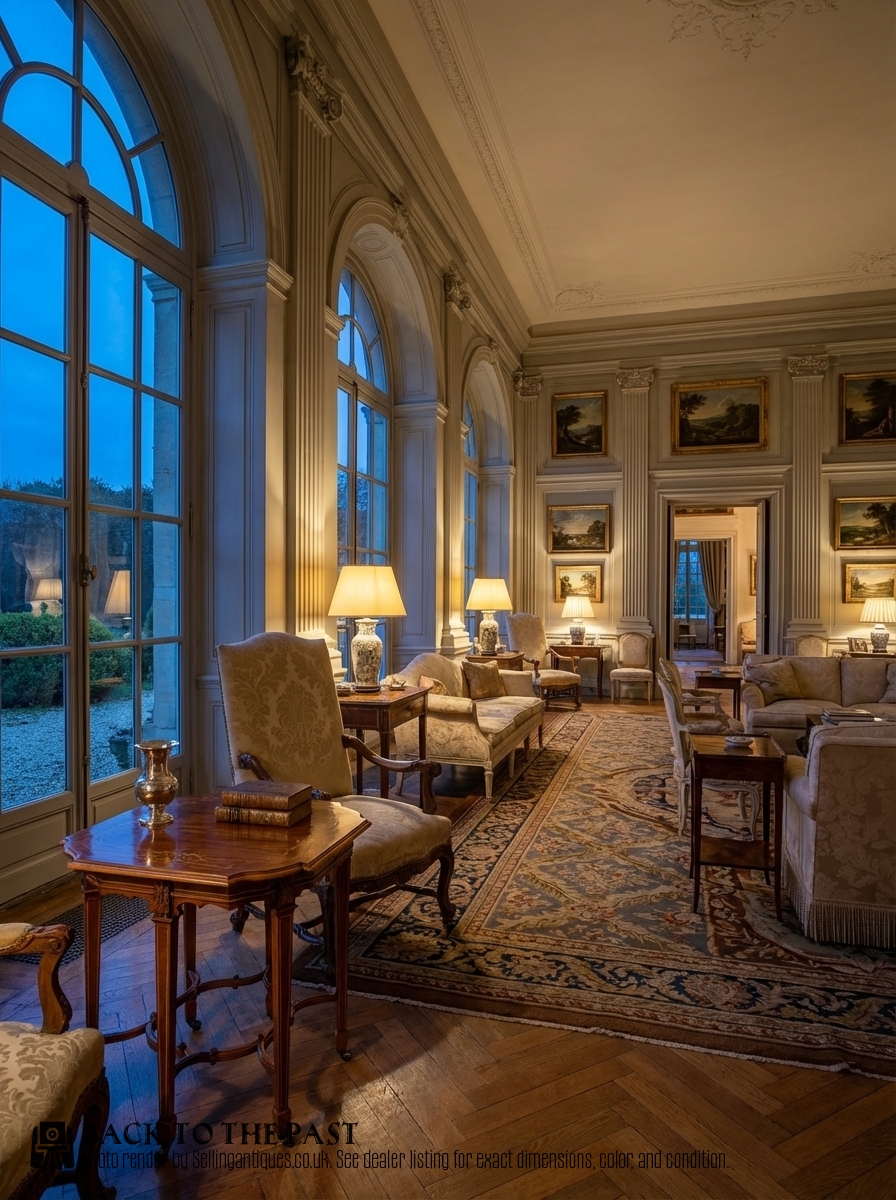
An occasional or side table fits well beside a sofa or in a hallway, offering a surface for lamps and small objects. Demilune and fold-over tables function effectively against blank walls as console surfaces.
Nested tables can be separated around a room when entertaining and stacked together when floor space is needed.
What is the difference between an occasional table and a tea table?
An occasional table is a general-purpose stand for books, lamps, or ornaments, built in various shapes including round, oval, and octagonal. A tea table is specifically configured for serving refreshments, often featuring drop leaves, a tray top, or a fold-over top.
Many tea tables were designed to be easily moved by their handles or lightweight frames during social calls.