
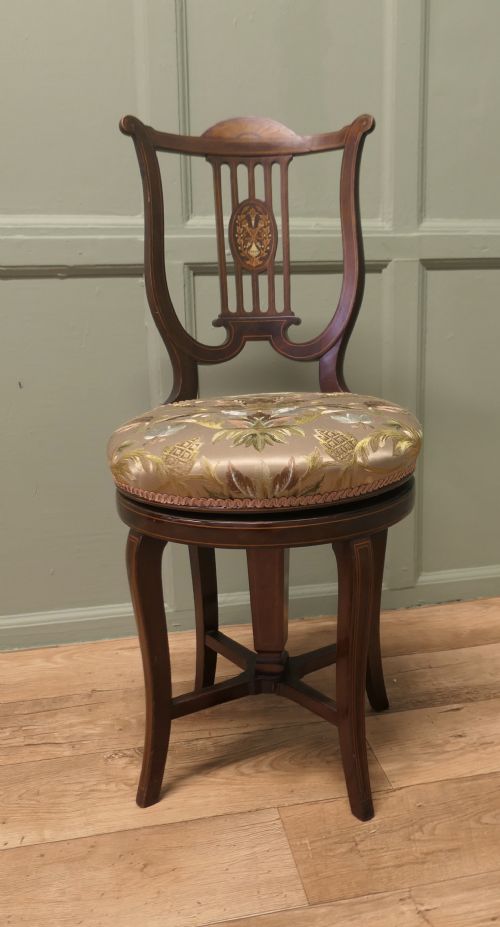
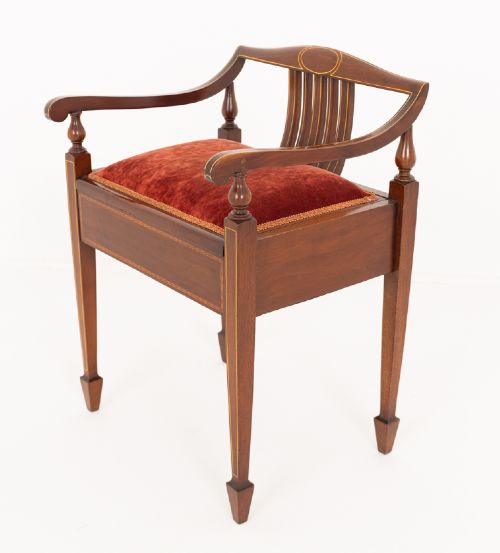


Edwardian Inlaid Stool
An edwardian inlaid stool combines timber construction with decorative contrast, serving as a seat or music stool while adding period detail to a room.
Edwardian Inlaid Stool
The edwardian inlaid stool typically appears as a piano stool, music seat, or duet stool designed for domestic use during the early twentieth century. These pieces serve practical seating needs in the home while incorporating contrasting timber details.
Makers of the period construct these seats in single or duet sizes, occasionally incorporating storage beneath the upholstery for sheet music. Mahogany and rosewood provide the primary timber structures for these domestic items.
While the majority date from the Edwardian period or around nineteen hundred, related examples span from late Victorian decades to nineteen thirty. Forms range from simple low seats to revolving music chairs and X-framed variants.
How they were made
Cabinet makers utilise solid timbers such as mahogany, rosewood, walnut, and oak to build the structural frames of these stools. Turnings, carved details, and open-framed designs provide structural support alongside visual interest.
Decoration relies upon satinwood inlay, boxwood inlay, and marquetry inlay set into the primary wood surface. Tunbridge ware and geometric needlepoint or kilim tapestry upholstery complete the decorative scheme of specific pieces.
Listings demonstrate a strong concentration of mahogany timber paired with satinwood and boxwood inlay across Edwardian piano stools.
What varies in quality
The refinement of the timber and the precision of the inlay separate standard examples from finer productions. Finely cut satinwood and boxwood contrasting sharply against rich mahogany indicate superior workshop execution.
The complexity of the form influences the standing of a piece, with revolving mechanisms, rise and fall actions, or duet proportions requiring greater mechanical skill. Original tapestry or needlepoint upholstery maintained in sound condition elevates the integrity of the object.
The Edwardian Inlaid Stool Glossary
- Inlay
- A technique where pieces of contrasting timber, such as satinwood or boxwood, are inserted into recessed cavities of a primary wood surface to form patterns. This decorative method defines the visual character of Edwardian furniture.
- Duet stool
- A wider seating form designed for two people, frequently utilised alongside piano or music cabinet furniture. These pieces often incorporate internal storage compartments beneath the seat.
- Marquetry
- An elaborate assembly of wood veneers applied to a surface to create pictorial or geometric designs. Artisans cut various timber species to fit together precisely before gluing them to the substrate.
- Tunbridge ware
- Small-scale woodwork decorated with mosaic patterns formed from multiple tiny pieces of naturally coloured woods. This technique creates intricate geometric or pictorial motifs on specialist items.
- X-framed
- A structural support style utilising intersecting diagonal legs shaped like the letter X. This form provides stable load-bearing capacity while maintaining a distinctive silhouette.
Edwardian Inlaid Stool: Frequently Asked Questions
What is an edwardian inlaid stool used for?
These pieces function primarily as piano stools, music seats, or dressing table benches within domestic interiors. Their compact proportions allow them to sit easily beside keyboards, desks, or in hallways.
Many examples include internal compartments designed specifically to hold sheet music or small accessories. Their decorative inlay ensures they contribute visual detail to a room even when unoccupied.
How do I identify an edwardian inlaid stool?
Identification relies on observing the combination of Edwardian or nineteen-hundreds timber framing alongside contrasting satinwood or boxwood inlay. Mahogany and rosewood serve as the dominant woods for these specific seating forms.
Details such as open frames, revolving seats, or duet proportions further distinguish these functional domestic items. Construction methods and secondary timbers align with early twentieth-century British cabinet-making standards.
Can I use an edwardian inlaid stool daily?
Sturdy timber construction allows these stools to function adequately for regular seating or piano practice. Checking the stability of the frame ensures the piece handles everyday weight safely.
Upholstery may require renewal depending on the condition of the fabric or tapestry seat. Careful placement protects delicate inlay work from heavy wear or moisture.
What is the difference between a solo and duet stool?
Solo stools provide compact seating for one person and often feature square or round upholstered tops. They frequently incorporate revolving mechanisms or simple fixed frames.
Duet stools offer an extended rectangular platform designed to accommodate two individuals simultaneously. These wider variants frequently conceal music storage boxes beneath hinged upholstered seats.