


Cabriole Leg Piano Bench
A cabriole leg piano bench offers sturdy seating at the keyboard, combining carved curved supports with practical upholstered seats from various periods.
Cabriole Leg Piano Bench
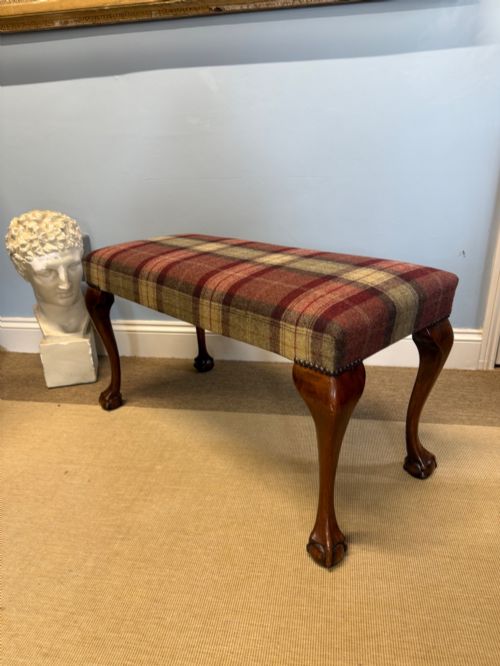
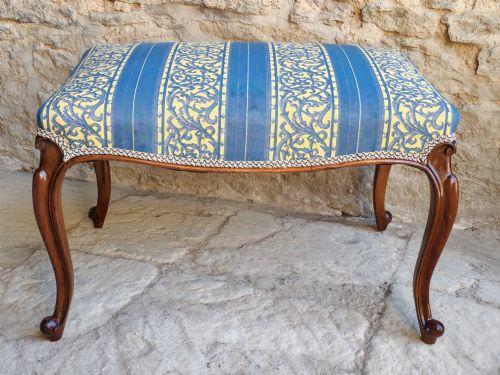
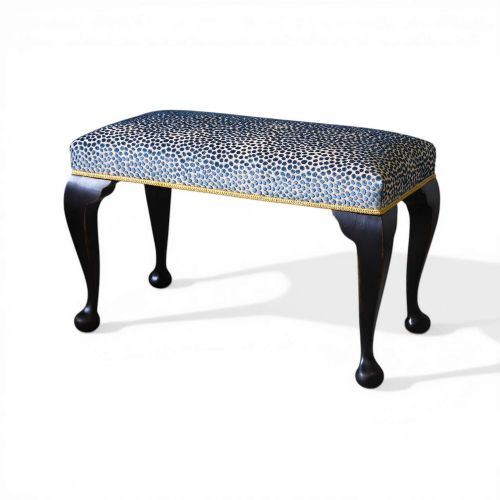
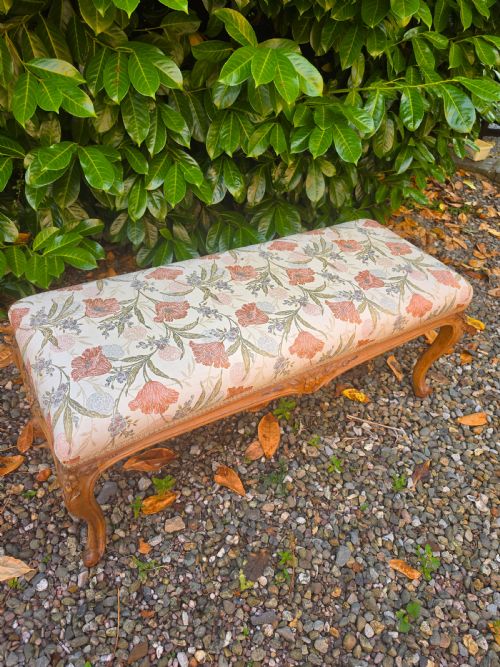
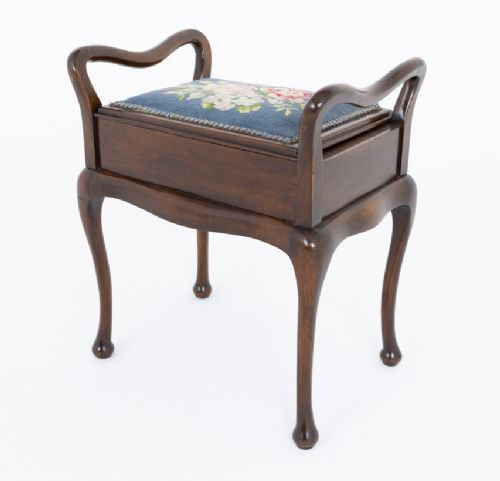
A cabriole leg piano bench is primarily found in mahogany or walnut, taking forms such as duet piano stools, music stools with lift-up seats, and long dressing stools. These pieces emerge across the nineteenth and early twentieth centuries, spanning the Edwardian era, Victorian period, and earlier revivals.
Buyers encounter single and duet formats designed for keyboard use, alongside dressing table stools and window seats sharing the characteristic curved support. The selection relies heavily on Edwardian mahogany examples and nineteenth-century walnut pieces displaying revival styles.
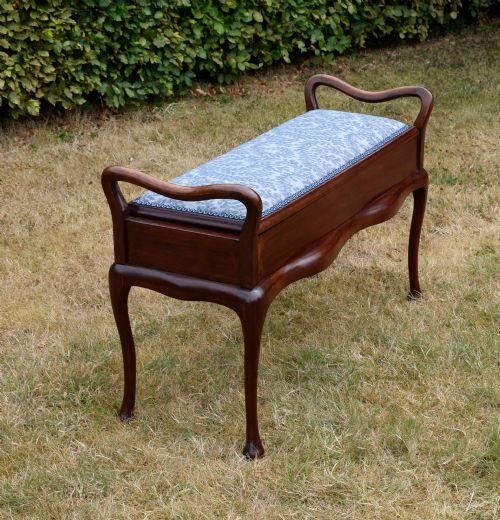
Origins stretch from standard nineteenth-century production to specific regional interpretations like Irish Georgian pieces and French-influenced long stools. Form follows function closely, providing either fixed upholstered pads or lift-out and lift-up seats for storage.
What varies in quality
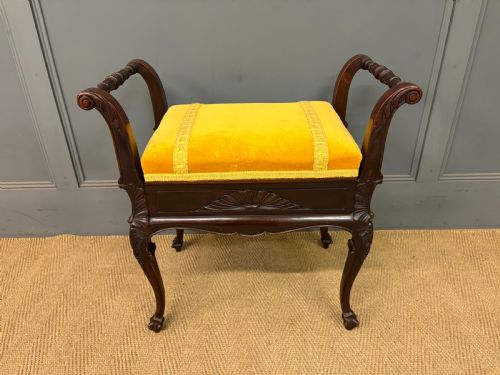
The degree of hand-carving on the wooden frame separates standard production from finer examples, particularly in the execution of the knee and foot on the curved leg. Crisp detailing in ball and claw elements or intricate floral carving indicates superior craftsmanship.
Timber selection and grain figure dictate the visual weight of the piece, with richly figured walnut and dense mahogany sitting at the upper end. The retention of original upholstery materials like period needlepoint tapestry also influences the integrity of the piece.
Revival aesthetics heavily represent Queen Anne, Georgian, and Chippendale styles alongside Victorian and Edwardian production.
The Cabriole Leg Piano Bench Glossary
- Cabriole leg
- A furniture support curving outward at the knee and tapering inward toward the foot, mimicking animal limbs. This form appeared widely across eighteenth-century designs and later revival periods.
- Duet stool
- An extended seating bench designed for two people to sit side by side at a keyboard. These longer forms frequently incorporate lift-out or lift-up seats.
- Ebonised
- Wood finished with a dark stain or paint to imitate ebony. This treatment was common on Victorian and Edwardian seating.
- Needlepoint
- Hand-stitched canvas work utilised for upholstery. It provides a textured, decorative surface on period dressing table and piano stools.
- Lift-up seat
- A hinged top panel opening to reveal internal storage space for sheet music. This mechanism is standard on many surviving music stools.
Cabriole Leg Piano Bench: Frequently Asked Questions
How do I identify a piano bench?
Piano benches are identified by their specific proportions, often built narrower or longer to accommodate one or two players at a keyboard. Many examples feature hinged or lift-out seats designed for storing sheet music beneath the cushion.
They appear in single or duet sizes, constructed from timbers like mahogany and walnut. The inclusion of music storage distinguishes them from standard dressing table stools or footstools.
What periods do these benches span?
The available pieces span from the late eighteenth century through the nineteenth century and into the Edwardian era and the 1920s. Revival styles look back to Georgian, Queen Anne, and Chippendale designs.
Mid-Victorian and Edwardian examples make up a significant portion of the selection. Dating relies on timber characteristics, upholstery style, and construction methods.
Can I use a music stool daily?
These benches are constructed from solid hardwoods like mahogany and walnut, making them durable for regular seating. Traditional joinery ensures the frames remain stable under daily use.
Care should be taken with antique upholstery fabrics and delicate carved details. Regular maintenance of the wooden frame helps preserve the piece over time.