


Brown Velvet Bench
These brown velvet bench pieces offer tactile seating, uniting period woodwork with plush textiles.
Brown Velvet Bench
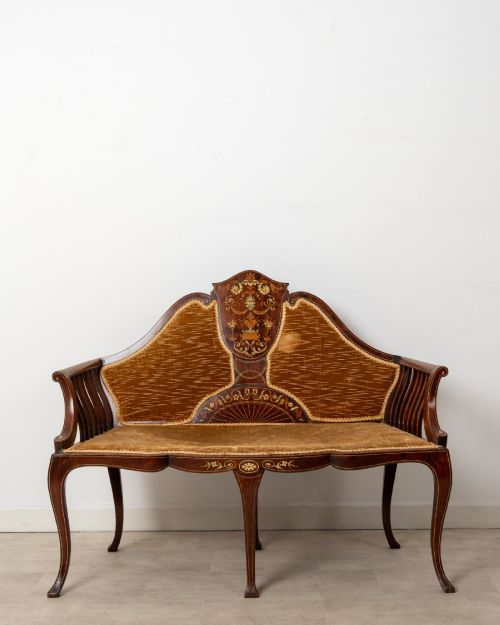
A brown velvet bench brings together traditional seating forms and soft textile surfaces across various historic eras. When searching for a brown velvet bench, buyers encounter a selection spanning Victorian, Edwardian, and nineteenth-century periods.
The objects listed take several forms, including stools, settees, sofas, and banquette sofas. Many items feature mahogany or walnut frames, occasionally accented with satinwood inlay or brass details.
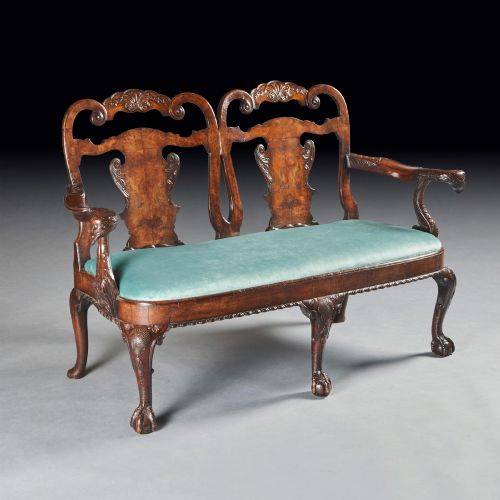
Stools and piano stools dominate the smaller formats, whilst settees and twin chair back sofas provide larger seating options. These pieces reflect revival styles such as Georgian, French Louis XV, and Belle Epoque alongside standard period designs.
Materials and construction
Frames are constructed primarily from solid mahogany and walnut timbers, sometimes shaped into cabriole legs. Artisans employed traditional joinery to build sturdy seating foundations that endure across centuries.
Upholstery incorporates fabric and velvet, occasionally trimmed or paired with leather elements. Details such as satinwood inlay and metal components further distinguish the construction of these items.
Piano stools ensure pianists sit in proper comfort while tackling demanding nineteenth-century salon pieces.
Assessing quality and craftsmanship
Quality rests in the crispness of the woodwork carving, the stability of the frame joints, and the refinement of any inlaid decoration. Walnut and mahogany framing with sophisticated styling commands greater visual presence.
The execution of the upholstery work and the selection of timber grain significantly influence the overall character of each piece. Finer examples display meticulous attention to proportion and period detail.
The Brown Velvet Bench Glossary
- Cabriole leg
- A furniture leg that curves outward and then tapers inward, mimicking an animal's curving leg. This form appears frequently on eighteenth-century and revival seating.
- Satinwood inlay
- A decorative technique where contrasting light timber is inserted into a darker wood surface. It adds delicate geometric or floral patterns to table and seat frames.
- Banquette sofa
- An upholstered long bench seat designed for communal sitting. These often feature decorative trim and luxurious fabric coverings.
- Twin chair back sofa
- A settee design featuring a backrest styled to resemble two adjacent chair backs joined together. This configuration echoes earlier Georgian furniture patterns.
Brown Velvet Bench: Frequently Asked Questions
What periods do these pieces span?
The selection encompasses items originating from the nineteenth century, including Victorian and Edwardian eras, alongside specific revival designs.
Craftsmanship reflects the aesthetic preferences of these distinct historical periods.
How were piano stools used?
Piano stools provided adjustable or stable seating specifically designed for musicians at keyboard instruments.
They often incorporated compact dimensions to fit easily near domestic pianos.
What woods are commonly found?
Makers utilised dense hardwoods such as mahogany and walnut for structural frames and legs.
These timbers offered durability and a rich surface texture suitable for polishing.
Are revival styles common?
Several pieces follow Georgian and French Louis XV design traditions produced in later centuries.
These revival items emulate earlier aesthetics while employing contemporary nineteenth and twentieth-century workshop methods.