

Edwardian Inlaid Mahogany Table
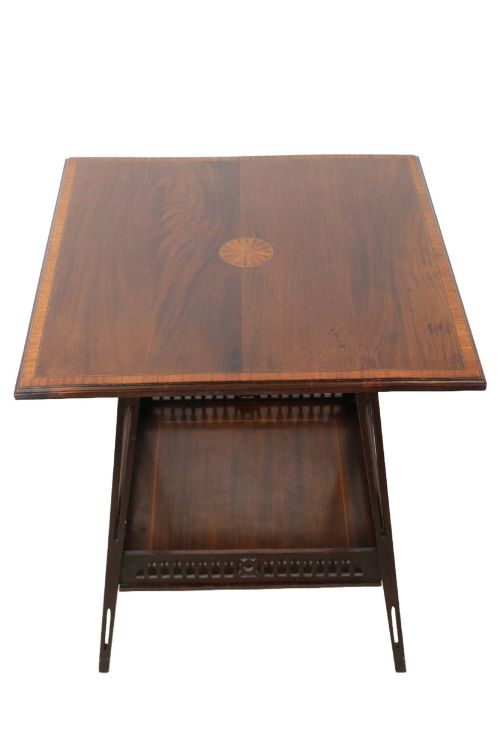
When you examine an edwardian inlaid mahogany table, you find a practical piece of period furniture defined by crisp contrast and lighter proportions.
Edwardian Inlaid Mahogany Table
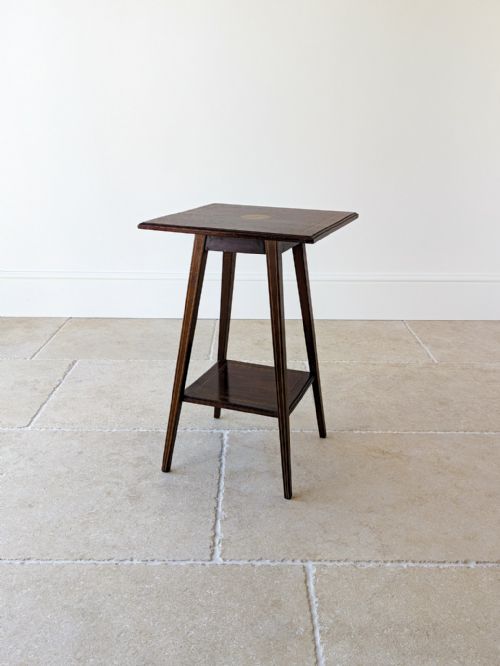
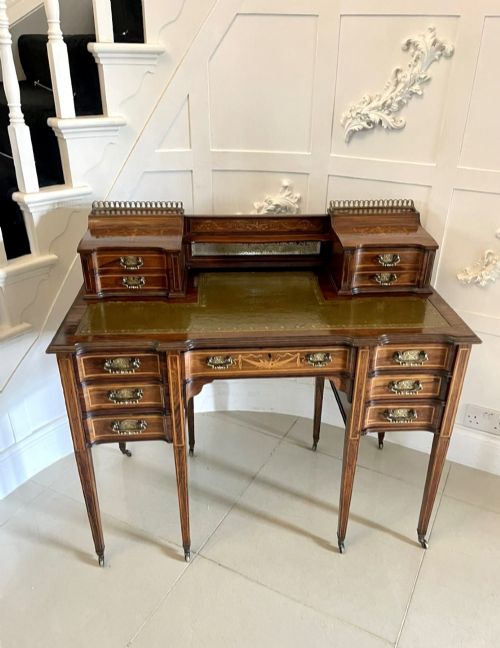
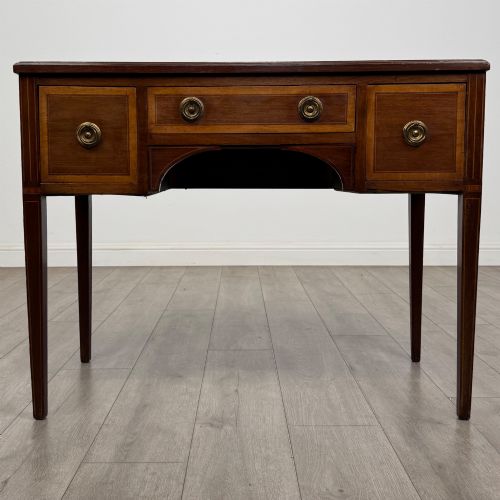
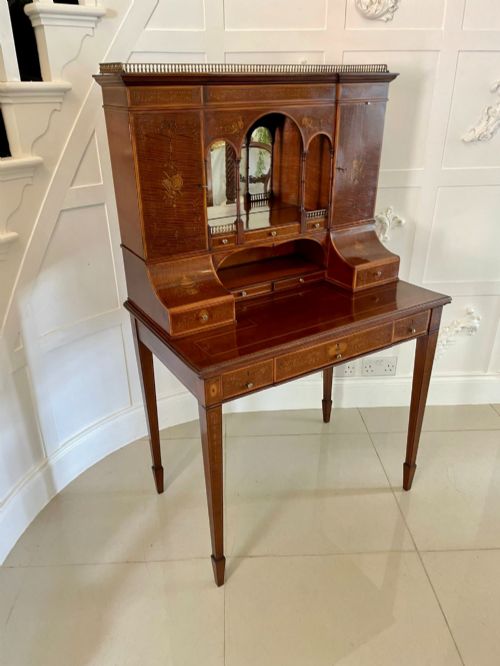
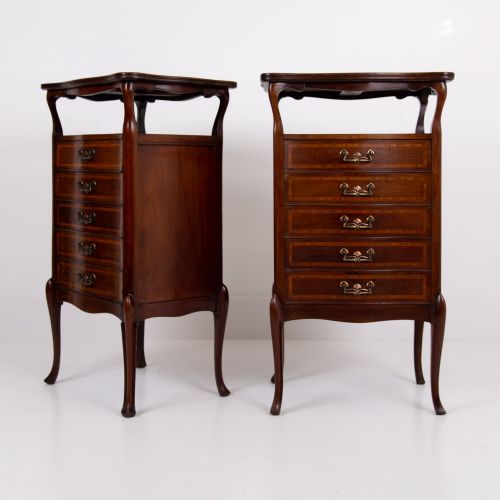
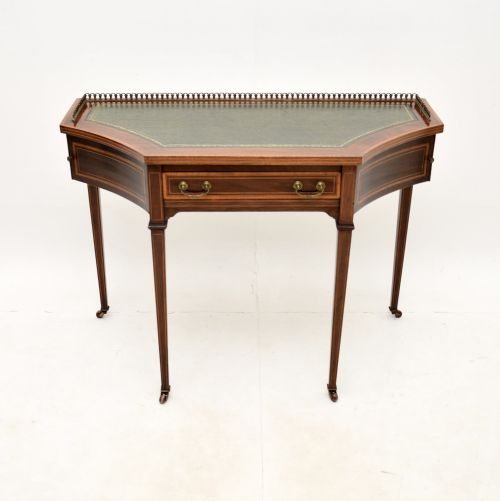
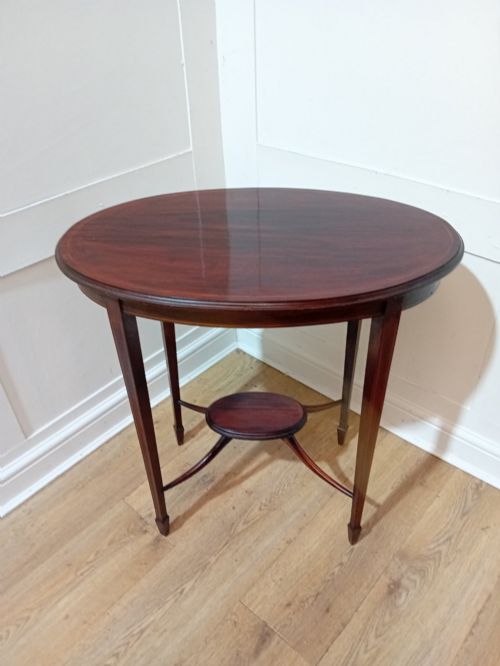
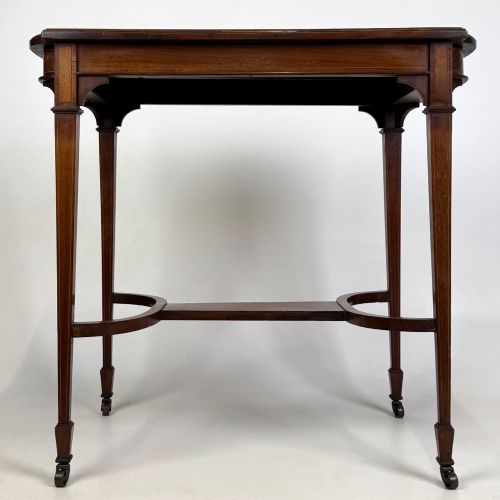
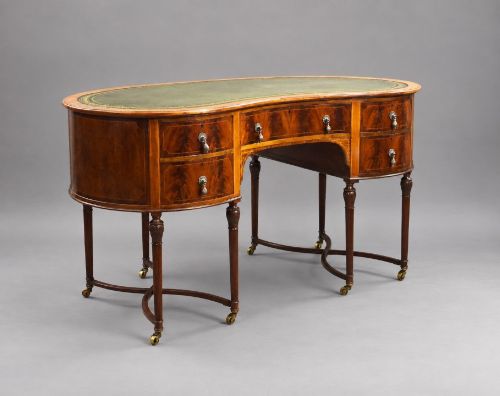
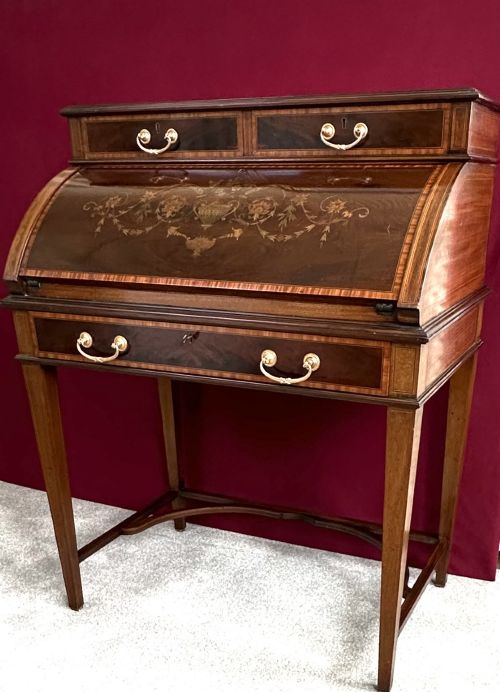
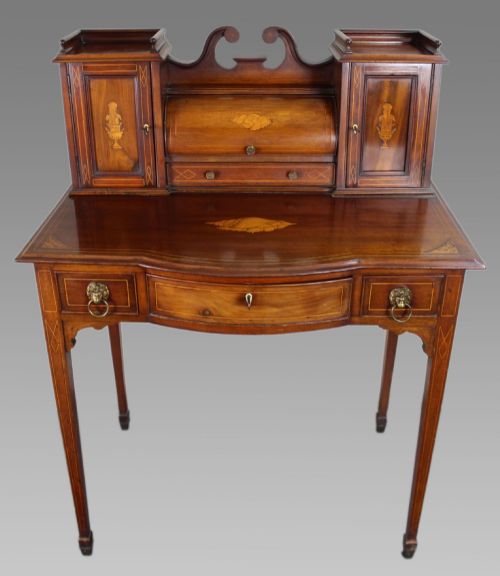
An edwardian inlaid mahogany table typically takes the form of a writing desk, occasional lamp table, or card table dating from the early twentieth century or late nineteenth century. These pieces reflect a period of domestic comfort where smaller, movable furniture suited drawing rooms and parlours.
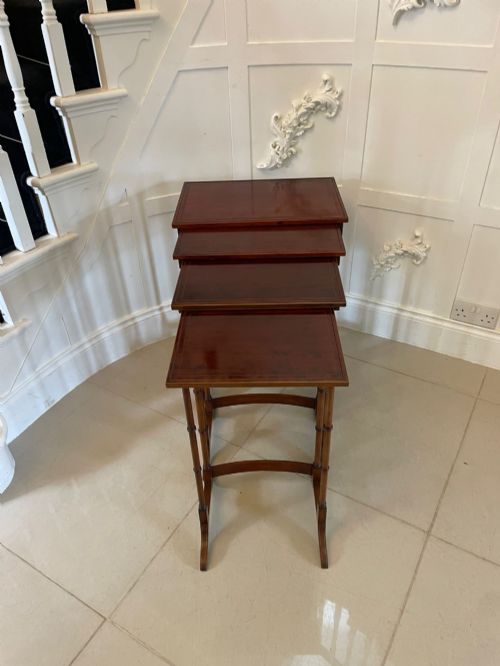
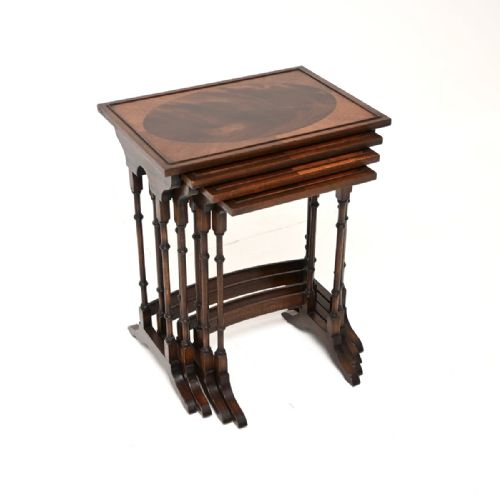
The most common formats on this page include Pembroke, envelope card tables, and nests of tables, all designed to occupy minimal space until needed. Cabinet makers of the Edwardian era drew heavily on Sheraton Revival and Georgian styles, adapting earlier proportions for modern homes.
Makers utilised resilient timber combined with lighter contrasting woods to brighten interiors, moving away from heavier Victorian designs. Each piece served a specific daily function, from holding a reading lamp to providing a fold-out surface for evening games.
Construction and materials
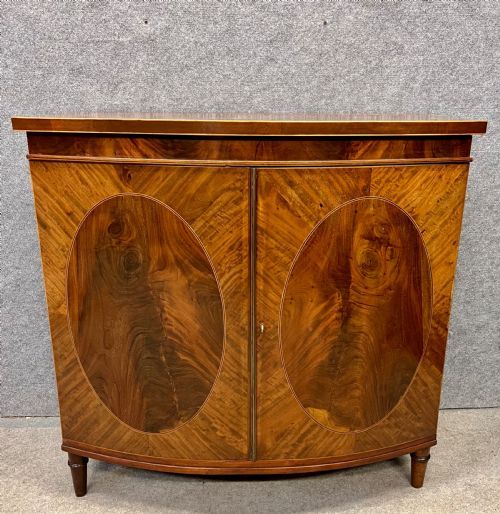
Makers built these tables using solid mahogany or flame mahogany veneers laid over secondary timbers, selected for grain movement and depth of colour. Cabinet shops incorporated contrasting light woods such as satinwood and boxwood to create delicate stringing and symmetrical panel motifs.
Inlay work required precise hand-cutting to set contrasting timber strips and floral paterae flush into channels carved within the mahogany surface. Brass fittings, leather inserts, and glass tops appeared on functional writing and games tables to withstand regular use.
Listings feature mahogany, satinwood, and boxwood across writing desks, occasional tables, and nests spanning the Edwardian period and late Victorian era.
Distinctions in craftsmanship
The standard of an edwardian inlaid mahogany table depends on the precision of the parquetry and the depth of figure within the mahogany veneer. Finer examples display hand-cut boxwood and satinwood stringing that remains entirely flush with the surrounding timber.
Workshops demonstrated superior skill through tight joinery on folding mechanisms, drawer linings, and tapered leg junctions. Tables bearing recorded maker stamps or original brass hardware retain closer adherence to late eighteenth-century design principles.
Trevor Page & Co·Edwards & Roberts
The Edwardian Inlaid Mahogany Table Glossary
- Inlay
- A technique where pieces of contrasting material are embedded into a recess to form a decorative design on a wooden surface.
- Satinwood
- A durable tropical timber with a lustrous yellow sheen utilised extensively for banding and stringing.
- Boxwood
- A dense, pale wood employed by cabinet makers for fine linear stringing and delicate contrasting details.
- Demilune
- A half-moon shape characteristic of console and card tables designed to stand flat against a wall.
- Envelope card table
- A folding table featuring triangular leaves that swivel open to reveal a baize-lined playing surface.
Edwardian Inlaid Mahogany Table: Frequently Asked Questions
How do I identify an Edwardian table?
Edwardian tables generally display lighter proportions and paler inlay work compared to heavier Victorian predecessors. Cabinet makers relied on Sheraton Revival motifs and mahogany veneers that date from around 1890 to 1920.
Look for machine-sawn elements mixed with hand-finishing, tapered square legs, and satinwood banding. These stylistic markers separate the period from earlier Georgian originals.
Were these tables used for writing?
Many examples functioned as designated writing desks or reading tables, featuring fitted drawers for stationery and inkwells. Metamorphic and pembroke variants provided adaptable surfaces for correspondence.
Interior spaces in homes required compact furniture that could serve multiple domestic purposes throughout the day. Drop-leaf and fold-over designs accommodated changing household activities.
How should I care for mahogany?
Protect the polished mahogany surface by keeping the timber away from direct heat sources and strong sunlight. Regular dusting with a dry cloth maintains the natural lustre of the polish.
Avoid applying silicone polishes, which build up residue over time and dull the grain. Occasional application of quality wax preserves the vintage finish.
What is satinwood inlay?
Satinwood inlay involves setting thin strips of pale, reflective timber into routed channels within the darker mahogany. This technique created sharp linear borders and decorative classical urns.
Craftsmen used this contrast to accentuate the geometry of table tops and drawer fronts. The method defines the lighter aesthetic of Sheraton Revival furniture.