

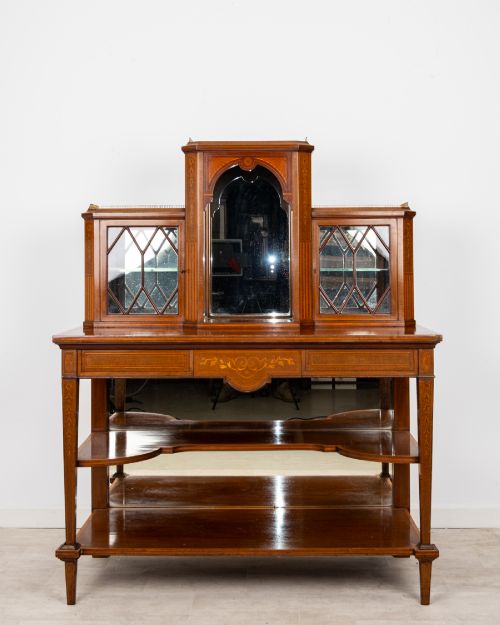
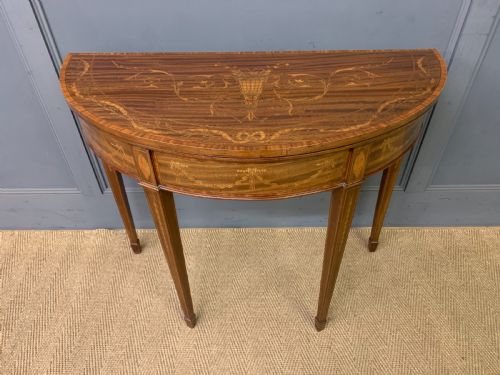
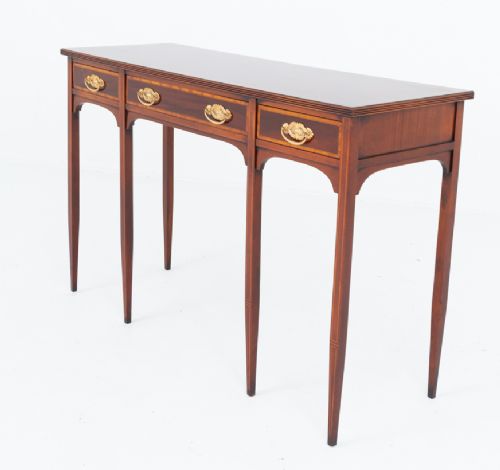
Edwardian Inlaid Console Table
These pieces bring together mahogany, satinwood and boxwood inlay in forms from side tables to demi-lune consoles.

Edwardian Inlaid Console Table
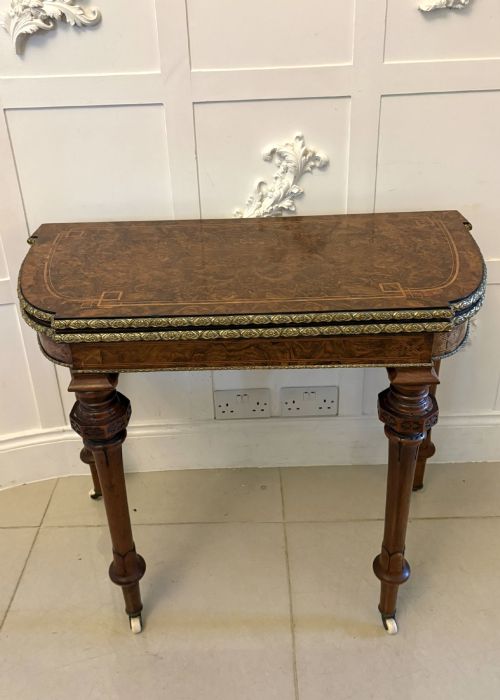
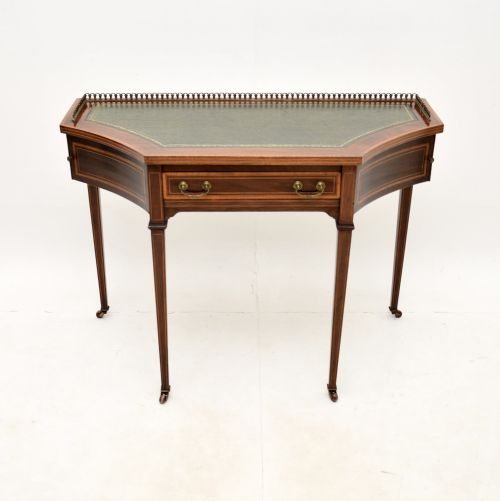
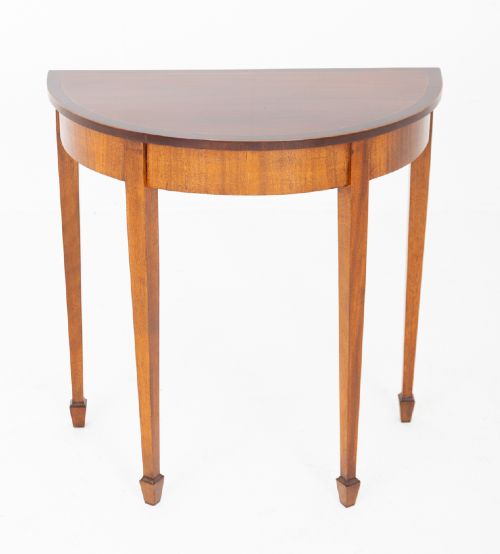
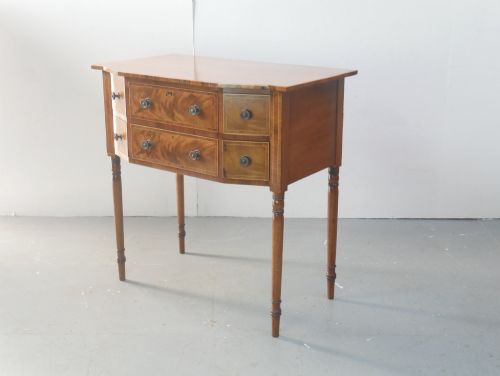
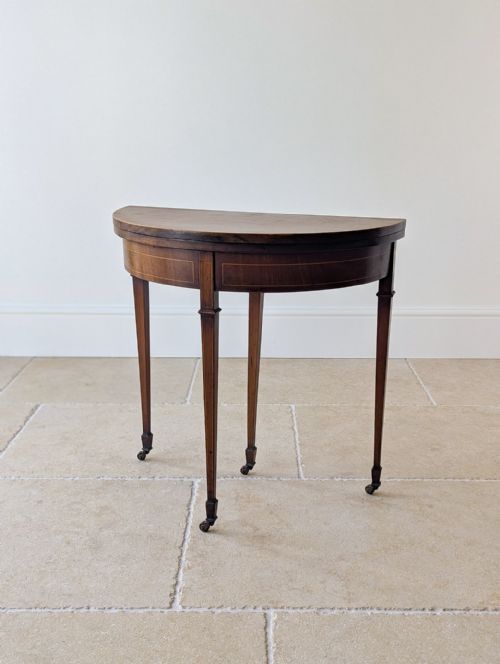
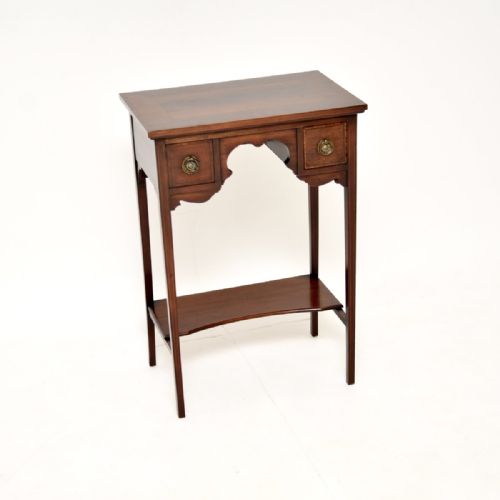
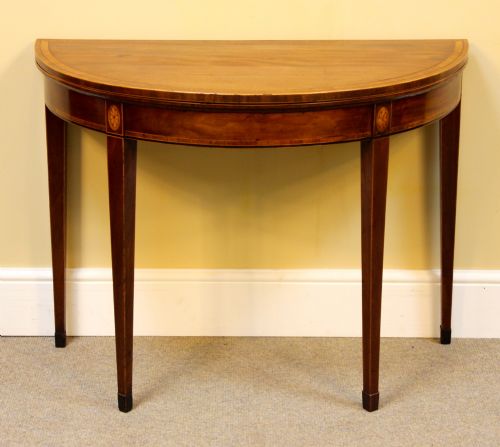
An edwardian inlaid console table brings together the lighter domestic furniture styles of the early twentieth century, drawing heavily on eighteenth-century revival designs. When searching for an edwardian inlaid console table, you encounter pieces that often take a semi-circular or demi-lune shape designed to sit flush against a wall in a hallway or drawing room.
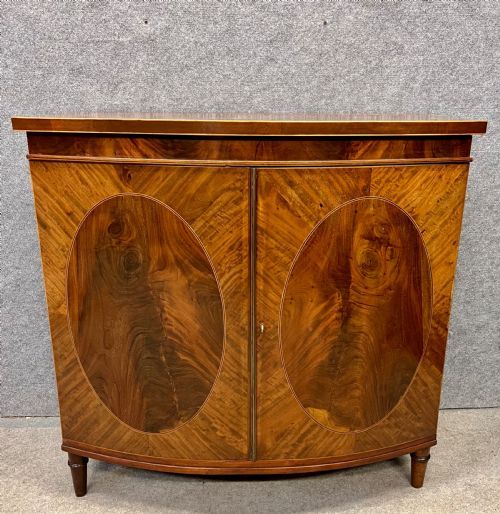
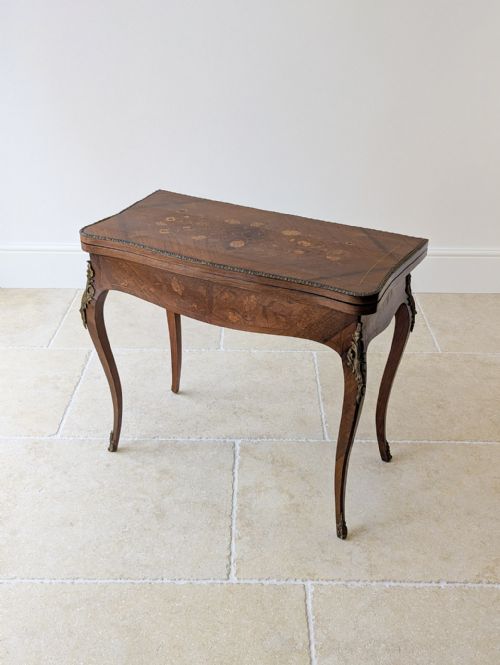
The selections span from strict Edwardian pieces to nineteenth-century and Georgian precursors, alongside later revivals in mahogany and satinwood. Alongside the true console form, related side tables, card tables and serving pieces appear frequently in the listings.
How they were made
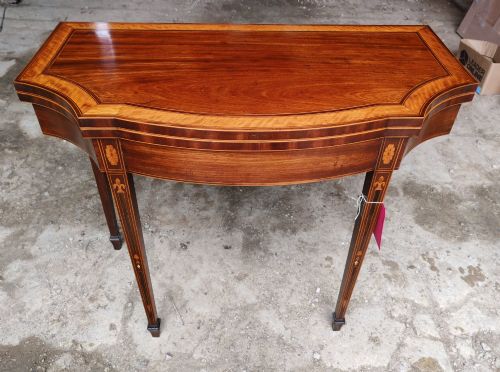
Makers utilised solid mahogany and walnut as foundational timbers, often applying veneers of satinwood, burr walnut or rosewood to create patterned tabletops. Contrasting woods such as boxwood provided delicate stringing and inlay work to define the borders and central motifs.
Surfaces received hand-applied polishes that brought out the natural grain of the timber while protecting the intricate marquetry and inlay work set into the wood.
Some console tables arrive with matching wall mirrors, ensuring the furniture and reflection stay matched across the decades.
What varies in quality
The standard of an edwardian inlaid console table rests upon the precision of the cabinet work and the crispness of the timber inlay. Pieces with well-figured mahogany and tightly fitted boxwood stringing show a higher level of workshop skill.
The choice of secondary timbers and the stability of the demi-lune frame separate standard production items from finer examples produced by established workshops.
Lamb of Manchester
The Edwardian Inlaid Console Table Glossary
- Demi-lune
- A half-moon shape popular for console and side tables designed to stand flat against a wall. This profile allows the table to occupy minimal floor space in a narrow hallway.
- Inlay
- A technique where pieces of contrasting wood or other materials are inserted into depressions in the base timber to form a pattern. Boxwood and satinwood are frequently used for this decorative work.
- Console table
- A table supported against a wall by console brackets or legs, historically designed for display. Many examples feature a fold-over top or a semi-circular footprint.
- Sheraton Revival
- A style of furniture produced in the late nineteenth and early Edwardian periods that copies the neoclassical designs of Thomas Sheraton. These pieces often incorporate satinwood inlay and tapering legs.
Edwardian Inlaid Console Table: Frequently Asked Questions
What is a demi-lune console?
A demi-lune console is a half-moon shaped table designed to stand flat against a wall. It functions well in hallways or reception rooms where floor space is limited.
These tables frequently feature fold-over tops and delicate inlay work across the primary surface.
How do I spot satinwood inlay?
Satinwood is a dense, yellow-gold timber that provides a bright contrast against darker woods like mahogany. It is typically cut into thin strips or floral motifs and set directly into the tabletop.
This material reflects light differently than the surrounding mahogany, creating a distinct visual border.
Are these tables solid mahogany?
Many examples combine solid mahogany frames with selected veneers applied to the tabletops and friezes. This construction method prevented warping while allowing craftsmen to display figured wood grains.
Secondary timbers were often utilised for the internal framing and drawer linings.
What distinguishes Sheraton Revival pieces?
Sheraton Revival furniture draws inspiration from eighteenth-century neoclassical designs, featuring symmetrical layouts and restrained decorative motifs. These pieces typically showcase fine stringing and tapering square legs.
The style became particularly prominent during the Edwardian period.