




Rosewood Swivel Top Table
A rosewood swivel top table is a clever folding piece designed for cards and tea, combining rich grain with smooth mechanical action.
Rosewood Swivel Top Table
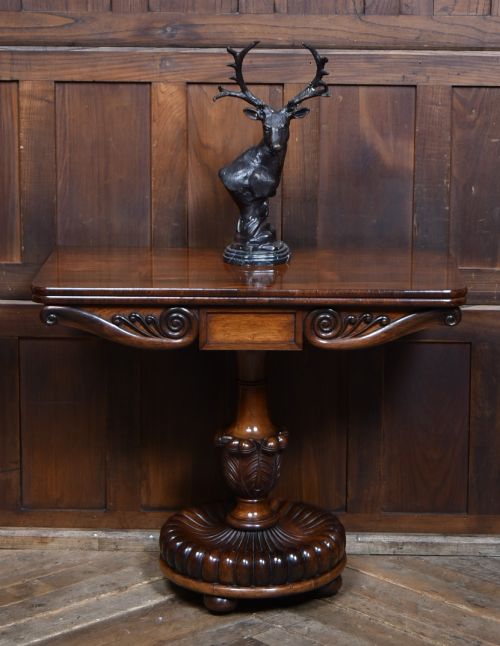
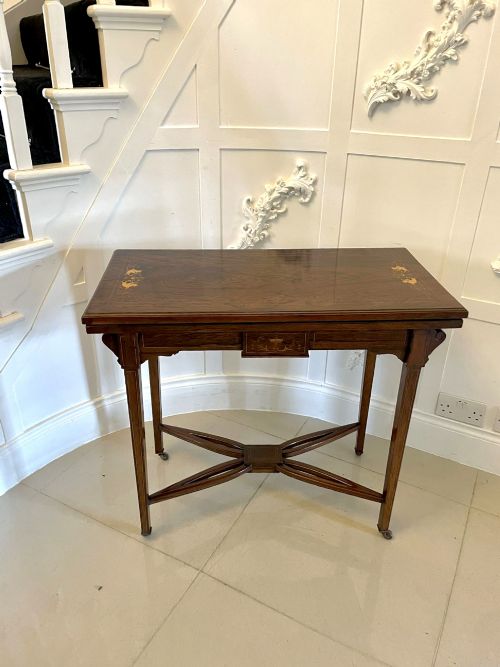
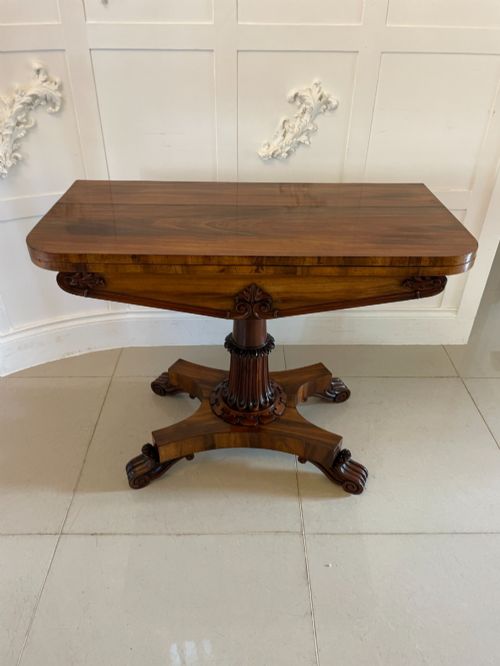
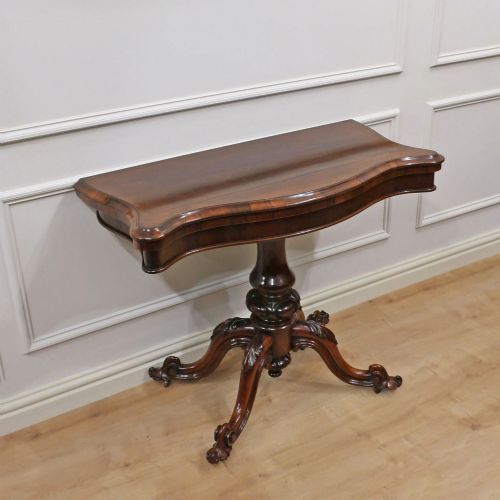
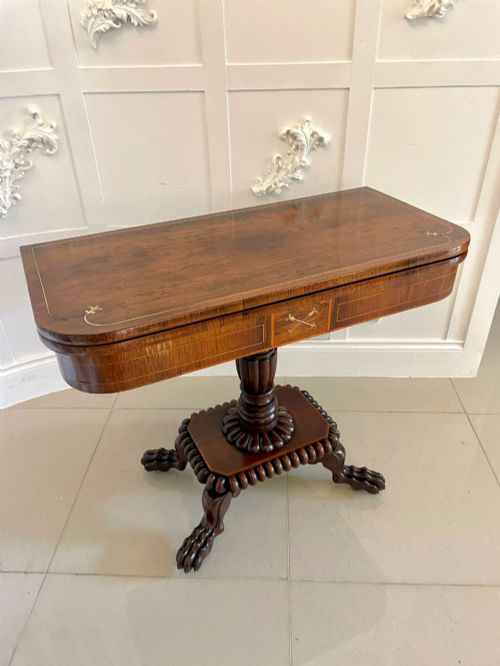
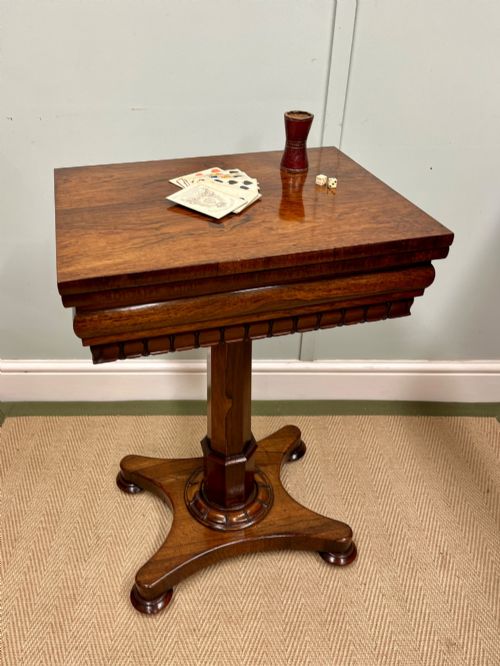
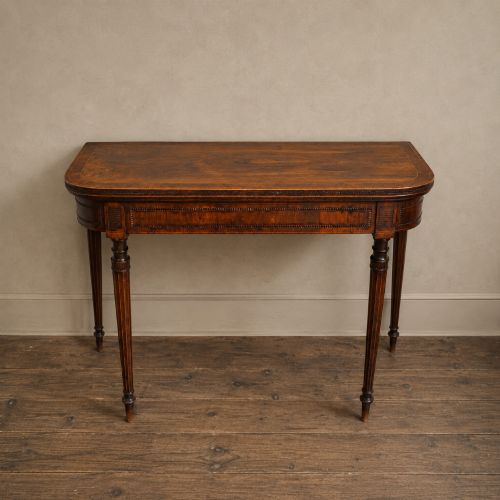
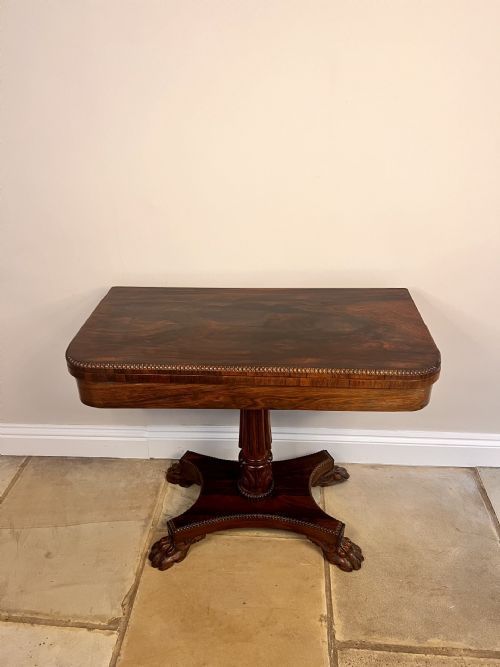
A rosewood swivel top table most often appears as a card table, games table, or tea table dating from the Georgian, Regency, William IV, and Victorian eras. These pieces combine a hinged folding top with a clever pivoting mechanism that turns the surface to reveal a hidden well or to lock squarely over the pedestal base.
Card and games tables dominate the selections here, frequently featuring lined playing surfaces of baize or leather for evening entertainment. Tea tables and side tables appear alongside them, offering the same characteristic swivel action designed to save space in a drawing room when not in use.
Materials and Technique
Cabinet makers utilised dense tropical rosewood veneers over firmer timbers, often enhancing the primary surfaces with crossbanding in burr yew or mahogany. Inlays of brass, boxwood, and delicate carved details define the decorative vocabulary of Regency and William IV examples.
The clever turning action relies on internal pivot hinges and pivots concealed beneath the fold-over leaf, allowing the top to rotate ninety degrees and lock firmly into position for dining or card playing.
Rosewood Swivel Top Table Retail Price Guide 2026
Typical asking prices for rosewood swivel top table among the pieces listed under this phrase on Sellingantiques today, from the lower quarter to the upper quarter. They describe what is for sale here now, not the wider market.
Materials appearing across these tables include rosewood, mahogany, burr yew, boxwood, brass, leather, and baize.
Judging Quality
The standard of a rosewood swivel top table rests in the crispness of its carving, the richness of the figured grain, and the stability of the swivelling mechanism. Finer examples display meticulous brass inlay and seamless crossbanding that show little sign of shrinking or separation over the decades.
Provenance and attribution elevate certain pieces, particularly those reflecting the designs of Gillows or William Trotter. Tables with well-preserved original baize linings and tight, smooth rotating actions sit firmly at the upper end of the range.
T & G Seddon·William Trotter
The Rosewood Swivel Top Table Glossary
- Swivel top
- A table design featuring a hinged folding leaf mounted on a pivot mechanism that rotates the surface to lock over the pedestal frame.
- Crossbanding
- A border of veneer laid with the grain running perpendicular to the main surface, frequently seen in contrasting timbers like burr yew.
- Baize
- A coarse woolen fabric used traditionally to line the playing surfaces of card and games tables.
- Pedestal
- A central column support rising from a platform base with feet, common in Regency and William IV furniture forms.
- Goncalo Alves
- A dense exotic hardwood with striking dark figuring, occasionally utilised in place of standard rosewood during the nineteenth century.
Rosewood Swivel Top Table: Frequently Asked Questions
What is a swivel top table?
A swivel top table is a dual-purpose piece of nineteenth-century furniture with a hinged top that rotates ninety degrees to reveal a concealed compartment or to support a fold-over playing surface.
The clever pivoting action allows the top to lock securely into a stable position whether closed against a wall or opened fully for games and tea.
How do I date a rosewood table?
Dating relies on observing the stylistic details, such as the heavy pedestal bases and bold scrollwork characteristic of William IV and Victorian pieces, versus the crisper brass inlays typical of the Regency period.
Examining the secondary timbers and the construction of the pivot mechanism also helps narrow the decade of manufacture between eighteen hundred and nineteen hundred.
Can I use it for cards?
These tables were built specifically for card games, chess, and backgammon, featuring integrated folding leaves and lined surfaces suited for evening entertainment.
Many surviving examples retain their original baize or leather playing surfaces, making them just as functional for modern games nights as they were two centuries ago.
How do I care for rosewood?
Rosewood benefits from being kept away from direct sunlight and sudden temperature changes, which can dry out the dense tropical timber and cause the veneer to lift.
Applying a traditional beeswax polish occasionally helps maintain the deep natural lustre of the grain without building up heavy layers of residue.