
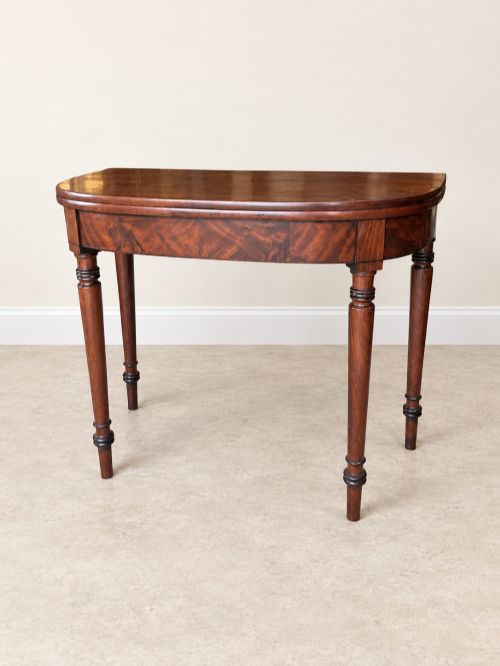
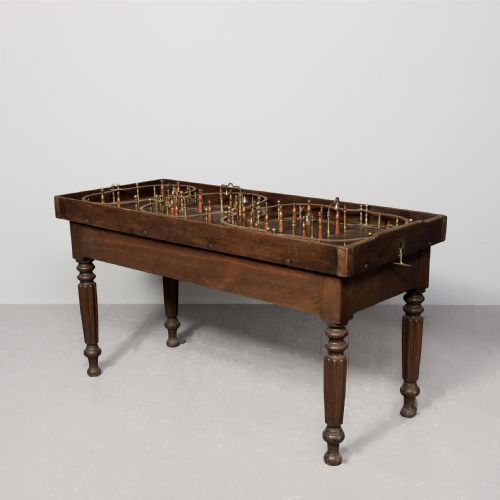
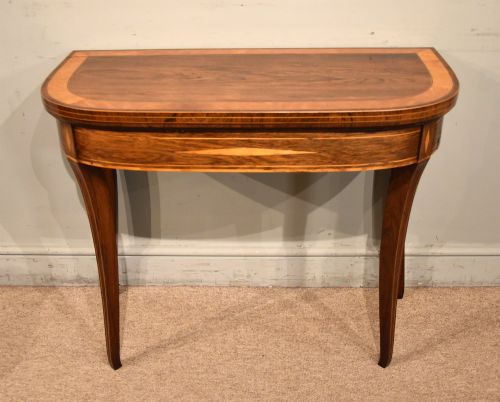
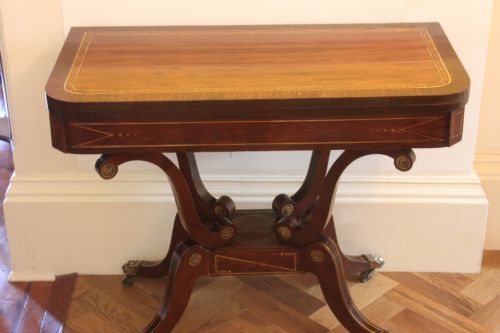
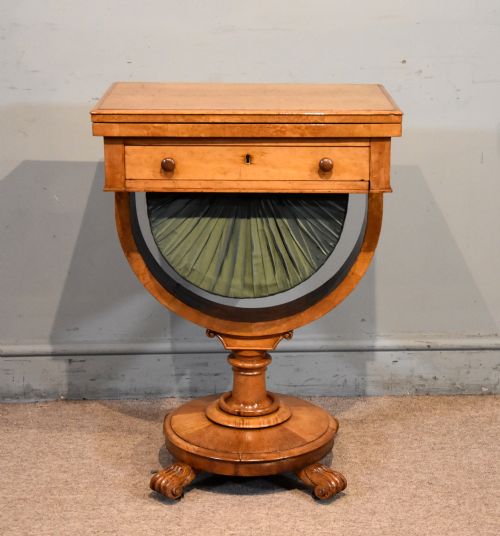

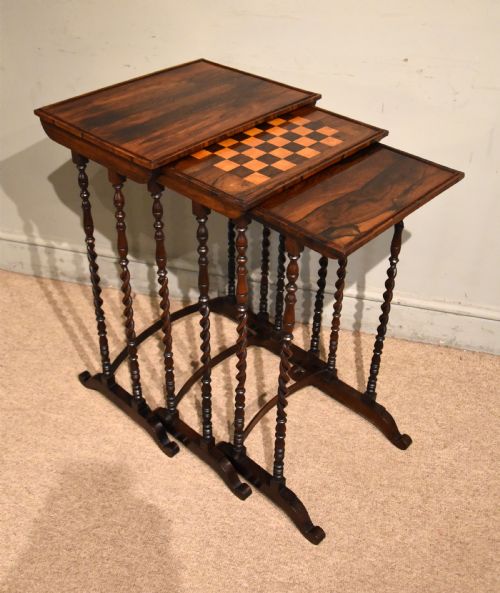


Regency Period Games Table
A regency period games table brings refined folding leaves, rich timbers and clever pivoting tops into the drawing room.
Regency Period Games Table
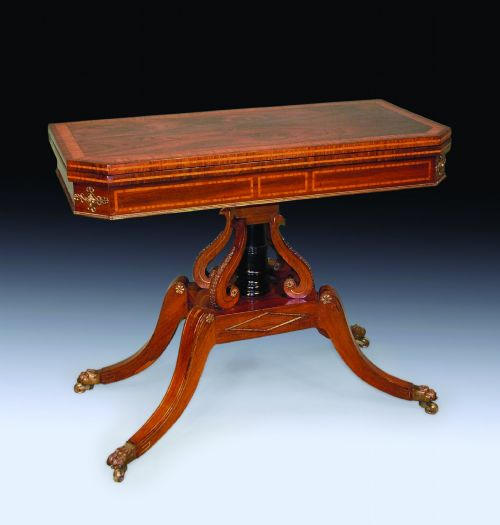
A regency period games table usually takes the form of a fold-over card table, tea table or occasional table designed for entertainment and parlor use. These pieces emerge primarily from the nineteenth century, spanning George IV and William IV styles alongside the core Regency period.
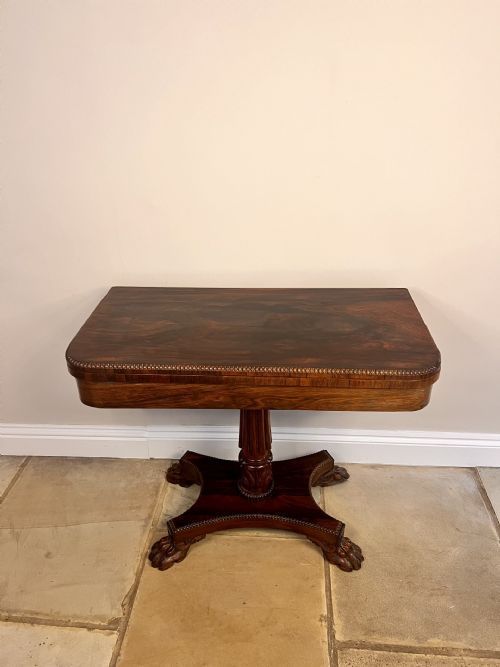
The most common formats on this page are mahogany and rosewood fold-over tables, often featuring D-shaped tops or rectangular leaves supported on central pedestals or carved bases. Examples frequently incorporate specialised surfaces for cards, chess or general gaming alongside dual-purpose tea and sewing compartments.
Originating in domestic British settings, these tables reflect the social habits of the period, combining functional surfaces with formal elegance. Makers utilised indigenous timbers like mahogany alongside imported exotics to suit fashionable interiors.
Materials and Construction
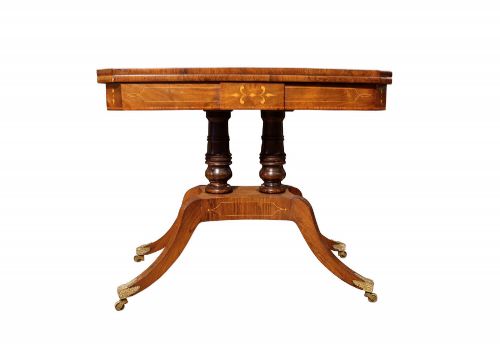
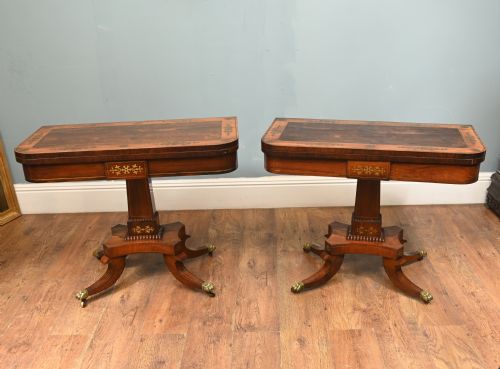
Makers constructed these tables using solid foundations of mahogany or rosewood, frequently applying flame mahogany veneer, satinwood, kingwood or goncalo alves to prominent surfaces. Brass inlay, stringing in ebony and boxwood, and ormolu mounts define the decorative vocabulary.
Structural integrity relied on clever joinery to support the pivoting fold-over tops and delicate pedestal bases, which often incorporated carved dolphins, scroll supports or lyre shapes. Brass sabots and castors finished the feet, allowing these heavy timber tables to move smoothly across carpets.
Regency Period Games Table Retail Price Guide 2026
Typical asking prices for regency period games table among the pieces listed under this phrase on Sellingantiques today, from the lower quarter to the upper quarter. They describe what is for sale here now, not the wider market.
Listings feature rosewood, mahogany, satinwood and brass inlay predominantly across nineteenth-century forms.
Craftsmanship and Proportion
Quality rests in the selection of timber veneers and the precision of the contrasting stringing and brass inlay. Finer examples display symmetrical grain patterns, particularly on rosewood and flame mahogany surfaces, matched carefully across the folding leaves.
Proportion and stability separate standard pieces from exceptional ones, notably in the carving of pedestal bases and the smooth mechanics of the pivoting top. The crispness of hand-carved details, such as scrollwork or dolphin supports, dictates the overall distinction of the table.
William Trotter
The Regency Period Games Table Glossary
- Fold-over top
- A hinged table surface that opens to double its area for card playing or dining. It pivots on a frieze frame or conceals a storage well beneath.
- Brass inlay
- Strips or motifs of brass embedded flush into the timber surface. This technique creates geometric or floral patterns popular in the Regency period.
- Sabot
- A decorative metal sleeve fitted to the foot of a furniture leg. It protects the timber base and often incorporates integrated castors.
- Stringing
- Thin contrasting lines of wood, such as ebony or boxwood, inlaid into channels on table edges and friezes. It accentuates the linear geometry of the piece.
- Quartetto tables
- A set of four graduated occasional tables designed to slide neatly beneath one another. They function flexibly for tea or light games.
Regency Period Games Table: Frequently Asked Questions
How do I use a games table today?
These tables adapt easily to modern rooms as console surfaces against a wall, opening out when extra space is required for cards or drinks. The fold-over leaves provide a sturdy surface without dominating smaller spaces.
Keep them away from direct heat sources and strong sunlight to protect the polished rosewood or mahogany veneers from drying out or fading over time.
What is the difference between a card table and a tea table?
Card tables typically feature baize or leather-lined interiors designed for gaming, alongside a small concealed well for counters and cards beneath the folding leaf. Tea tables generally present a smooth polished timber surface across the entire interior when opened.
Many period examples served interchangeable purposes depending on the day's requirements in the drawing room, reflecting the versatile nature of Regency furniture.
How do I identify a Regency period table?
Look for architectural characteristics such as pedestal bases with scroll or dolphin carvings, brass stringing, and rich rosewood or mahogany timbers. The proportions remain classical, drawing inspiration from Greek and Roman design.
Construction methods, including hand-cut dovetails and traditional fixings beneath the top, help confirm the nineteenth-century date of manufacture.
Are these tables suitable for everyday use?
Period tables withstand normal daily use provided they receive gentle care and proper maintenance of their polished finishes. Use coasters and avoid placing heavy objects on the folding overhangs.
Applying quality beeswax periodically helps preserve the timber grain and maintains the lustre of the original polish.