


Antique Tabletop Game
An antique tabletop game brings parlour entertainment to the surface, offering interactive pastimes crafted from wood, bone, and brass.
Antique Tabletop Game
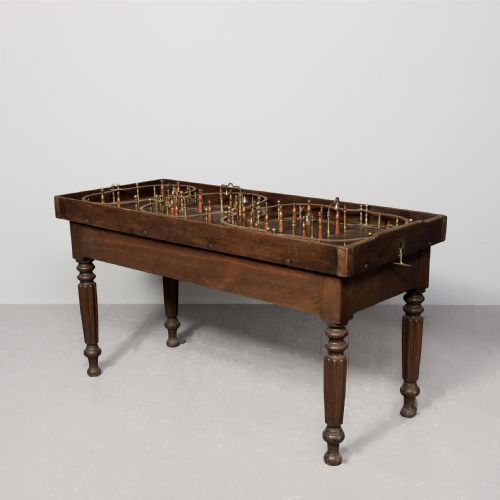
When you search for an antique tabletop game, you encounter various amusements designed for parlour entertainment across the nineteenth and early twentieth centuries. These pieces encompass folding boards, fitted boxes, and freestanding sets intended for indoor play. The selection ranges from traditional chess and draughts to regional pastimes and dexterity games.
You are most likely to meet wooden chess boards, compendium boxes, and specialised game sets dating from the Regency, Victorian, and Edwardian eras. Materials such as mahogany, oak, and burr walnut dominate the forms, often complemented by bone and brass components. Each object reflects the social pastimes of its period, whether through elaborate compendiums or simple wooden skittles.
How they were made
Cabinetmakers utilised timber such as mahogany, oak, and burr walnut to construct robust boards and fitted compartments. Surfaces often received painted details, gold leaf decoration, or contrasting veneers of sycamore and mahogany.
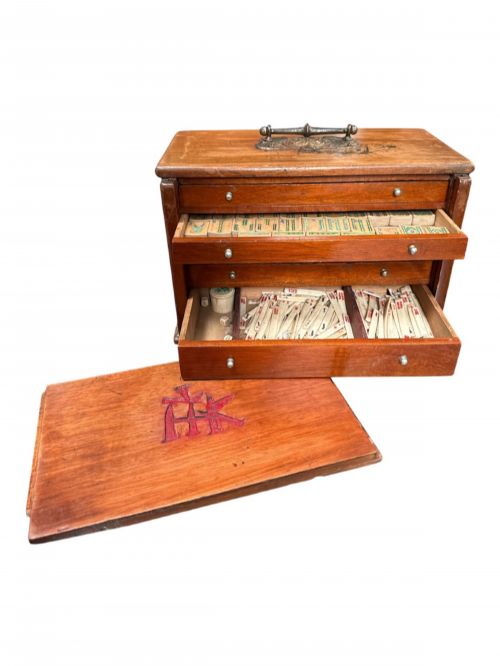
Game pieces and boards frequently incorporated turned bone, brass fixtures, and glass elements alongside traditional woodworking techniques. Fitted wooden cabinets and specialised boxes required precise joinery to house multiple gaming components securely.
Listings feature items from the Regency, Victorian, and 1930 periods, utilising wood, brass, bone, and glass.
What varies in quality
The refinement of the timber and the precision of the joinery set finer examples apart from simpler pieces. Burr walnut veneers and detailed brass or gold leaf decoration indicate a higher standard of manufacture.
The completeness of fitted components and the quality of turning on bone or wooden pieces also determine the distinction between standard production and superior craftsmanship.
F.H.Ayres Ltd., London·British Chess Company
The Antique Tabletop Game Glossary
- Compendium of games
- A fitted box containing multiple pastimes, such as chess, draughts, and card games, arranged within tiers or compartments.
- Pope Joan game
- A traditional parlour game played on a decorated board featuring partitioned sections for wagers.
- Squails
- A nineteenth-century table game where players flick wooden discs toward a central target.
- Mahjong set
- A game of Chinese origin played with tiles, typically housed in a fitted wooden cabinet.
- Skittles game
- A miniature tabletop version of ninepins, played by knocking down wooden pins with a propelled ball.
Antique Tabletop Game: Frequently Asked Questions
What periods do these games come from?
These items predominantly date from the nineteenth and early twentieth centuries, spanning the Regency, Victorian, and later periods.
Craftsmanship from these eras relies on traditional timber selection and manual construction methods.
How were parlour games used?
Families and guests utilised these items for indoor entertainment and social gatherings during the Victorian and Edwardian eras.
Many sets were kept in parlours or drawing rooms for evening amusement.
Are pieces usually complete?
Completeness varies depending on how frequently the items were played with over the generations. Fitted boxes often help retain component parts.
Checking the interior compartments reveals whether the original pieces survive.
What materials are most common?
Wood is the primary material, with mahogany, oak, and walnut frequently employed for boards and boxes. Bone, brass, and glass appear on playing pieces and decorative accents.
Surface ornamentation sometimes includes paint and gold leaf.