




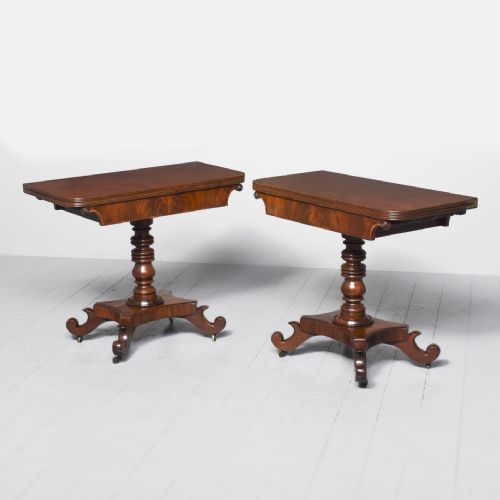

George IV Games Table
A george iv games table brings refined timber work and versatile fold-over surfaces directly into a modern sitting room.
George IV Games Table
Most examples encountered on this page date from the early nineteenth century and utilise rich timbers such as mahogany, rosewood, and oak. Buyers will also discover occasional tea tables and related fold-over designs alongside dedicated games surfaces.
Materials and construction
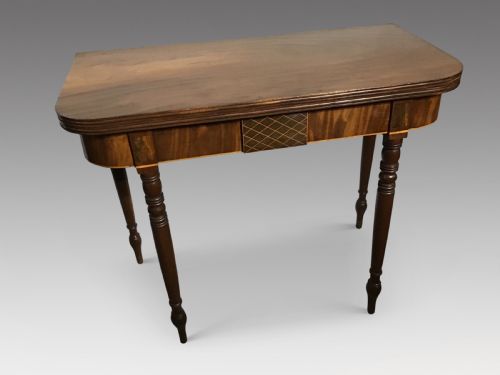
Cabinetmakers constructed these tables using dense hardwoods like mahogany and rosewood, frequently incorporating exotic veneers such as birdseye maple and burr oak. Timber selection defined the primary visual impact of the piece, often enhanced by contrasting inlay work.
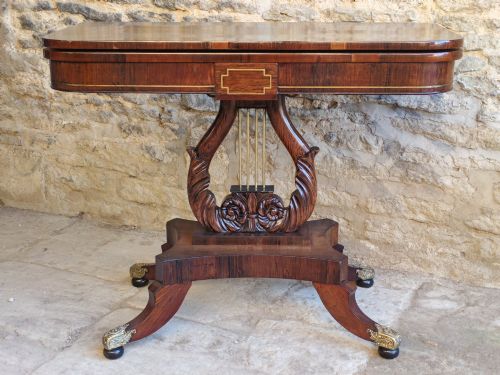
Structural engineering focused on stability and transformation, utilising fold-over tops supported by pivoting mechanisms or pedestal bases. Certain sophisticated examples incorporate brass inlay, gilt-brass mounts, and intricate lyre support bases.
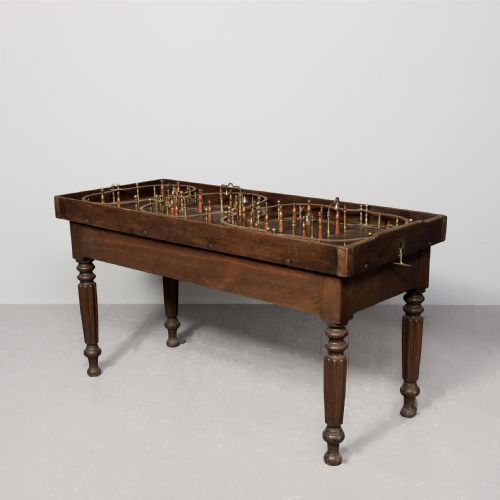
Among the formal mahogany and rosewood furniture sits a free-standing oak skittles game, proving that nineteenth-century households took their indoor recreation seriously.
Assessing quality and execution
Quality rests upon the selection of timber veneers and the precision of the cabinetwork, distinguishing robust daily furniture from high-status drawing-room pieces. Finely figured rosewood or burr oak displays superior natural grain patterns that elevate the overall presence of the table.
The sophistication of the support base, whether a carved pedestal, a lyre support, or brass-inlaid detailing, marks the distinction between standard production and exceptional workshop output. Attribution to notable makers further elevates the standing of an individual table.
William Trotter·Thomas Parker·Gillows
The George IV Games Table Glossary
- Card table
- A folding table specifically designed for playing cards, featuring a hinged top that opens to reveal a baize-lined surface. These pieces often double as console or tea tables when closed.
- Fold-over
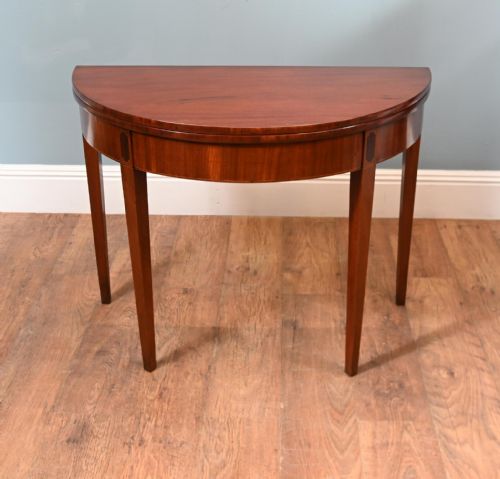
- A table top construction featuring two leaves hinged together, allowing the surface to double in area when opened for dining or gaming.
- Lyre support
- A furniture base shaped like the ancient musical instrument, popular during the Regency and George IV periods for supporting pedestal tables.
- Veneer
- A thin slice of ornamental wood applied to a coarser timber base to provide a decorative exterior grain pattern, commonly seen in birdseye maple and burr oak.
- Pedestal table
- A table supported by a single central column rising from a platform base or feet, frequently fitted with stability legs.
George IV Games Table: Frequently Asked Questions
What is a george iv games table used for?
These tables served primarily for indoor entertainment, offering a stable surface for card games and social pastimes in nineteenth-century drawing rooms.
Many designs also functioned as tea tables or console tables when folded shut against a wall, making them adaptable for everyday domestic use.
How do I care for a rosewood or mahogany surface?
Maintain antique timber by keeping it away from direct sunlight and maintaining stable room humidity to prevent the wood from splitting or warping.
Apply traditional beeswax periodically and buff gently with a soft cloth to preserve the natural lustre of the polished grain.
How do I distinguish a card table from a tea table?
Card tables historically featured interior surfaces lined with baize or felt for playing games, whereas tea tables typically displayed polished wood interiors.
In practice, many surviving pieces served dual purposes depending on the requirements of the household.
What defines the george iv style?
The style reflects a continuation of Regency elegance combined with heavier classical proportions and robust timber construction.
Pieces from this era frequently showcase rich rosewood and mahogany veneers alongside understated brass or inlaid decorations.