





Sheraton Revival Card Table
These sheraton revival card table pieces bring neoclassical elegance to a room, offering clever folding tops and refined inlay work.
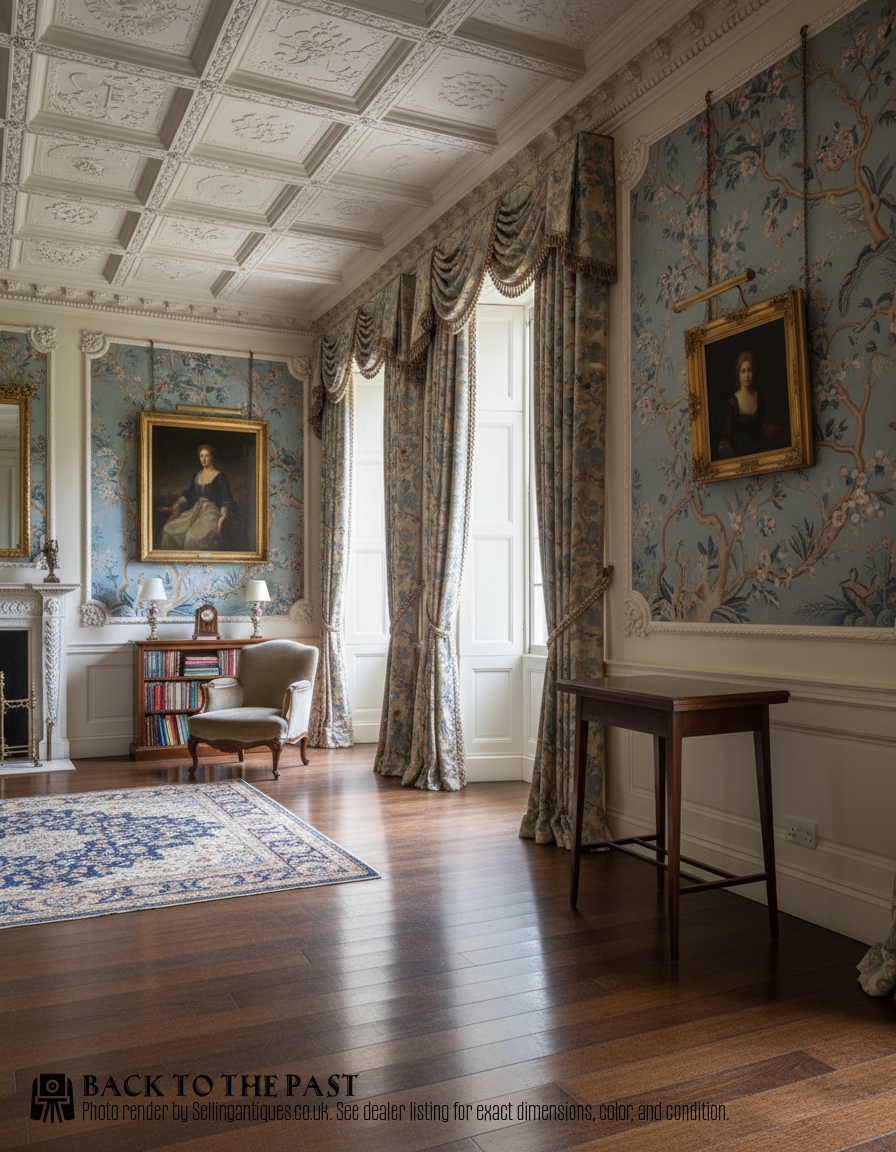
Sheraton Revival Card Table
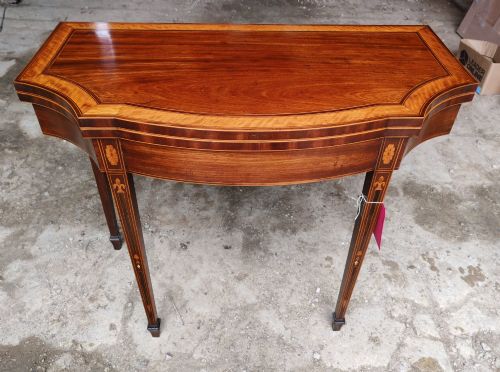
A sheraton revival card table is typically encountered in mahogany or satinwood, dating from the Victorian, Edwardian, and 1900 periods. These versatile items function as side tables, tea tables, and occasional tables when closed, expanding to reveal a playing surface.
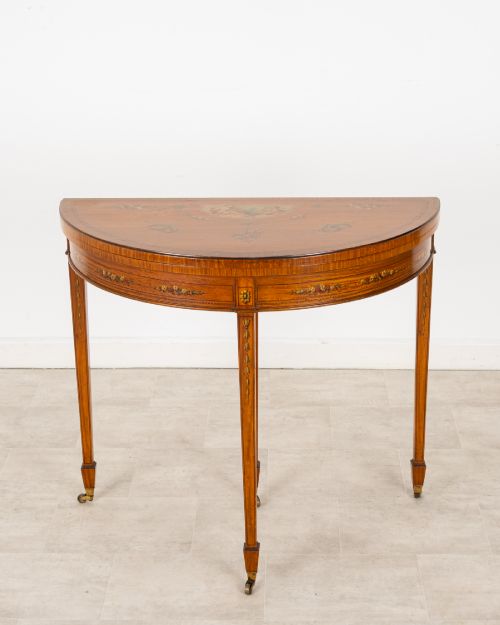
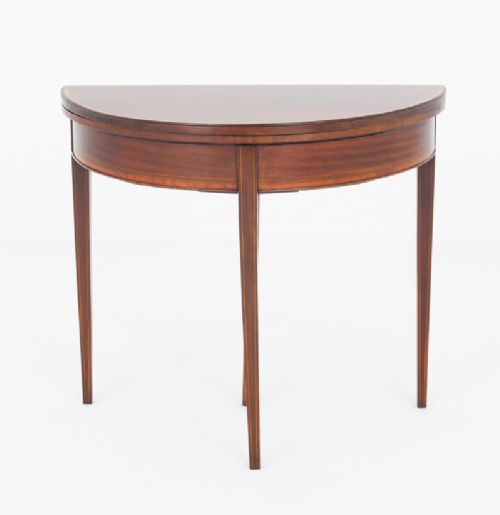
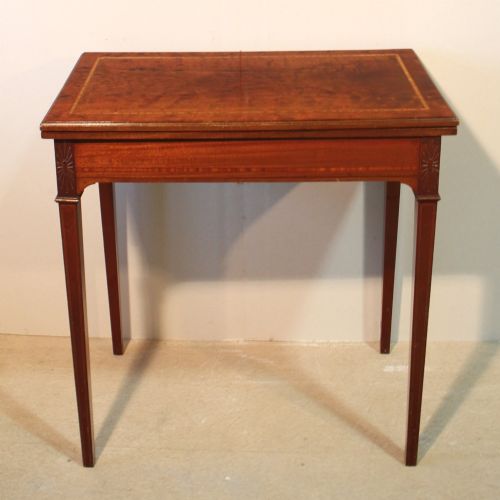
The most common forms seen on this page include demi-lune shapes, foldover tables, and envelope card tables. Originating as a revival of late eighteenth-century classical design, these pieces bring refined geometry to period and traditional interiors.
Materials and Construction
Cabinet makers utilised solid and veneered timbers including mahogany, satinwood, and rosewood, often contrasting darker woods with lighter boxwood stringing. This careful selection of timber provides both structural stability and a rich canvas for decorative surface work.
Surface ornamentation relies on intricate marquetry inlay, painted details, and brass fittings. Craftsmen assembled folding leaves and swivel mechanisms with precision to ensure the top surfaces aligned perfectly whether open or closed.
Materials recorded across the inventory include rich mahogany, luminous satinwood, rosewood, and intricate marquetry inlay work.
Assessing Quality and Finish
The distinction between ordinary and superior pieces rests on the crispness of the marquetry inlay and the choice of timbers, such as finely figured satinwood or rich mahogany. Master makers employed delicate boxwood stringing and hand-painted motifs that remain sharp and intact.
Mechanical integrity also dictates value, seen in the smooth operation of folding leaves, swivel tops, and envelope mechanisms. A higher quality table maintains tight joints and stable hinges that support regular use without sagging.
HOWARD & SON'S·MAPLES OF LONDON
The Sheraton Revival Card Table Glossary
- Demi-lune
- A half-moon shape characteristic of tables designed to sit flat against a wall when closed. This form became popular during the revival periods for saving floor space.
- Envelope card table
- A square table with four triangular flaps that swivel and fold open to reveal the baize-lined interior. The clever mechanism resembles the folding of an envelope.
- Marquetry inlay
- Decorative patterns created by fitting different wood veneers into a prepared background. This technique adds pictorial or geometric detail to the timber top.
- Stringing
- Thin lines of contrasting wood inlaid into channels on table tops and legs. It creates a neat border that defines the edges of panels.
- Foldover table
- A dual-purpose table with a hinged top that doubles the surface area when opened. The folding flap is typically supported by a swing leg or a pivoted frame.
Sheraton Revival Card Table: Frequently Asked Questions
How do you open an envelope card table?
The four triangular flaps swivel outwards on a central pivot to create a square playing surface. Each flap unfolds smoothly from the centre to reveal the lined interior.
This clever mechanism allows the table to remain compact when not in use while providing a stable surface for games when fully extended.
What is the difference between satinwood and mahogany versions?
Satinwood offers a pale, golden-yellow tone that reflects light and highlights delicate painted or inlaid details. Mahogany provides a deeper, reddish-brown hue with strong grain patterns.
Both timbers were favoured during different revival phases, with satinwood often associated with lighter, more decorative Edwardian pieces.
Where should I place a demi-lune table?
A demi-lune table is specifically shaped with a flat back to sit snugly against a hallway or living room wall. When closed, it functions as a console or side table.
Opening the hinged top transforms it into a full circular table suitable for card games or occasional tea service.
How can I date my card table?
Dating relies on identifying the combination of timber choices, inlay techniques, and structural hardware. Pieces from the Victorian era often feature heavier mahogany and robust hinges.
Edwardian and 1900 examples frequently display lighter satinwood, painted decoration, and refined brass elements characteristic of the revival movement.