


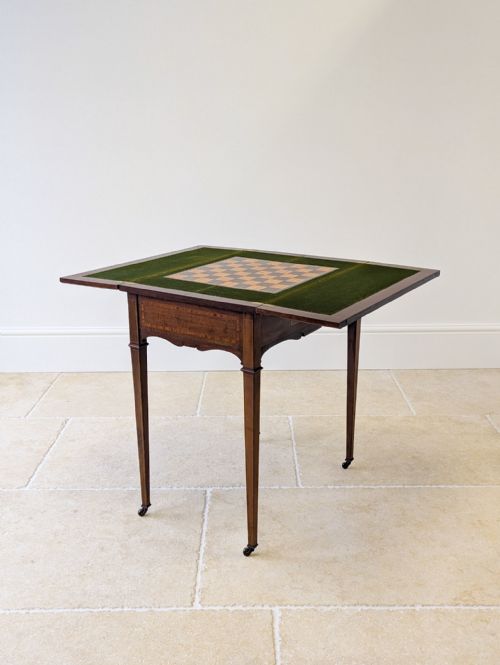
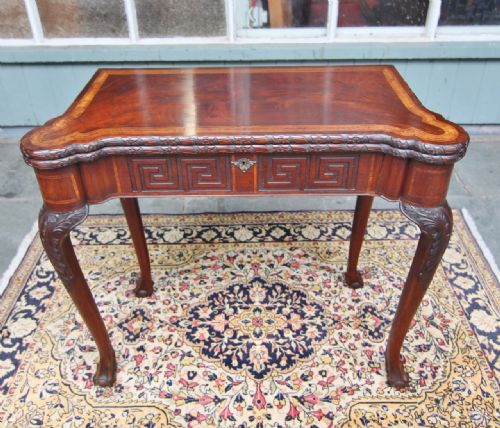
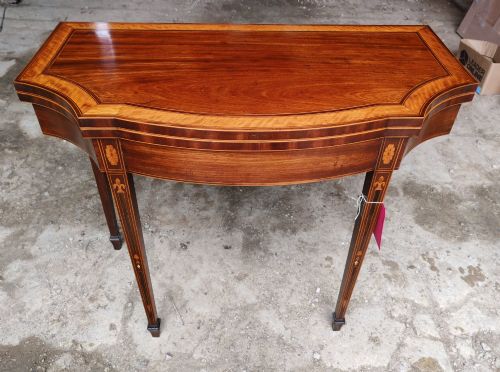
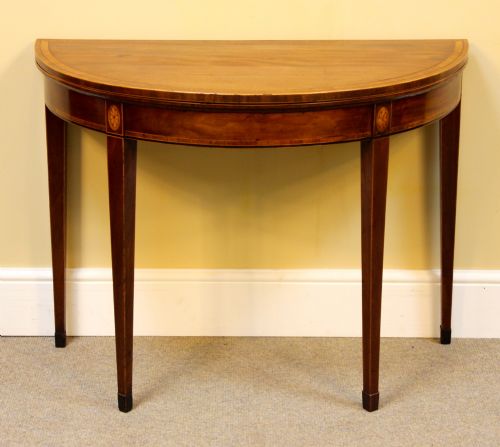
Edwardian Inlaid Games Table
These pieces combine clever folding tops and precise stringing, offering a versatile surface for cards and board pastimes.
Edwardian Inlaid Games Table
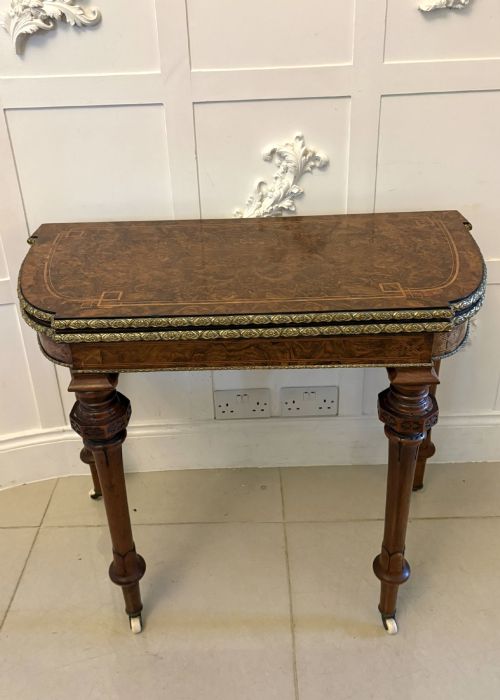
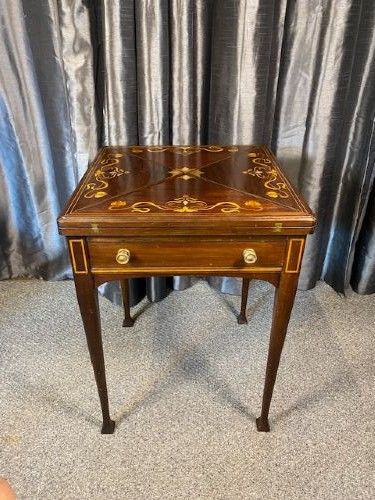
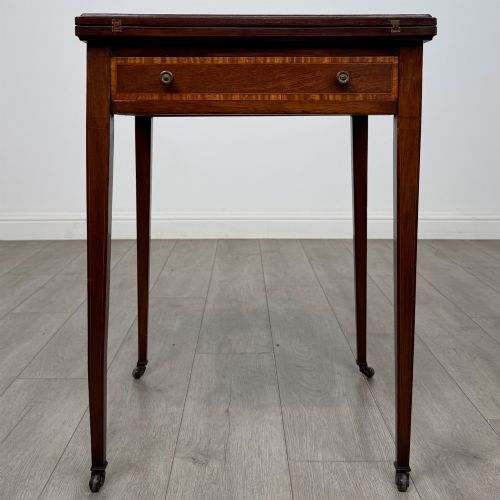
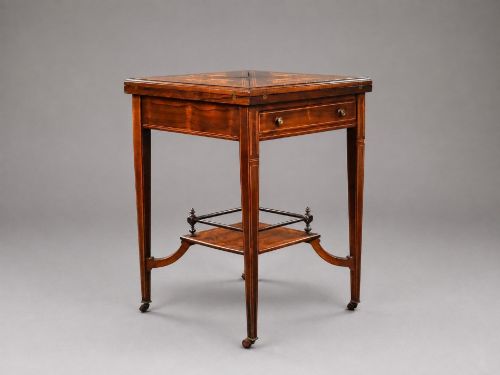
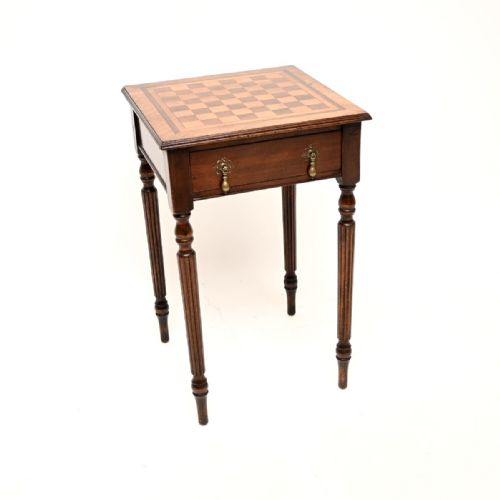
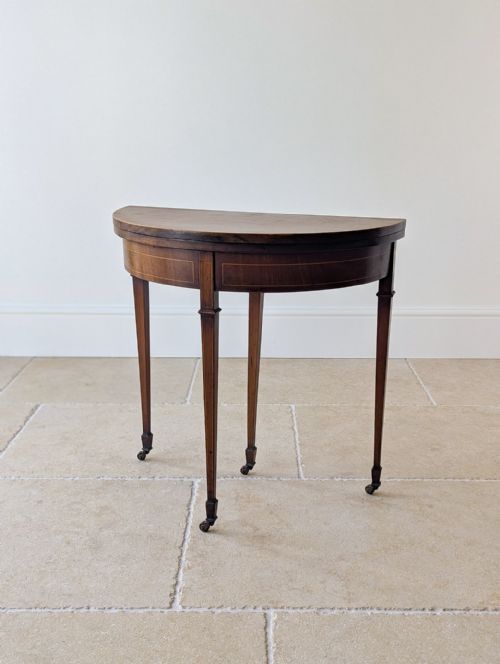
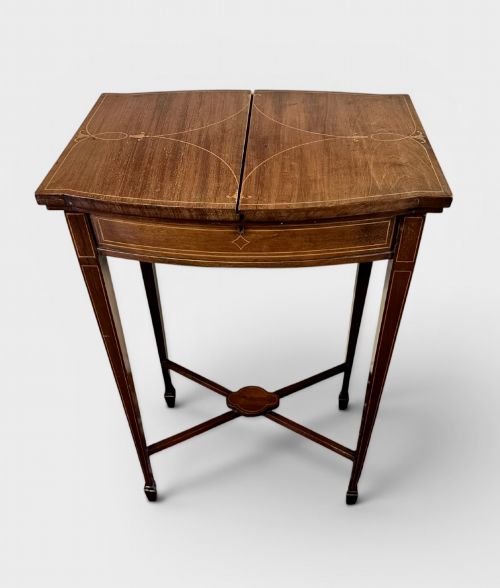
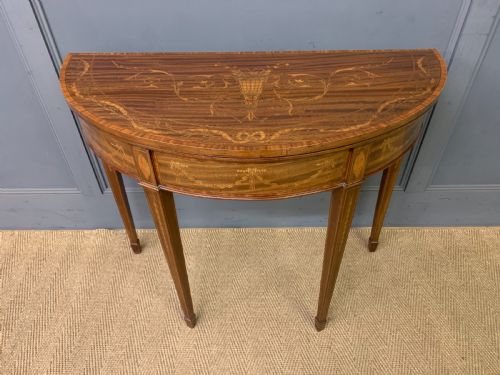
An edwardian inlaid games table is a multifunctional piece of furniture designed for leisure, frequently appearing in mahogany or rosewood with contrasting wood details. These tables often take the form of envelope tops that rotate and unfold to reveal baize-lined playing surfaces, or demilune folding designs that sit flat against a wall when not in use.
The evidence shows a strong representation of Edwardian and late nineteenth-century examples alongside earlier Georgian, Regency and Victorian pieces. Alongside standard card tables, the selection includes combination pieces that double as work boxes, sewing tables or occasional furniture.
Makers and workshops of the period produced these tables to serve the drawing rooms of large homes, where entertainment required adaptable furniture. Buyers will find square envelope versions, D-shaped console variants, and rectangular swivel-top models dominating the current offerings.
Materials and construction
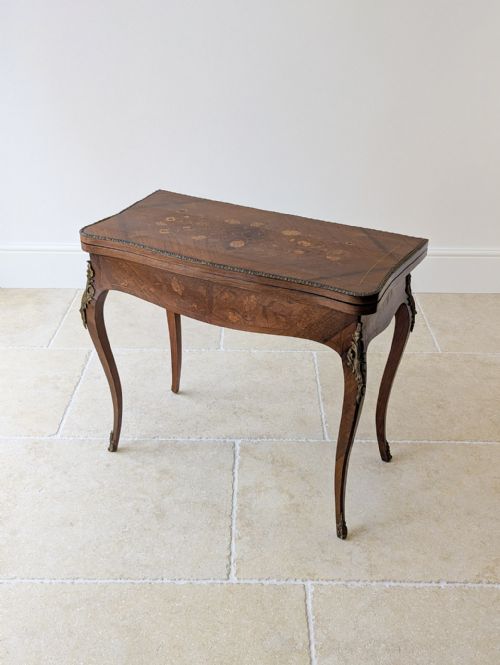
Cabinet makers utilised dense timbers such as mahogany, rosewood and burr walnut as the structural foundation for these tables. Solid cuts form the frames, while carefully selected veneers provide figured surfaces on the folding leaves and friezes.
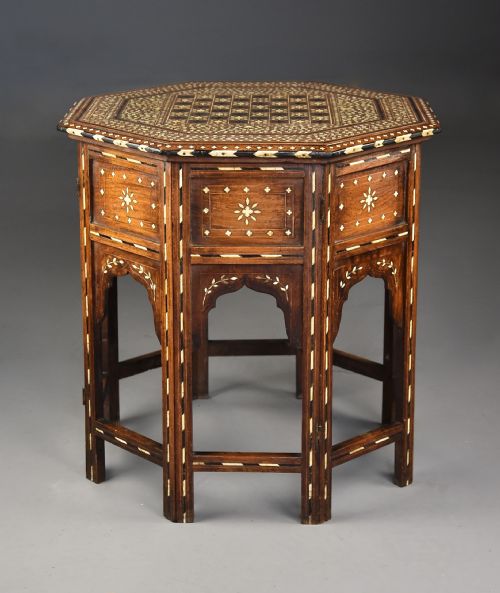
Decoration relies heavily on contrasting stringing and marquetry using satinwood, boxwood and ebony inlay. Brass hinges, castors and occasional ormolu mounts complete the hardware, allowing the folding mechanisms to operate smoothly.
Some folding game tables arrive complete with instructions for playing long-forgotten parlour pastimes like The Royal and Pleasant Game of Goose.
Evaluating craftsmanship
Quality rests upon the precision of the joinery in the folding and swivel mechanisms, ensuring leaves open level without sagging. Superior examples display crisp, unbroken stringing and finely figured timber veneers selected for symmetry.
The treatment of internal compartments, such as lined wells for counters or fitted drawers, distinguishes workshop output. Finer pieces maintain stability across extended legs without relying on excessive reinforcement.
Maple and Co·Howard and Son's
The Edwardian Inlaid Games Table Glossary
- Envelope top
- A folding table design featuring four triangular flaps that rotate and fold outward to open into a square playing surface. This mechanism relies on a central pivot beneath the top.
- Demilune
- A half-moon shape used for folding card tables designed to stand flush against a wall. When opened, the hinged top forms a full circle or square supported by a swinging leg.
- Inlay
- A technique where pieces of contrasting wood, such as boxwood or satinwood, are fitted into recessed cavities in the primary timber. This creates decorative geometric lines and floral motifs.
- Baize
- A coarse woollen fabric, traditionally green, used to line the playing surfaces of card and games tables. It provides a soft, non-slip texture for dealing cards.
- Marquetry
- Elaborate patterns formed by fitted wood veneers applied across the top of a table. It differs from simple stringing by depicting pictorial or flowing natural designs.
Edwardian Inlaid Games Table: Frequently Asked Questions
What is an envelope games table?
An envelope games table is a square occasional table with a clever pivoting top made of four triangular flaps. When the top is rotated, the flaps unfold outward to reveal a baize-lined playing surface.
Inside these tables, makers often included small wells for holding counters, cards or scoring pegs. This design allowed a compact side table to transform quickly into a dedicated card table.
What woods were used for these tables?
Makers relied primarily on mahogany and rosewood for the main structure and framing of these tables. Burr walnut also appears frequently, prized for its distinctive swirling grain patterns on table tops.
Contrasting timbers like satinwood, boxwood and ebony were employed specifically for stringing and decorative inlay work. These lighter woods create sharp borders around the edges of the folding leaves.
How do I care for a baize playing surface?
Baize is a woven woollen textile that requires gentle maintenance to prevent dust accumulation and moth damage. Using a soft brush or a low-suction vacuum attachment helps keep the fabric clean.
Keeping the table away from direct sunlight prevents the traditional green colour from fading unevenly across the open leaves. Moisture should be kept away from the fabric to avoid shrinking or staining the wool.