
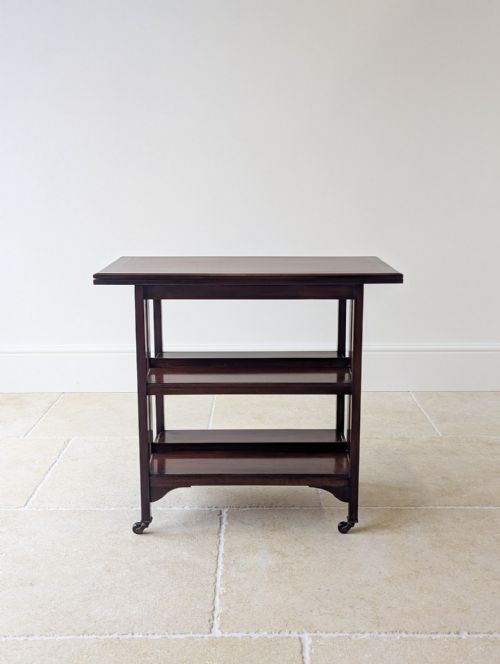


Vintage Bridge Table
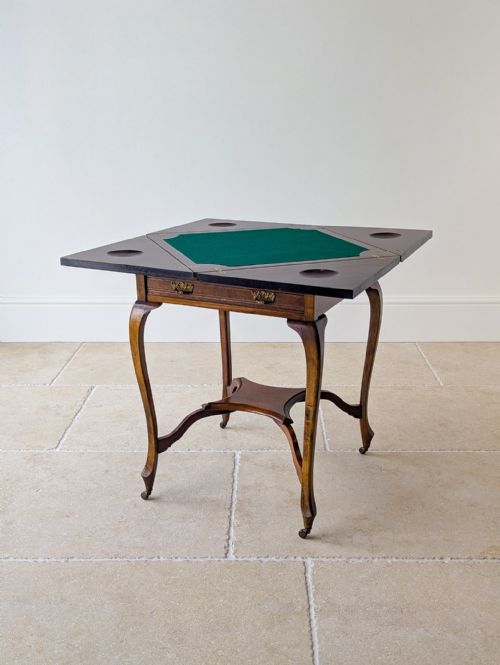
These vintage bridge table selections bring together Edwardian mahogany envelope designs and Art Deco forms built for card playing.
Vintage Bridge Table
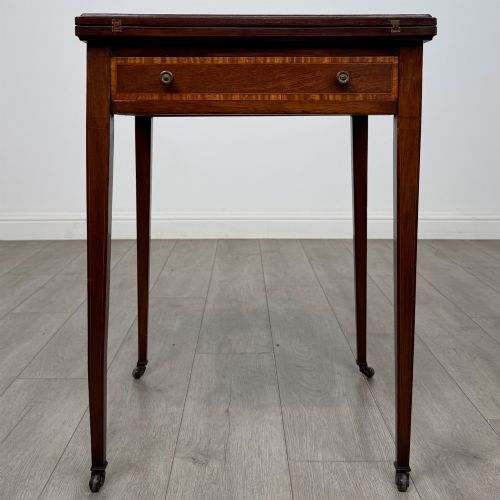
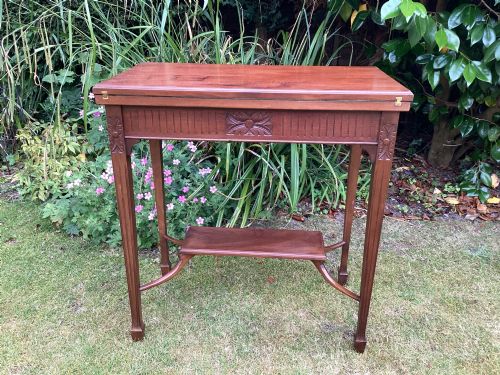
A vintage bridge table serves as a dedicated piece of furniture for card games, most frequently appearing on this page in Edwardian envelope formats constructed from mahogany. These tables often feature clever folding tops that open to reveal a baize-lined playing surface, alongside occasional variations in walnut, satinwood, and brass inlay.
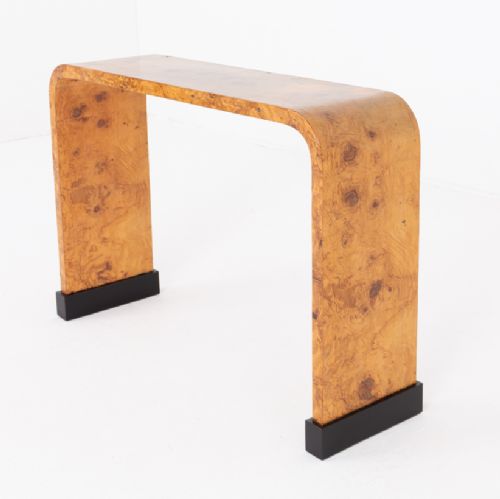
Beyond standard Edwardian envelope tables, the selection includes Victorian card games tables, Queen Anne style games tables, and triangular Thonet bentwood pieces from around 1900. Alongside these dedicated folding designs, one encounters Art Deco console tables and lamp tables associated with the same era.
The periods represented span the nineteenth century through the 1930s, encompassing Victorian, Edwardian, and Art Deco aesthetics. The primary function remains hosting card parties and evening games, housed in timber frames designed to fold away or stand as console furniture when not in use.
Materials and construction
Makers utilised mahogany as the primary timber for these tables, frequently enhancing the surfaces with satinwood and brass inlay. Burr walnut and rosewood also appear among the listed pieces, providing diverse grain patterns and rich natural colour across the woodwork.
The working surfaces rely on baize as a traditional playing cloth insert inside the folding flaps. Structural elements incorporate bentwood techniques in specific examples, whilst traditional joinery supports the envelope mechanisms and folding leaves.
Vintage Bridge Table Retail Price Guide 2026
Typical asking prices for vintage bridge table among the pieces listed under this phrase on Sellingantiques today, from the lower quarter to the upper quarter. They describe what is for sale here now, not the wider market.
Listings span the nineteenth century, Edwardian era, 1920s, and Art Deco 1930s, constructed in mahogany, walnut, burr walnut, rosewood, satinwood, brass, and tin.
Judgements of quality
Quality rests upon the precision of the folding mechanism and the stability of the timber frame when extended. Envelope tops that operate smoothly and close flush demonstrate superior carpentry.
The choice of secondary woods, the crispness of brass inlay, and the retention of original baize distinguish finer examples from simpler production. Subtle details such as inlaid stringing or figured mahogany veneers elevate the visual merit of an individual piece.
Thonet
The Vintage Bridge Table Glossary
- Envelope table
- A card table with a four-flap folding top that rotates and opens like an envelope to reveal a square playing surface. This clever mechanism sits on four legs, often with a small undertier for storage.
- Baize
- A coarse woolen fabric used traditionally to line the playing surfaces of card and games tables. It provides a soft, durable texture that prevents cards from sliding during play.
- Bentwood
- Wood that has been steamed and bent into curved shapes, famously utilised by manufacturers such as Thonet. It creates strong, lightweight furniture frames with flowing organic lines.
- Inlay
- A technique where pieces of contrasting materials such as brass or satinwood are embedded into the wood surface to create decorative patterns. This ornamentation defines many Edwardian and Victorian pieces.
Vintage Bridge Table: Frequently Asked Questions
How do I date a vintage bridge table?
Dating relies on examining the timber, decorative style, and mechanical construction of the piece. Edwardian examples often display mahogany with satinwood or brass inlay, whilst Victorian pieces feature heavier timber proportions.
Art Deco items from the 1930s introduce simpler geometric lines and alternative table formats like console or lamp tables.
What materials are used for the playing surface?
The primary material inset into the playing surface is baize, a durable woven fabric designed to cushion cards and reduce noise during play. It sits within a folding wooden top.
Surrounding wooden frames are constructed from timbers such as mahogany, walnut, burr walnut, and rosewood, sometimes accented with brass inlay.
Where should I place a bridge table in a room?
These versatile tables function well as console tables or lamp tables against a wall when folded shut. Their compact profile allows them to occupy hallway or living room spaces without dominating the floor.
When guests arrive for cards, the table moves easily into the centre of the room and unfolds to accept players.