
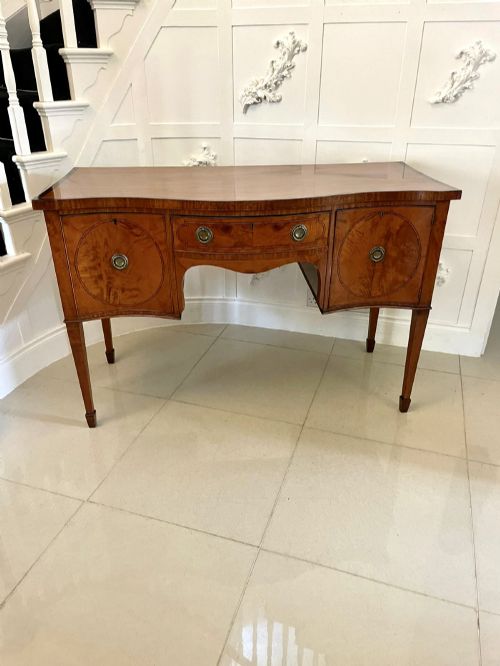
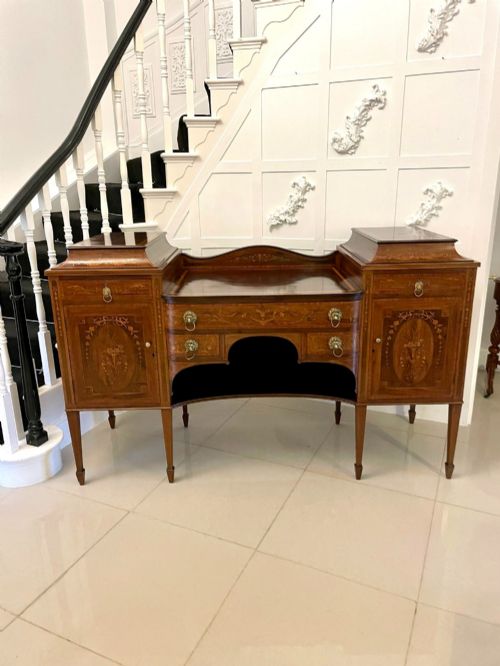
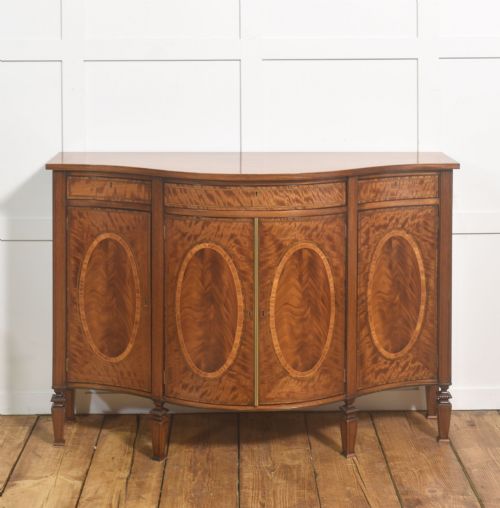
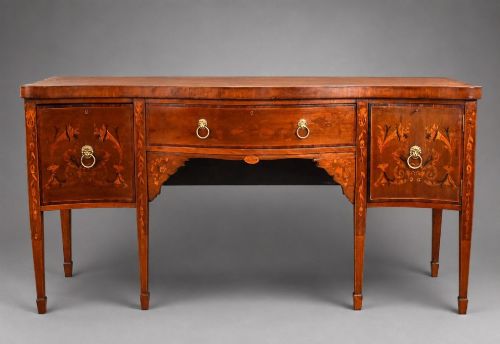




Edwardian Inlaid Buffet
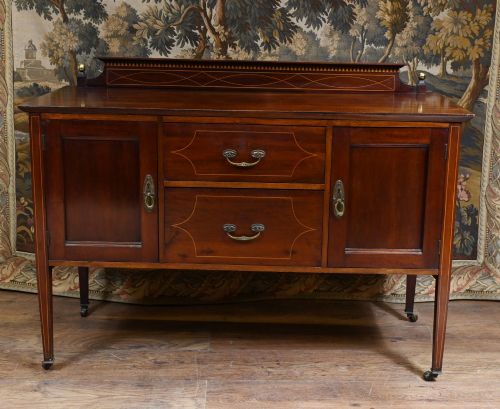
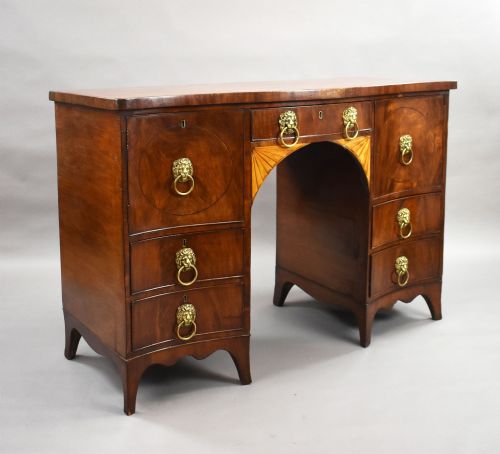
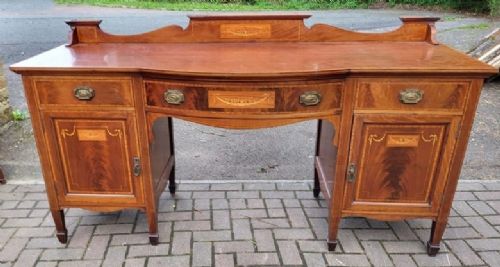
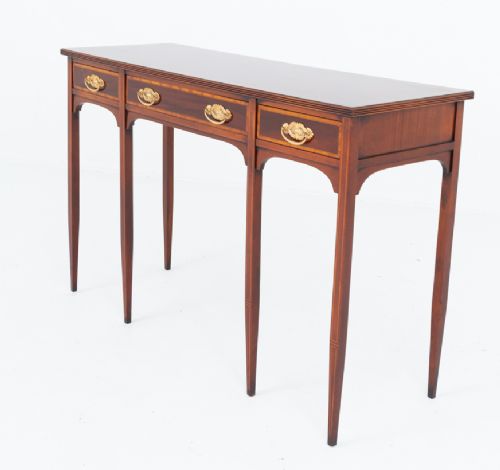
These edwardian inlaid buffet pieces combine mahogany or satinwood with intricate boxwood and wood inlay, offering both functional dining room storage and refined period elegance.
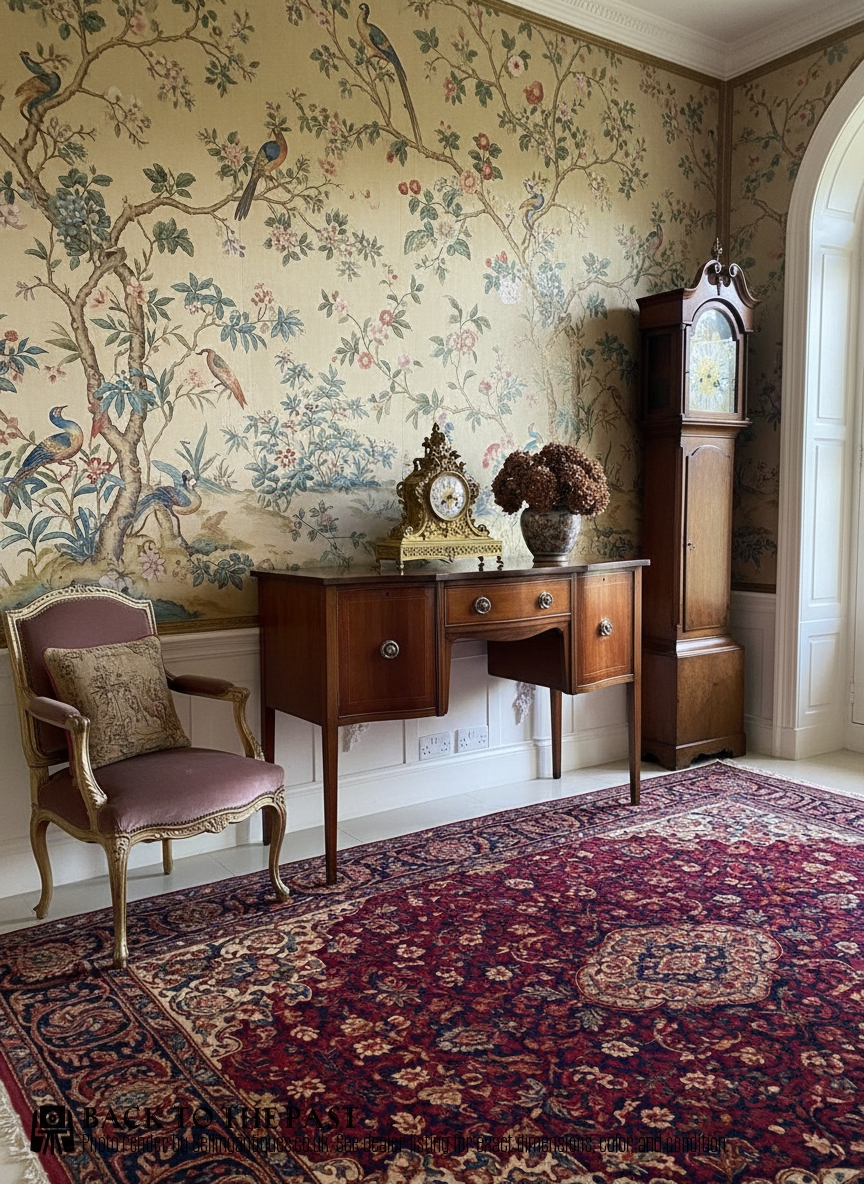
Edwardian Inlaid Buffet
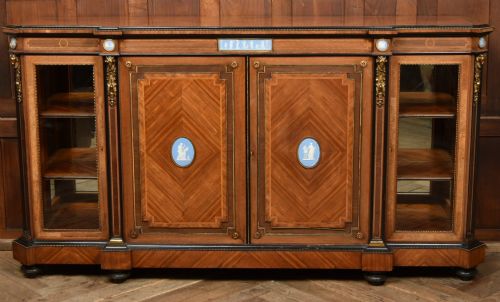
When you search for an edwardian inlaid buffet, you encounter formal dining room furniture designed for serving food and displaying silver or glassware. The forms on this page span sideboards, servers, and side cabinets originating predominantly from the Edwardian period and the late nineteenth century.
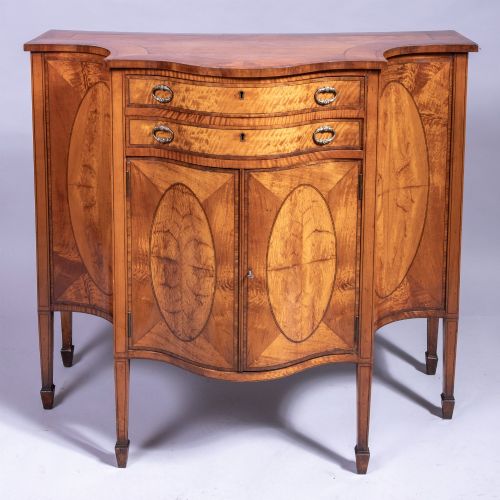
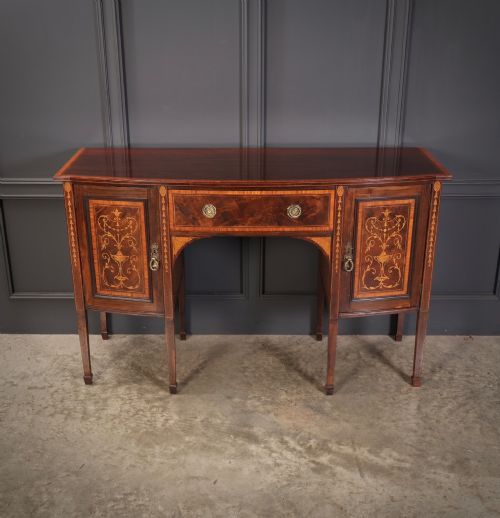
Makers and cabinetmakers working in the Sheraton Revival style frequently produced these items, utilising bow-front and serpentine shapes alongside traditional rectangular formats. Surviving examples reflect the aesthetic preferences of both the Edwardian era and the preceding Victorian decades.
The primary forms function as practical sideboards with cupboards and drawers, while related serving tables and credenzas offer alternative surface space. Mahogany and satinwood form the structural foundation of these pieces, often enriched with detailed contrasting stringing.
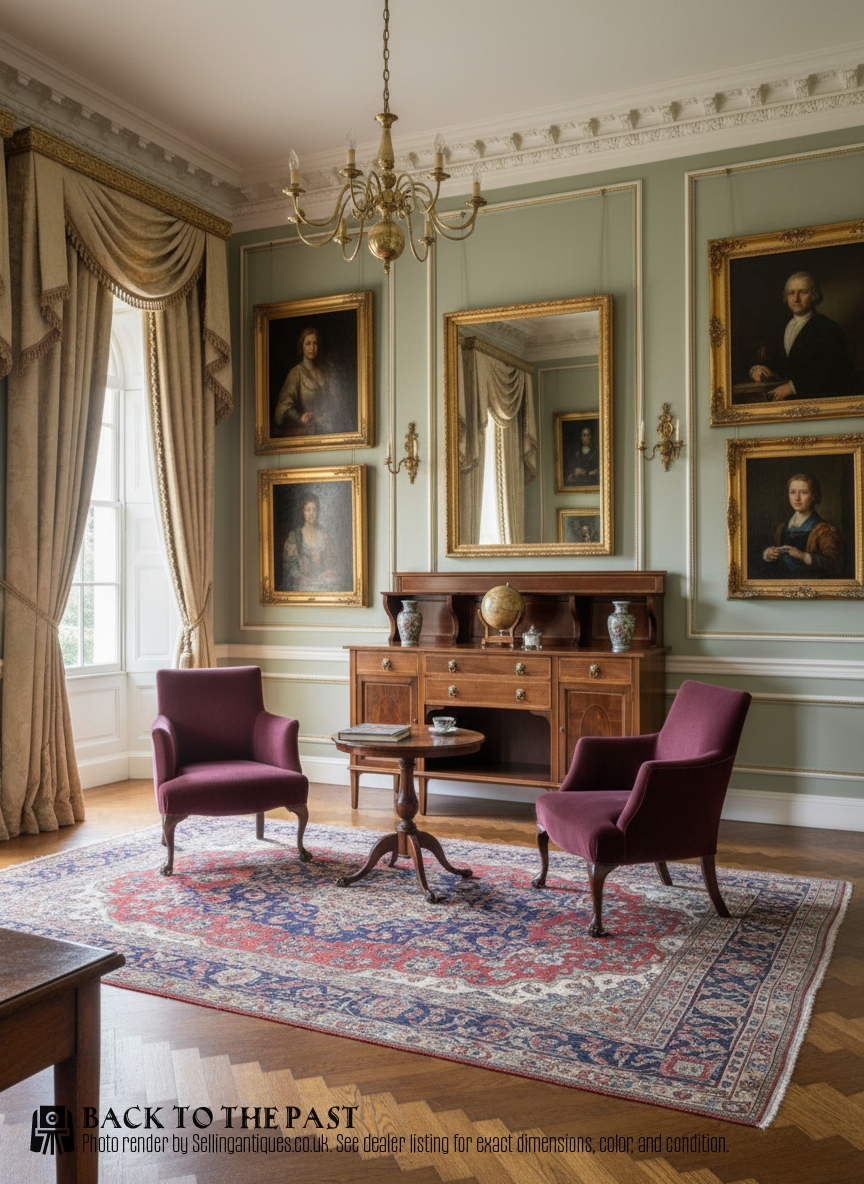
Materials and Technique
Cabinetmakers constructed these pieces primarily using solid mahogany and satinwood, frequently applying burr walnut or rosewood veneers to primary surfaces. Timber selection focused on grain figure and colour warmth to create visual contrast across doors and drawer fronts.
Inlay techniques involved cutting delicate recesses into the base timber to insert contrasting woods such as boxwood and satinwood, creating geometric patterns, ribbon motifs, and marquetry sprays. Crossbanding framed the main panels, defining edges with narrow strips of darker or lighter wood.
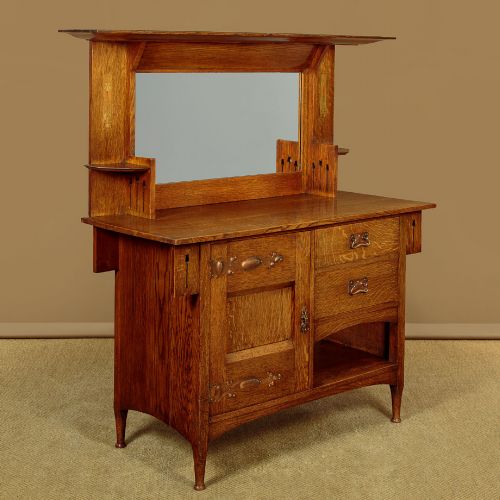
Brass hardware, including ring pulls, backplates, and cabinet keys, completed the construction, whilst occasional pieces incorporated bevelled glass mirrors within superstructure backs.
Listings feature periods spanning from the Georgian era through Victorian, Edwardian, and Arts and Crafts movements, using mahogany, satinwood, and burr walnut.
Assessing Quality
Quality rests upon the precision of the timber inlay and the symmetry of the wood grain selected for the front panels. Finely executed marquetry and crisp crossbanding indicate superior workshop production.
Structural complexity also dictates standing, with serpentine and bow-front shapes requiring advanced joinery compared to flat-fronted alternatives. The inclusion of secondary timbers inside drawers and the weight of solid brass fittings further separate standard production from master craftsmanship.
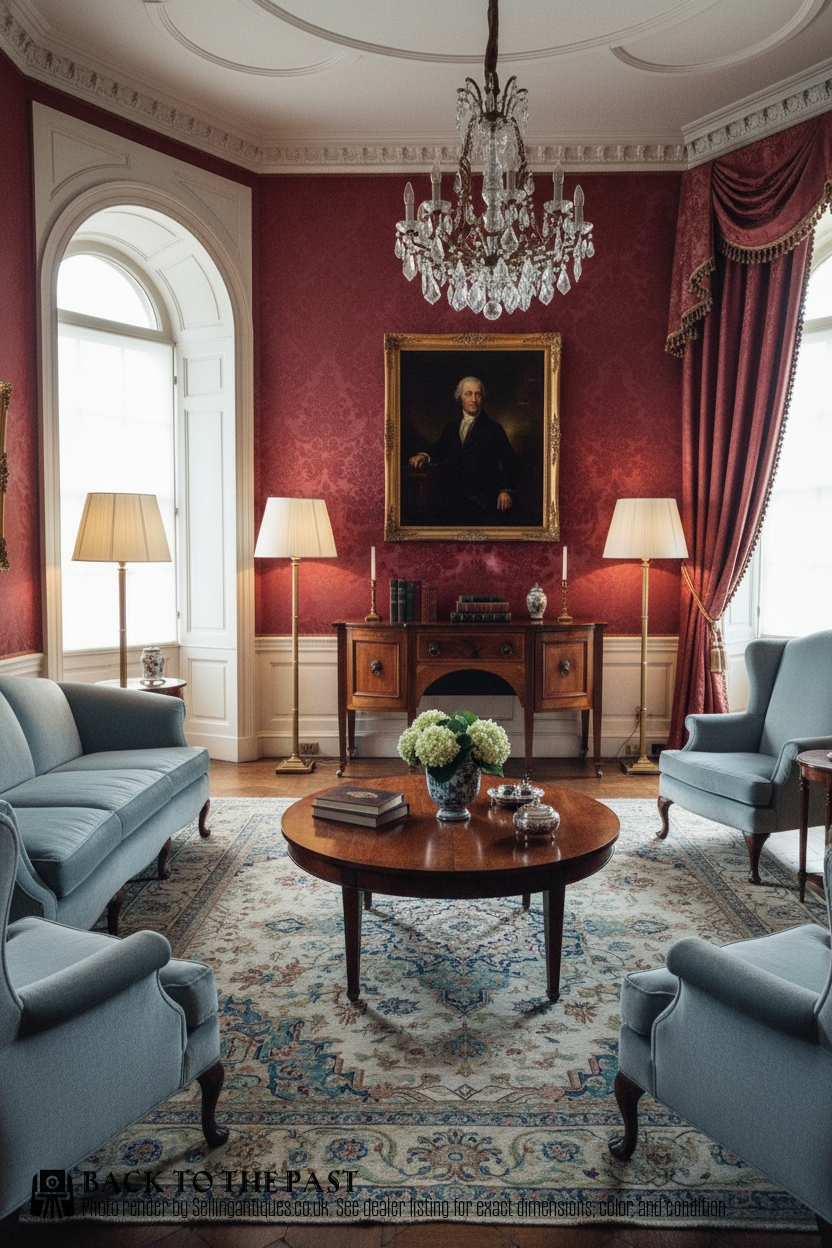
Hewetsons London·Shapland and Petter·Edwards and Roberts
The Edwardian Inlaid Buffet Glossary
- Inlay
- A decorative technique where small pieces of contrasting wood are inserted into prepared recesses on the surface. This method creates geometric patterns or pictorial motifs.
- Crossbanding
- A narrow strip of veneer laid around the border of a panel, with the grain running perpendicular to the centre wood. It frames the central design.
- Marquetry
- Elaborate veneer work forming pictorial or decorative designs using various tinted woods. It differs from simple inlay by covering the entire surface.
- Serpentine
- A shaped furniture front that curves outward in the middle and inward at the sides. This contour requires skilled carpentry.
Edwardian Inlaid Buffet: Frequently Asked Questions
What is an edwardian inlaid buffet used for?
These pieces served primarily in dining rooms for storing tableware, cutlery, and serving dishes during meals. The flat top provided a convenient surface for serving food or displaying decorative silver and ceramic items.
Today, they function well in dining rooms, hallways, or living spaces as practical storage credenzas that double as display surfaces.
How do I identify a Sheraton Revival piece?
Sheraton Revival furniture draws inspiration from eighteenth-century neoclassical designs, typically showcasing light timbers like satinwood and mahogany. Look for delicate proportions, tapered legs, and symmetrical inlay patterns.
Many pieces from this revival movement date from the late nineteenth or early twentieth century rather than the original Georgian period.
What is the difference between a sideboard and a buffet?
Sideboards and buffets both provide dining room storage with cupboards and drawers, though the terms often overlap in historic descriptions. Buffets traditionally emphasised a lower profile specifically for serving meals.
On this page, both terms describe similar serving furniture from the Victorian and Edwardian eras.
How should I care for mahogany and satinwood?
Protect these polished wood surfaces by keeping them away from direct sunlight and heat sources, which can dry out the timber and fade the delicate inlay. Dust regularly with a soft, dry cloth.
Occasional application of appropriate furniture wax helps maintain the lustre of the wood without building up a heavy residue.