

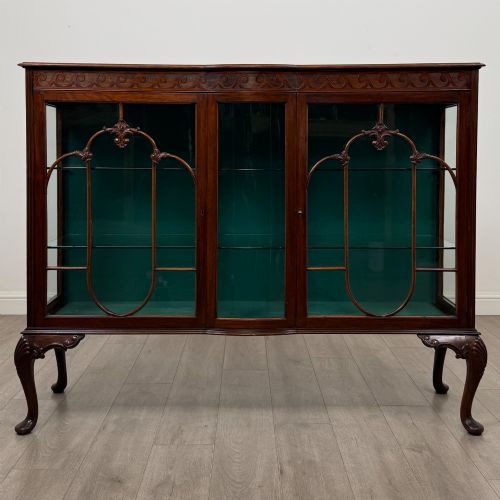
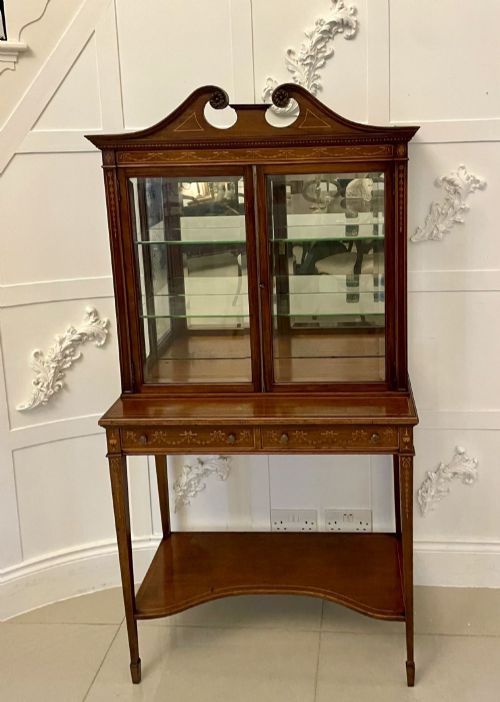
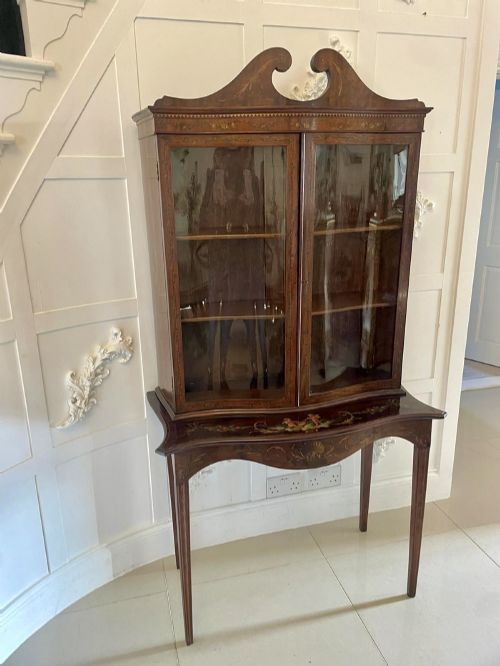
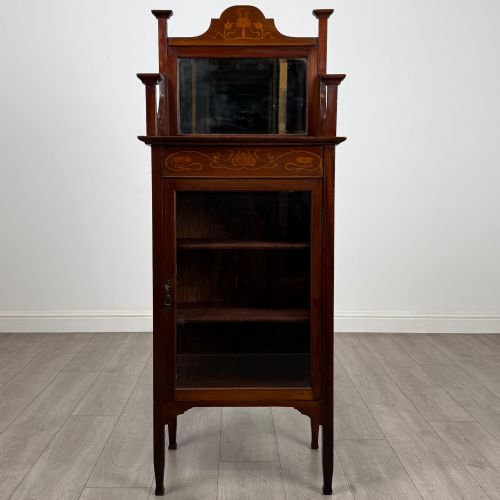
Edwardian Glass Vitrine
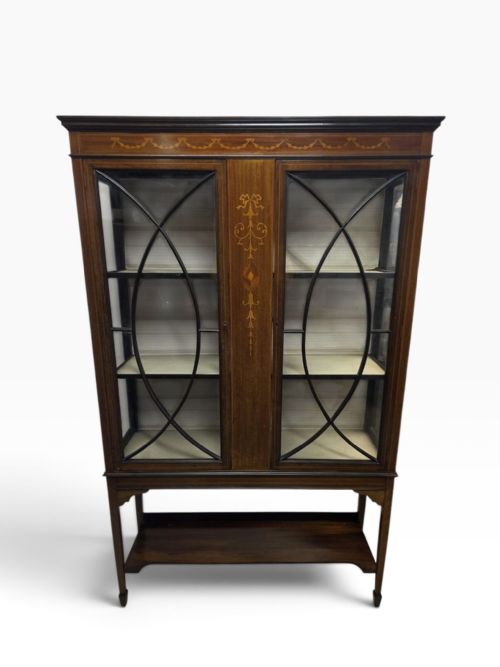
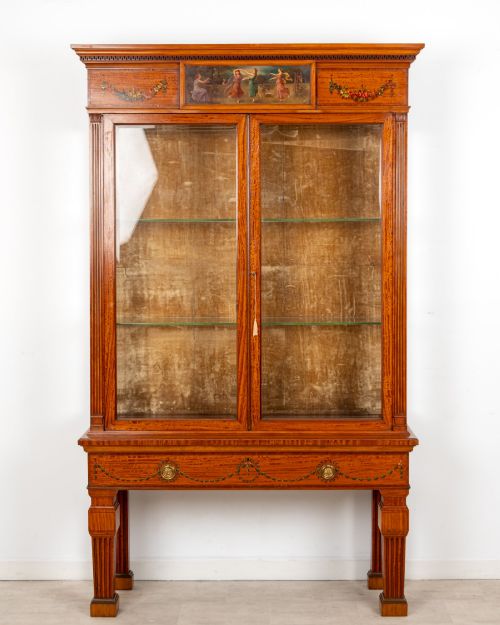
An Edwardian glass vitrine displays precious objects behind polished timber and clear panes, bringing light and elegance into a room.
Edwardian Glass Vitrine
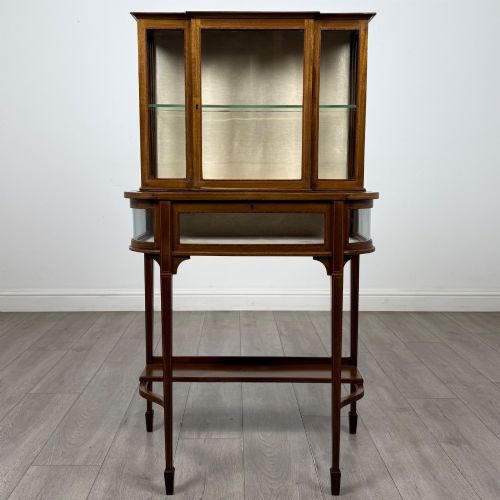
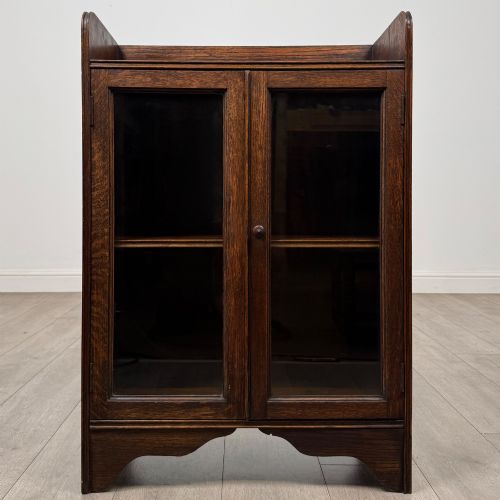
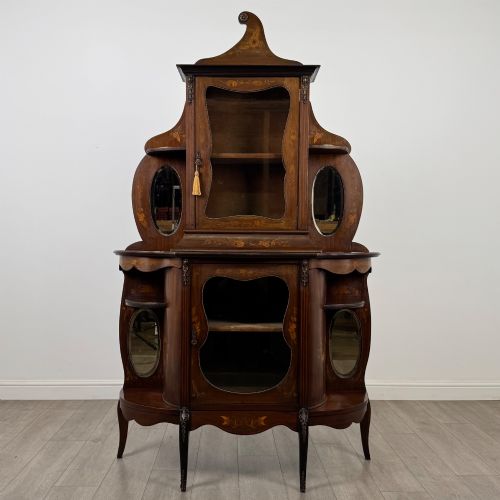
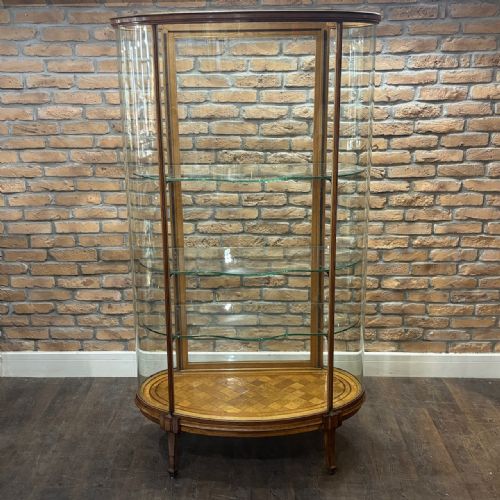
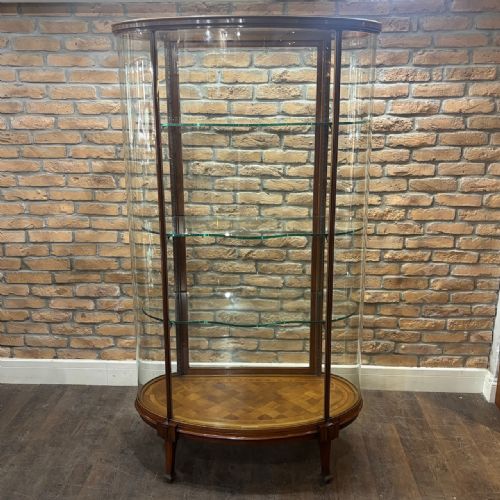
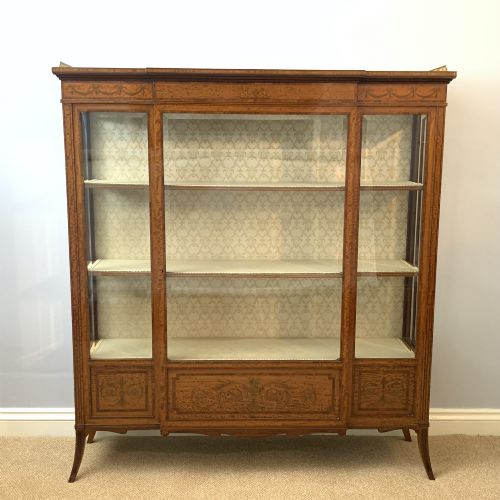
The edwardian glass vitrine is a specialised display piece designed to hold ceramics, silverware, and small curiosities. These cabinets feature extensive glass panels and glazed doors to illuminate contents from multiple angles.
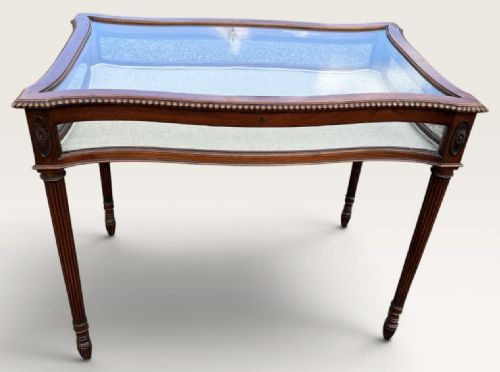
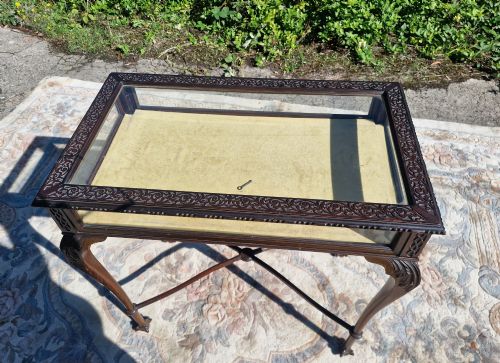
Most examples found here date from the Edwardian period or late Victorian era, constructed in forms such as tall display cabinets, serpentine bijouterie tables, and pedestal units. Mahogany and satinwood predominate, frequently enhanced by delicate inlay work.
How they were made
Cabinet makers utilised solid and veneered timbers such as mahogany, oak, walnut, and satinwood, applying brass mounts and fabric linings for interior surfaces. Frames incorporate curved or flat glass held securely within rebated wooden bars.
Decoration relied on marquetry and satinwood inlay, along with painted details and carved wooden motifs. Workshops employed glazing bars to create slender structural divisions that maximised light penetration.
Edwardian Glass Vitrine Retail Price Guide 2026
Typical asking prices for edwardian glass vitrine among the pieces listed under this phrase on Sellingantiques today, from the lower quarter to the upper quarter. They describe what is for sale here now, not the wider market.
Design styles span the Edwardian era, Sheraton Revival, Art Nouveau, and Queen Anne Revival periods.
What varies in quality
Quality rests in the crispness of the cabinet work, the choice of figured timber veneers, and the sophistication of the inlay or marquetry. Superior pieces exhibit fine joinery in curved glass doors and well-balanced proportions.
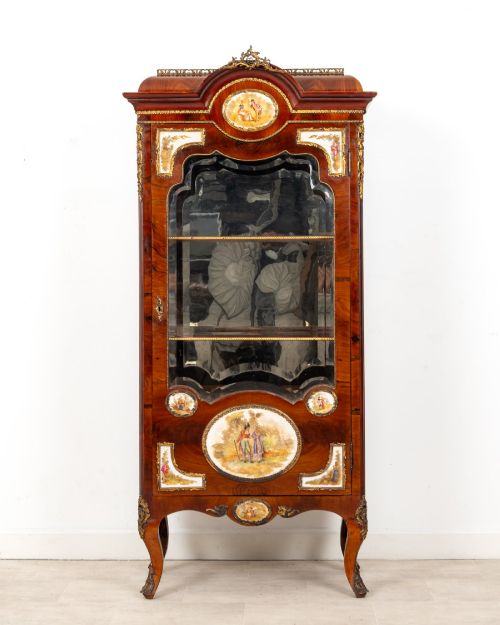
The integration of original decorative elements, such as painted panels and chased gilt-bronze mounts, separates standard production items from distinguished workshop commissions.
F. Sage & Co·Hampton & Sons·Edwards & Roberts·H. J. Hatfield & Sons·Maple & Co·Shapland and Petter
The Edwardian Glass Vitrine Glossary
- Vitrine
- A glass-fronted cabinet designed specifically for displaying fine objects or collections. These pieces often feature glazed sides to maximise visibility.
- Bijouterie table
- A low display table with a glazed top and shallow compartment for holding small trinkets and jewellery. They frequently stand on slender legs.
- Marquetry
- Decorative woodwork where pieces of contrasting veneer form intricate pictorial patterns. This technique frequently adorns cabinet doors and friezes.
- Sheraton Revival
- A late nineteenth and early twentieth century design style drawing on eighteenth century neoclassical motifs. It is characterised by refined proportions and satinwood inlay.
- Serpentine
- A gently curved shape curving inward at the centre and outward at the ends. This contour appears on the fronts of select tables and cabinets.
Edwardian Glass Vitrine: Frequently Asked Questions
What is an edwardian glass vitrine used for?
These cabinets were built to showcase precious collections, including porcelain, glass, and small ornaments, keeping them dust-free while visible.
The large glass areas allow light to circulate around delicate items, making them central decorative focal points in a drawing room or parlour.
How do I identify an edwardian piece?
Edwardian cabinets generally display lighter timbers like satinwood and inlaid mahogany, contrasting with the darker, heavier woods typical of early Victorian furniture.
Design influences often lean toward revived classical styles with restrained ornamentation and slender supporting legs.
Where should I place a vitrine?
Position the cabinet away from direct sunlight to protect interior fabric linings and any displayed items from fading over time.
Place it in a well-lit reception room where its glazed panels can catch ambient light and reflect it across the space.
What is a bijouterie table?
A bijouterie table is a specialised display furniture piece featuring a glazed top and a shallow velvet-lined interior tray.
Designed for eye-level viewing of small valuable items while seated, these tables combine display utility with table functionality.