


Bow Front Display Case
A bow front display case offers the curved glass and refined proportions that collectors seek to frame collections of china or curiosities.
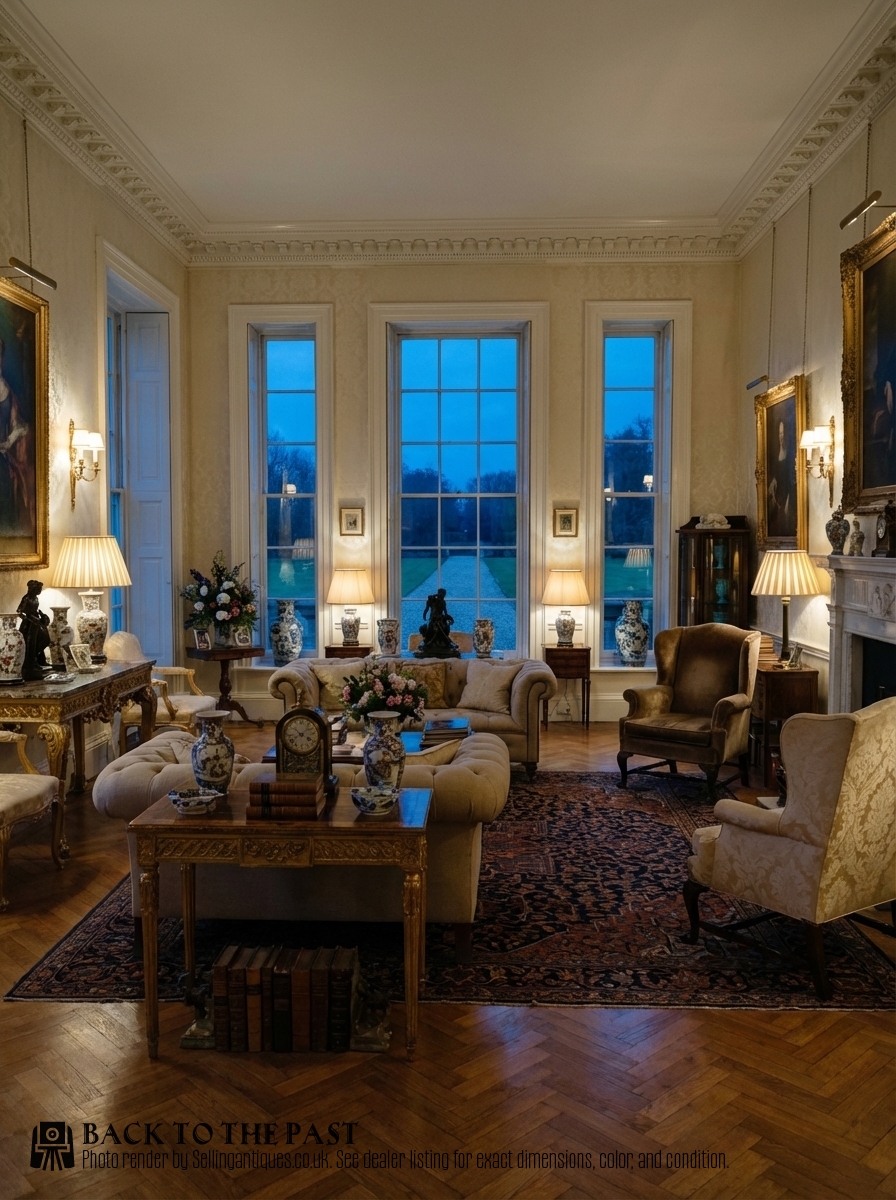
Bow Front Display Case
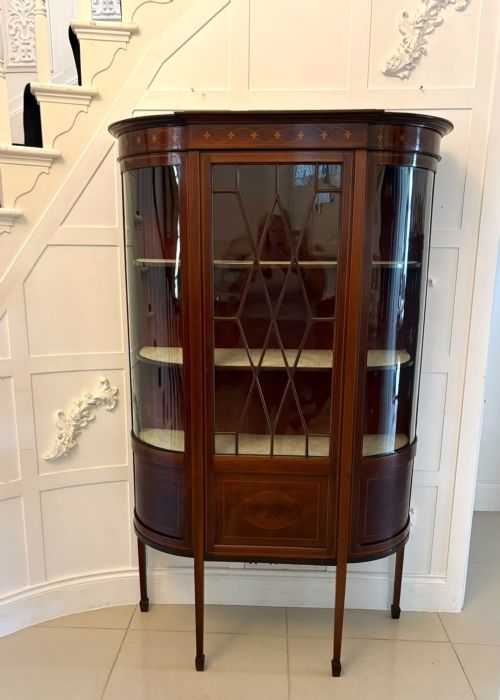
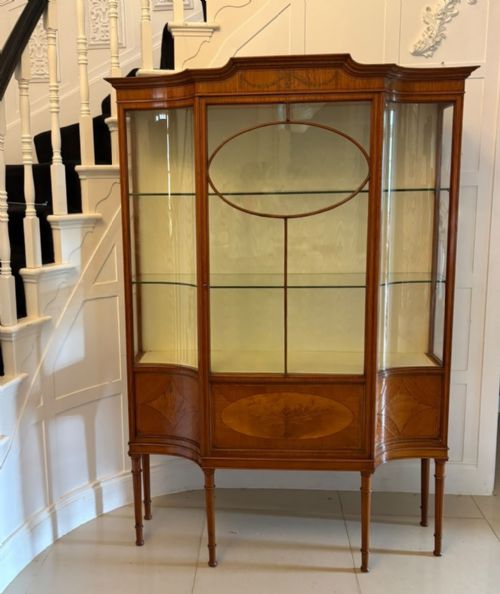
A bow front display case presents a curved glass facade designed to catch the light and soften the corners of a room. These pieces appear across Victorian, Edwardian, and early twentieth-century periods, constructed primarily as freestanding cabinets or corner cupboards.
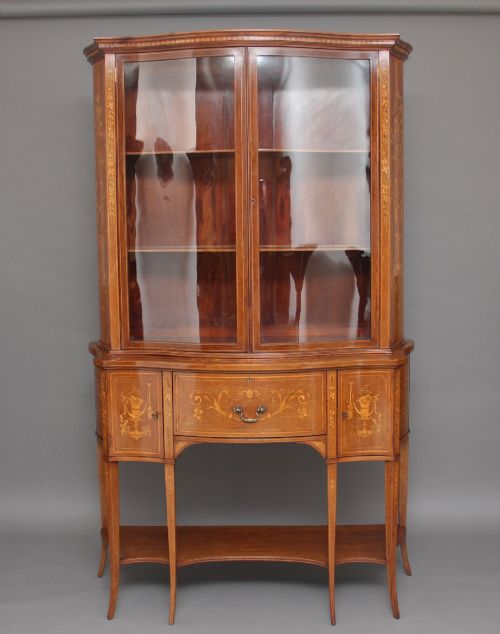
The Edwardian and Victorian iterations dominate the selection, frequently incorporating mahogany timbers and delicate inlaid details. Buyers encounter tall freestanding vitrines alongside compact corner units designed to utilise neglected angles in a room.
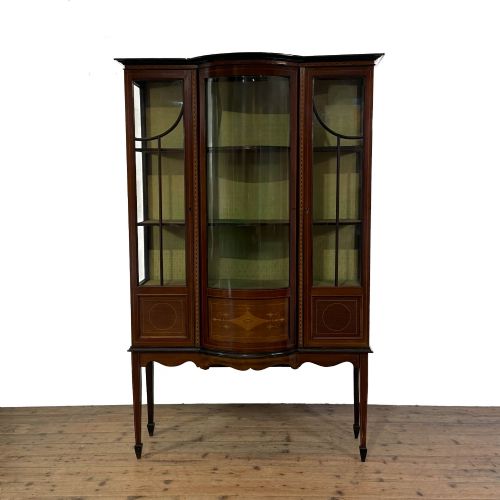
Interior shelving typically consists of glass or timber plates intended for the display of ceramics, glassware, or specimens. The curved glazing remains the defining characteristic, providing an optical depth that flat-fronted cabinets lack.
Materials and Construction
Cabinet makers built these pieces using solid mahogany or mahogany veneers applied to secondary woods, often accentuating the surfaces with satinwood inlay. Brass hardware secures the doors and interior fittings, while fabric linings occasionally back the display chambers.
The construction of a bowed glass door requires specialised joinery to maintain the curve under tension. Glazing bars divide the glass panes in many Edwardian and Victorian examples, holding the curved panels securely in place.
The archive records bow fronted display bookcases and corner cabinets alongside freestanding Victorian vitrines.
Quality Variations
The refinement of the timber selection and the subtlety of the inlay work distinguish finer examples from standard production pieces. Finely figured mahogany grain and precise satinwood stringing indicate a higher grade of workshop output.
The integrity of the curved glass and the smoothness of the door mechanisms reflect the original manufacturing standards. Superior cabinets display tight joints, balanced proportions, and well-finished interiors that complement the exterior design.
James Jones of London·J Cooper and Sons·Gillows
The Bow Front Display Case Glossary
- Bow front
- A convex curved front section on a cabinet or chest that projects outward. This shape softens the profile of the furniture and enhances light reflection.
- Vitrine
- A glass-fronted cabinet designed specifically for displaying fine objects or curiosities. The term originates from the French word for glass.
- Satinwood inlay
- A decorative technique using contrasting light-coloured wood inserted into the primary timber. It creates delicate geometric or floral patterns.
- Corner cupboard
- A triangular cabinet built to fit neatly into the corner of a room. These pieces make efficient use of domestic space.
- Stringing
- Thin lines of contrasting wood inlay used to outline panels and drawers. It adds a subtle linear decoration to mahogany surfaces.
Bow Front Display Case: Frequently Asked Questions
How do I date a bow front display case?
Dating relies on stylistic clues, timber characteristics, and construction methods. Edwardian and Victorian pieces often feature distinct inlay patterns and hardware styles that align with documented manufacturing periods.
Examining the interior woodwork and glass production techniques helps narrow down the decade of manufacture. Makers frequently left structural hints beneath shelves or behind backboards.
Where should I place a corner display cabinet?
A corner display cabinet fits neatly into empty room angles, preserving floor space while providing storage. They work effectively in dining rooms or drawing rooms where room geometry leaves corners underutilised.
Position the unit away from direct sunlight to protect interior contents and timber finishes from fading. Ensure the floor is level so the doors hang true on their hinges.
What items look best inside these cabinets?
Ceramics, glassware, small silver items, and natural history specimens complement the glazed interiors. The glass shelving allows light to filter through the displayed objects from multiple angles.
Avoid overcrowding the shelves so each piece remains visible through the curved glass. Fabric-lined interiors provide a neutral background that highlights porcelain and polished metal.
How do I maintain the mahogany wood?
Dust the exterior regularly with a soft, dry cloth to prevent particulate buildup. Apply traditional beeswax sparingly when the timber appears dry to nourish the surface.
Keep the cabinet away from radiators and extreme humidity fluctuations to prevent wood movement. Avoid using modern silicone-based polishes that can degrade the historic finish over time.