
Edwardian Dining Room Buffet
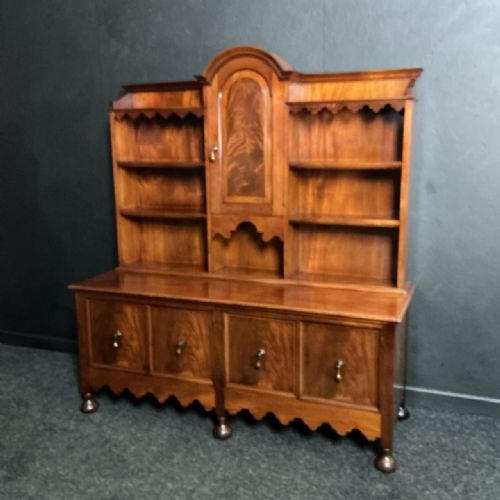
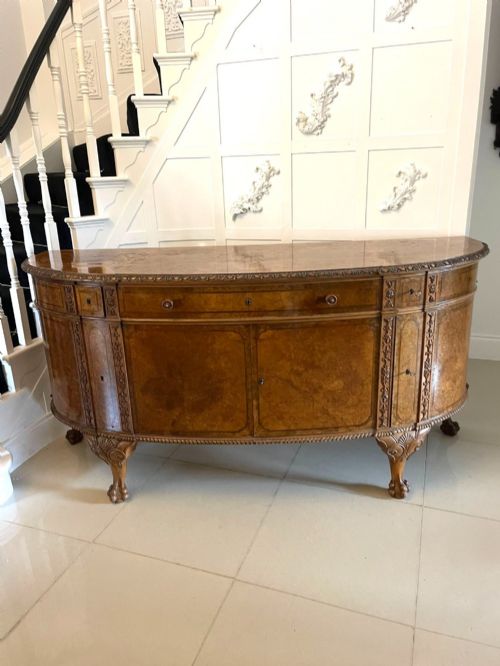
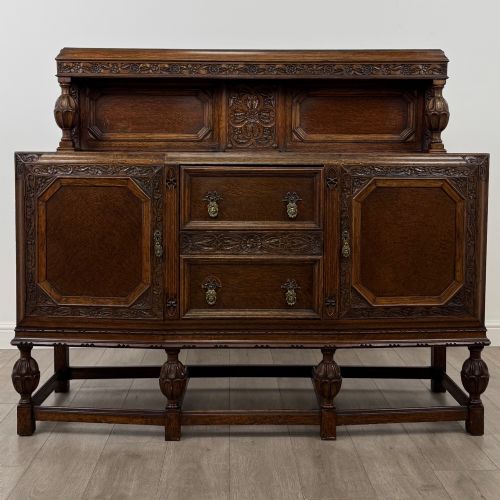
An edwardian dining room buffet serves as a substantial focal point for storing silver and linens while bringing stately mahogany or oak timberwork to the dining space.

Edwardian Dining Room Buffet
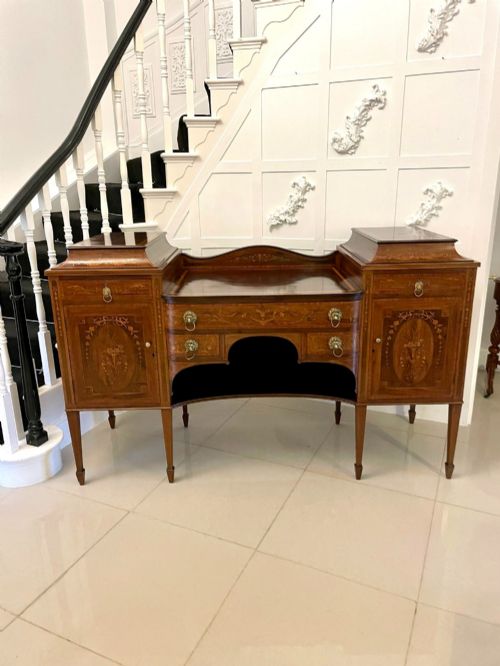
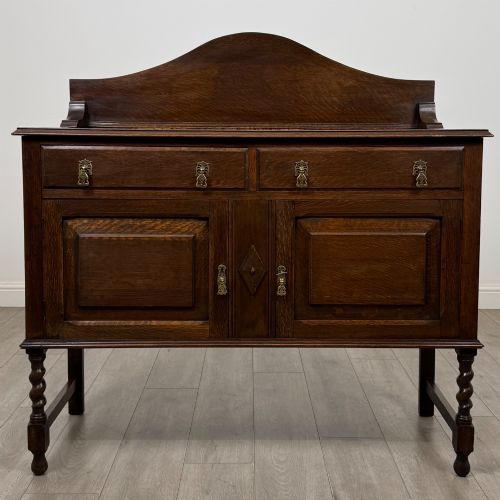
When searching for an edwardian dining room buffet, you encounter large storage pieces intended for formal entertaining, appearing most frequently in mahogany, oak, and walnut across this selection. These items span sideboards, servers, dressers, and cupboards, rooted in the Edwardian era alongside occasional Victorian and revival pieces.
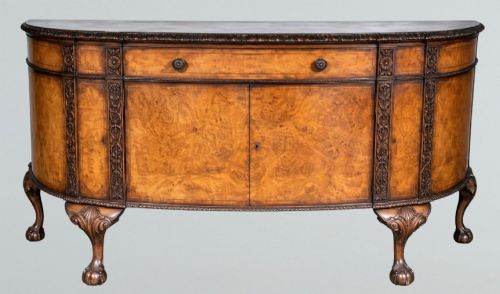
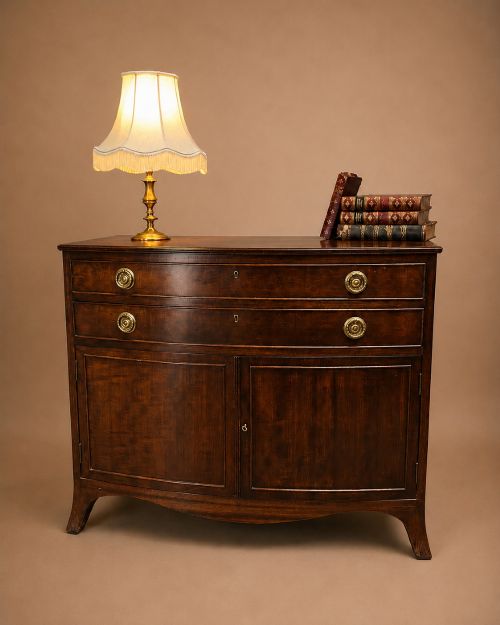
Makers and designers from these periods adopted classical influences, producing bow-fronted cabinets and flat-fronted servers that reflect Sheraton Revival or Arts and Crafts ideals. The proportions suit traditional dining rooms requiring surface space for serving dishes and enclosed cupboards for tableware.
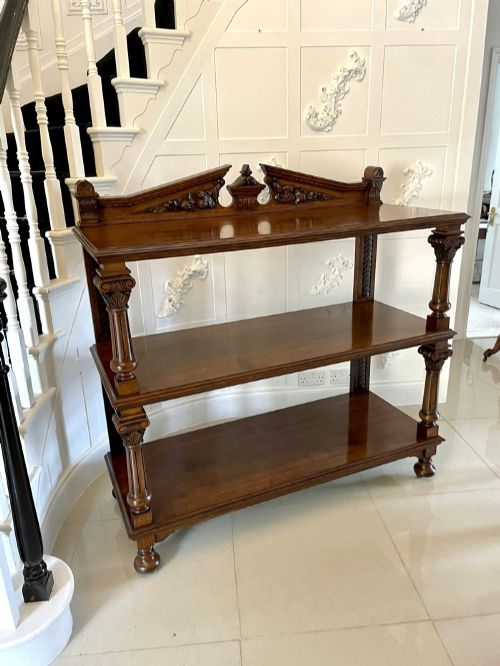
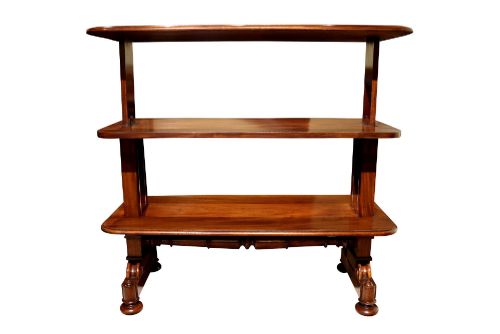
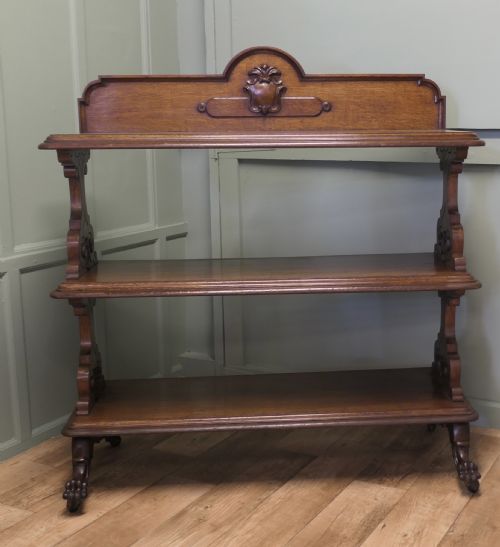
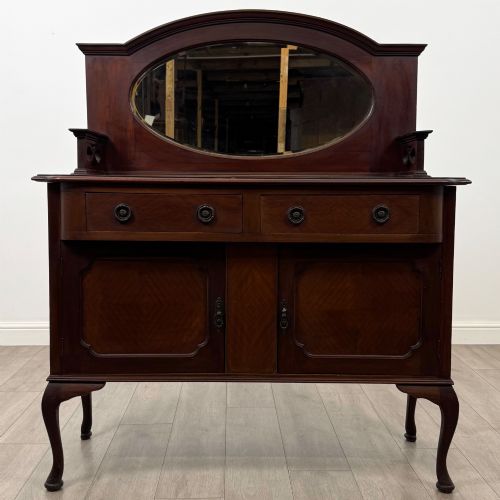
Variations in form include mirror-back servers, barley twist supports, and tiered dumbwaiters, yet the core function remains the storage and presentation of dining accessories. Oak and mahogany dominate the structural choices, often enriched with marquetry or satinwood inlay.
Materials and Construction
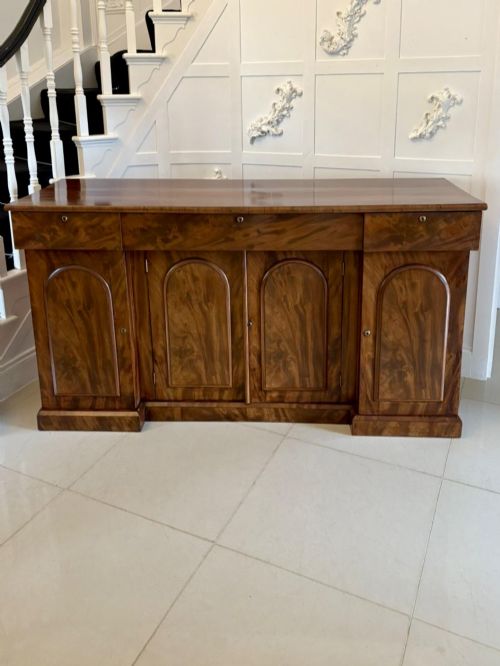
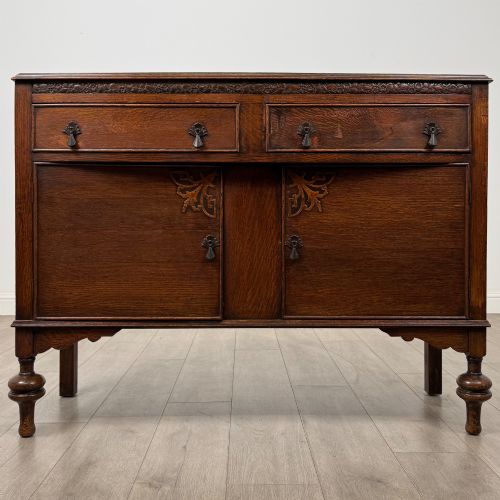
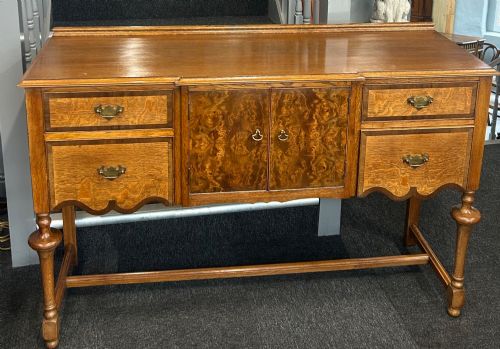
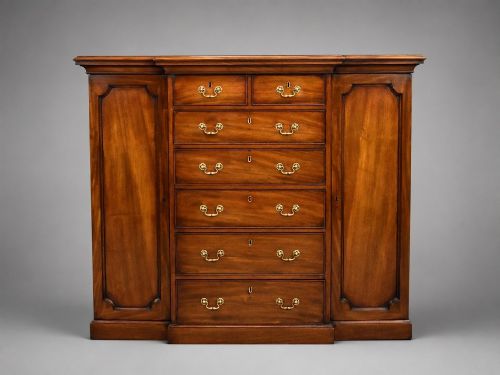
Cabinet makers utilised solid hardwoods and selected veneers, applying flame mahogany and burr walnut across drawer fronts and cupboard doors to create striking natural patterns. Brass fittings, including drop handles and key escutcheons, secure the functional elements of each heavy timber carcass.
Construction techniques involve dovetail joints for drawers and panelled door frames that accommodate wood movement over decades of use. Inlaid stringing in contrasting light timbers outlines the drawer profiles on Sheraton Revival models, demonstrating precise hand-cut joinery.
Forms include bow-fronted cupboards, mirror-back servers, and multi-tiered dumbwaiters.
Evaluating Craftsmanship
Quality rests upon the selection of timber figures, where book-matched flame mahogany or burr walnut veneer displays balanced grain symmetry across wide drawer banks. Secondary timbers used for drawer linings and internal shelving reveal the underlying standard of manufacture.
Carved details distinguish standard production from superior workshops, showing crisp undercutting in oak and walnut rather than soft, moulded relief. The weight of the timber and the smooth operation of heavy doors demonstrate structural integrity.
Hewetsons London·M D Miller And Sons Nottingham
The Edwardian Dining Room Buffet Glossary
- Bow front
- A convex curved cabinet front that projects outward in a smooth arc. This shape gained popularity during the late eighteenth century and returned in Edwardian revival designs.
- Marquetry
- Decorative patterns formed by fitting together small pieces of contrasting veneer into wood panels. Craftsmen utilise this technique to render floral or geometric motifs.
- Dumbwaiter
- A multi-tiered freestanding piece of dining furniture designed to hold dishes and silverware. Victorian and Edwardian examples often feature rotating or graduated circular shelves.
- Chiffonier
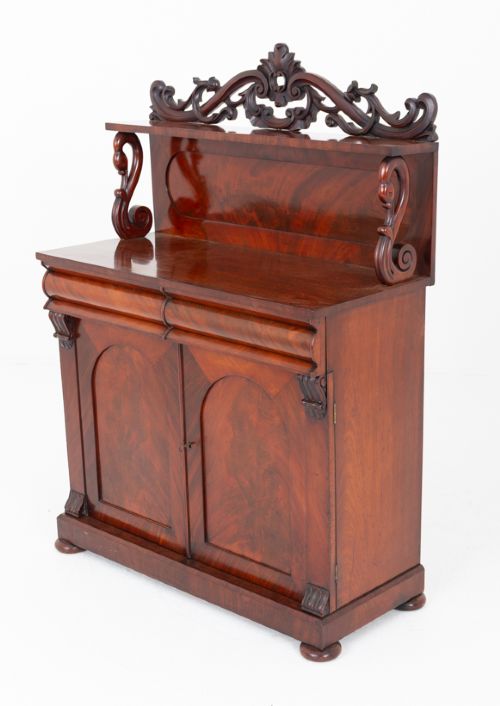
- A compact sideboard or low cupboard featuring a shelf tier above the main surface. These pieces provided additional display space for glassware in Victorian dining rooms.
- Stringing
- Thin lines of contrasting wood inlaid into the surface of a cabinet to form geometric borders. This detail is characteristic of Sheraton Revival furniture.
- Pedestal sideboard
- A large dining room unit comprising two side pedestals connected by a central serving table. George III and nineteenth-century makers favoured this grand architectural configuration.
Edwardian Dining Room Buffet: Frequently Asked Questions
How do I clean a mahogany buffet?
Dust regularly with a soft, dry cloth to prevent dirt accumulation on the polished wood surface. Apply natural beeswax periodically to nourish the timber and maintain the grain.
Avoid placing these cabinets near direct heat sources or strong sunlight, which causes the mahogany finish to fade and the timber joints to dry out.
What is the difference between a sideboard and a buffet?
Sideboards generally feature low profiles with a combination of drawers and cupboards designed primarily for storing tableware and serving dishes. Buffets often incorporate upper display shelves or tiers specifically intended for presenting food and drink.
In many historic listings, makers used these terms interchangeably depending on the regional terminology of the workshop.
Can I fit a large buffet in a modern dining room?
These substantial items require careful measurement of floor space and ceiling clearance, particularly models featuring mirror backs or heavy projecting cornices. Their deep carcasses provide exceptional storage capacity for modern dining rooms needing characterful focal points.
Ensure doorways and hallways leading to the room can accommodate the rigid, non-demountable frame of a solid wood cabinet.
How do I date an Edwardian sideboard?
Examine the internal construction methods, such as machine-cut versus hand-cut dovetails, alongside the timber choices like oak or mahogany. Hardware fixings, lock types, and secondary woods offer further clues to the manufacturing decade.
Revival styles often combine eighteenth-century proportions with Edwardian hardware, distinguishing them from original Georgian pieces.