
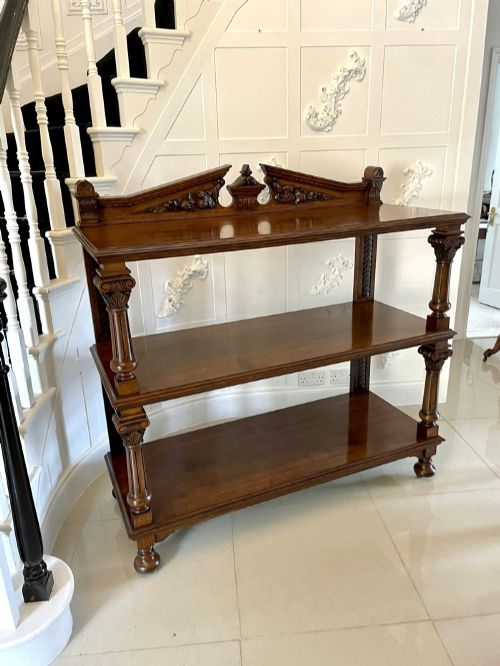
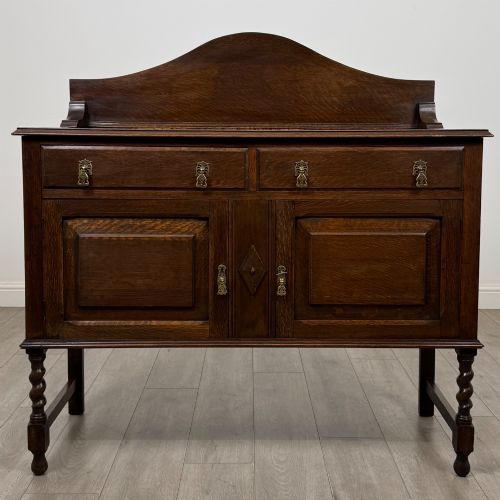
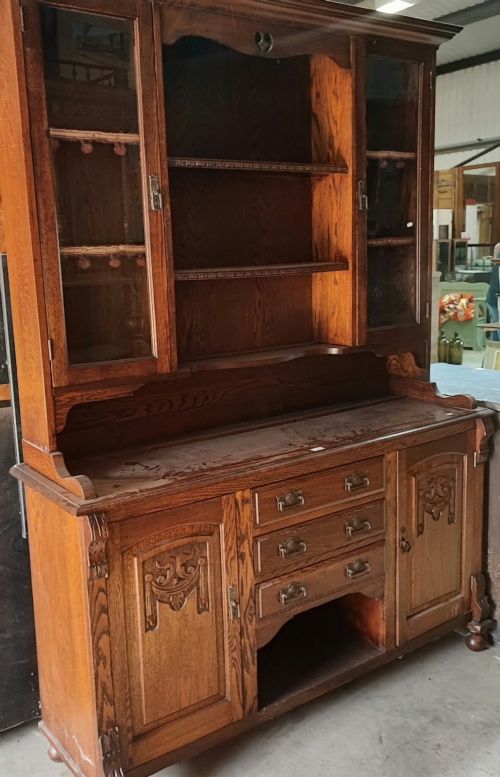
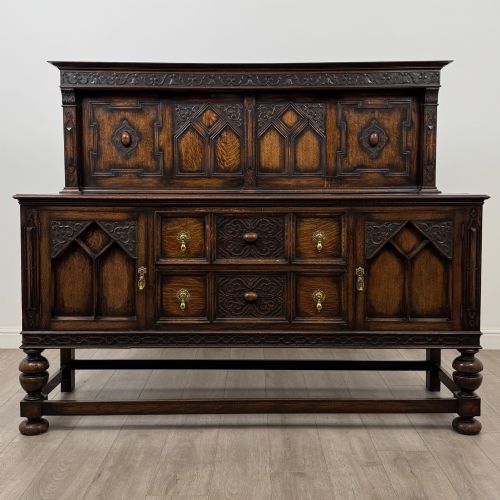
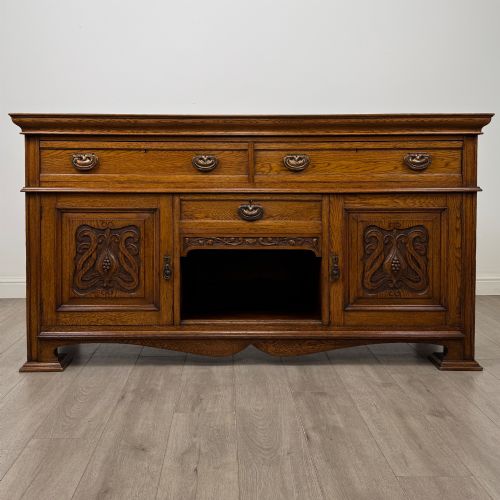
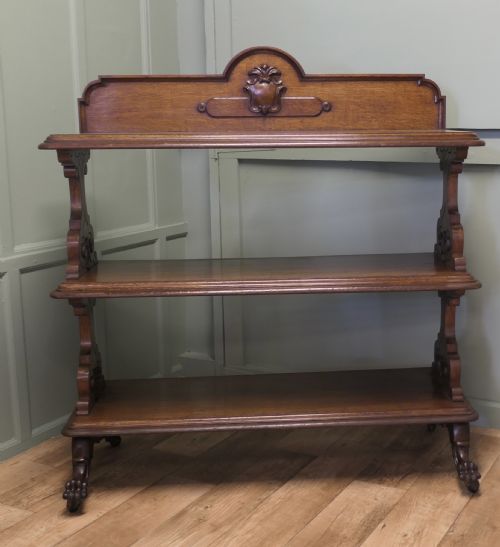
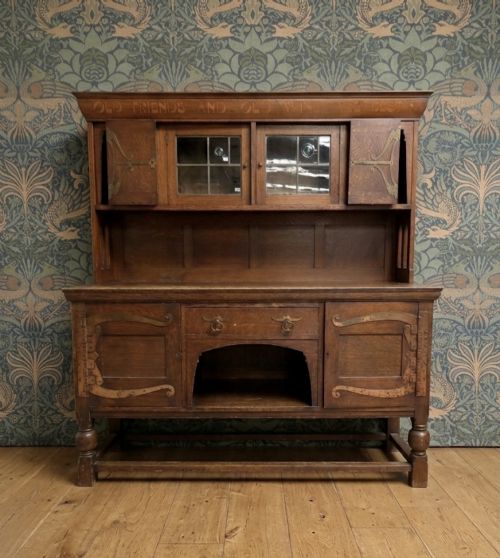
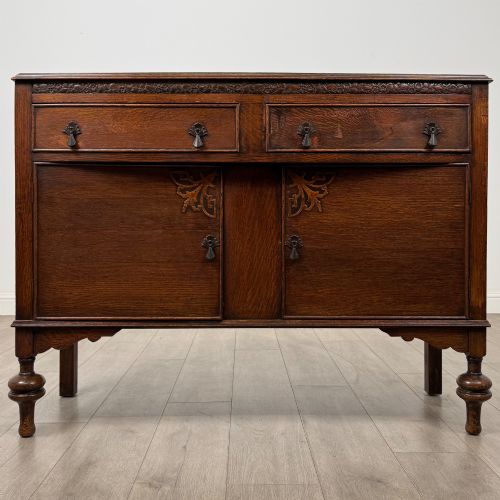
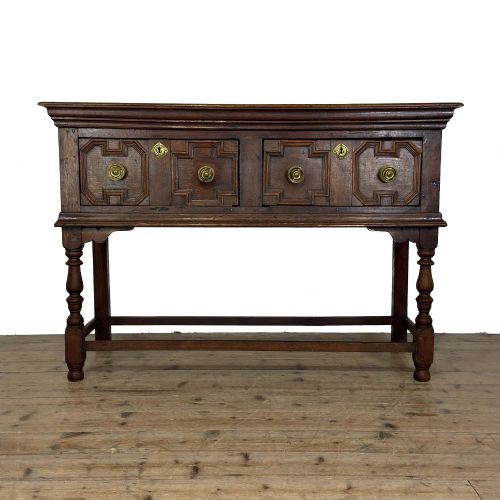
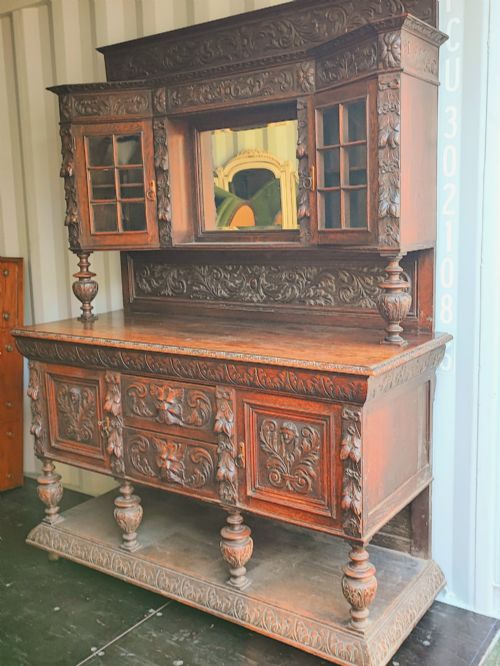
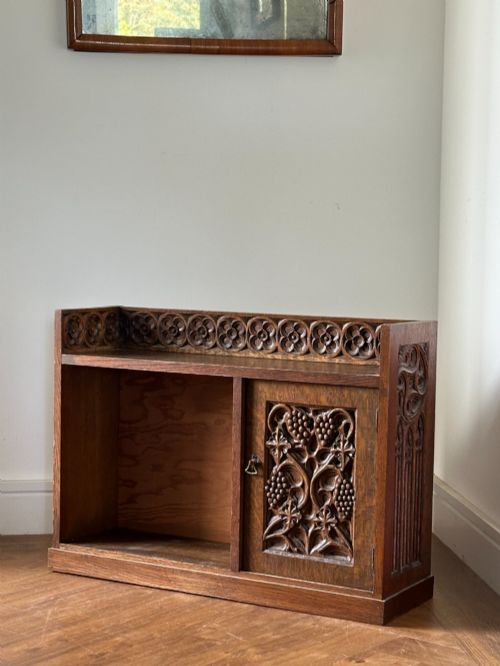
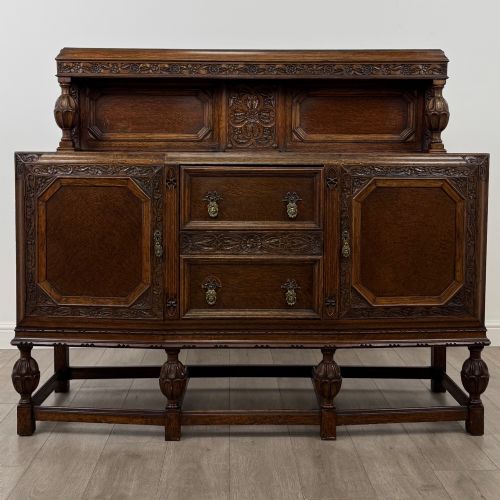
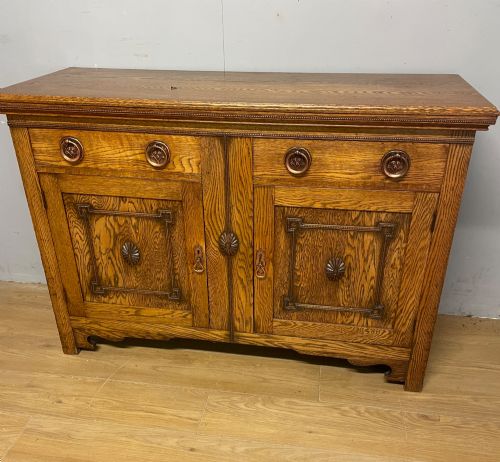
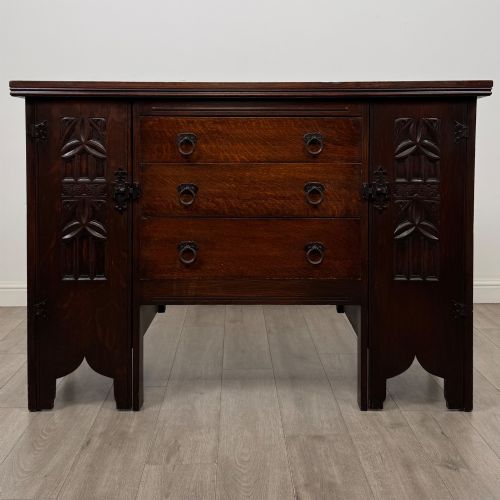
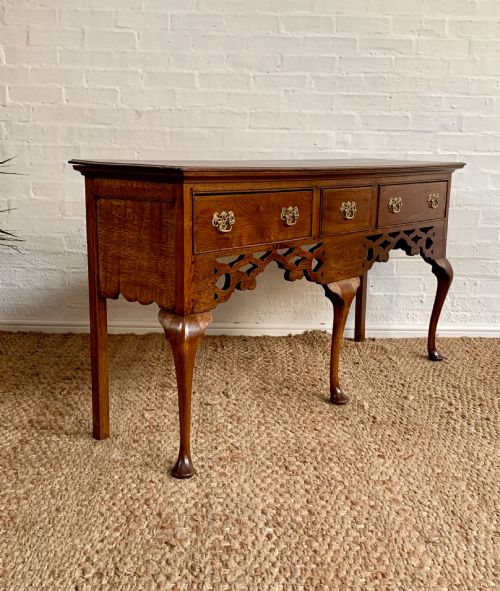
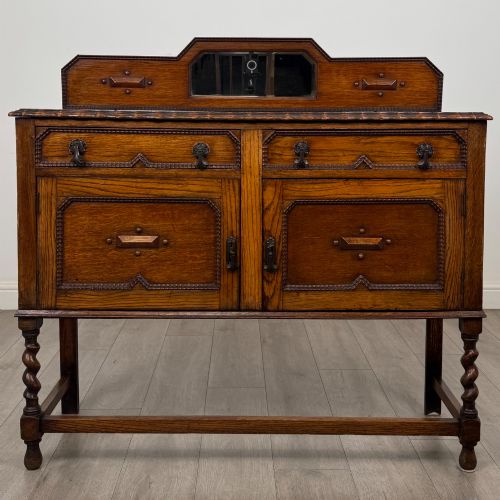
Edwardian Carved Oak Sideboard
An edwardian carved oak sideboard brings robust timber and deep relief carving straight into the dining room.
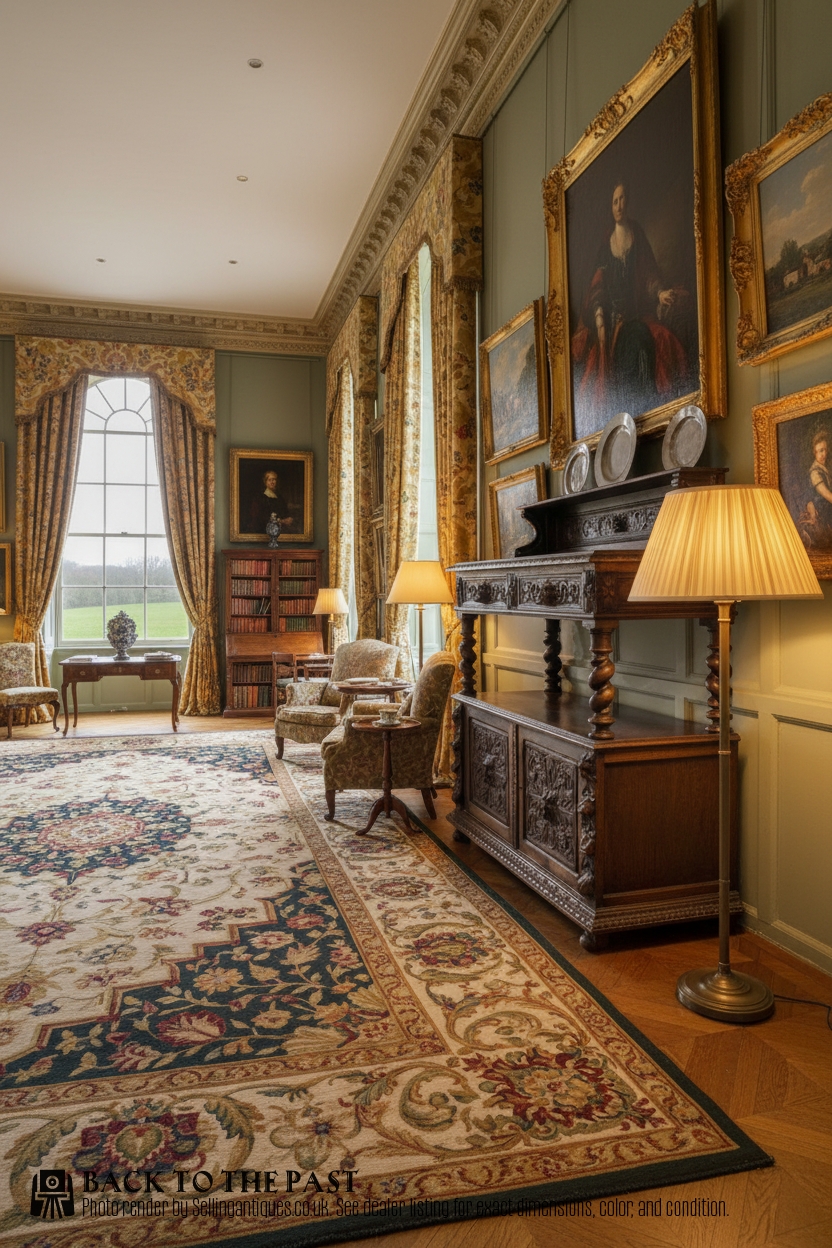
Defining the edwardian carved oak sideboard
An edwardian carved oak sideboard is a substantial dining room furnishing designed for serving food and storing tableware, typically encountered as a heavy base, dresser base, or mirror-back combination. These pieces anchor a room with their generous proportions and practical surface space for everyday use or formal entertaining.
The core of this inventory comprises sturdy Edwardian examples alongside pieces from the early twentieth century, the nineteenth century, and the Victorian era. Many incorporate pot boards, wine racks, or tall display elements that extend their utility far beyond a simple surface.
Stylistic influences range from classic Edwardian forms to Jacobean Revival, Arts and Crafts, and Victorian and Gothic designs. This variety means buyers often choose between the soaring presence of a mirror-back superstructure and the grounded utility of an open dresser base.
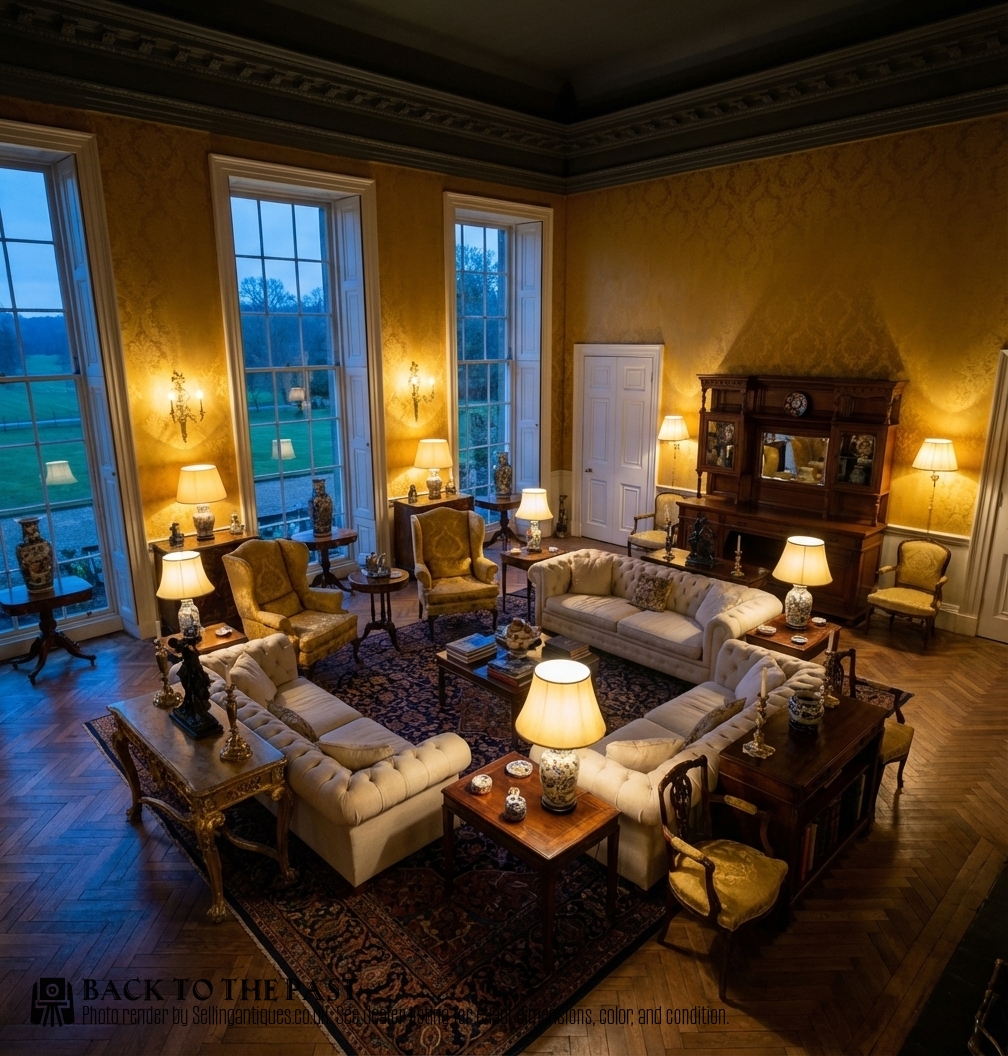
Materials and construction methods
These items rely principally on solid oak, selected for its strength, distinctive grain pattern, and capacity to hold sharp, deep chisel work. Workshops utilised substantial timber boards for the main carcase, doors, and tops, ensuring structural longevity under heavy daily use.
Metal and glass components complement the woodwork, with brass hardware such as drop handles and backplates providing functional contrast. Bevelled glass and mirror plates frequently appear set into upper wooden frames, reflecting light across the dining space.
Retail Price Guide 2026
Typical UK retail prices for edwardian carved oak sideboard, calculated from the Sellingantiques database of over a million retail prices indexed since 2003. This retail price guide relies exclusively on Sellingantiques data; no external sources or auction records are used, so the figures do not describe the wider market.
Listings feature solid oak combined with brass, mirror glass, and lead, spanning Edwardian, Victorian, and Jacobean Revival styles.
Assessing quality in carved oak furniture
The distinction between tiers of production lies in the ambition of the hand-carved relief work and the selection of the timber. Skilled carvers brought foliage, scrolls, and mythical motifs such as the Green Man into high relief with crisp undercutting, whereas lesser examples rely on shallow, machine-routed patterns.
Construction integrity also separates standard utility pieces from finer commissions. Heavier stock timber, well-fitted drawers with traditional joinery, and substantial brass mounts indicate a higher grade of workshop output that endures without structural sagging.
The Edwardian Carved Oak Sideboard Glossary
- Dresser base
- A low wooden storage unit with cupboards and drawers, historically used for food preparation and serving. It forms the foundation for many larger sideboard combinations.
- Pot board
- An open lower shelf positioned near the floor beneath a dresser base or sideboard. It originally held heavy pots, pans, and serving vessels.
- Mirror-back
- A tall wooden superstructure incorporating a mirror plate mounted above the main sideboard surface. This feature reflects light and displays decorative ceramics.
- Jacobean Revival
- A nineteenth and early twentieth century decorative style imitating seventeenth century English furniture. It is characterised by geometric moulding, heavy turned legs, and sombre oak tones.
- Green Man
- A sculptural architectural ornament depicting a human face emerging from or entwined with foliage and vines. It symbolises rebirth and appears frequently in revivalist wood carving.
Frequently Asked Questions
How do I care for an oak sideboard?
Keep solid oak furniture away from direct heat sources and strong sunlight to prevent the timber from drying out or splitting. Apply a suitable beeswax periodically to nourish the wood and maintain a natural sheen.
Dust surfaces regularly with a soft, dry cloth rather than using silicone-based sprays. Protecting the top with coasters and placemats prevents moisture rings from hot dishes and glasses.
What is the difference between a sideboard and a buffet?
Historically, sideboards and buffets served similar dining room functions for storing and serving food, though terms varied by region and era. Sideboards often featured deep cupboards, drawers, and sometimes a tall mirror-back superstructure.
Buffets traditionally emphasised lower, open shelving or simpler storage configurations for dishes. In modern usage, the terms overlap significantly when describing heavy oak dining furniture.
Can I fit a mirror-back sideboard in a modern home?
Mirror-back units require adequate wall clearance and ceiling height due to their tall superstructures. Measure both the footprint and the total vertical space before placing one in a dining room or hallway.
Their substantial weight means they need stable flooring and, where necessary, wall-fixing brackets for safety. The integrated mirror helps brighten smaller rooms by reflecting natural light.
How can I identify Edwardian oak furniture?
Edwardian pieces often display lighter honey or golden oak tones compared to the darker, heavier finishes of the preceding Victorian era. Design motifs frequently blend traditional craftsmanship with lighter Arts and Crafts or early Art Nouveau influences.
Hardware on Edwardian pieces commonly includes brass drop handles and backplates rather than heavy wooden knobs. Interior construction may reveal machine-sawn components alongside traditional hand-cut joinery.