
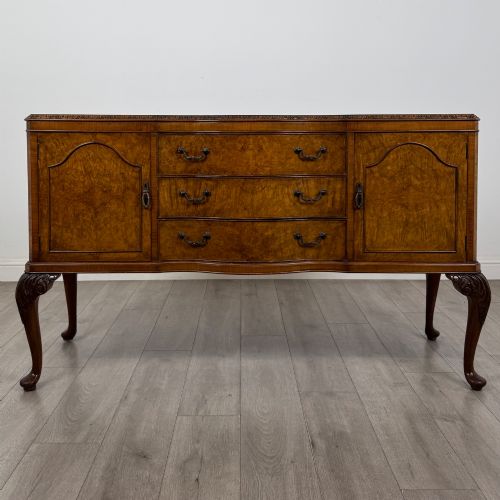
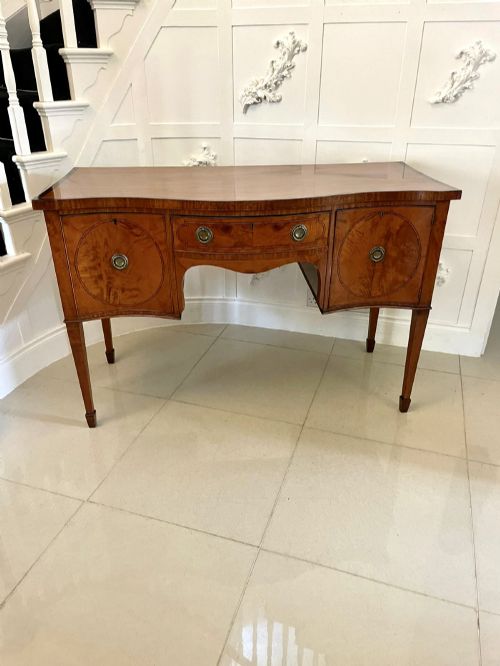
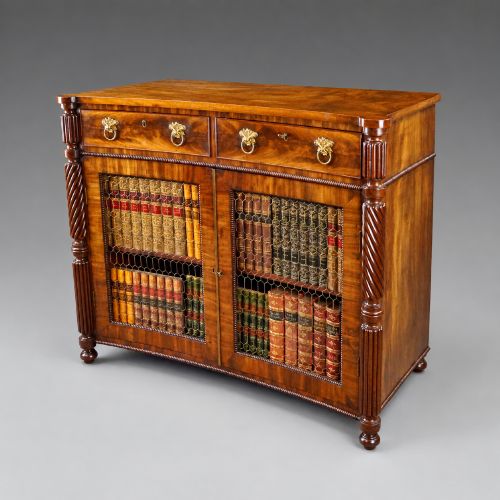
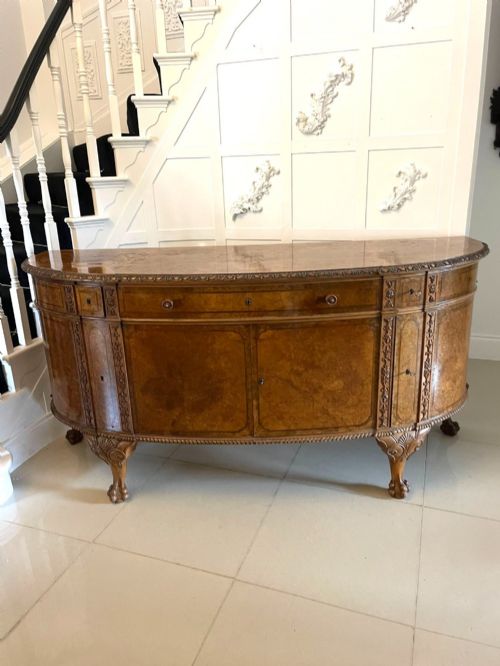
Edwardian Carved Credenza
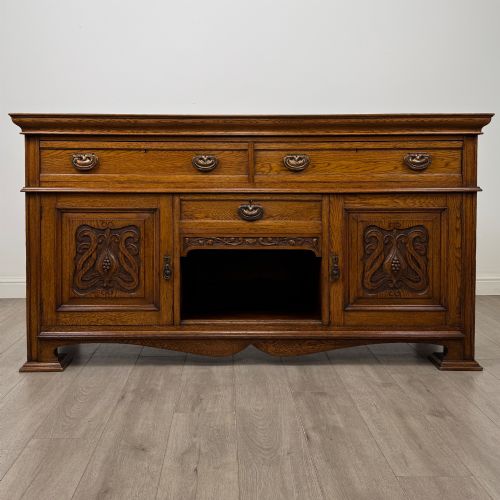
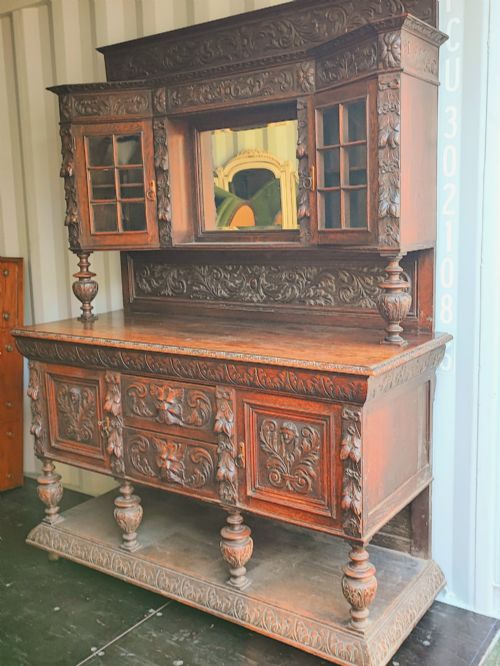
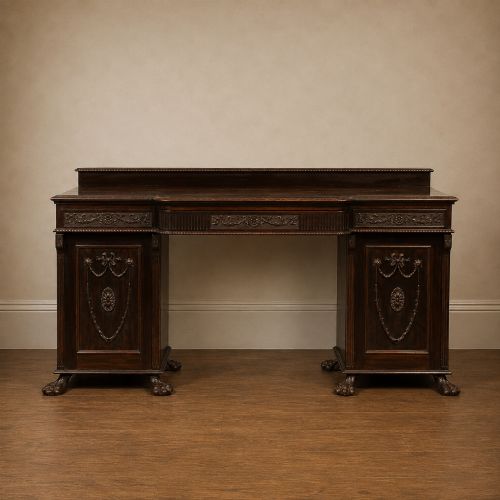
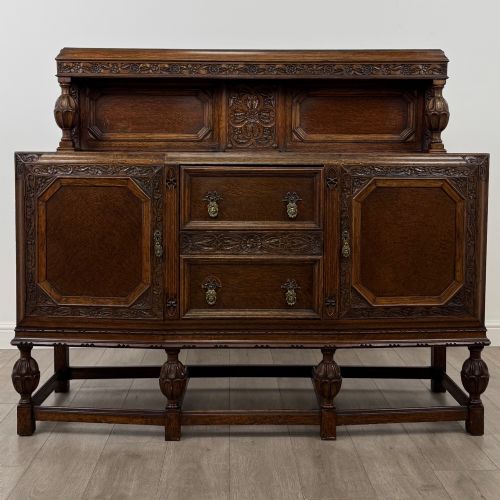
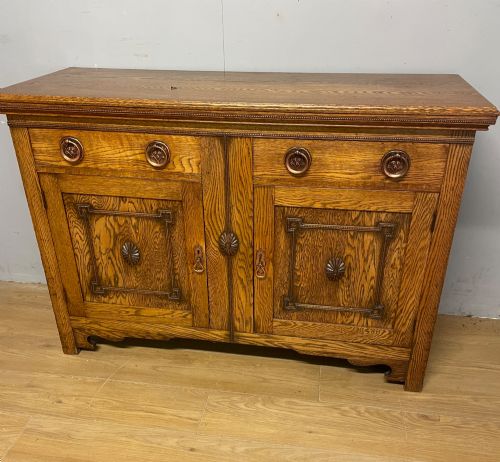
An edwardian carved credenza brings substantial presence to a room, offering surface space and enclosed storage in rich hardwoods.
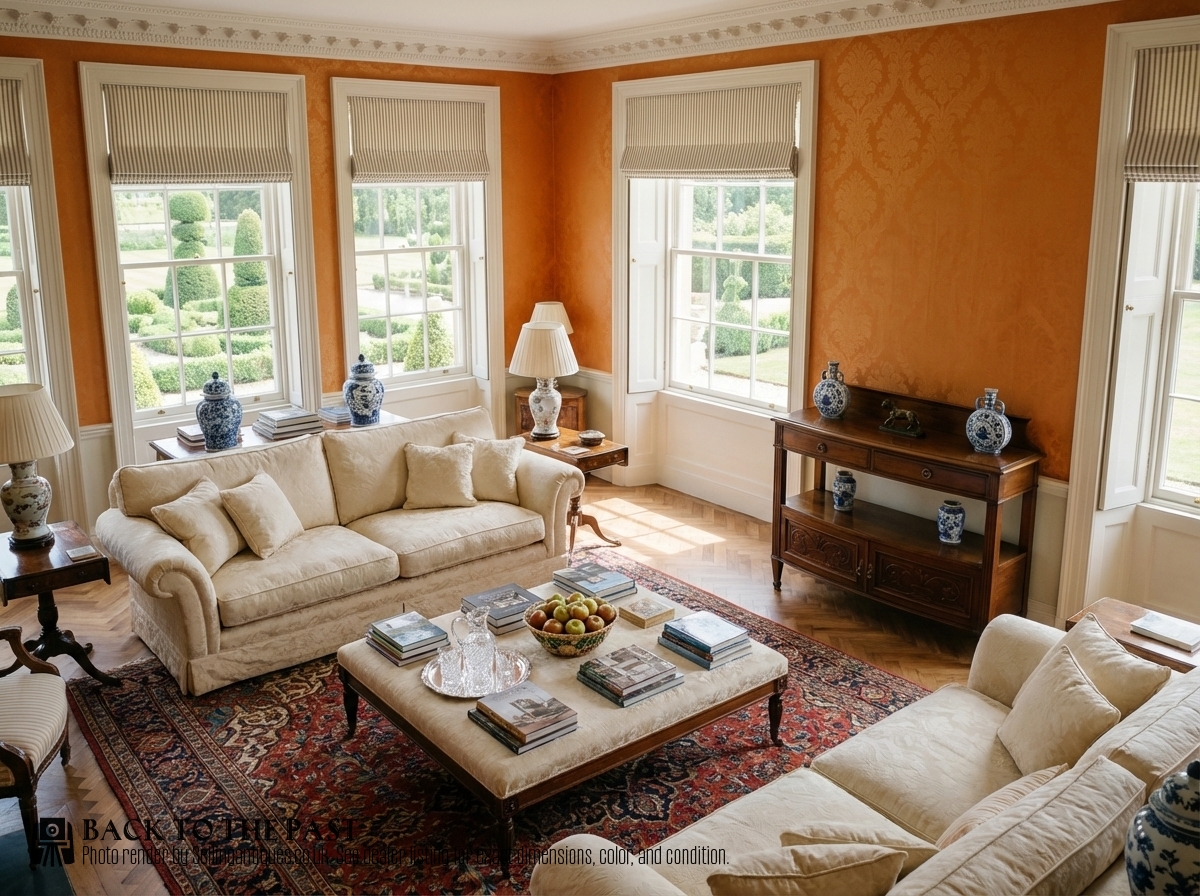
Edwardian Carved Credenza
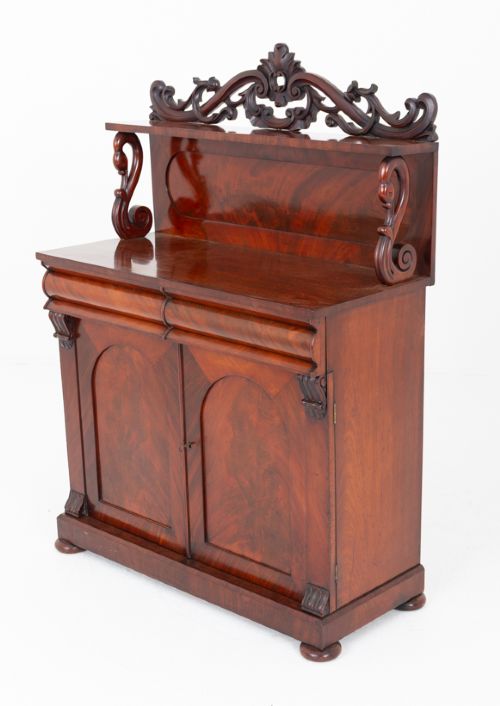
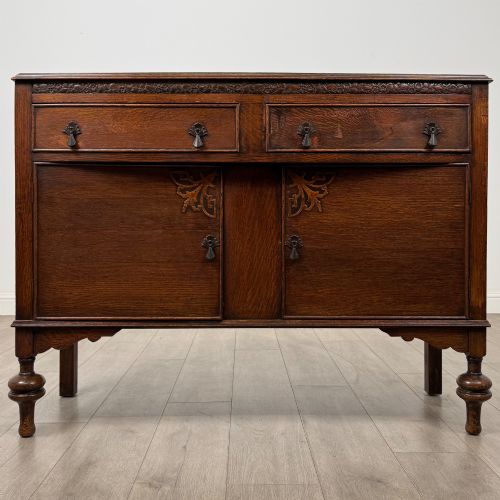
An edwardian carved credenza and its close relatives, such as sideboards and side cabinets, serve as large storage furniture primarily found in dining spaces or halls. These pieces bridge late nineteenth-century Victorian heaviness and the cleaner lines of the twentieth century, often drawing on earlier design revivals.
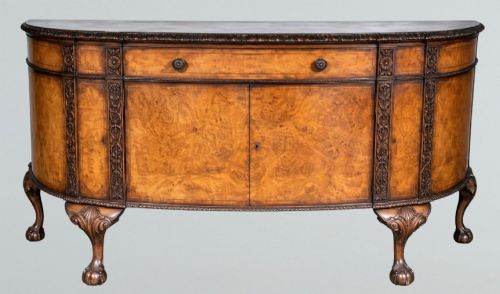
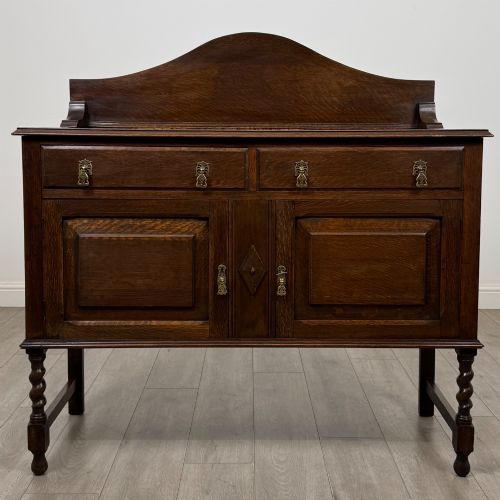
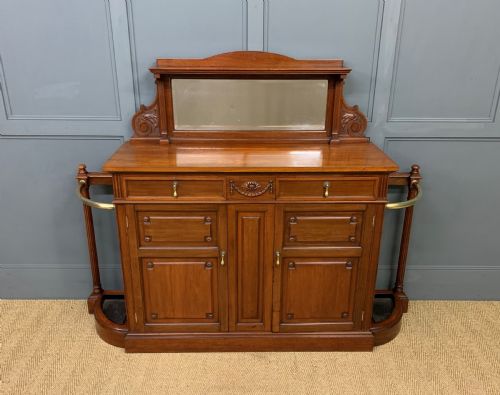
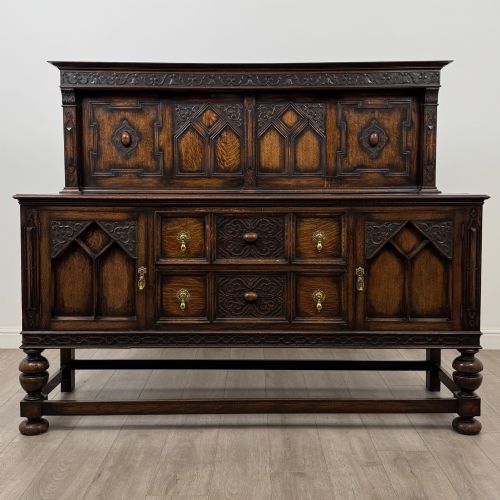
The material record shows a strong preference for oak and mahogany, alongside figured veneers like burr walnut. Workshops of the period utilised these timbers to build substantial cupboards, servers, and breakfront units, frequently incorporating carved detailing and mirror-backs.
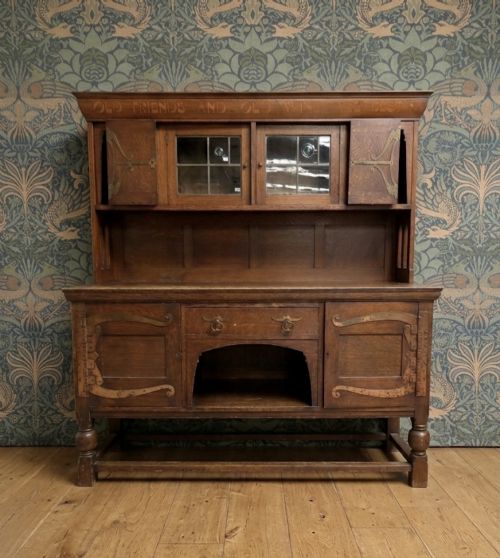
Buyers will encounter varied stylistic influences ranging from Arts and Crafts simplicity to Jacobean, Gothic, and Adam revivals. While the phrase specifically denotes a credenza, the market groups these alongside sideboards and side cabinets sharing similar proportions and periods.
Materials and Technique
Cabinetmakers built these pieces using solid timbers like oak and mahogany for structural integrity, often applying burr walnut, satinwood, or flame mahogany veneers to primary visual surfaces. Brass fittings, glass panels, and mirrored backs frequently complete the construction.
Decoration relied heavily on physical carving directly into the timber, alongside barley twist turnings, geometric panels, and careful inlay work. Joints were traditionally pegged or dovetailed to ensure the heavy sideboards and cabinets endured decades of domestic use.
One unexpected Edwardian sideboard turns up complete with a fitted twelve-piece cutlery set tucked away inside its drawers.
Evaluating Construction and Finish
Quality rests in the selection of timber and the crispness of the carved details rather than superficial ornament. Superior pieces display carefully matched veneers and dense, solid hardwoods that maintain structural rigidity across wide cabinet spans.
The standard of interior joinery and original hardware, such as brass handles and working locks, distinguishes finer workshop production from simpler commercial output. Well-executed revival styles demonstrate a clear command of historical joinery techniques.
Shoolbred and Co.·Ambrose Heal for Heal and Son·M. D. Miller and Sons·Leonard Wyburd for Liberty
The Edwardian Carved Credenza Glossary
- Credenza
- A low dining room cabinet or sideboard, frequently featuring cupboards and drawer space. It originated as a display surface before evolving into enclosed storage.
- Burr walnut
- Timber taken from a tree growth that produces intricate, swirling grain patterns. Cabinetmakers prize it for creating decorative veneer panels on doors and drawers.
- Breakfront
- A piece of furniture where the central section projects forward from the flanking wings. This architectural arrangement creates depth and breaks up long façades.
- Barley twist
- A type of turned wooden column resembling the spiral shape of a twisted rope. It appears frequently on legs and structural supports of late Victorian and Edwardian furniture.
- Pot board
- An open lower shelf built into a sideboard or dresser base. Historically, it held heavy pots and earthenware utensils.
Edwardian Carved Credenza: Frequently Asked Questions
What is an edwardian carved credenza?
An edwardian carved credenza is a low storage cabinet made during the Edwardian era, featuring decorative woodwork and enclosed shelving.
These items were designed primarily for dining rooms and halls to store tableware and display decorative objects on their top surfaces.
Where should I place a large sideboard?
These substantial pieces fit best against a dining room wall or in a spacious hallway where their depth and length do not crowd the floor plan.
Ensure there is sufficient clearance for cabinet doors to swing open fully and for drawers to pull out without obstruction.
How do I care for polished walnut and oak?
Maintain the wood by dusting regularly with a soft, dry cloth and avoiding placement near direct heat sources or strong sunlight.
Apply a traditional beeswax polish sparingly to nourish the grain and protect the historical finish from drying out over time.
How can I tell Edwardian furniture from Victorian pieces?
Edwardian furniture generally exhibits lighter proportions, brighter golden oak tones, and simpler decorative motifs compared to the heavier, darker aesthetics typical of mid-Victorian design.
While both periods overlap in revival styles, Edwardian makers often embraced Arts and Crafts simplicity alongside neoclassical revivals.