


Walnut Buffet Sideboard
A walnut buffet sideboard brings substantial storage and rich timber grain to a room, uniting utility with the decorative presence of Victorian and Art Deco design.
Walnut Buffet Sideboard
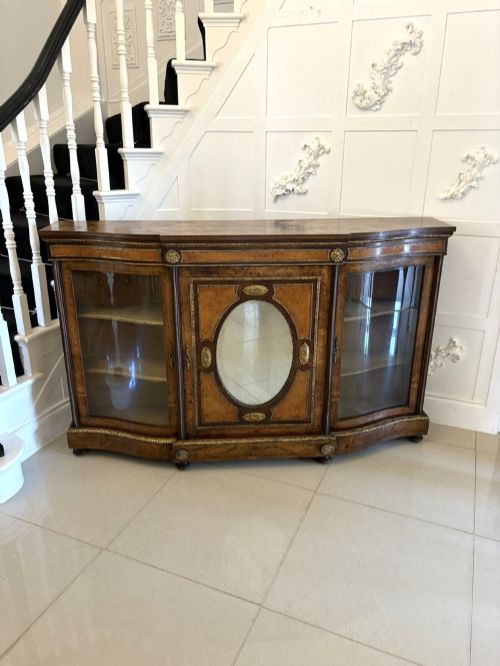
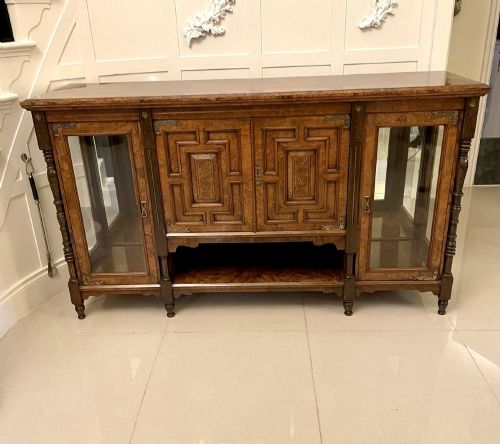
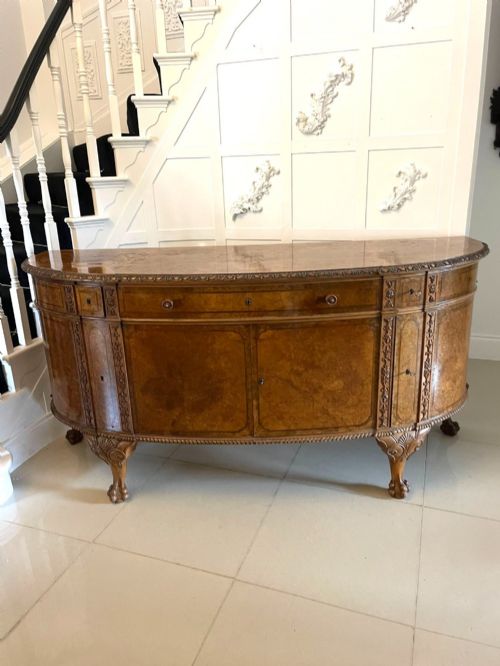
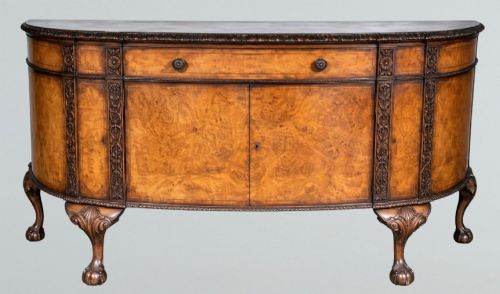
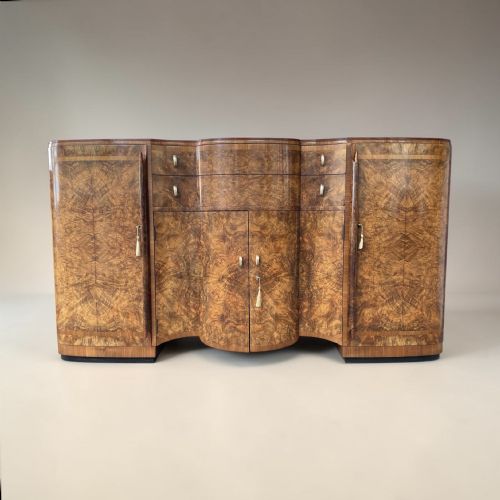
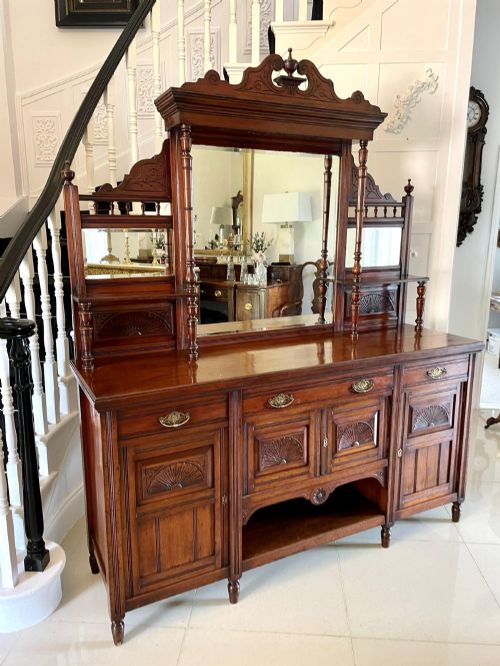
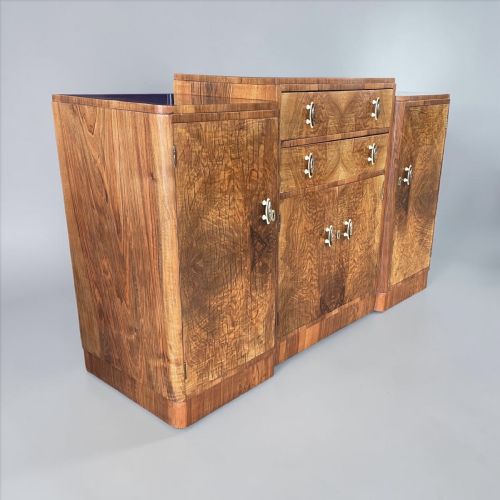
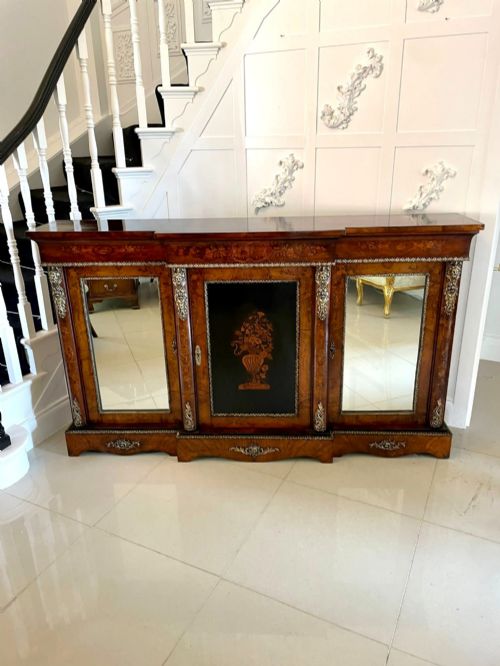
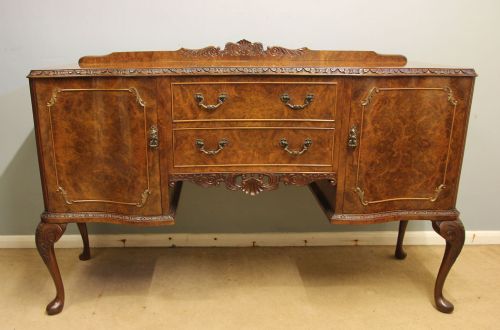
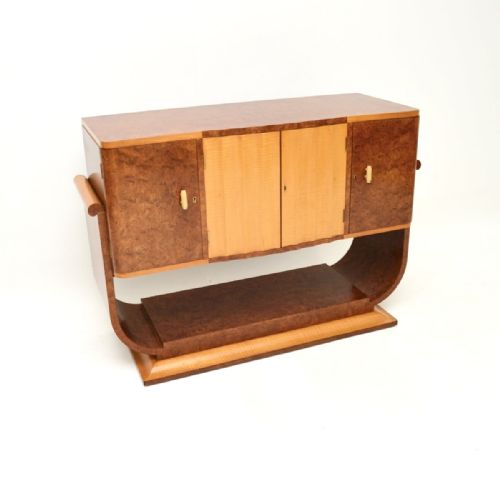
A walnut buffet sideboard serves as a substantial dining room or reception piece, combining surface display space with enclosed storage behind doors or drawers. Buyers searching for a walnut buffet sideboard encounter pieces originating predominantly from the Victorian era and the Art Deco period, alongside Edwardian and earlier 19th-century examples.
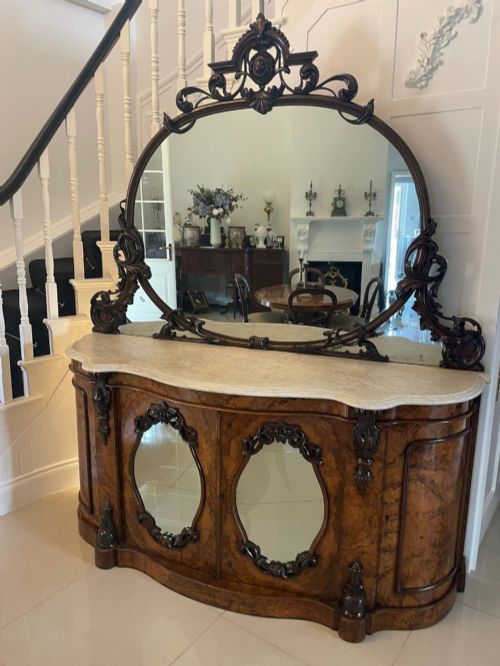
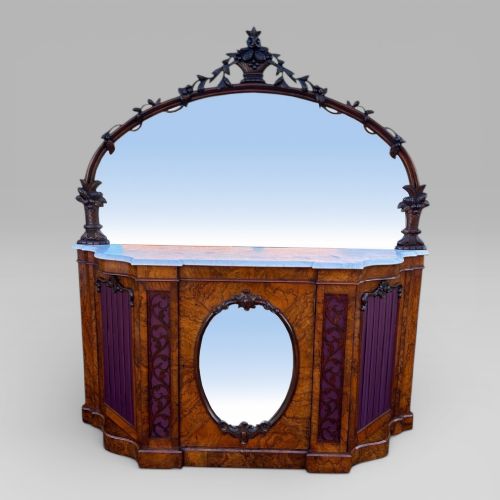
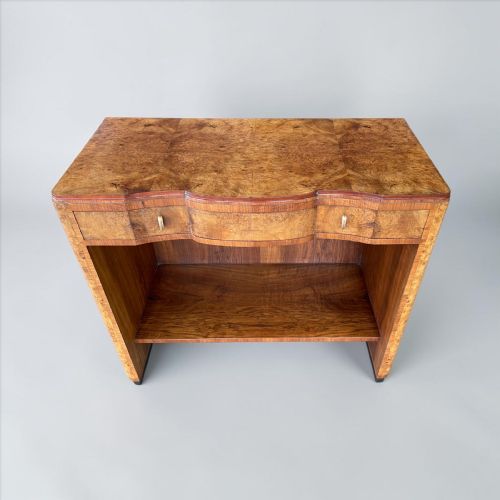
The form shifts across these eras from heavily carved Victorian mirror-back credenzas and marble-topped servers to streamlined 1930s geometric shapes. French provincial and regional walnut dressers also appear, offering varied door configurations and lower storage capacities.
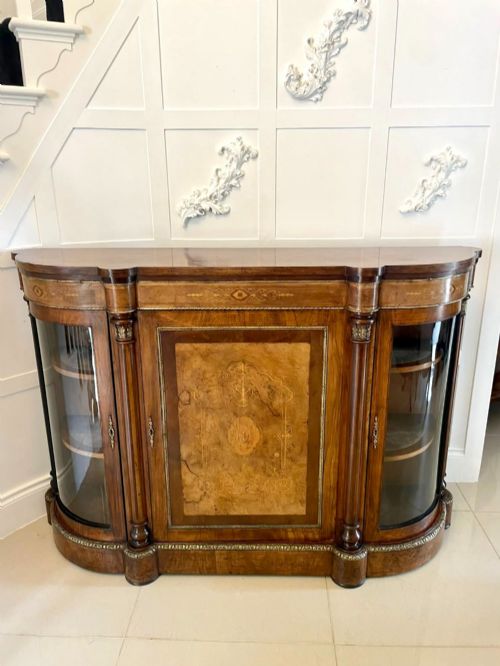
Victorian iterations frequently incorporate glazed cabinets, ormolu mounts, and intricate marquetry, whereas later 19th-century and 20th-century variants emphasise clean burr walnut veneers and sycamore contrasts.
Materials and Construction
Makers utilised solid walnut and decorative burr walnut veneers applied over secondary carcase timbers to achieve striking grain patterns across large surfaces. Marquetry inlay, mother-of-pearl details, and carved ornamentation frequently decorate the drawer fronts and door panels.
Heavy white or grey marble tops feature on numerous French and Victorian buffet sideboards, providing a durable and cool preparation or serving surface. Ormolu mounts, brass handles, and glass doors complete the construction of the higher-status specimens found in the records.
One unexpected walnut sideboard arrives complete with a matching twelve-piece cutlery set ready for immediate dining.
Gradations of Quality
Quality rests upon the selection and matching of the walnut veneer, where symmetrical burr grain demonstrates superior cabinet-making ambition over plain timber boards. The crispness of hand-carving and the integration of secondary woods like sycamore or fruitwood separate standard production from exhibition pieces.
Hardware integrity also distinguishes the range, with original ormolu mounts, well-fitted brass locks, and intact marble slabs indicating higher original cost and careful preservation.
Maurice Adams·Edward Barnsley·Harry and Lou Epstein·Hille·Jules Leleu·Schmit of Paris
The Walnut Buffet Sideboard Glossary
- Burr walnut
- A figured timber harvested from walnut tree growths, producing swirling, highly decorative grain patterns prized for cabinet fronts.
- Credenza
- A low dining room sideboard or cabinet, frequently featuring mirrored backing, ormolu mounts, and glass-fronted side cupboards.
- Marquetry
- Decorative veneer patterns formed by fitting small pieces of contrasting wood, shell, or metal into a prepared background.
- Ormolu
- Gilded bronze mounts and decorative trimmings applied to the corners, feet, and doors of mid-19th-century furniture.
- Serpentine front
- A furniture front curved in a wave shape, presenting a convex centre flanked by concave ends or vice versa.
Walnut Buffet Sideboard: Frequently Asked Questions
How do I clean a marble top?
Wipe the marble surface regularly with a soft cloth dampened in warm water and mild, neutral soap. Avoid acidic cleaners, vinegar, or harsh scouring pads that can etch or dull the polished stone.
Dry the surface thoroughly after washing to prevent water spots. Applying a specialist stone sealer periodically helps protect the marble from stains originating from food or drink.
Where should I place a sideboard?
Position the piece against a principal dining room or hallway wall where its length and depth will not obstruct household traffic. Ensure the location remains away from direct sunlight and strong heat sources to protect the walnut veneer from drying and cracking.
Allow adequate clearance around doors and drawers so they open fully without bumping nearby furniture. Mirror-backed variants benefit from placement opposite a light source to brighten darker interior spaces.
How do I date a sideboard?
Examine the construction methods, handles, and overall style cues to determine the likely era of manufacture. Victorian pieces often display heavy carving, mirror backs, and ormolu mounts, whereas 1930s examples favour geometric shapes and contrasting sycamore banding.
Look for maker stamps, paper labels, or signatures inside drawers and on the backboards. Secondary timbers used in the carcase interior also offer clues regarding the geographical origin and workshop period.