


Late Victorian Sideboard Bookcase
These late victorian sideboard bookcase pieces combine storage and display, offering a practical centrepiece for any room.
Late Victorian Sideboard Bookcase
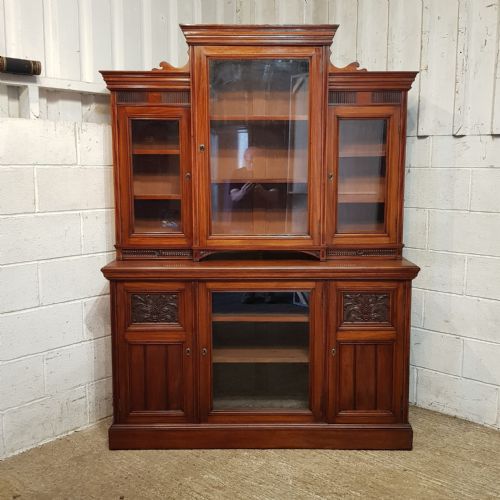
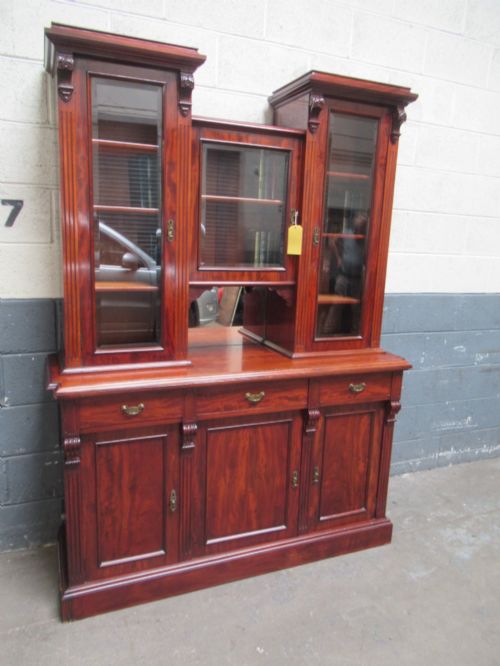
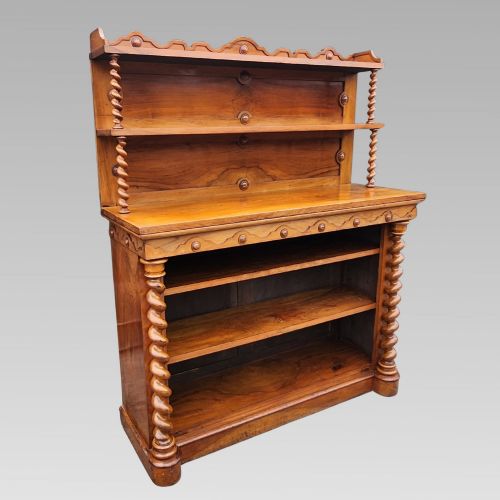
A late victorian sideboard bookcase brings together the lower storage capacity of a sideboard or cabinet with the upper display space of a glazed bookcase. You will most frequently encounter large breakfront formats, drop centre mirror back cabinets, and tall glazed cupboard combinations.
The objects listed span the late nineteenth century, predominantly utilising forms from the 1880s and 1890s. They function as both furniture for holding household goods and vitrines for books or decorative objects.
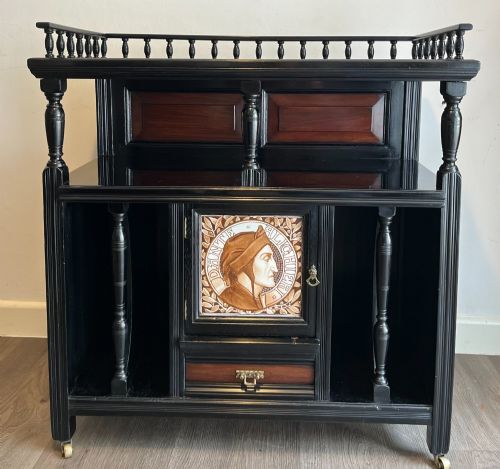
Makers and designers of the period worked within stylistic revivals and modern movements, producing pieces that range from architectural Gothic Revival designs to inlaid aesthetic movement pieces.
How they were made
Cabinet makers utilised dense hardwoods such as mahogany, walnut, and rosewood, alongside ebonised wood for specific decorative effects. These timbers provided a stable carcase for intricate inlay work and heavy architectural mouldings.
Glazing bars framed sections of glass to create panelled display doors, while brass hardware served both functional and decorative purposes on doors and drawers. Mirror glass was integrated into drop centre back panels to reflect light within the room.
Construction techniques included breakfront framing to create depth and dimension across large four door bookcase cabinets and buffet sideboards.
Some models hide drinks cabinets behind their heavy glazed doors, proving Victorians enjoyed a discreet tipple with their reading.
What varies in quality
Quality rests upon the selection of timber and the precision of the cabinet maker in executing complex forms like breakfronts and drop centre mirror backs. Greater care in selecting figured mahogany or walnut elevates the overall presence of the piece.
The sophistication of decorative details, from fine wood inlay to architectural Gothic Revival mouldings, separates standard utilitarian storage from high design cabinet work. Attribution to notable firms like Collinson and Lock indicates superior workshop standards.
Collinson and Lock
The Late Victorian Sideboard Bookcase Glossary
- Breakfront
- A cabinet design where the central section projects forward from the flanking wings. This architectural feature creates depth and visual interest across large bookcase carcases.
- Ebonised wood
- Timber treated with a chemical stain or finish to imitate ebony. This technique was popular in the late nineteenth century for creating sharp contrast with inlaid details.
- Drop centre
- A furniture configuration where the middle section sits lower than the sides, frequently incorporating a mirror back in late nineteenth century display cabinets.
- Gothic Revival
- A nineteenth century design movement drawing inspiration from medieval architecture. Pieces feature pointed arches, heavy mouldings, and structural oak construction.
- Vitrine
- A glass fronted display cabinet designed for showing porcelain, books, or curiosities. Glazed doors protect the contents while allowing maximum visibility.
Late Victorian Sideboard Bookcase: Frequently Asked Questions
What is a late victorian sideboard bookcase?
It is a combined storage and display unit featuring a lower sideboard or cabinet base and an upper glazed bookcase section. These items date from the late nineteenth century, specifically the 1880s and 1890s.
They were designed for principal rooms to house libraries, display ceramics, and store household items behind timber or glass doors.
How were these bookcases used originally?
Middle and upper class households utilised them in dining rooms and libraries to store books, tableware, and decorative objects. The glazed upper sections protected volumes from dust while displaying fine bindings.
Drop centre mirror back variants also served as decorative backdrops for displaying silverware and ornaments in reception rooms.
What woods were used for these pieces?
Cabinet makers predominantly used mahogany, walnut, and rosewood for their rich grain and durability. Ebonised wood and oak also appear, particularly in pieces influenced by the Gothic Revival.
Inlay work in contrasting timbers added decorative detail to mahogany and ebonised carcases.
How do I identify the style?
Stylistic clues include architectural elements like pointed arches for Gothic Revival, or flat ebonised surfaces with delicate inlay for Aesthetic Movement pieces. Breakfront configurations and drop centre mirrors point directly to late nineteenth century production.
Examining the glass type, hardware, and timber choice helps connect the piece to its specific Victorian decade.