
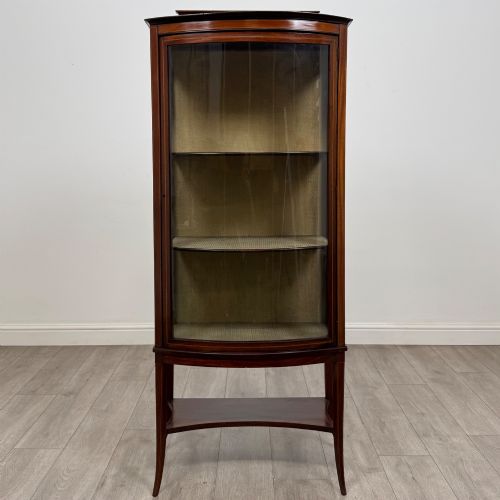
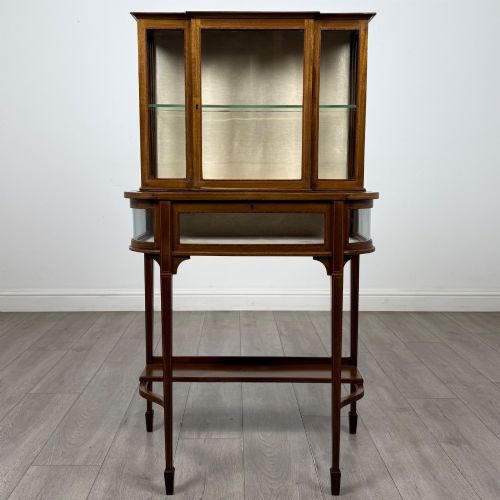
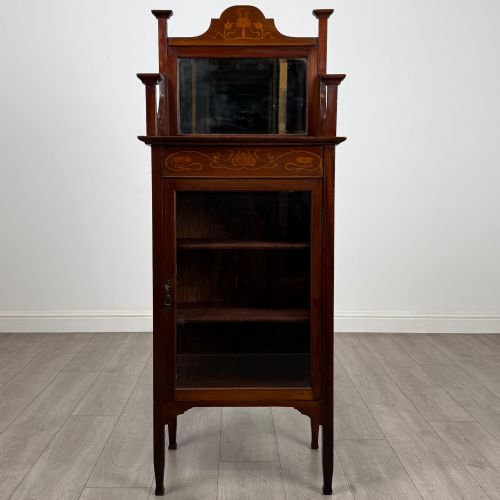
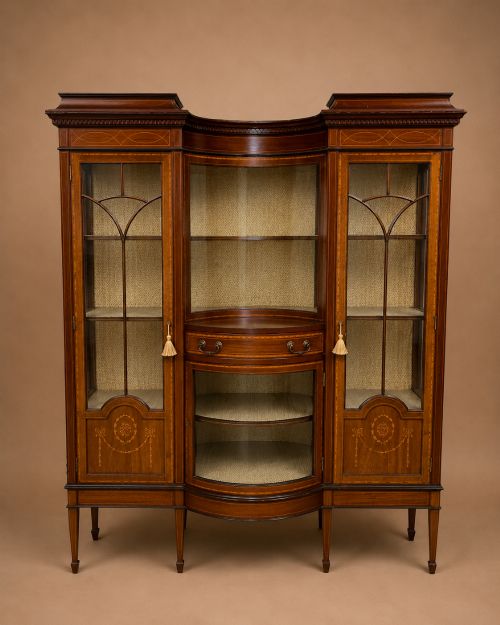
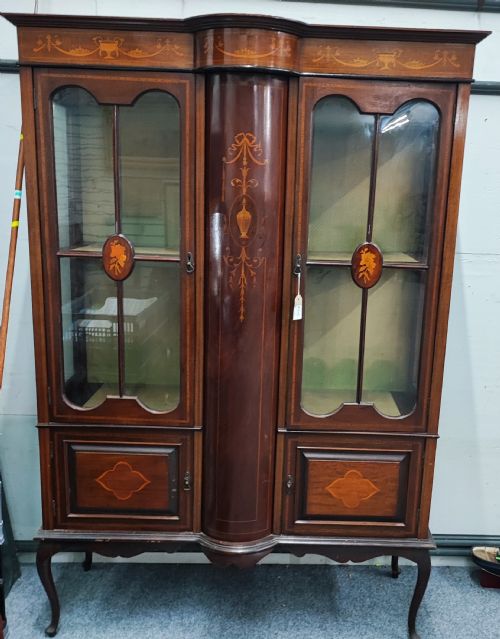


Antique Parlour Bookcase
An antique parlour bookcase brings together polished timbers and glazed display space, offering a refined way to house a collection.
Antique Parlour Bookcase
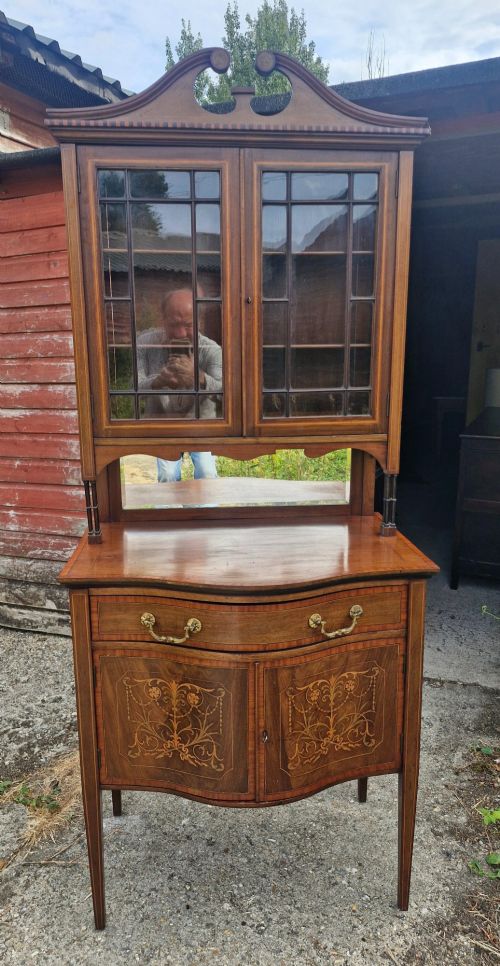
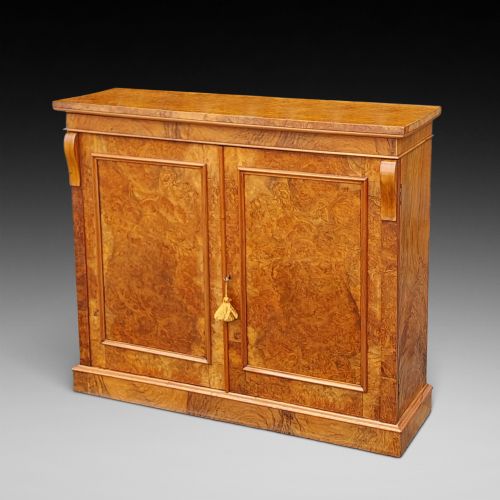
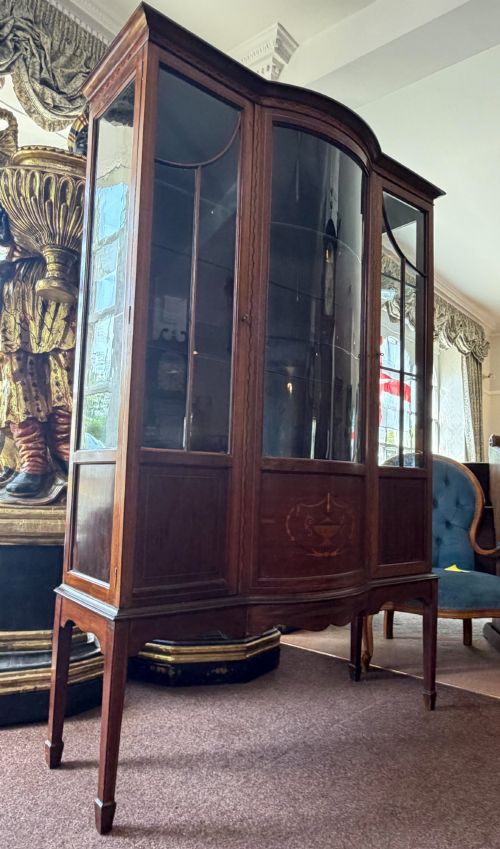
An antique parlour bookcase represents the intersection of domestic display and storage from the nineteenth and early twentieth centuries. These pieces appear primarily as mahogany, rosewood, and walnut cabinets, often featuring glazed doors, mirror backs, and delicate inlaid motifs.
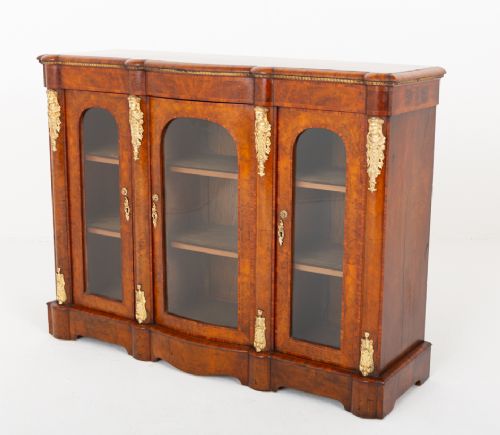
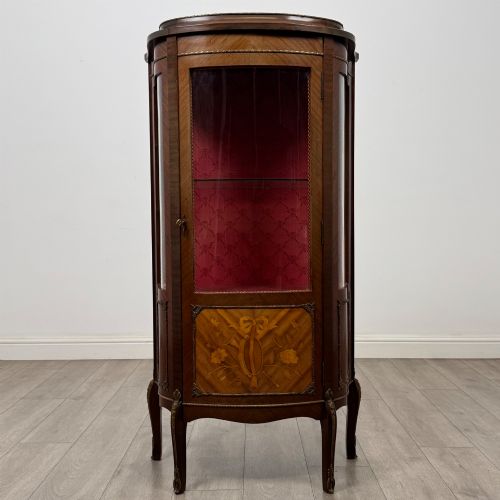
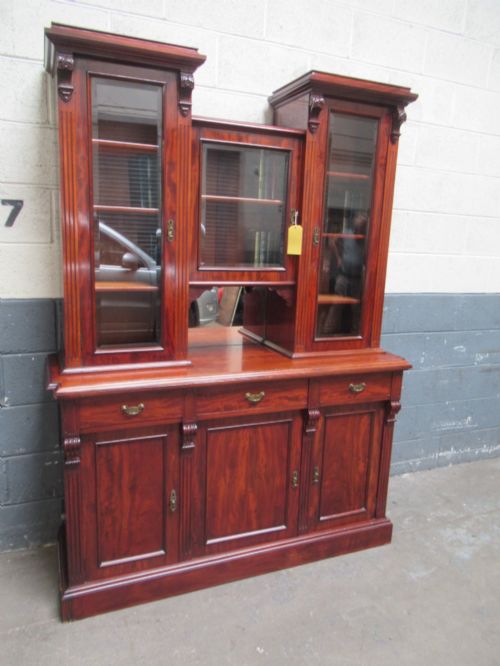
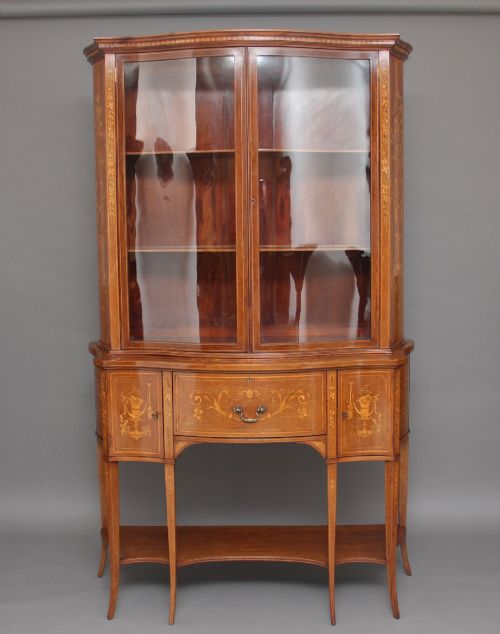
Buyers searching for an antique parlour bookcase commonly encounter Edwardian and Victorian forms designed for principal reception rooms. The selection ranges from bow-front display cabinets and credenzas to twin-part bookcases and side cabinets.
The objects serve to exhibit prized ceramics and volumes while anchoring the aesthetic of a traditional interior. Their varied origins span English workshops alongside French interpretations of the period.
How they were made
Cabinet makers utilised dense hardwoods including mahogany, rosewood, walnut, and satinwood, frequently laid over secondary carcasing timbers. Surfaces often receive decorative embellishment through marquetry inlay, contrasting stringing, and painted or simulated grain effects.
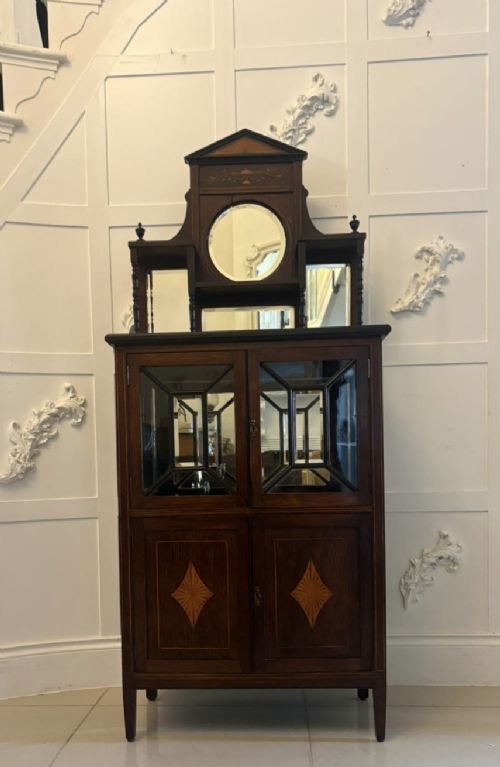
Glazing bars hold individual glass panes within cabinet doors, while internal mirror backs catch and reflect ambient light. Metal components such as brass handles, ormolu mounts, and fabric linings complete the construction of these refined storage pieces.
Some Edwardian display cabinets feature mirror backs specifically designed to bounce candlelight around a dim Victorian parlour.
What varies in quality
The standard of an antique parlour bookcase rests upon the crispness of its marquetry and the choice of timber figures, such as burr walnut or figured mahogany. Finer examples display meticulous hand-cut stringing, balanced proportions, and integrated architectural details like mirror backs and carved cornices.
Workmanship shows in the smooth action of bow-front doors, the weight of the brass hardware, and the integration of secondary woods. Lesser pieces rely on simpler construction methods with minimal decorative enrichment, while notable attribution elevates the standing of specific cabinets.
Collinson & Lock·Edwards & Roberts·Linke
The Antique Parlour Bookcase Glossary
- Marquetry
- Decorative patterns formed by fitting together thin veneers of contrasting wood or other materials onto a structural surface. This technique creates intricate pictorial or geometric designs across cabinet doors and friezes.
- Credenza
- A low-standing cabinet, popular in the Victorian era, typically featuring central cupboard doors flanked by curved glazed compartments. These pieces often incorporate mirror backs and elaborate marquetry.
- Ormolu
- Gilded bronze mounts applied as decorative accents to furniture frames and feet. The technique gained prominence in French-influenced and revival pieces.
- Satinwood
- A lustrous, hard timber native to India and Ceylon, prized for its golden-yellow colour and silky grain. Makers used it extensively for contrasting inlay work and banding.
- Stringing
- Very narrow strips of contrasting wood inlaid into the surface of furniture to form delicate borders and linear outlines. It defines panels on Edwardian and Victorian cabinet doors.
Antique Parlour Bookcase: Frequently Asked Questions
What is a parlour bookcase?
A parlour bookcase is a formal cabinet designed for nineteenth and twentieth-century reception rooms to hold books and display decorative objects behind glass doors.
These pieces combine functional shelving with aesthetic refinements such as mirror backs, inlaid veneers, and brass hardware.
How do I date a cabinet?
Dating relies on stylistic markers, construction techniques, and predominant timbers used during specific eras. Edwardian examples often feature lighter satinwood inlay and Sheraton Revival motifs, while Victorian pieces tend towards heavier burr walnut or rosewood.
Cabinet hardware, backboards, and internal linings also provide physical evidence of the period of manufacture.
Where were these cabinets placed?
These pieces occupied principal reception rooms, parlours, and drawing rooms where families entertained guests and displayed their refined tastes. They stood against drawing room walls to showcase bound volumes and collected ceramics.
Their glazed fronts and mirrored interiors were specifically chosen to brighten Victorian and Edwardian reception spaces.
How should I care for timber?
Maintenance involves keeping antique timber away from direct sunlight and steady sources of artificial heat to prevent the wood from drying out. Consistent indoor humidity protects delicate veneers and prevents marquetry from lifting.
Surfaces benefit from occasional dusting with a soft, dry cloth rather than modern silicone polishes.