


Edwardian Blush Ivory
Edwardian blush ivory pieces are delicate ceramic wares defined by soft pastel tones and gilt detailing, prized by collectors for their painterly floral charm.
Edwardian Blush Ivory
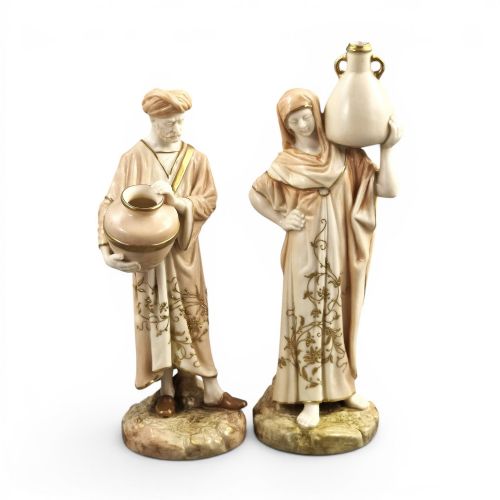
When searching for edwardian blush ivory, collectors look at ceramic objects produced primarily around the turn of the twentieth century. These pieces span standard ornamental vessels, tablewares, and figural works originating predominantly from British potteries.
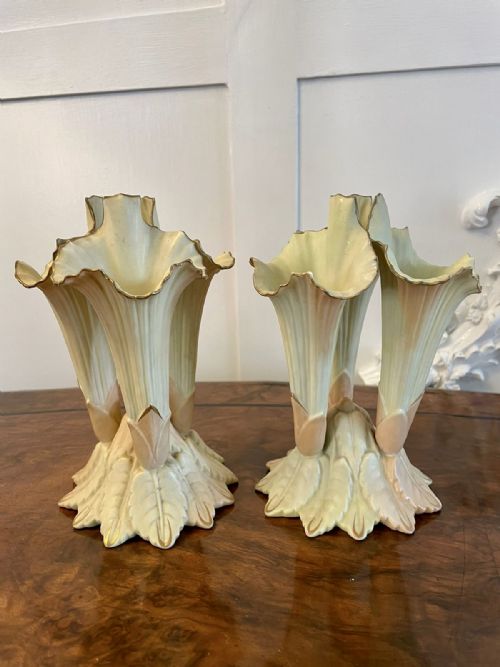
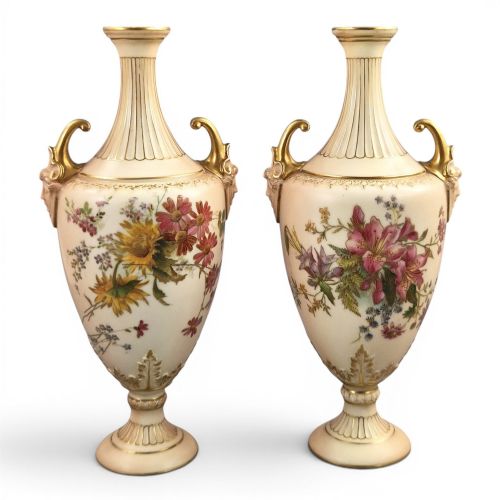
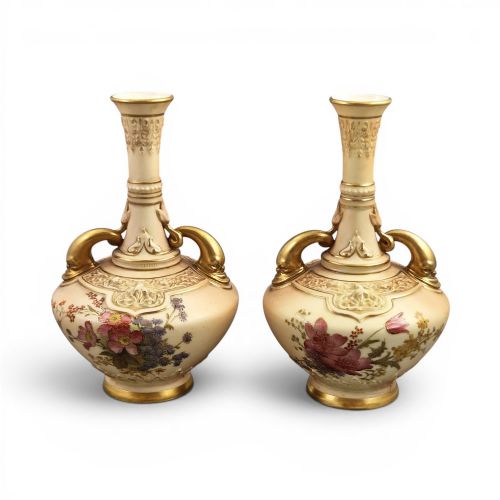
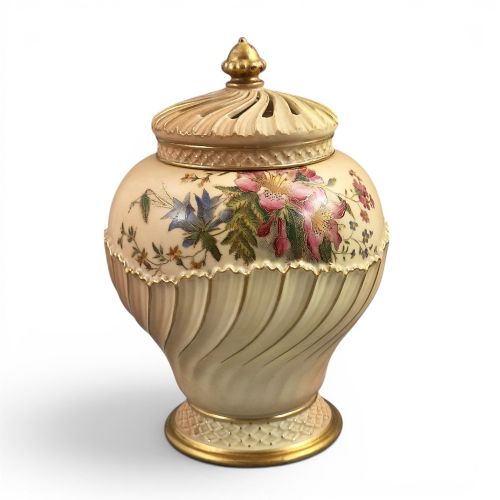
The version most commonly met on this page is the Royal Worcester vessel, often featuring hand-painted floral motifs against a creamy peach-tinted ground. Forms range from simple spill vases and shell dishes to large pot-pourri jars and ewers.
Objects carrying this finish bridge the gap between late Victorian ornamentation and early Edwardian design. They appear in both domestic settings as functional tea trios and decorative contexts as cabinet vases.
Materials and production methods
These pieces rely on fine porcelain and ceramic bodies coated in specialised tinted glazes that create the characteristic matte ivory and peach shading. Artisans applied these layers by hand before firing the ceramics to achieve the soft background tone.
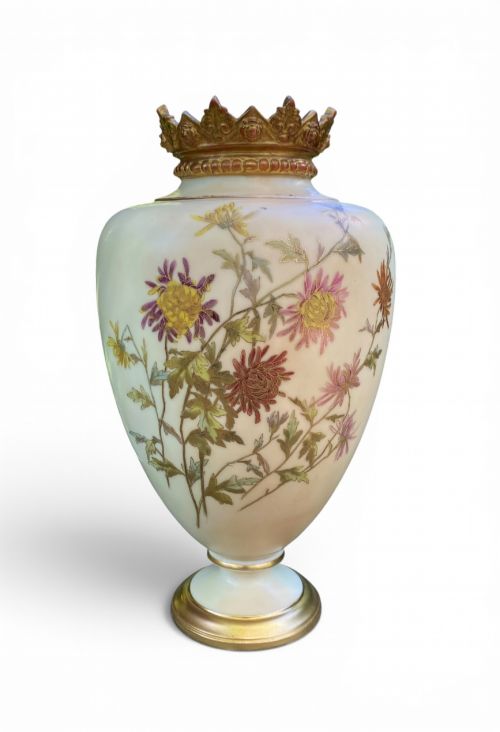
Decoration typically incorporates hand-painted enamels depicting natural subjects such as chrysanthemums and roses. This painted surface is frequently accented with gold leaf, gilding, and gilt edges to frame the central floral designs.
Listings demonstrate production across the nineteenth and twentieth centuries, spanning Victorian, Edwardian, and Art Nouveau stylistic influences.
Assessing craftsmanship and execution
Quality in these ceramics rests on the nuance of the hand-painting and the delicacy of the modelled forms. Superior examples display detailed brushwork by named artists and intricate pierced gilt handles rather than standard stencilled transfers.
Locke And Co·Royal Worcester·Royal Dux
The Edwardian Blush Ivory Glossary
- Blush ivory
- A soft matte ceramic glaze combining pale cream and peach tones, used as a background for hand-painted floral decoration. It gained widespread popularity during the late nineteenth and early twentieth centuries.
- Pot-pourri
- A decorative jar or vase featuring a pierced cover designed to diffuse scent from dried flower petals. These vessels often include internal lids and pedestal bases.
- Gilding
- The application of gold leaf or gilt paint to ceramic surfaces to highlight rims, handles, and raised motifs. It adds metallic contrast to the matte pastel background.
- Spill vase
- A tall, narrow vessel intended to hold wooden spills used for lighting fires or candles. They represent one of the common domestic forms found in this palette.
- Ewer
- A large pitcher with a flared spout and an ornate handle, often produced as a decorative ornamental pair rather than for practical utility.
Edwardian Blush Ivory: Frequently Asked Questions
What is blush ivory porcelain?
Blush ivory refers to a specialised ceramic finish featuring soft matte cream and peach tones beneath hand-painted floral decoration. It serves as the canvas for delicate naturalist artwork.
This aesthetic became a hallmark of late Victorian and Edwardian pottery production, particularly among leading manufacturers in Worcestershire.
How do I identify Edwardian pieces?
Identification relies on factory date marks, style characteristics, and registration numbers stamped or painted on the underside of the ceramic base. These marks often include cipher systems specific to the manufacturing year.
Stylistic cues also help, as Edwardian examples frequently combine pastel glazes with refined gilding and naturalistic subjects like chrysanthemums.
Were these items used daily?
While tea trios and jugs served functional roles in the dining room, many forms like pot-pourri jars, spill vases, and decorative ewers were primarily ornamental. They sat on mantelpieces and cabinets to display artistic taste.
Their survival in domestic collections reflects careful handling rather than heavy everyday employment.
How should I clean these ceramics?
Cleaning requires gentle dusting with a soft, dry brush to protect fragile hand-painted enamel and raised gold leaf. Moisture can damage vulnerable gilt surfaces over time.
Harsh chemical detergents and immersion in water should be avoided entirely to preserve the delicate matte glaze and painted details.